
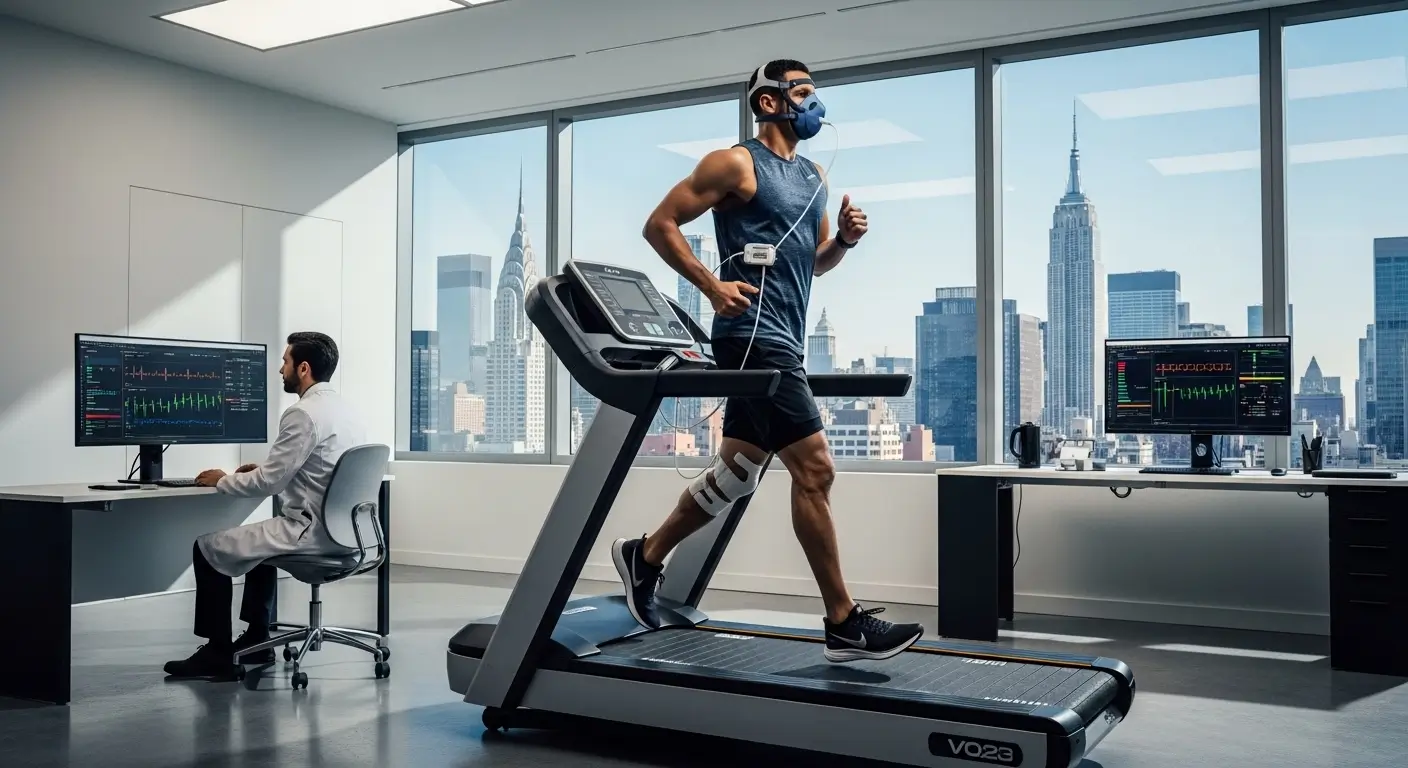
When New York City residents search for “bespoke treatments VO2 Max test price NYC,” they’re typically serious athletes or health-conscious individuals ready to invest in understanding their cardiovascular fitness. This comprehensive guide covers everything you need to know about VO2 Max testing in New York City – from pricing and what’s included to how to prepare and interpret your results.
Table of Contents
Understanding VO2 Max Testing Costs in NYC
What Does VO2 Max Testing Cost in New York City?
VO2 Max testing in NYC typically ranges from $175 to $400 for a single test, depending on the facility type, technology used, and services included.
Standard Pricing Breakdown:
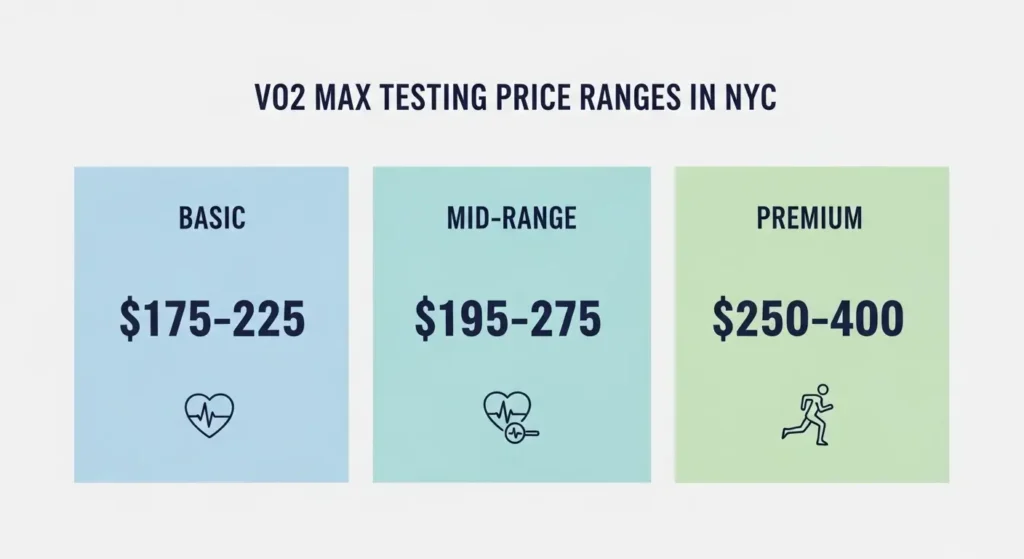
- Basic Testing (Hospital Labs, Universities): $175-$225
- Usually just VO2 Max measurement
- Minimal consultation time
- Basic printed report
- Traditional lab cart equipment
- Mid-Range Testing (Performance Labs): $195-$275
- VO2 Max plus 2-3 additional metrics
- 5-10 minute results review
- Digital report emailed after test
- Modern equipment options
- Premium Testing (Boutique Performance Centers): $250-$400
- Comprehensive biomarker analysis (7-9 metrics)
- Extended consultation and review time
- Personalized training recommendations
- Advanced wireless technology
- Follow-up support included
What’s Typically Included in the Price?
Understanding what you’re actually paying for helps you compare facilities accurately:
Standard Inclusions (Most Facilities):
- The actual VO2 Max test (15-30 minutes)
- Basic equipment usage (treadmill or bike)
- Your VO2 Max score
- Brief results explanation (5-10 minutes)
- Printed or emailed report
Premium Add-Ons (Varies by Facility):
- Pre-test consultation with exercise physiologist or PT
- Choice of testing modality (treadmill, bike, rower, or your own equipment)
- Extended results analysis session (15-20 minutes)
- Personalized training zone calculations
- Heart rate recovery metrics
- Metabolic efficiency data
- Resting metabolic rate (RMR) measurement
- Fat oxidation zone identification
- 30-day follow-up consultation
- Online dashboard for tracking progress
- Retesting discounts
Package Pricing and Bundles
Many NYC facilities offer package deals that provide better value:
Progress Tracking Packages:
- 3-Test Package: $450-$650 (saves $75-$150)
- Best for athletes tracking improvements over 6-9 months
- Ideal timing: test every 12-16 weeks
Comprehensive Assessment Bundles:
- VO2 Max + DEXA Body Composition: $325-$475
- VO2 Max + RMR Testing: $295-$425
- VO2 Max + Lactate Threshold Test: $350-$500
- Complete Performance Package (multiple tests): $600-$900
Payment Options to Consider
Insurance and Health Accounts:
- Most facilities are out-of-network for insurance
- VO2 Max testing is typically HSA/FSA eligible
- Request a superbill for potential reimbursement
- Some preventive care plans may cover testing
Payment Plans:
- Some facilities offer payment plans for packages over $300
- Typically 3-month interest-free options
- Corporate wellness programs may cover costs
- Ask about membership discounts if available
What is VO2 Max and Why Does This Number Matter?
The Simple Definition
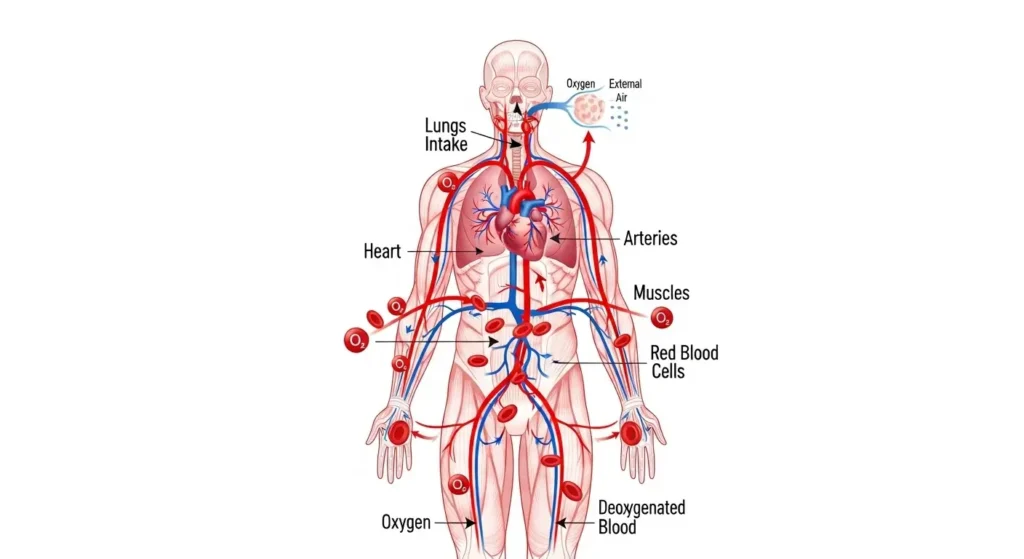
VO2 Max measures the maximum amount of oxygen your body can use during intense exercise. It’s expressed as milliliters of oxygen per kilogram of body weight per minute (mL/kg/min).
Think of it as your engine size – the bigger your VO2 Max, the more aerobic capacity and endurance you have available.
If someone has a VO2 Max of 50 mL/kg/min, it means at maximum effort, their body uses 50 milliliters of oxygen per kilogram of bodyweight every minute.
Why This Number Is Critical
#1 Predictor of Cardiovascular Health
VO2 Max is a better indicator of overall health than cholesterol levels, blood pressure, or BMI. Research consistently shows that higher VO2 Max correlates with lower risk of cardiovascular disease, diabetes, and metabolic syndrome.
Longevity Marker
Studies published in JAMA (Journal of the American Medical Association) demonstrate that improving your VO2 Max from “low” to even “below average” is associated with a 50% reduction in all-cause mortality. It’s one of the most powerful predictors of lifespan we have.
Athletic Performance Ceiling
Your VO2 Max determines your maximum sustainable pace or power output. Two athletes with identical training might perform differently because one has a higher aerobic capacity. Knowing this number helps you understand your current ceiling and potential for improvement.
Training Effectiveness Tracker
Without objective measurement, how do you know if your training is actually working? VO2 Max testing every 3-4 months provides concrete data showing whether your cardiovascular fitness is improving, plateauing, or declining.
Injury Risk Indicator
Research shows that low aerobic capacity correlates with higher injury rates. Athletes with poor cardiovascular fitness relative to their training volume are more likely to suffer overuse injuries.
Who Should Get VO2 Max Testing?
Ideal Candidates:
- Serious runners, cyclists, triathletes, and rowers
- Athletes training for endurance events (marathons, century rides, Ironman races)
- CrossFit athletes optimizing Zone 2 aerobic work
- People over 40 focused on longevity and healthspan
- Anyone whose smartwatch VO2 Max estimate doesn’t match their performance
- Athletes who’ve been training consistently but not seeing improvements
- Individuals returning from injury who need baseline data
- Competitive athletes seeking every possible advantage
When Testing Is Most Valuable:
- Beginning a new training program (establish baseline)
- 12-16 weeks into a program (measure progress)
- Pre-season preparation for competitive athletes
- Post-rehabilitation from injury
- When training feels ineffective despite consistent effort
- For major life events (significant weight loss, lifestyle changes)
Who Should NOT Get Tested (Medical Contraindications)
VO2 Max testing requires maximum effort and isn’t appropriate for everyone:
Absolute Contraindications:
- Recent heart attack or stroke (within 6 months)
- Unstable angina or chest pain at rest
- Uncontrolled high blood pressure (>180/110 mmHg)
- Severe aortic stenosis
- Acute myocarditis or pericarditis
- Suspected or known dissecting aneurysm
- Active respiratory infection or COVID-19
Relative Contraindications (Discuss with Doctor First):
- Moderate aortic stenosis
- Significant arrhythmias
- Uncontrolled diabetes
- Severe obesity (may limit testing accuracy)
- Pregnancy (especially third trimester)
- Orthopedic limitations preventing maximum effort
Most facilities provide a medical screening questionnaire before your appointment. If you have any cardiac history or chronic conditions, consult your physician before scheduling testing.
Understanding VO2 Max Score Ranges
What the Numbers Mean
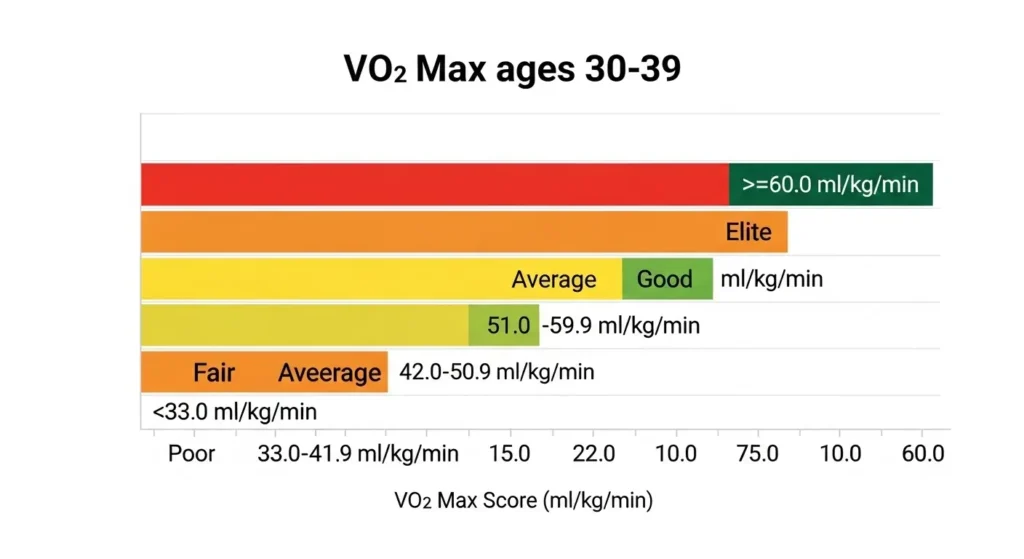
VO2 Max scores vary significantly by age, gender, and training status. Here are general ranges for adults:
For Men (Age 30-39):
- Superior/Elite: 55+ mL/kg/min
- Excellent: 48-54 mL/kg/min
- Good: 43-47 mL/kg/min
- Average: 39-42 mL/kg/min
- Below Average: 35-38 mL/kg/min
- Poor: <35 mL/kg/min
For Women (Age 30-39):
- Superior/Elite: 49+ mL/kg/min
- Excellent: 43-48 mL/kg/min
- Good: 38-42 mL/kg/min
- Average: 34-37 mL/kg/min
- Below Average: 30-33 mL/kg/min
- Poor: <30 mL/kg/min
Elite Athlete Benchmarks:
- Professional male cyclists: 65-85 mL/kg/min
- Professional female cyclists: 55-70 mL/kg/min
- Elite male runners: 70-85 mL/kg/min
- Elite female runners: 60-75 mL/kg/min
- Professional soccer players: 55-68 mL/kg/min
Age-Related Decline
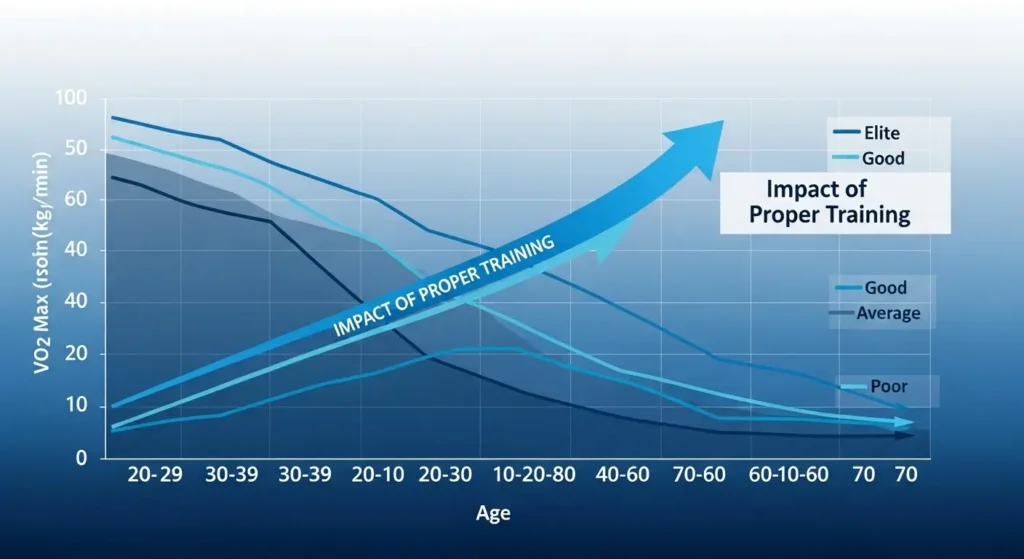
VO2 Max naturally declines approximately 10% per decade after age 30 without consistent training. However, trained athletes can maintain high scores well into their 50s and 60s with proper training.
Expected Scores by Age (Active Individuals):
- Ages 20-29: Baseline
- Ages 30-39: 5-10% lower than peak
- Ages 40-49: 10-15% lower than peak
- Ages 50-59: 15-20% lower than peak
- Ages 60+: 20-30% lower than peak
Regular endurance training significantly slows this decline. A fit 50-year-old can easily have a higher VO2 Max than an untrained 25-year-old.
The Complete VO2 Max Testing Experience: What to Expect
Total Time Commitment
Plan for 60-90 minutes at the facility, depending on the level of service:
- Basic facilities: 45-60 minutes total
- Premium facilities: 75-90 minutes total
Step-by-Step Testing Process
Step 1: Pre-Test Consultation (5-15 minutes)
You’ll meet with an exercise physiologist, physical therapist, or performance specialist who will:
- Review your medical history and current health status
- Discuss your training background and athletic goals
- Address any injuries or physical limitations
- Explain the testing protocol and what to expect
- Answer questions and address concerns
- Review your preparation (fasting, caffeine avoidance, etc.)
- Choose your testing modality (treadmill, bike, rower)
Step 2: Equipment Setup (5-10 minutes)
The specialist will fit you with testing equipment:
- Chest strap heart rate monitor – Worn around your chest for accurate HR tracking
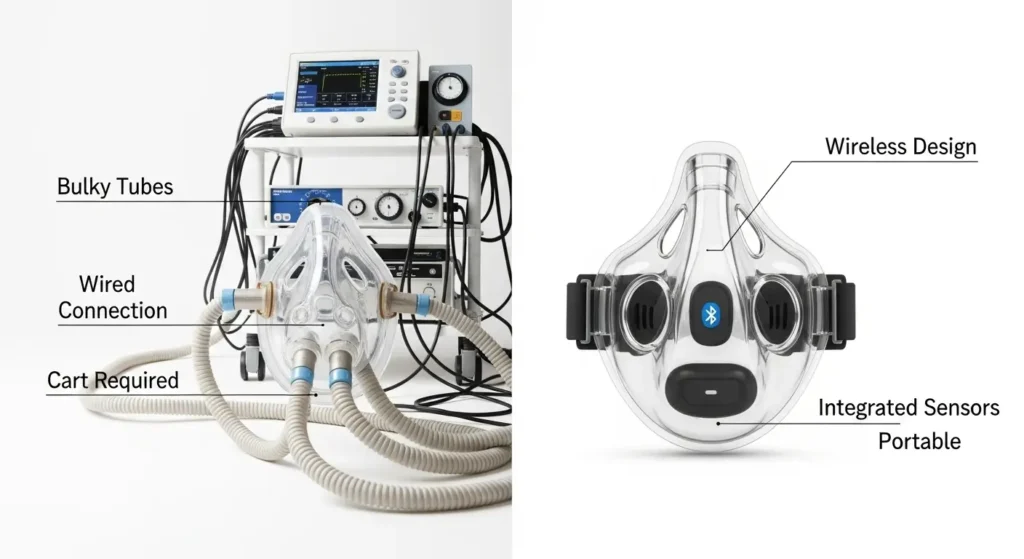
- VO2 mask – Either wireless (modern facilities) or connected to a cart (traditional labs)
- Mask sizing – Multiple sizes available to ensure comfortable fit
- Calibration – Equipment calibrated while you warm up
- Practice breaths – Get comfortable breathing through the mask before starting
Modern vs. Traditional Equipment:
Wireless Systems (Premium Facilities):
- Bluetooth-connected mask with no tubes or wires
- Complete freedom of movement
- More comfortable and less intimidating
- Used by professional athletes
- Medical-grade accuracy (±2% error)
Traditional Lab Carts (Standard Facilities):
- Mask connected to analysis cart via tubes/hoses
- Restricts movement slightly
- Same accuracy as wireless systems
- Less comfortable but proven technology
- May affect natural running or cycling gait
Step 3: Warm-Up Phase (3-5 minutes)
Before the actual test begins:
- Start at very easy intensity on your chosen equipment
- Get comfortable with breathing through the mask
- Allow your body to warm up gradually
- System continues calibration during this time
- Specialist checks mask fit and comfort
Step 4: The Actual Test (12-20 minutes)
This is the main event – a progressive test to maximum effort:
How It Works:
- Intensity increases gradually every 1-2 minutes
- For treadmill: speed and/or incline increases
- For bike: resistance/power increases
- For rower: target pace increases
- You continue until you can no longer maintain the intensity
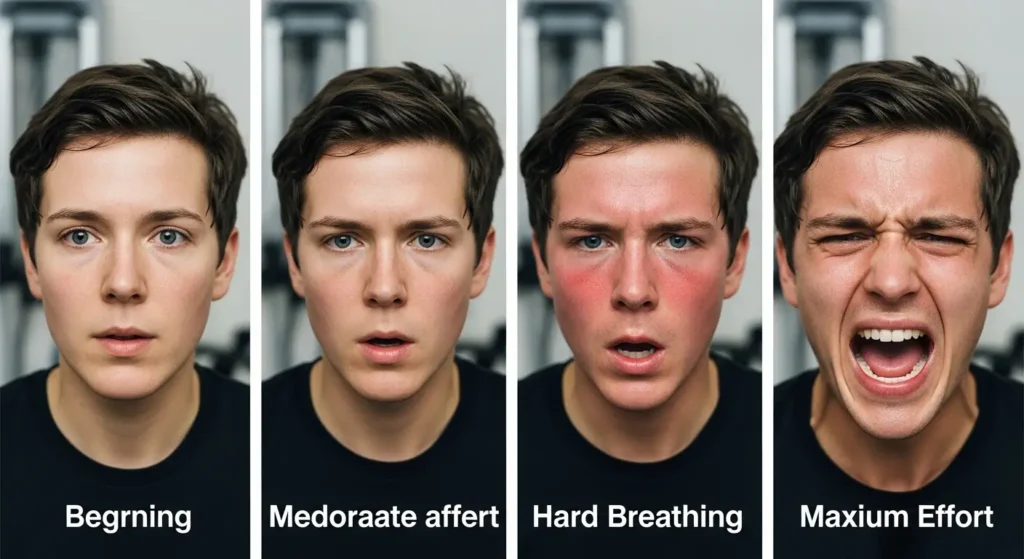
What It Feels Like:
First 5-10 minutes: Relatively comfortable with controlled breathing. You could hold a conversation in short sentences. Feels like a normal warm-up progressing to moderate intensity.
Middle phase (minutes 10-15): Breathing rate increases noticeably. Effort becomes significant but manageable. You’re working hard but still in control.
Final 2-3 minutes: Very hard effort. Breathing is rapid and deep. Legs burning (runners/cyclists) or full-body fatigue (rowers). You know you’re approaching your limit.
Last 30-60 seconds: Maximum sustainable effort. Cannot speak. Focused entirely on continuing. Most people naturally stop when they’ve reached true maximum – you’ll know.
Important Facts:
- You control when to stop – no one forces you to continue
- Most fit individuals reach maximum in 12-18 minutes
- Less fit individuals might reach max in 8-12 minutes
- The test is challenging but safe with proper supervision
- Reaching absolute maximum isn’t always necessary for useful data
Step 5: Cool Down and Recovery (5-10 minutes)
After reaching maximum effort:
- Intensity gradually decreases
- Keep moving at very low intensity
- Remove mask and heart rate monitor
- Specialist monitors your recovery
- Heart rate recovery rate is often measured (important health metric)
- Catch your breath and hydrate
Premium facilities often provide:
- Complimentary electrolyte drinks
- Protein shakes or recovery snacks
- Towels and comfortable recovery area
- Time to shower if needed
Step 6: Results Review (5-20 minutes)
This is where facilities differ dramatically:
Basic Facilities (5-10 minutes):
- Quick explanation of your VO2 Max score
- Brief comparison to age/gender norms
- Printed report to take home
- Minimal training recommendations
Premium Facilities (15-20 minutes):
- Detailed explanation of all biomarkers measured
- Your score in context of age, gender, and sport
- Specific training zone calculations with heart rate ranges
- Personalized recommendations for improvement
- Opportunity to ask questions
- Discussion of next steps and retest timing
Step 7: Follow-Up Report and Support
Within 24-48 Hours: Most facilities email a comprehensive report containing:
- Your complete test data and metrics
- Graphs showing your performance curve
- Training zone recommendations
- Peer comparison benchmarks
- Personalized insights based on your goals
Premium Services May Include:
- Access to online dashboard for tracking progress
- 30-day follow-up consultation (phone or email)
- Answers to questions as you apply the data
- Adjustments to zones based on real-world training
- Retest scheduling and progress planning
How to Prepare for Your VO2 Max Test
Why Preparation Matters
Proper preparation ensures accurate results and optimal performance. An unprepared test can underestimate your true VO2 Max by 5-15%, wasting your investment and providing misleading data.
48 Hours Before Your Test
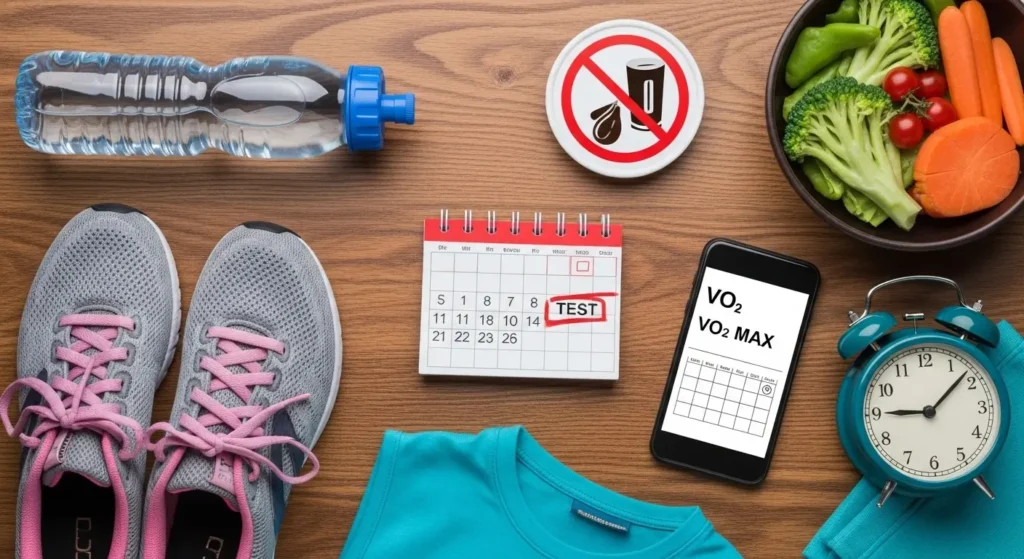
Training:
- Maintain your normal training schedule
- Don’t taper excessively or try to rest extra
- Avoid unusually long or intense workouts
- Train as you normally would
Lifestyle:
- Avoid heavy alcohol consumption
- Stay well-hydrated throughout the day
- Get adequate sleep (7-9 hours per night)
- Don’t make dramatic diet changes
- Manage stress levels
24 Hours Before Your Test
Exercise:
- Light workout only (easy Zone 1-2 intensity)
- No hard intervals, tempo runs, or heavy lifting
- Active recovery is fine (easy swim, walk, yoga)
- Rest is also perfectly acceptable
Nutrition and Hydration:
- Continue normal eating patterns
- Stay well-hydrated but don’t overdo it
- Avoid trying new foods or supplements
- No excessive carbohydrate loading necessary
- Limit sodium if you’re sensitive to bloating
Sleep:
- Aim for 7-9 hours of quality sleep
- Avoid staying up unusually late
- Don’t stress about sleep – anxiety affects results more than one poor night
Test Day – 4 Hours Before
Fasting Requirements:
- No food for 4 hours before your test
- Water is allowed and encouraged
- Black coffee is typically NOT allowed (see caffeine below)
- No pre-workout supplements or energy drinks
Caffeine Restriction:
- Avoid all caffeine for at least 4 hours (some facilities request 12 hours)
- Caffeine artificially elevates heart rate by 5-10 beats per minute
- Can skew results and training zone calculations
- Includes coffee, tea, energy drinks, and caffeine pills
Other Restrictions:
- No nicotine products (cigarettes, vaping, nicotine gum)
- No stimulant medications unless medically necessary
- Avoid cold medicine or antihistamines if possible
- If you must take medication, inform the facility
Test Day – 2 Hours Before
For Morning Tests:
- Fast from the night before (last meal by 8-9pm)
- Wake up 2 hours before appointment
- Drink water as desired
- Empty bladder before leaving for the facility
For Afternoon Tests:
- Light breakfast 4+ hours before is acceptable
- Examples: Toast with peanut butter, oatmeal, banana
- Continue drinking water
- Avoid large or heavy meals
Final Preparation:
- Wear or bring appropriate athletic clothing
- Use the bathroom before your appointment
- Arrive 10 minutes early for paperwork
- Bring any required medical documentation
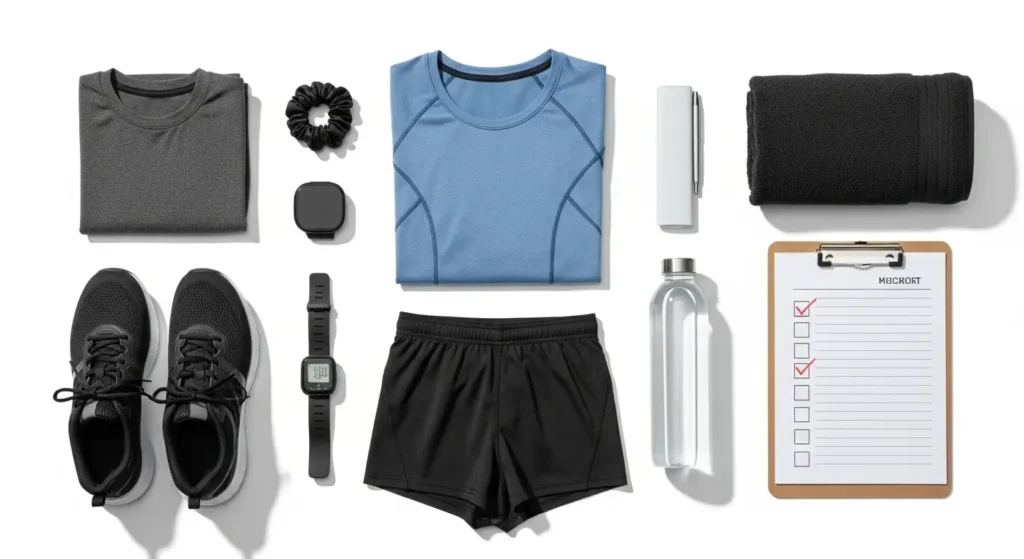
What to Bring to Your Test
Required Items:
- Athletic shoes appropriate for your test modality
- Runners: running shoes
- Cyclists: cycling shoes (if using your own pedals)
- Rowers: athletic sneakers
- Comfortable workout clothes
- Shorts or leggings
- Moisture-wicking shirt
- Sports bra for women
Optional But Helpful:
- Water bottle (most facilities provide)
- Hair tie for long hair
- Small towel (usually provided)
- Change of clothes if returning to work
- Earbuds if facility allows music during test
For Cyclists Bringing Own Bike:
- Your road or triathlon bike
- Pedals (if not standard)
- Any specific equipment you train with
- Call ahead to confirm compatibility with their trainer
What NOT to Do Before Your Test
Avoid These Common Mistakes:
❌ Don’t consume caffeine – Even one cup of coffee can affect results significantly
❌ Don’t eat a large meal within 4 hours – You risk nausea during maximum effort
❌ Don’t do a hard workout the morning of – You need to be fresh, not fatigued
❌ Don’t take cold medicine or decongestants – These affect breathing and heart rate
❌ Don’t use bronchodilators unless medically necessary – Inform the facility if you must
❌ Don’t come sick or with respiratory infection – Reschedule to get accurate results
❌ Don’t try new foods or supplements – Stick with what you know works
❌ Don’t stress excessively – Anxiety can affect results more than you think
Optimal Testing Times
Morning Testing (9am-11am):
- Many people feel freshest in the morning
- Easier to fast overnight
- Avoid afternoon work fatigue
- Cooler temperatures may help performance
Afternoon Testing (2pm-4pm):
- Body temperature peaks in afternoon
- May perform slightly better physiologically
- Allows for light breakfast earlier
- Good if you train in afternoons normally
Avoid:
- Very early morning (before 7am) – body not fully awake
- Immediately after work (fatigue affects results)
- Late evening (if it disrupts sleep patterns)
Rescheduling and Cancellation
When to Reschedule:
- You’re sick with cold, flu, or respiratory infection
- You didn’t follow preparation guidelines
- You’re injured and can’t safely reach maximum effort
- You’re unusually fatigued from recent training or life stress
- Severe weather makes travel unsafe
Typical Facility Policies:
- Free rescheduling with 24-48 hours notice
- Same-day cancellation may incur $50-75 fee
- No-show may forfeit full test cost
- Illness/emergency usually accommodated – just call
The goal is to test when you’re at your best, so facilities generally work with you to find the right timing.
Understanding Your VO2 Max Results
The Complete Biomarker Breakdown
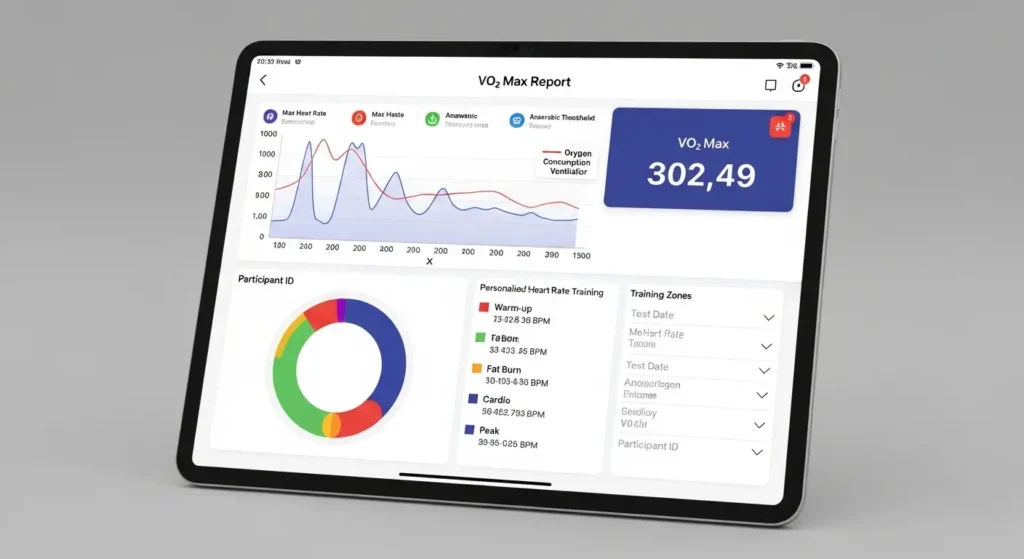
While basic facilities only measure VO2 Max, comprehensive testing provides multiple valuable metrics:
1. VO2 Max (Maximum Oxygen Consumption)
- Your primary score – the maximum oxygen your body can use
- Expressed as mL/kg/min
- Determines your aerobic capacity ceiling
- Best predictor of cardiovascular health and longevity
2. Anaerobic Threshold (Lactate Threshold)
- The intensity where lactate begins accumulating faster than clearance
- Your maximum sustainable pace/power for 30-60 minutes
- Critical for race pacing and tempo training
- Typically 80-90% of VO2 Max for trained athletes
3. Aerobic Efficiency
- How much oxygen you consume at different intensities
- Better efficiency = same pace with less oxygen/energy
- Improves with consistent aerobic training
- Indicates running/cycling economy
4. Resting Metabolic Rate (RMR)
- Calories burned at complete rest
- Useful for weight management and nutrition planning
- Typically 1,200-2,000 calories per day depending on body size
- More accurate than online calculators
5. Fat Oxidation Zone (Fat-Max)
- The intensity where you burn the most fat
- Usually falls within Zone 2 training range
- Critical for endurance athletes and weight loss
- Improves metabolic flexibility
6. Heart Rate Recovery
- How quickly heart rate decreases after maximum effort
- Excellent indicator of cardiac health
- Faster recovery = better cardiovascular fitness
- Should drop 12+ beats in first minute
7. Ventilatory Threshold 1 (VT1)
- First significant increase in breathing rate
- Marks transition from easy to moderate intensity
- Top of “true” Zone 2 training
- You can still speak in sentences but with more effort
8. Ventilatory Threshold 2 (VT2)
- Second sharp increase in breathing rate
- Transition from moderate to hard intensity
- Close to anaerobic threshold
- Speaking becomes very difficult
9. Respiratory Exchange Ratio (RER)
- Ratio of CO2 produced to O2 consumed
- Indicates fuel utilization (fat vs. carbohydrate)
- RER of 0.7 = pure fat burning
- RER of 1.0 = pure carbohydrate burning
- Shows metabolic flexibility across intensities
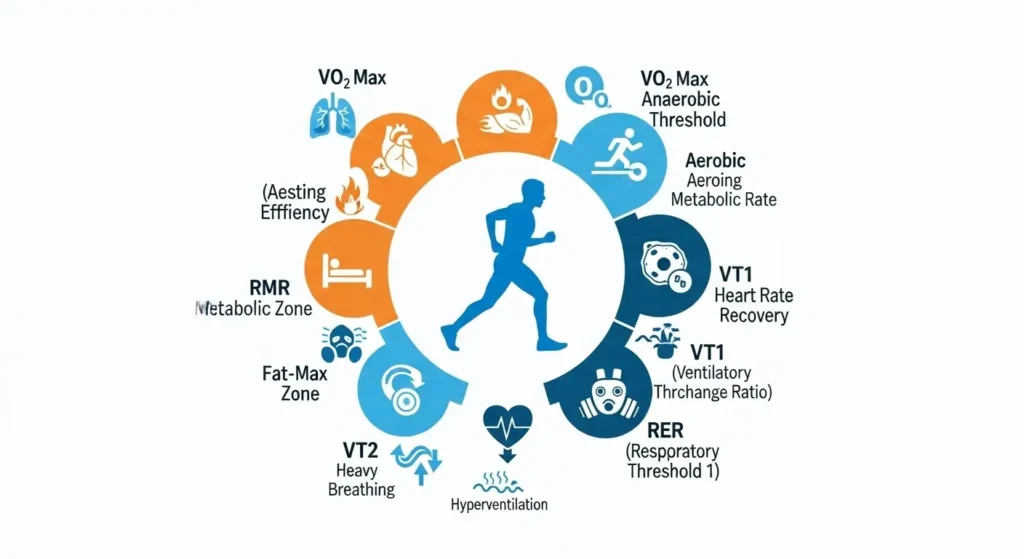
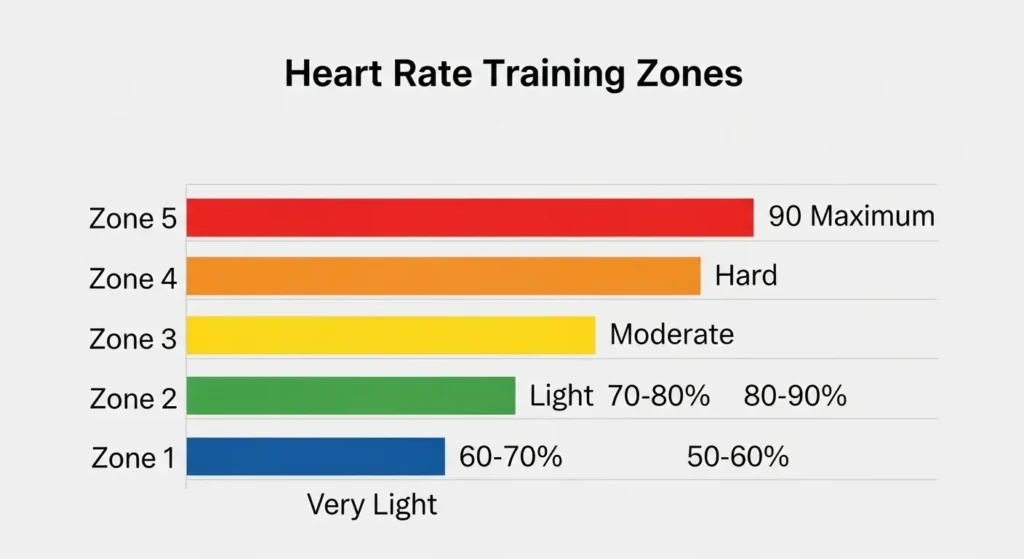
Your Personalized Training Zones
One of the most valuable outputs from VO2 Max testing is precise training zones:
Zone 1 – Active Recovery (50-60% max HR)
- Purpose: Recovery between hard sessions
- Feel: Very easy, can hold full conversation
- Breathing: Barely elevated, through nose possible
- Duration: 30-60 minutes
- Training time: 5-10% of weekly volume
Zone 2 – Aerobic Base (60-70% max HR)
- Purpose: Build aerobic capacity and fat-burning efficiency
- Feel: Comfortable, can speak in full sentences
- Breathing: Elevated but controlled and rhythmic
- Duration: 45-180 minutes
- Training time: 70-80% of weekly volume for most athletes
- This is where most improvement happens
Zone 3 – Tempo (70-80% max HR)
- Purpose: Improve sustainable moderate intensity
- Feel: Comfortably hard, “conversational but choppy”
- Breathing: Noticeable, speaking in phrases possible
- Duration: 20-60 minutes
- Training time: 10-15% of weekly volume
- Often called the “gray zone” – use sparingly
Zone 4 – Threshold (80-90% max HR)
- Purpose: Increase lactate threshold and race pace
- Feel: Hard but sustainable for 30-60 minutes
- Breathing: Heavy, can only speak a few words
- Duration: 10-40 minutes (intervals or continuous)
- Training time: 5-10% of weekly volume
Zone 5 – VO2 Max Intervals (90-100% max HR)
- Purpose: Increase maximum oxygen consumption
- Feel: Very hard, maximum sustainable effort
- Breathing: Gasping, cannot speak
- Duration: 3-8 minute intervals with rest between
- Training time: 2-5% of weekly volume
- Maximum improvement in VO2 Max itself
How to Apply Your Training Zones
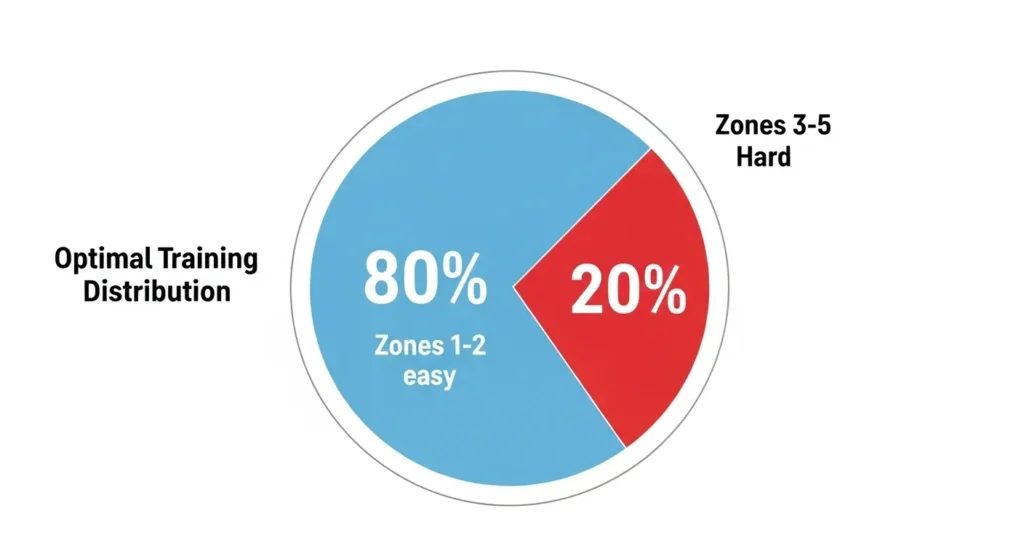
The 80/20 Rule:
Research consistently shows that elite endurance athletes spend approximately 80% of training time in Zones 1-2 (easy) and only 20% in Zones 3-5 (moderate to hard).
Most recreational athletes make the critical mistake of training in reverse: too hard on easy days (Zone 3), not hard enough on hard days (barely reaching Zone 4-5).
Sample Weekly Training Distribution:
For Runners (6 hours per week):
- Zone 1-2: 4.5-5 hours (3-4 easy runs)
- Zone 3: 30-45 minutes (during some easy runs unintentionally)
- Zone 4: 30-45 minutes (1x weekly tempo or threshold workout)
- Zone 5: 20-30 minutes (1x weekly interval session)
For Cyclists (8 hours per week):
- Zone 1-2: 6-6.5 hours (most rides)
- Zone 3: 45-60 minutes (minimize this “gray zone”)
- Zone 4: 40-60 minutes (1-2x weekly threshold efforts)
- Zone 5: 20-40 minutes (1x weekly VO2 Max intervals)
Common Training Mistakes to Avoid:
❌ Training too hard on easy days – This prevents recovery and limits your intensity on hard days
❌ Not going hard enough on hard days – If you’re tired from too-hard easy days, you can’t hit true Zone 4-5
❌ Too much Zone 3 training – The “gray zone” provides stress without sufficient stimulus
❌ Ignoring Zone 2 – This is where aerobic base is built; shortcuts don’t work
❌ Doing hard workouts back-to-back – Allows 48 hours minimum between Zone 4-5 sessions
Sample Training Recommendations by VO2 Max Level
If Your VO2 Max is Below Average:
Focus: Build aerobic base
- 90% of training in Zone 1-2 for first 12-16 weeks
- Frequency: 4-5 sessions per week
- Duration: Start with 30-45 minutes, build to 60-90 minutes
- Add: 1x weekly Zone 4 threshold work after 8 weeks (just 15-20 minutes)
- Avoid: Zone 5 intervals until base is established
Expected Improvement: 15-25% increase in VO2 Max over 6 months with consistent training
If Your VO2 Max is Average:
Focus: Maintain base, add progressive intensity
- 80% of training in Zone 1-2
- 10% in Zone 3 (natural drift during longer sessions)
- 10% in Zones 4-5 combined
- Frequency: 5-6 sessions per week
- Structure: 3-4 easy, 1-2 moderate, 1 hard
Expected Improvement: 8-15% increase over 4-6 months
If Your VO2 Max is Good/Excellent:
Focus: Optimize training stimulus
- 75-80% Zone 1-2 (base maintenance)
- 5-10% Zone 3 (minimize)
- 15-20% Zones 4-5 (2-3 quality sessions weekly)
- Consider periodization and training blocks
- Focus on specific limiters
Expected Improvement: 3-8% increase over 3-4 months (gains come slower at higher fitness)
Red Flags in Your Results
Experienced specialists look for warning signs in your data:
Poor Heart Rate Recovery
- HR drops <12 beats in first minute post-exercise
- May indicate: Overtraining, poor cardiovascular health, inadequate recovery
- Action: Increase rest days, reduce training intensity, consider medical evaluation
Very Low Aerobic Efficiency
- High oxygen consumption at easy paces
- May indicate: Poor running/cycling economy, always training too hard
- Action: More Zone 2 work, technique assessment, strength training
High RER at Low Intensities
- Burning mostly carbohydrates even in Zone 2
- May indicate: Metabolic inflexibility, insufficient easy training
- Action: More true Zone 2 work to improve fat oxidation
Large VT1-VT2 Gap
- Big difference between first and second ventilatory thresholds
- May indicate: Missing Zone 3 training or poor lactate clearance
- Action: Strategic tempo work to tighten the gap
Unusually Low VO2 Max Despite Training
- Training consistently but score remains low
- May indicate: Overtraining, under-recovery, sleep issues, medical conditions
- Action: Evaluate total life stress, sleep quality, consider medical screening
Progress Tracking and Retesting Strategy
When to Retest Your VO2 Max
Minimum Time Between Tests: 12-16 weeks
Your body needs at least 12 weeks of consistent training to produce measurable VO2 Max improvements. Testing more frequently wastes money and won’t show meaningful changes.
Optimal Retesting Timeline:
For General Fitness/Longevity Focus:
- Every 4-6 months
- Twice per year is sufficient
- Tests your annual training effectiveness
For Competitive Athletes:
- Every 12-16 weeks (3-4 times per year)
- Pre-season baseline
- Mid-season check (8-12 weeks into training block)
- Post-season evaluation
- Off-season test if training significantly
After Major Training Changes:
- 16 weeks minimum after changing approach
- Examples: Switching from high-intensity to polarized training, adding significant weekly volume, recovering from injury
After Significant Life Changes:
- Major weight loss (20+ pounds)
- Recovery from illness or injury
- Lifestyle changes affecting training consistency
- Want to reestablish baseline
Why Retest?
Verify Training Effectiveness
The only way to truly know if your training is working is objective measurement. Feeling stronger doesn’t always translate to measurable improvement. Testing removes guesswork.
Update Training Zones
As your fitness improves, your zones change. The heart rate that was Zone 2 might now be Zone 1. Using outdated zones means you’re no longer training in the correct intensity ranges.
Track Cardiovascular Health
VO2 Max is a critical health marker. Tracking it over years provides valuable data about your cardiovascular aging and overall health trajectory.
Motivation and Accountability
Nothing motivates like seeing your VO2 Max increase from 42 to 48 after months of dedicated training. Scheduled retests create accountability and provide tangible goals.
Catch Overtraining Early
If your VO2 Max decreases or heart rate recovery worsens despite consistent training, it may indicate overtraining or inadequate recovery. Retesting catches this before injury occurs.
Adjust Training Approach
If you don’t see expected improvements after 16 weeks, something needs to change. Maybe you need more volume, better recovery, different intensity distribution, or technique work.
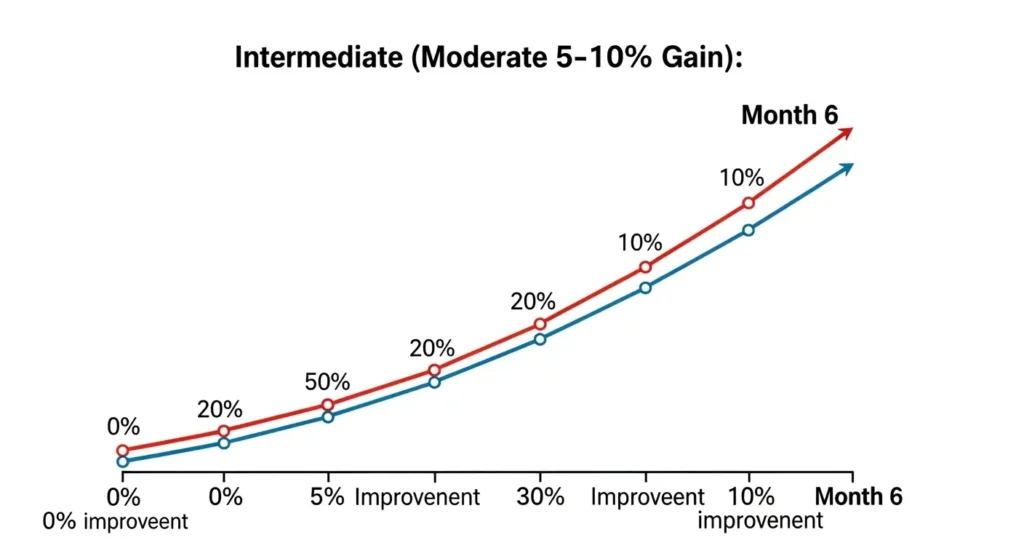
Expected Improvements by Fitness Level
Understanding realistic expectations prevents disappointment and helps assess if your training is working:
Untrained/Beginner Improvements:
- Starting VO2 Max: 30-40 mL/kg/min
- Expected increase: 15-25% over 6 months
- Timeline: Noticeable gains in first 8-12 weeks
- Example: From 35 to 42 mL/kg/min
Trained Amateur Athletes:
- Starting VO2 Max: 45-55 mL/kg/min
- Expected increase: 5-10% over 3-4 months
- Timeline: Slower, steadier improvements
- Example: From 48 to 52 mL/kg/min
Highly Trained Athletes:
- Starting VO2 Max: 55-65 mL/kg/min
- Expected increase: 2-5% over 3-4 months
- Timeline: Very slow gains, requires optimal training
- Example: From 60 to 62 mL/kg/min
Elite Athletes:
- Starting VO2 Max: 65+ mL/kg/min
- Expected increase: 1-3% if any
- At this level, small gains are significant
- Maintenance often becomes the goal
Returning from Injury/Layoff:
- Variable depending on layoff duration
- 4-week layoff: 5-10% decrease
- 12-week layoff: 15-20% decrease
- Good news: Regaining fitness is faster than building it initially
- Can often return to previous level in 6-8 weeks with proper training
Real Progress Examples
These examples illustrate typical improvements seen in NYC testing facilities:
Case Study 1: Marathon Runner
- Profile: 34-year-old female, running 4-5x/week
- Initial test: VO2 Max 42 (good for age)
- Problem: Training mostly in Zone 3, not enough easy or hard running
- Intervention: Restructured training to 80% Zone 2, 10% Zone 4, 10% Zone 5
- 16-week retest: VO2 Max 48 (+14% improvement)
- Performance: Marathon time improved from 4:15 to 3:52
Case Study 2: Cyclist Returning from Injury
- Profile: 41-year-old male, recovering from broken collarbone
- Initial test (4 months post-injury): VO2 Max 38 (down from 52 pre-injury)
- Intervention: Progressive return-to-training plan, focused on Zone 2 rebuilding
- 16-week retest: VO2 Max 49 (regained 90% of pre-injury fitness)
- Performance: Successfully returned to century rides
Case Study 3: Triathlete Hitting Plateau
- Profile: 28-year-old male, training 10-12 hours/week
- Initial test: VO2 Max 56 (excellent)
- Problem: Not improving despite high volume
- Finding: Training too much in Zone 3, insufficient recovery
- Intervention: Reduced volume 20%, made easy days truly easy, harder intervals on hard days
- 16-week retest: VO2 Max 59 (+5% improvement)
- Performance: Improved Olympic triathlon time by 6 minutes
Case Study 4: Longevity-Focused Individual
- Profile: 52-year-old male, new to structured training
- Initial test: VO2 Max 36 (below average for age)
- Intervention: Consistent Zone 2 training, 4x/week, 45-60 minutes
- 24-week retest: VO2 Max 44 (+22% improvement)
- Health impact: Resting heart rate dropped from 72 to 58 bpm
Retest Package Pricing
Most facilities offer discounted packages for multiple tests:
Standard Packages:
- 2-Test Package: $325-$450 (saves $50-100)
- 3-Test Package: $450-$650 (saves $75-150)
- 4-Test Package: $600-$850 (saves $100-200)
Annual Membership Options: Some facilities offer annual memberships including:
- Unlimited testing throughout the year
- Other performance assessments
- Coaching consultations
- Typical cost: $1,200-$2,500 annually
Best Value Strategy: Purchase a 3-test package when you begin structured training. Test at baseline, 16 weeks, and 32 weeks to track one full training cycle.
Choosing the Right NYC VO2 Max Testing Facility
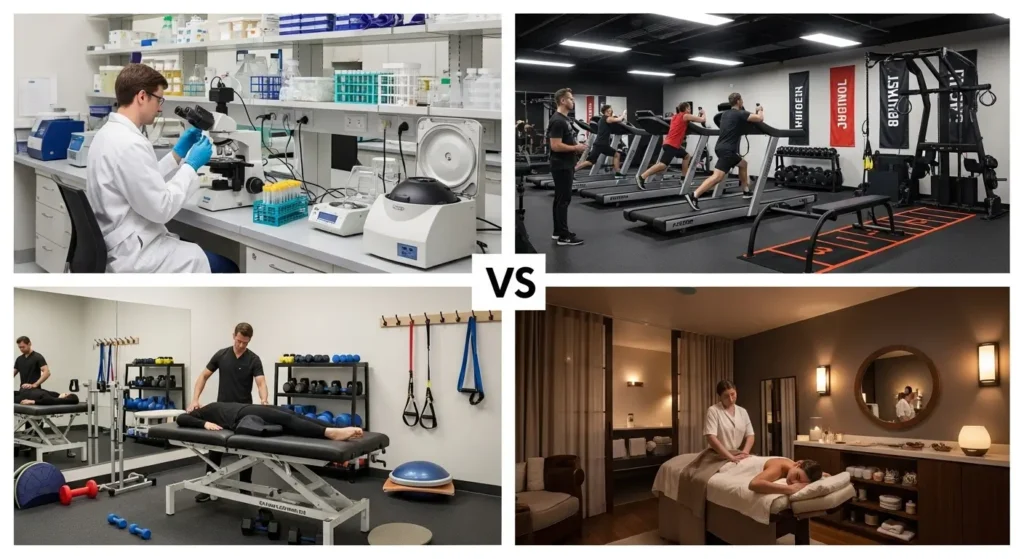
Types of Facilities Offering Testing
University and Hospital Labs:
- Pros: Medical-grade equipment, experienced clinicians, often research-based
- Cons: Clinical atmosphere, less personalized service, longer wait times
- Best for: Those who value medical environment and credentials
- Price range: $175-$250
Performance Training Centers:
- Pros: Athlete-focused, modern equipment, coaching integration available
- Cons: May be intimidating for beginners, focused on competitive athletes
- Best for: Serious athletes, competitors, those wanting coaching
- Price range: $195-$300
Physical Therapy/Sports Medicine Clinics:
- Pros: PT expertise, injury prevention focus, movement assessment integration
- Cons: May have limited testing hours, smaller facilities
- Best for: Injured athletes, return-to-sport situations, injury prevention focus
- Price range: $195-$350
Boutique Wellness Centers:
- Pros: Premium experience, comprehensive services, comfortable environment
- Cons: Higher prices, may lack sport-specific expertise
- Best for: Longevity-focused individuals, those who value experience
- Price range: $250-$400
Key Questions to Ask Before Booking
About the Test:
- What exactly is included in the price?
- How long is the total appointment?
- What biomarkers do you measure beyond VO2 Max?
- What equipment/technology do you use?
- Can I choose my testing modality (treadmill, bike, rower)?
- Can I bring my own bike?
About Results: 7. How long is the results review session? 8. When will I receive my detailed report? 9. What format is the report (PDF, online dashboard, printed)? 10. Do you provide personalized training zone recommendations? 11. Is follow-up consultation included? 12. Can I access historical data if I retest?
About Qualifications: 13. Who administers the test? (Exercise physiologist, PT, certified trainer?) 14. What are their credentials and experience? 15. How many tests do they perform weekly/monthly?
About Logistics: 16. What’s your cancellation/rescheduling policy? 17. Do you offer evening or weekend hours? 18. Is parking available? 19. Do you have shower facilities?
About Pricing: 20. Do you offer package pricing for multiple tests? 21. Is it HSA/FSA eligible? 22. Do you provide superbills for insurance? 23. Are there any additional fees?

Red Flags to Avoid
Warning Signs of Subpar Facilities:
❌ No clear pricing on website – Lack of transparency often means overpricing
❌ Vague about credentials – You should know exactly who administers your test
❌ Only measures VO2 Max – Miss out on valuable additional biomarkers
❌ Very short results review – 5 minutes isn’t enough to understand your data
❌ No follow-up support – You’re left to interpret and apply results alone
❌ Equipment looks outdated – Old technology may be less accurate or comfortable
❌ Inflexible testing protocols – One-size-fits-all approach doesn’t optimize results
❌ Pressure to buy packages immediately – Should have time to consider options
❌ No medical screening process – Safety should always come first
What Makes a Facility Premium vs. Basic
Understanding these differences helps you evaluate if premium pricing is worth it:
Premium Facilities Typically Offer:
- 15-20 minute pre-test consultation with expert
- Choice of testing modality (treadmill, bike, rower, own equipment)
- Wireless mask technology for comfort
- 7-9 biomarkers measured, not just VO2 Max
- 20-30 minute detailed results review
- Personalized training recommendations
- Digital report with graphs and benchmarking
- 30-day follow-up consultation included
- Online dashboard for progress tracking
- Comfortable recovery area with amenities
- Integration with other services (PT, coaching, nutrition)
Basic Facilities Typically Offer:
- Brief intake (5 minutes)
- Standard treadmill test only
- Traditional mask with cart and tubes
- VO2 Max score only (maybe 1-2 other metrics)
- 5-10 minute results review
- Basic printed report
- No follow-up support
- Clinical/sparse environment
Is Premium Worth It?
If you’re serious about using the data to improve performance or health, premium services provide significantly better value. The extended consultation time, comprehensive biomarkers, and follow-up support help you actually apply the information effectively.
If you only want to know your VO2 Max number out of curiosity and don’t plan to modify training, basic testing may suffice.
Common Questions About VO2 Max Testing in NYC
Test Experience Questions
Q: Is VO2 Max testing safe?
Yes, very safe when administered by qualified professionals with proper screening. You’re continuously monitored throughout the test. The test is voluntarily terminated – you control when to stop. Serious adverse events are extremely rare (less than 0.01% of tests).
Q: Will I throw up or pass out?
Very unlikely. While you’ll reach maximum effort, vomiting or passing out is rare. The progressive nature of the test allows your body to adapt. If you feel dizzy or nauseous, simply stop – no pressure to continue beyond what’s safe and comfortable.
Q: What does wearing the mask feel like?
Most people describe it like breathing through a snorkel – slightly restricted but not claustrophobic. Modern wireless masks are quite comfortable. You practice breathing through it before starting, and most people adapt within 30-60 seconds.
Q: Can I listen to music during the test?
Policies vary by facility. Some allow music at lower volumes, others prefer you don’t so they can communicate clearly. Podcasts or audiobooks are generally not recommended as you need to focus on effort.
Q: What if I can’t finish the test?
Not finishing to absolute maximum just means slightly less accurate results – you’ll still get valuable data. Many factors can prevent reaching true max (lack of sleep, stress, nutrition, etc.). The facility can note this and suggest retesting when you’re better prepared.
Q: Do I need to be in good shape already?
No. Facilities test people across all fitness levels, from deconditioned individuals to professional athletes. The test protocol is adjusted to your fitness level. Less fit individuals simply reach their maximum sooner.
Results and Application Questions
Q: When will I get my results?
You’ll receive basic results immediately after your test. Comprehensive reports are typically emailed within 24-48 hours. Some facilities provide instant access to online dashboards.
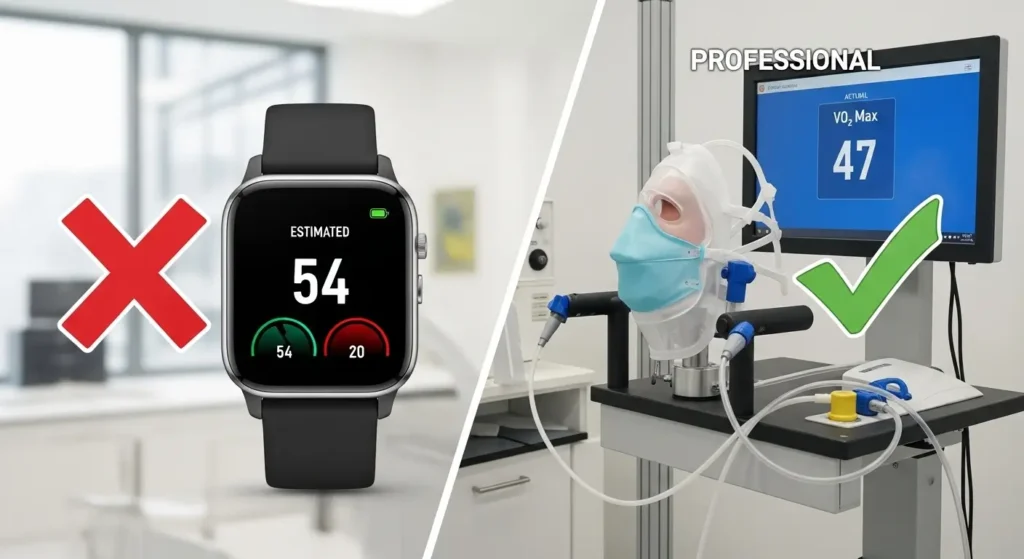
Q: What if my results are lower than my smartwatch estimate?
Very common. Fitness trackers often overestimate VO2 Max by 10-30%. They use algorithms based on heart rate patterns, not direct oxygen measurement. Your test result is your true VO2 Max – the watch estimate was inaccurate.
Q: Can I really improve my VO2 Max?
Yes, absolutely. With consistent training, most people see 5-25% improvements depending on starting fitness level. Improvements come fastest for less trained individuals. Even highly trained athletes can make small gains with optimized training.
Q: How long does it take to improve VO2 Max?
Noticeable improvements typically occur after 8-12 weeks of consistent training. Maximum gains require 16-24 weeks. The key is consistency – sporadic training produces minimal improvements.
Q: Will the results tell me what workouts to do?
Yes, if the facility provides training zone recommendations. You’ll receive heart rate zones (and often pace/power zones) for different training intensities, allowing you to structure workouts appropriately.
Preparation Questions
Q: Why can’t I have caffeine before the test?
Caffeine artificially elevates heart rate by 5-10 beats per minute and can affect breathing patterns. This skews your training zone calculations. We want your baseline physiology, not a caffeine-enhanced version.
Q: Can I take my regular medications?
Most medications are fine. Exceptions include beta-blockers (lower heart rate), bronchodilators (unless medically necessary), and stimulant medications. Always inform the facility about all medications. Never stop prescribed medication without physician approval.
Q: Should I carb-load the day before?
No need for special nutrition. Eat normally. We’re testing your physiology and training zones, not your race-day fueling strategy. Dramatic diet changes can actually affect results negatively.
Q: What if I’m sick on test day?
Always reschedule. Testing with a cold, flu, or respiratory infection produces inaccurate results and delays your recovery. Most facilities accommodate illness rescheduling without penalty.
Q: Can I test during my menstrual cycle?
Yes. Hormonal fluctuations have minimal impact on VO2 Max. Some women prefer avoiding the first day or two of their period when they feel worst, but testing is fine any time in your cycle.
Logistics Questions
Q: How much does VO2 Max testing cost in NYC?
$175-$400 for a single test, depending on facility type and services included. Average is around $195-$275. Package deals for multiple tests offer better value (typically $450-$650 for 3 tests).
Q: Is VO2 Max testing covered by insurance?
Most facilities are out-of-network, but testing is typically eligible for HSA/FSA reimbursement. Request a superbill to submit to your insurance for potential partial reimbursement.
Q: How do I choose between testing facilities?
Consider: (1) What biomarkers they measure, (2) Consultation and review time included, (3) Staff credentials, (4) Technology used, (5) Follow-up support, (6) Location convenience, (7) Total price including all services.
Q: What should I wear to my test?
Standard athletic clothing – running shorts or leggings, moisture-wicking shirt, sports bra for women, and appropriate athletic shoes. Avoid cotton (doesn’t wick sweat). Dress as you would for a hard workout.
Q: Do facilities have showers?
Some do, some don’t. Call ahead if this matters to you. You can also bring a change of clothes and towel.
Q: Can someone come with me?
Almost all facilities allow guests in the waiting area. Some allow them to watch your test for encouragement. Call ahead to confirm their policy.
Retest Questions
Q: How often should I retest?
Minimum 12-16 weeks between tests for meaningful results. Most athletes retest every 3-4 months (3-4 times per year). Twice yearly is sufficient for general fitness/longevity focus.
Q: Do I get a discount for retesting?
Most facilities offer package pricing that reduces per-test cost. A 3-test package typically saves $75-$150 versus buying tests individually.
Q: What if my retest shows no improvement?
First, don’t panic. Small changes might not show in a single retest. Consider: (1) Training consistency over the period, (2) Life stress and recovery, (3) Sleep quality, (4) Nutrition adequacy. Lack of improvement suggests training modifications needed – discuss with the facility or a coach.
Comparison Questions
Q: How is this different from a stress test at a cardiologist?
Medical stress tests screen for heart disease and typically stop at 85% max heart rate. VO2 Max tests push to maximum effort (95-100% max HR) to measure peak capacity. Different purposes, though similar equipment.
Q: Why not just use my Apple Watch or Garmin estimate?
Wearable estimates have ±15-25% error margins. For a metric this critical to health and training, direct measurement (±2% error) is worth the investment. Watches also can’t measure training zones, RMR, or fat oxidation.
Q: What’s the difference between VO2 Max and lactate threshold testing?
VO2 Max measures maximum oxygen consumption. Lactate threshold measures the intensity where lactate accumulates faster than clearance (your sustainable race pace). They’re related but different. Some facilities measure both during one test; others require separate tests.
Q: Is this the same as a DEXA scan?
No. DEXA scans measure body composition (fat, muscle, bone density). VO2 Max tests measure cardiovascular fitness. Many facilities offer both as they’re complementary metrics. Often bundled together for comprehensive assessment.
Taking Action: Getting Your VO2 Max Tested in NYC
Step 1: Decide If Testing Is Right for You

VO2 Max testing is most valuable if you:
- Train regularly and want to optimize your approach
- Are preparing for endurance events
- Want objective health metrics beyond basic vitals
- Have been training but not seeing expected results
- Are returning from injury and need baseline data
- Are serious about longevity and healthspan
- Want to stop guessing and start training with precision
Testing may not be necessary if you:
- Are completely new to exercise (start training first, test in 3-4 months)
- Only exercise casually without performance goals
- Have medical contraindications
- Aren’t willing to apply the data to your training
Step 2: Research NYC Facilities
Use the criteria in this guide to identify 2-3 facilities that match your needs:
Create a Comparison Spreadsheet:
- Facility name and location
- Total price (including all services)
- Biomarkers measured
- Consultation/review time
- Technology used
- Staff credentials
- Package pricing options
- Follow-up support
- Convenience factors (hours, location, parking)
Check Reviews:
- Google reviews for overall satisfaction
- Sport-specific forums for athlete feedback
- Ask your running club, cycling group, or gym for recommendations
Step 3: Contact Facilities with Questions
Before booking, call or email with any remaining questions:
- Confirm exactly what’s included in the price
- Ask about their experience with your sport/goals
- Verify cancellation policy
- Check availability for your preferred time
Step 4: Book Your Test
Choose Your Date Strategically:
- Not during high-stress work periods
- Not immediately before/after major life events
- Not during illness or injury
- Allow 2-4 weeks for preparation if starting new training
Select Optimal Timing:
- Morning if you’re a morning person
- Afternoon if you train in afternoons
- Weekend if work makes weekday appointments difficult
Step 5: Prepare Thoroughly
Follow the preparation guidelines in this article:
- Mark your calendar with 48-hour, 24-hour, and 4-hour preparation checkpoints
- Set reminders for caffeine avoidance
- Plan your test-day nutrition and schedule
- Prepare clothing and equipment the night before
- Get adequate sleep
Step 6: Maximize the Testing Experience
During Your Appointment:
- Arrive 10 minutes early (stress affects results)
- Ask questions during pre-test consultation
- Communicate about mask fit and comfort
- Push appropriately hard (but safely) during test
- Take notes during results review
- Ask for clarification on anything unclear
After Your Test:
- Review your emailed report carefully
- Create a training plan using your zones
- Set calendar reminder for retest in 12-16 weeks
- Share results with coach if you have one
Step 7: Apply Your Results
Immediately (Week 1):
- Input your training zones into your watch/bike computer
- Share zones with training partners who pace with you
- Plan your week’s training with appropriate zone distribution
Short Term (Weeks 2-8):
- Track adherence to zone guidelines
- Notice how prescribed zones feel
- Adjust other life factors (sleep, nutrition, stress) to support training
- Use 30-day follow-up consultation if included
Medium Term (Weeks 8-16):
- Assess if you’re seeing expected performance improvements
- Schedule retest for week 16-20
- Modify training if results aren’t matching expectations
Long Term (6+ months):
- Track VO2 Max trends over multiple tests
- Celebrate improvements
- Adjust training approach based on what works
- Consider annual testing as health screening
Final Thoughts: The Value of Knowing Your VO2 Max
VO2 Max testing represents one of the best investments you can make in your athletic performance and long-term health. For $175-$400, you receive:
Objective Health Data: VO2 Max is a better predictor of longevity than cholesterol, blood pressure, or BMI. Tracking it over years provides valuable health insights.
Training Precision: Stop guessing about training intensity. Know exactly what heart rate ranges produce specific adaptations.
Performance Optimization: Understanding your current fitness ceiling helps you set realistic goals and track progress objectively.
Injury Prevention: Training in appropriate zones reduces overtraining risk and subsequent injury.
Motivation: Watching your VO2 Max improve over months of training provides tangible proof that your work is paying off.
Whether you’re a competitive athlete chasing podiums or a health-conscious individual focused on longevity, VO2 Max testing transforms abstract concepts like “aerobic capacity” into concrete, actionable data.
The facilities across New York City offer various options to match different needs and budgets. Use this guide to make an informed choice, prepare properly, and maximize the value of your investment.
Your cardiovascular system is your body’s engine. Isn’t it time you knew exactly how powerful it is – and how much stronger you can make it?
Ready to get started? Research facilities in your area, compare options using the criteria in this guide, and book your first VO2 Max test. Your future self – whether crossing finish lines or simply living a longer, healthier life – will thank you.



Pingback: Emergency Room Cost in New York: 2026 Guide (Save Big!)