
If your dentist just recommended deep cleaning and quoted you anywhere from $800 to $1,600, you’re probably feeling some sticker shock right now. That’s four to eight times more than a regular cleaning costs, and it’s natural to wonder what you’re actually paying for—and whether there’s any way to make it more affordable.
This guide breaks down everything New York residents need to know about teeth deep cleaning costs. You’ll learn what determines pricing across different parts of the state, how insurance affects your out-of-pocket expenses, what payment options exist, and where to find affordable alternatives if money is tight. Most importantly, you’ll get the information you need to make confident decisions about your dental health without feeling pressured or confused.
This is an independent educational resource. We don’t promote specific dental practices or products—just straight facts about what deep cleaning costs in New York and how to navigate your options.
Table of Contents
Quick Answer: What Does Teeth Deep Cleaning Cost in New York?
Let’s start with the numbers you came here to find.
At-a-Glance Pricing:
- Per quadrant cost: $200-$400
- Full mouth (4 quadrants): $800-$1,600
- With typical insurance: $240-$640 out-of-pocket
- Without insurance: Full price $800-$1,600
Quick Reference Pricing Table
| Treatment Scope | Without Insurance | With Insurance (50% coverage) | With Insurance (80% coverage) |
|---|---|---|---|
| 1 Quadrant | $200-$400 | $100-$200 | $40-$80 |
| 2 Quadrants | $400-$800 | $200-$400 | $80-$160 |
| 4 Quadrants (Full) | $800-$1,600 | $400-$800 | $160-$320 |
Keep in mind these are general ranges. Your actual cost depends on where you live in New York, your insurance coverage, how severe your gum disease is, and which provider you choose. We’ll break down all these factors in detail throughout this guide.
Understanding Teeth Deep Cleaning: What You’re Paying For
Before diving deeper into costs, it helps to understand exactly what deep cleaning is and why it costs significantly more than the regular cleaning you’re used to.
What Is Teeth Deep Cleaning?
The clinical name for deep cleaning is scaling and root planing. It’s not a cosmetic procedure—it’s a medical treatment for periodontal disease, commonly known as gum disease. The purpose is to remove tartar and harmful bacteria that have accumulated below your gum line, where regular brushing and flossing can’t reach.
Unlike regular cleanings that maintain healthy gums, deep cleaning treats active disease. When bacteria invade the space between your gums and teeth, they create pockets that deepen over time. If left untreated, these pockets lead to bone loss, tooth mobility, and eventually tooth loss. Deep cleaning stops this progression by cleaning out the infection and allowing your gums to heal and reattach to your teeth.
Deep Cleaning vs. Regular Cleaning: Key Differences
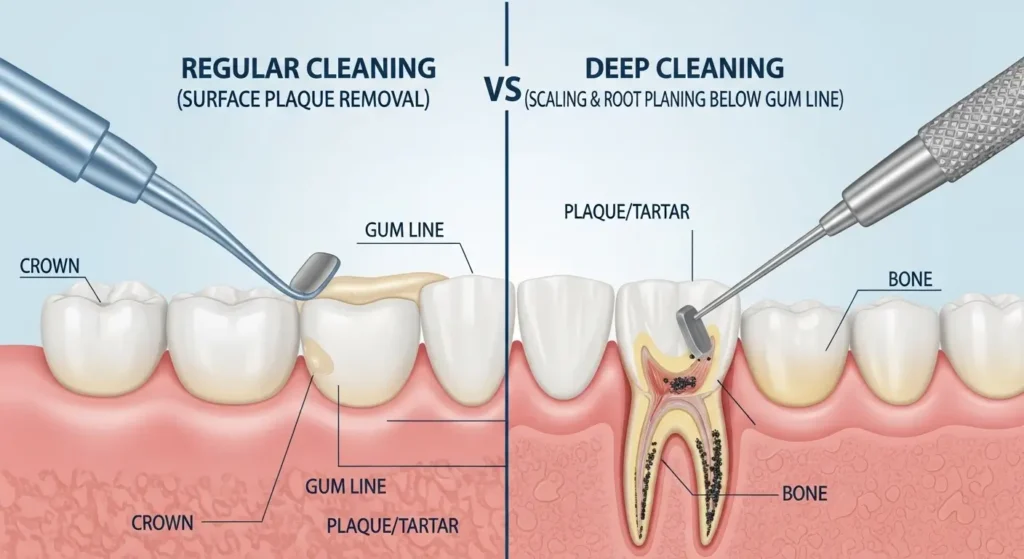
Understanding the difference between these two procedures explains the cost gap.
Regular Cleaning (Prophylaxis):
- Preventive maintenance for healthy gums
- Cleans above the gum line only
- Takes 30-45 minutes
- Cost: $75-$200 in New York
- Recommended every 6 months
- No anesthesia needed
- Minimal discomfort
Deep Cleaning (Scaling & Root Planing):
- Therapeutic treatment for gum disease
- Cleans below the gum line into periodontal pockets
- Takes 2-4 hours total (usually split into 2 appointments)
- Teeth deep cleaning cost in New York: $800-$1,600 for full mouth
- Typically one-time treatment, then maintenance schedule begins
- Requires local anesthesia
- More intensive procedure with specialized instruments
The dramatic difference in time, complexity, and clinical expertise required explains why deep cleaning costs three to four times more than preventive cleaning.
The Four-Quadrant System Explained
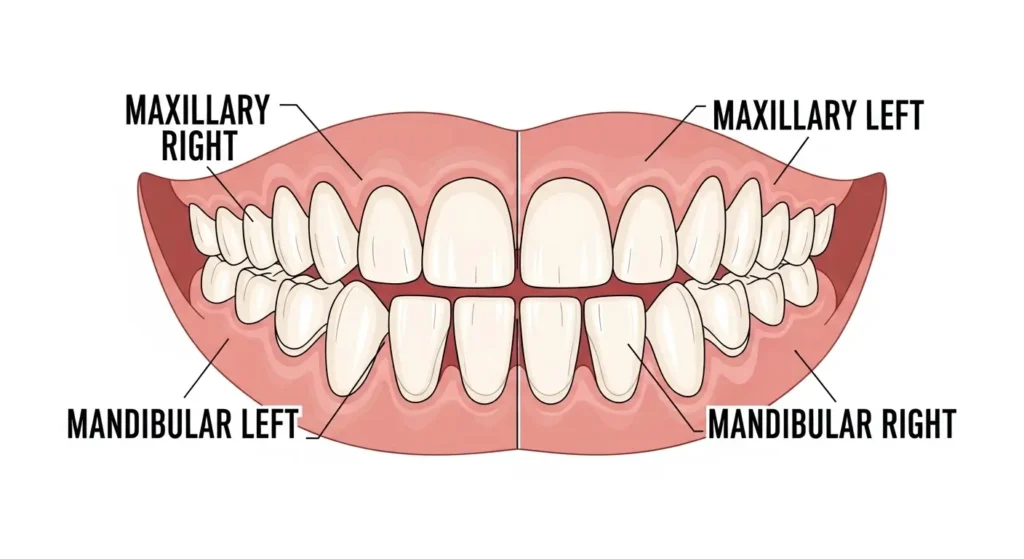
When dentists talk about deep cleaning costs, they price it per “quadrant.” This is important to understand because not everyone needs all four quadrants treated.
Your mouth is divided into four sections:
- Upper right quadrant
- Upper left quadrant
- Lower right quadrant
- Lower left quadrant
Each quadrant contains 6-8 teeth depending on whether you’ve had wisdom teeth removed. The reason pricing works this way is that gum disease doesn’t always affect your entire mouth equally. You might only have disease in two quadrants, which would cut your total cost in half compared to full mouth treatment.
Your dentist determines which quadrants need treatment by measuring pocket depths at six points around each tooth. These measurements, combined with X-rays showing bone loss, create a clinical picture of where disease exists and how severe it is.
When Is Deep Cleaning Medically Necessary?
This is a crucial question because it affects whether you should proceed with treatment and whether insurance will cover it. Deep cleaning becomes necessary when certain clinical indicators are present.
Clinical Indicators:
- Periodontal pocket depths of 4mm or greater (healthy gums measure 1-3mm)
- Bleeding when the dentist or hygienist probes your gums
- Bone loss visible on X-rays
- Tartar buildup below the gum line that you can’t remove at home
- Gum recession exposing tooth roots
- Teeth that feel loose or mobile
The Diagnostic Process:
Before any dentist can legitimately recommend deep cleaning, they must conduct a comprehensive periodontal examination. This includes measuring pocket depths at six points around every tooth—that’s over 150 measurements for a full mouth. They also need current X-rays showing the level of bone around your teeth.
This documentation serves two purposes. First, it confirms the diagnosis is based on objective clinical evidence rather than subjective opinion. Second, insurance companies require this documentation to approve coverage, as they only cover medically necessary procedures.
Your Rights as a Patient:
You have every right to request your specific pocket depth measurements. You can ask to see the X-rays showing bone loss. If you’re uncertain about the diagnosis, seeking a second opinion is completely appropriate, especially for treatment costing $800-$1,600. A legitimate diagnosis should be consistent across different providers who examine you independently.
Understanding whether deep cleaning is truly necessary helps you distinguish between dentists making evidence-based recommendations and those potentially overselling treatment.
What Happens During Deep Cleaning
Knowing what to expect during the procedure helps you understand what you’re paying for.
Appointment 1 (Usually 2 Quadrants):
Most dentists treat one side of your mouth at the first appointment—either the entire right side or entire left side. This approach allows you to chew normally on the untreated side while the treated side heals.
The procedure begins with local anesthesia to numb the treatment area. Once you’re numb, the hygienist or dentist uses specialized instruments called scalers and curettes to remove tartar deposits from below your gum line. This is the “scaling” part.
Next comes “root planing,” where they smooth the surfaces of your tooth roots. Rough root surfaces provide ideal attachment points for bacteria, so smoothing them makes it harder for bacteria to recolonize the area and easier for your gums to heal and reattach.
The entire process takes 1-2 hours depending on how much tartar has accumulated and how deep the pockets are.
Recovery After First Appointment:
Your gums will feel tender and sensitive for 2-3 days. Some bleeding when brushing is normal during this healing period. Most people manage discomfort with over-the-counter pain relievers and avoid hard, crunchy foods for a few days.
Appointment 2 (Remaining 2 Quadrants):
Typically scheduled 1-2 weeks after the first appointment, this visit treats the other side of your mouth using the same process. Spacing the appointments allows healing while ensuring complete treatment.
Follow-up Evaluation:
About 4-6 weeks after completing treatment, you’ll return for re-evaluation. The dentist re-measures your pocket depths to assess healing. Successful treatment shows reduced pocket depths, less bleeding, and healthier gum tissue. This visit determines your ongoing maintenance schedule.
Teeth Deep Cleaning Cost by New York Region
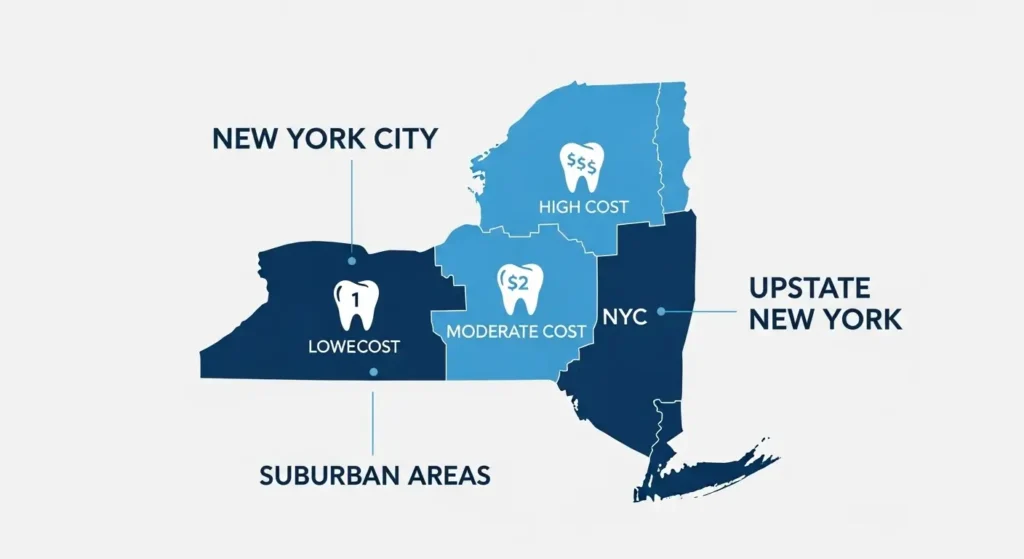
One of the most significant factors affecting your cost is where you live in New York. The geographic variation is substantial—Manhattan residents often pay 40-50% more than people in upstate cities for the identical procedure.
New York City Deep Cleaning Costs
Manhattan:
The teeth deep cleaning cost in New York City’s Manhattan borough ranges from $1,100 to $1,600 for full mouth treatment, or $275-$400 per quadrant. These are the highest prices in the state, driven by commercial real estate costs, higher overhead, and demographic factors.
Within Manhattan, neighborhood variations exist:
- Highest costs: Upper East Side, Midtown, TriBeCa ($350-$400 per quadrant) where practices cater to affluent demographics and face premium rent
- Moderate costs: Upper West Side, Chelsea, Greenwich Village ($300-$350 per quadrant) with established practices and competitive markets
- Lower costs: Washington Heights, Inwood, East Harlem ($250-$300 per quadrant) serving more diverse economic communities
Brooklyn:
Brooklyn offers more affordable options with full mouth deep cleaning ranging from $900 to $1,400, or $225-$350 per quadrant. That’s roughly 15-20% less than Manhattan.
Brooklyn’s pricing also varies by neighborhood:
- Higher-cost areas: Park Slope, DUMBO, Williamsburg ($300-$350 per quadrant) mirror Manhattan’s gentrified neighborhoods
- Mid-range areas: Brooklyn Heights, Carroll Gardens, Cobble Hill ($250-$300 per quadrant) offer balanced pricing
- More affordable: Flatbush, East New York, Brownsville ($225-$275 per quadrant) provide budget-friendly options
Queens:
Queens typically falls in the $800-$1,300 range for full mouth treatment, or $200-$325 per quadrant. The borough offers some of New York City’s most competitive pricing while maintaining quality care.
Neighborhoods like Astoria and Long Island City near Manhattan tend toward higher prices, while areas like Jamaica, Flushing, and Far Rockaway offer more affordable options. Overall, expect to pay 20-30% less than Manhattan rates.
Bronx:
The Bronx typically offers the most affordable teeth deep cleaning costs in New York City, ranging from $800 to $1,200 for full mouth treatment, or $200-$300 per quadrant. Lower commercial rents and demographics create competitive pricing with less variation between neighborhoods than other boroughs.
Staten Island:
Staten Island sits in the middle range at $860-$1,300 for full mouth treatment, or $215-$325 per quadrant. With fewer dental practices than other boroughs, there’s less price competition but also less extreme pricing.
Upstate and Suburban New York Costs
Long Island (Nassau & Suffolk Counties):
Long Island’s teeth deep cleaning cost ranges from $900 to $1,500 for full mouth treatment, or $225-$375 per quadrant. The North Shore communities with higher incomes see pricing similar to Manhattan ($300-$375 per quadrant), while South Shore and eastern Long Island areas offer more moderate pricing ($225-$300 per quadrant).
Westchester County:
Westchester mirrors Manhattan in many ways, with full mouth treatment costing $1,000-$1,500, or $250-$375 per quadrant. Affluent communities like Scarsdale, Rye, and Chappaqua see higher pricing, while lower Westchester cities like Yonkers and Mount Vernon offer more affordable options.
Albany Capital Region:
Albany and surrounding cities provide significantly lower costs: $720-$1,100 for full mouth treatment, or $180-$275 per quadrant. That’s 30-40% less than Manhattan, making upstate an attractive option if you live in the region.
Buffalo & Western New York:
Buffalo offers some of the state’s most affordable deep cleaning: $700-$1,000 for full mouth treatment, or $175-$250 per quadrant. The lower cost of living translates directly to lower dental care costs.
Rochester:
Rochester’s pricing is comparable to Buffalo: $720-$1,040 for full mouth treatment, or $180-$260 per quadrant. Multiple dental schools and teaching hospitals in the region create competitive pricing pressure.
Syracuse:
Syracuse falls in the same affordable range: $700-$1,060 for full mouth treatment, or $175-$265 per quadrant. Central New York residents enjoy some of the state’s lowest dental costs while still accessing quality care.
Why Costs Vary by Location
Several factors drive these geographic variations in teeth deep cleaning costs across New York:
Commercial Real Estate: Manhattan dentists pay $80-$200+ per square foot annually for office space. Buffalo dentists might pay $15-$30 per square foot. This overhead difference must be recovered through service pricing.
Cost of Living: Staff salaries reflect local living costs. Dental hygienists in Manhattan earn $85,000-$110,000 annually, while those in Buffalo earn $65,000-$80,000. These labor cost differences affect pricing.
Competition Density: Areas with many dental practices competing for patients see more competitive pricing. Manhattan has over 3,000 dentists, but also millions of residents. Less dense areas may have less competition.
Demographic Income Levels: Practices naturally price according to what their local market can bear. Affluent areas support premium pricing, while working-class neighborhoods require competitive rates to attract patients.
Proximity to Dental Schools: Cities with dental schools (Buffalo, Syracuse, Albany, NYC) see downward pricing pressure as dental schools offer significantly discounted care, forcing private practices to remain somewhat competitive.
Factors That Determine Your Deep Cleaning Cost
Beyond location, several other variables affect how much you’ll pay for teeth deep cleaning in New York. Understanding these helps you evaluate quotes and make informed decisions.
Severity of Periodontal Disease
The extent and severity of your gum disease directly impacts cost.
Mild Periodontitis:
If you have early-stage disease with pocket depths of 4-5mm and minimal bone loss on X-rays, you might only need one or two quadrants treated rather than your full mouth. This scenario costs $200-$800 total, significantly less than full mouth treatment. Your dentist might also recommend trying improved home care first to see if mild cases can be reversed without intensive treatment.
Moderate Periodontitis:
Moderate disease presents pocket depths of 5-7mm with visible bone loss on X-rays. Most patients at this stage need three or four quadrants treated, costing $900-$1,800. Some dentists recommend additional antimicrobial treatments to improve outcomes, which add $50-$150 to the total cost.
Severe/Advanced Periodontitis:
Severe disease means pocket depths of 7mm or more with significant bone loss. All four quadrants require treatment, and additional procedures often become necessary. The base cost of $1,200-$1,600 for scaling may be supplemented with:
- Local antibiotic therapy like Arestin placed in the deepest pockets: $50-$150 per site
- Laser-assisted periodontal therapy: $200-$500 per quadrant
- Full mouth disinfection protocols: $150-$400
Total costs for severe cases can reach $2,000-$2,500 when including these adjunctive treatments.
Number of Quadrants Requiring Treatment
This is perhaps the most variable factor in determining your teeth deep cleaning cost in New York. Not every patient needs all four quadrants treated.
Gum disease often affects certain areas more than others. Heavy tartar buildup might be concentrated on your lower front teeth or around your molars, leaving other areas relatively healthy. Your dentist determines this through comprehensive pocket measurements—six measurements per tooth throughout your mouth.
Common scenarios:
- Lower front teeth only: 1 quadrant = $200-$400
- Lower arch entirely: 2 quadrants = $400-$800
- One full side (upper and lower right or left): 2 quadrants = $400-$800
- Three quadrants with one area healthy: 3 quadrants = $600-$1,200
- Full mouth with disease throughout: 4 quadrants = $800-$1,600
Always ask your dentist specifically which quadrants they’re recommending for treatment and why. Request to see the pocket measurements for different areas of your mouth. This transparency helps you understand whether the recommendation is appropriate and allows you to potentially treat the most severely affected areas first if budget is a concern.
Anesthesia and Sedation Options
The type of anesthesia you receive significantly affects the total cost of teeth deep cleaning in New York.
Local Anesthesia (Standard):
Local anesthetic injections that numb the treatment area are typically included in the per-quadrant price. This is the standard approach and what most people receive. The numbing lasts 2-4 hours after your appointment, affecting your ability to eat or drink normally during that time, but it wears off completely the same day.
Nitrous Oxide (Laughing Gas):
If you experience dental anxiety, nitrous oxide provides relaxation and reduced awareness of the procedure while you remain conscious and responsive. This costs an additional $75-$200 per appointment beyond the base deep cleaning price. The effects wear off within minutes of removing the mask, so you can drive yourself home. Many New York dental practices offer this option for anxious patients.
Oral Sedation:
For patients with more significant anxiety, oral sedation involves taking a pill before your appointment that produces moderate sedation. You’ll feel drowsy and may not remember much of the procedure. This adds $150-$400 per appointment to your cost. You must have someone drive you to and from the appointment, as the effects last several hours.
IV Sedation:
Intravenous sedation producing “twilight sleep” is rarely used for routine deep cleaning, as it’s more commonly reserved for oral surgery. If needed, it costs $500-$1,000+ and requires an anesthesiologist or certified registered nurse anesthetist to administer and monitor. This would only be considered for patients with severe dental phobia or special needs.
Most people do fine with just local anesthesia. The procedure isn’t particularly painful when properly numbed—more uncomfortable than painful. If you’re anxious, discuss nitrous oxide with your dentist rather than jumping to more expensive sedation options.
Provider Type and Expertise
Who performs your deep cleaning affects the teeth deep cleaning cost in New York you’ll pay.
General Dentist:
Most deep cleaning is performed by general dentists or dental hygienists working under their supervision. This is appropriate for the majority of cases, especially mild to moderate periodontitis. Pricing falls in the standard ranges we’ve discussed: $200-$400 per quadrant depending on location.
Periodontist (Specialist):
Periodontists are dentists who completed additional specialty training in gum disease treatment. They typically charge 10-20% more than general dentists—$220-$480 per quadrant in most of New York. This premium reflects their additional expertise and training.
When should you see a periodontist instead of a general dentist? Consider a specialist for:
- Severe or aggressive periodontitis
- Deep pockets (7mm or greater)
- Significant bone loss
- Previous deep cleaning that failed to improve the condition
- Complex medical history (uncontrolled diabetes, history of radiation therapy, immunocompromised)
- Need for additional procedures like gum grafting or bone grafting
For straightforward cases of mild to moderate disease, a general dentist provides excellent care at lower cost. For complex cases, the specialist’s expertise may justify the higher fee.
Practice Type Variations:
The business model of the dental practice also influences pricing:
- Solo private practices: Mid-range pricing, personalized care, established relationships
- Group practices: Can offer lower prices due to shared overhead and economies of scale
- Corporate dental chains: Often competitive pricing with volume-based business models, though consistency varies by location
- Specialty periodontal practices: Premium pricing but highest expertise for severe cases
- Academic/teaching practices: Can be lower due to educational mission and resident involvement
Technology and Treatment Methods
Modern dentistry offers various technologies and approaches to deep cleaning, each with different cost implications.
Traditional Hand Instruments:
Manual scalers and curettes have been the gold standard for decades. These specialized hand tools allow the dentist or hygienist to feel the tooth surface and remove deposits with precision. There’s no additional cost beyond the base price, and this time-tested method remains highly effective. Many experienced clinicians prefer hand instruments for their tactile feedback.
Ultrasonic Scaling:
Ultrasonic scalers use high-frequency vibrations to break up tartar deposits. Many practices now use ultrasonics in combination with hand instruments. The vibrating tip is cooled by a water spray, making the process more comfortable for some patients. This technology might add $50-$100 to your total cost, though many practices include it in their standard fee. It’s faster than hand scaling alone and can be more comfortable, though it creates more aerosol spray.
Laser-Assisted Periodontal Therapy:
Some dentists offer laser treatment as an adjunct to traditional deep cleaning. Marketing often emphasizes benefits like less bleeding, faster healing, and bacterial reduction. The evidence on whether lasers provide significant advantages over traditional scaling is mixed in the scientific literature.
The cost impact is substantial: $200-$500 per quadrant in addition to standard deep cleaning fees. That means laser-assisted treatment could add $800-$2,000 to your total cost for full mouth treatment.
Most dental insurance plans don’t cover the laser premium, considering it experimental or not medically necessary. If cost is a concern, traditional scaling and root planing provides excellent outcomes without this additional expense. If your dentist recommends laser therapy, ask why they believe it’s necessary for your specific case and whether traditional treatment alone would be effective.
Antimicrobial Irrigation:
Flushing periodontal pockets with antimicrobial solutions is a standard practice at many offices. This typically costs $25-$75 if charged separately, though many practices include it in their standard protocol. Solutions like chlorhexidine or diluted povidone-iodine help reduce bacteria immediately after scaling.
Local Antibiotic Placement:
For particularly deep pockets that don’t respond well to scaling alone, dentists sometimes place time-release antibiotics directly into the pocket. Brand names include Arestin and Atridox. These controlled-release medications continue fighting bacteria for days or weeks after placement.
Cost ranges from $50-$150 per tooth or site. This is typically reserved for isolated problem areas rather than used throughout your mouth. Insurance coverage varies—some plans cover it, others don’t. It’s not necessary for every patient, only those with stubborn deep pockets that need extra help healing.
Initial Diagnostic Costs
Before deep cleaning can happen, your dentist must diagnose the extent of your periodontal disease. These diagnostic procedures come with their own costs.
Comprehensive Periodontal Exam:
This examination involves measuring and recording pocket depths at six points around every tooth—that’s over 150 measurements for a full set of teeth. It also includes assessment of gum recession, tooth mobility, and bleeding patterns. The cost ranges from $75-$200 depending on the practice and location in New York.
First-time patients at a practice usually need this comprehensive exam. If you’re an established patient who receives regular care, your dentist may already have recent measurements on file.
Full-Mouth X-Rays:
X-rays are essential for seeing bone levels around your teeth. Periodontal disease destroys bone, and this destruction is only visible on X-rays. Without this documentation, there’s no way to know the severity of your condition or whether insurance will cover treatment.
Options include:
- Panoramic X-ray (shows all teeth in one image): $75-$150
- Full periapical series (individual X-rays of each tooth): $100-$250
- Both may be taken for comprehensive assessment
Most dental insurance covers X-rays once per year, so if you’ve had them recently, you might not need new ones. However, if your last X-rays are more than a year old or didn’t include the specific views needed for periodontal assessment, new ones will be necessary.
Total Pre-Treatment Costs:
If you’re a new patient without recent records, expect to pay $150-$450 for the initial exam and X-rays before any deep cleaning begins. This diagnostic phase is separate from the treatment cost. If you’re an established patient with recent X-rays, these costs are lower or eliminated.
Some practices include the periodontal exam in the total deep cleaning fee, while others bill it separately. Always ask for a complete breakdown so you understand whether quoted prices include or exclude diagnostic procedures.
Dental Insurance Coverage for Deep Cleaning in New York
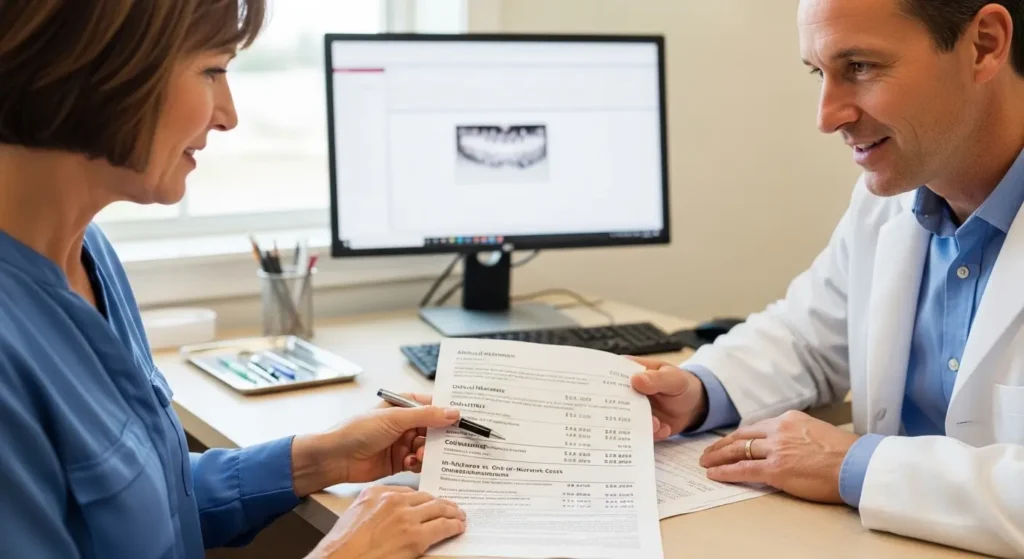
For the majority of New Yorkers with dental insurance, understanding how coverage works for teeth deep cleaning is critical to predicting your out-of-pocket costs.
How Dental Insurance Classifies Deep Cleaning
Dental insurance categorizes procedures into three main groups, each with different coverage levels:
Preventive Services: Regular cleanings, exams, X-rays—usually covered at 80-100% with no deductible
Basic Services: Fillings, simple extractions—typically covered at 70-80% after deductible
Major Services: Crowns, bridges, dentures—generally covered at 50% after deductible
Deep cleaning falls into either the Basic or Major category depending on your specific plan. Most plans classify it as Basic and cover it at 70-80%, though some plans treat it as Major and cover only 50%.
The insurance company requires specific procedure codes for billing. Deep cleaning uses code D4341 for “periodontal scaling and root planing, per quadrant.” This coding communicates exactly what procedure was performed and allows the insurance company to determine coverage.
Common New York Insurance Plans and Typical Coverage
While specific coverage varies based on your employer’s chosen plan level, here are general coverage patterns for major dental insurance carriers in New York:
Delta Dental:
Delta Dental is one of the most common dental insurance providers in New York. Most Delta Dental plans cover deep cleaning at 50-80% of the allowed amount. Annual maximums typically range from $1,000 to $2,000, with deductibles of $50-$100. Plans usually limit deep cleaning coverage to once every 24 months per quadrant, and pre-authorization is generally required before treatment.
Aetna Dental:
Aetna dental plans commonly cover deep cleaning at 50% as a Basic procedure. Annual maximums run $1,000-$1,500 with $50 deductibles being standard. Frequency limitations typically restrict coverage to once per 24 months. Some plans require pre-authorization while others simply need proper documentation.
Cigna Dental:
Cigna’s coverage for teeth deep cleaning in New York varies widely based on plan level, ranging from 50% to 80%. Annual maximums span $1,000-$2,500 depending on the employer’s chosen plan. Deductibles of $50-$100 are standard. Pre-authorization is often required, and frequency limits apply.
MetLife (MetDental):
MetLife plans typically cover deep cleaning at 50% of the allowed amount as a Basic service. Annual maximums usually fall in the $1,000-$2,000 range with $50-$100 deductibles. Coverage is generally limited to once every two years per quadrant. Pre-authorization is recommended before proceeding.
Guardian:
Guardian plans show more variation, with coverage ranging from 50-80% depending on plan design. Annual maximums of $1,000-$2,000 are typical with $50-$100 deductibles. Frequency limitations vary by plan, so checking your specific benefits is important.
United Healthcare Dental:
United Healthcare generally covers deep cleaning at 50% as a Basic procedure. Annual maximums typically range from $1,000-$1,500 with standard $50 deductibles. The 24-month frequency limitation is common, and pre-authorization is typically required.
EmblemHealth:
Popular among New York City government employees and union workers, EmblemHealth plans typically cover deep cleaning at 50-70%. Annual maximums range from $1,000-$2,000. Pre-authorization is required for coverage approval.
The takeaway: most plans cover 50-80% of teeth deep cleaning costs in New York, but you need to verify your specific plan details. Never assume coverage without checking.
Understanding Key Insurance Terms
Insurance terminology can be confusing. Here’s what the key terms mean for your wallet:
Annual Maximum:
This is the most your insurance plan will pay for all dental care in a calendar year. Common amounts are $1,000, $1,500, or $2,000. Once you hit this maximum, you pay 100% of any additional dental costs until the next January when it resets.
Example: Your plan has a $1,500 annual maximum. You’ve already used $300 this year for other dental work. You need $1,200 worth of deep cleaning. Your plan can only pay $1,200 toward it since you have $1,200 remaining of your $1,500 maximum. If your plan covers 50%, it will pay $600, and you’ll pay $600. The plan would pay more except you’re bumping against the annual maximum.
Deductible:
This is the amount you must pay out of pocket each year before your insurance begins paying for Basic and Major services. Preventive services like regular cleanings usually don’t have a deductible. Common deductible amounts are $50-$100 per person per year.
Example: You have a $50 deductible that you haven’t met this year. Your deep cleaning costs $1,200, and your plan covers 50%. First, you pay the $50 deductible. Then the remaining $1,150 is split 50/50, so insurance pays $575 and you pay $575. Your total out-of-pocket is $625 ($50 deductible plus $575 coinsurance).
Coinsurance Percentage:
This is the percentage split between what the insurance pays and what you pay for covered services. “80% coverage” means the plan pays 80% and you pay 20%. “50% coverage” means you each pay half.
The math: If your teeth deep cleaning cost in New York is $1,200 and you have 80% coverage, the insurance pays $960 and you pay $240 (plus any deductible).
Frequency Limitations:
Insurance companies limit how often they’ll pay for certain procedures. For deep cleaning, the most common limitation is once every 24 months per quadrant. This means each quadrant has its own 24-month clock.
Example: You had your lower right quadrant treated in January. Your insurance won’t cover that same quadrant again until January two years later. However, if you need your upper left quadrant treated six months later, that’s a different quadrant with its own 24-month clock, so it would be covered.
This frequency limitation affects people who might need retreatment if their disease doesn’t respond well or if they develop new problems in already-treated areas.
Pre-authorization (Pre-certification):
Many insurance plans require approval before deep cleaning can be covered. Your dentist submits clinical information—X-rays, pocket measurements, and a narrative explaining the diagnosis—to the insurance company for review. The insurer evaluates whether the treatment is medically necessary based on their coverage criteria.
This process takes 1-3 weeks typically. The benefit is knowing your exact coverage before treatment. The downside is the waiting period. If your pre-authorization is denied, you can appeal with additional documentation or decide to proceed and pay out of pocket.
Smart strategy: Always request pre-authorization before scheduling treatment. This eliminates surprise bills and ensures you know your financial responsibility upfront.
Out-of-Pocket Cost Calculations
Let’s work through realistic examples showing how insurance affects your teeth deep cleaning cost in New York.
Example 1: Excellent Coverage Scenario
- Treatment needed: 4 quadrants at $300 each = $1,200 total
- Insurance: Delta Dental with 80% coverage for deep cleaning
- Deductible: $50 (already met earlier this year for a filling)
- Annual maximum: $1,500 (you’ve used $200 this year)
Calculation:
- Total cost: $1,200
- Deductible already met: $0 additional
- Insurance covers 80%: $960
- You pay 20%: $240
Example 2: Standard Coverage Scenario
- Treatment needed: 4 quadrants at $300 each = $1,200 total
- Insurance: MetLife with 50% coverage for deep cleaning
- Deductible: $50 (not yet met this year)
- Annual maximum: $1,000 (you haven’t used any this year)
Calculation:
- Total cost: $1,200
- First, you pay deductible: $50
- Remaining amount: $1,150
- Insurance would cover 50%: $575
- But there’s $1,000 remaining in annual maximum, so insurance pays $575
- You pay: $50 (deductible) + $575 (coinsurance) = $625
Example 3: Annual Maximum Impact Scenario
- Treatment needed: 4 quadrants at $350 each = $1,400 total
- Insurance: Cigna with 50% coverage for deep cleaning
- Deductible: $100 (not yet met)
- Annual maximum: $1,000 (you’ve already used $400 this year)
Calculation:
- Total cost: $1,400
- First, you pay deductible: $100
- Remaining amount: $1,300
- Insurance would normally cover 50%: $650
- BUT you only have $600 remaining in your annual maximum ($1,000 max – $400 used = $600 remaining)
- Insurance can only pay $600 (the remaining maximum)
- You pay: $100 (deductible) + $700 (amount exceeding insurance benefit) = $800
Example 4: Strategic Timing Scenario
- Treatment needed: 4 quadrants at $300 each = $1,200 total
- Insurance: 50% coverage, approaching annual maximum
- Current situation: It’s December, and you’ve used most of your annual maximum
Smart strategy:
- Treat 2 quadrants in December ($600 cost, insurance pays $300 of remaining maximum)
- Treat 2 quadrants in January ($600 cost, insurance pays $300 from fresh maximum)
- Result: You maximize insurance benefits across two calendar years rather than exhausting your maximum in one year
This strategic timing can save hundreds of dollars when you’re close to your annual maximum.
New York Medicaid Dental Coverage
For New Yorkers enrolled in Medicaid, understanding coverage for teeth deep cleaning requires checking your specific managed care plan.
Eligibility:
Medicaid eligibility is income-based. Children under 21 receive comprehensive dental coverage through Medicaid. Adults age 21 and older have more limited coverage that varies by which managed care plan you’re enrolled in.
Deep Cleaning Coverage for Adults:
Adult Medicaid coverage for deep cleaning exists but varies significantly by plan. Major Medicaid managed care plans in New York include:
- Fidelis Care
- Healthfirst
- MetroPlus
- United Healthcare Community Plan
- Affinity
- Amerigroup
Each plan has slightly different coverage policies. Generally, deep cleaning is covered when medically necessary and properly documented, but authorization requirements and limitations vary. You must check with your specific plan to understand your coverage.
Finding Medicaid Providers:
The biggest challenge for Medicaid recipients is finding dentists who accept Medicaid. Reimbursement rates are lower than commercial insurance, so many private practice dentists don’t participate in the program.
Your best options:
- Check your plan’s provider directory online or by phone
- Federally Qualified Health Centers (FQHCs) are required to accept Medicaid
- NYC Health + Hospitals facilities accept all Medicaid plans
- Community health centers throughout New York accept Medicaid
Start by calling your managed care plan’s member services number (on your insurance card) and request a list of dental providers accepting new Medicaid patients in your area.
The Pre-Authorization Process
Pre-authorization deserves special attention because it’s a critical step that determines whether insurance will pay for your teeth deep cleaning in New York.
Why It’s Required:
Insurance companies want to verify that deep cleaning is medically necessary before approving coverage. This prevents paying for unnecessary procedures and ensures clinical standards are met. From your perspective, pre-authorization provides certainty about your financial responsibility before you commit to treatment.
What Your Dentist Submits:
Your dental office compiles and submits:
- Complete periodontal charting showing pocket depths at six points per tooth
- Full-mouth X-rays demonstrating bone loss
- Clinical photographs of your gums (sometimes)
- Written narrative explaining the diagnosis and why deep cleaning is necessary
- Proposed treatment plan with specific quadrants and procedure codes
All of this gets submitted electronically or by mail to your insurance company.
Timeline:
Electronic submissions typically receive responses in 3-10 business days. Paper submissions can take 2-3 weeks. Plan for total time from submission to decision of 1-3 weeks in most cases.
Possible Outcomes:
Approved as submitted: The insurance company agrees with the diagnosis and treatment plan. You receive written confirmation of coverage percentage and your estimated out-of-pocket cost. You can proceed with confidence knowing what you’ll pay.
Approved with modifications: The insurance might approve treatment for fewer quadrants than requested. For example, your dentist recommended all four quadrants, but the insurance only approves two based on their review of the clinical information. You and your dentist must then decide whether to proceed with just the approved quadrants or appeal for full coverage.
Denied: The insurance company doesn’t believe the submitted documentation shows medical necessity. Common reasons include insufficient pocket depths, lack of bone loss on X-rays, or inadequate documentation. This doesn’t necessarily mean treatment isn’t needed—just that the insurance won’t pay for it.
Request for additional information: Sometimes the insurance needs more documentation. They might request different X-ray views, more detailed pocket charting, or additional explanation of the diagnosis. Your dentist can provide this supplemental information.
If Your Pre-Authorization Is Denied:
Don’t panic. You have options:
Review the explanation: The insurance company must explain why they denied coverage. Common issues are technical (wrong codes submitted, missing documentation) rather than clinical disagreement.
Provide additional documentation: Your dentist might have additional X-rays or clinical photos that better demonstrate the disease. Updated pocket measurements showing progression might support the case for treatment.
File an appeal: Most plans allow 60-180 days to appeal a denial. The appeal process involves submitting additional evidence and explanation. Periodontists’ evaluations carry weight in appeals.
Get a second opinion: Another dentist might document the condition differently or provide additional perspective that supports coverage.
Proceed without insurance: If insurance won’t cover treatment but you and your dentist agree it’s necessary, you can choose to pay out of pocket. Discuss payment options with the practice.
Patient Strategy for Success:
The best approach is requesting pre-authorization before scheduling any treatment. Don’t let a dentist pressure you into starting treatment before insurance approval comes through. Get written estimates of your cost based on the pre-authorization outcome. Keep all documentation—approval letters, explanations of benefits, and receipts.
Paying for Deep Cleaning Without Insurance
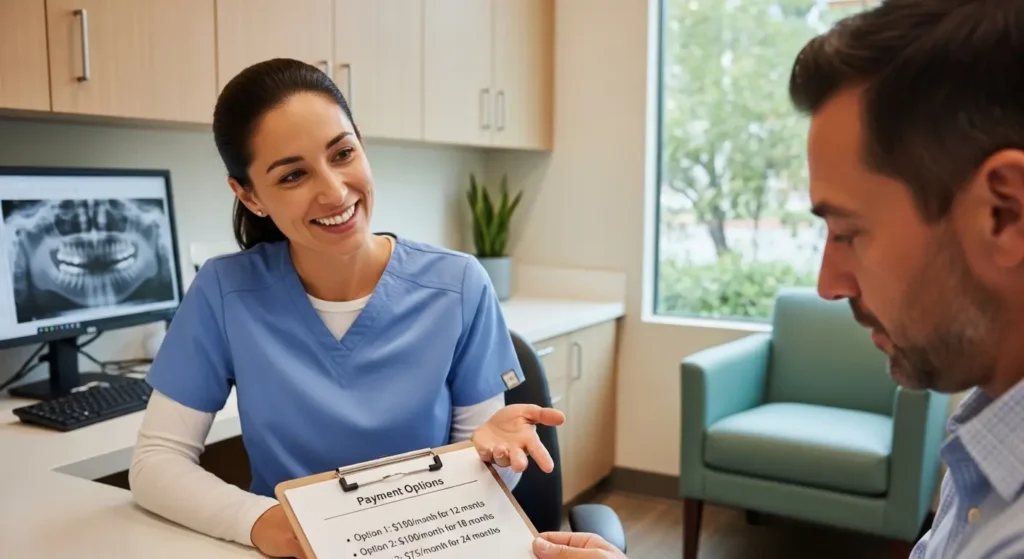
Roughly one-third of New Yorkers lack dental insurance. If you’re among them, the full teeth deep cleaning cost in New York becomes your responsibility, but multiple strategies can make treatment affordable.
Full Cost Expectations
What You’ll Pay:
Without insurance coverage, expect to pay the full per-quadrant rate of $200-$400 depending on your location in New York. Full mouth treatment ranges from $800-$1,600. Additionally, budget for diagnostic costs if you’re a new patient: $75-$300 for comprehensive exam and X-rays. Your total first-time investment could be $875-$1,900.
Reality Check:
This is a significant expense, and it’s normal to feel sticker shock. However, consider it a medical investment in preventing much more expensive complications. Tooth replacement costs dwarf deep cleaning costs—a single dental implant in New York runs $3,000-$6,000. Losing multiple teeth and needing implants could cost $12,000-$24,000. Deep cleaning at $1,200 prevents these expensive futures.
Negotiation Is Possible:
Without insurance, you have more flexibility to negotiate directly with providers. You’re not bound by insurance networks or fee schedules. This creates opportunities to discuss pricing and payment terms.
Cash Payment Discounts
Many New York dental practices offer discounts for full payment at the time of service, often called “cash discounts” though they apply to any upfront payment method including credit cards and checks.
How They Work:
Dentists incur costs when dealing with insurance—staff time for pre-authorizations, claims submission, following up on denied claims, and waiting 30-60 days for payment. When you pay immediately, they save these administrative costs and receive their money right away. Many practices share these savings by discounting their fees.
Typical Discount Scenarios:
- 5% discount: $1,200 treatment becomes $1,140 (save $60)
- 10% discount: $1,200 treatment becomes $1,080 (save $120)
- 15% discount: $1,200 treatment becomes $1,020 (save $180)
A 10% discount is common, though some practices offer more and some offer none. The larger the total treatment cost, the more dollars these percentages represent.
How to Ask:
Timing matters. Ask about discounts during the treatment planning consultation, not after treatment is completed. Appropriate questions include:
- “Do you offer a discount for paying in full at the time of service?”
- “What’s your self-pay rate for patients without insurance?”
- “Is there a cash discount available?”
Most offices won’t volunteer this information, so you must ask. There’s no downside to asking—the worst they can say is no.
Payment Methods That Qualify:
“Cash discount” is a misnomer. These discounts typically apply to:
- Actual cash
- Personal checks
- Debit cards
- Credit cards
- CareCredit and healthcare financing cards
As long as you’re paying the full amount before or at the time of treatment, the discount usually applies regardless of payment method.
Dental Discount Plans (Not Insurance)
Dental discount plans are membership programs that provide reduced fees at participating dentists. They’re fundamentally different from insurance but can save money for people without employer-sponsored coverage.
How They Work:
You pay an annual membership fee, typically $100-$200 for an individual or $150-$350 for a family. In return, you get access to a network of dentists who have agreed to provide services at discounted rates—usually 10-60% off their standard fees. When you visit a participating dentist, you show your membership card and pay the discounted rate directly to the office.
Key Differences from Insurance:
| Feature | Dental Insurance | Dental Discount Plan |
|---|---|---|
| Monthly/Annual Cost | $30-$60/month ($360-$720/year) | $100-$200/year |
| Waiting Periods | Common (6-12 months for major services) | None—use immediately |
| Annual Maximum | Yes ($1,000-$2,000 typical) | No maximum |
| Claims/Paperwork | Yes, can be complicated | No, pay dentist directly at discounted rate |
| Coverage Level | 50-80% for deep cleaning | 10-60% discount off standard fees |
| Pre-authorization | Often required | Not required |
Major Discount Plan Options:
Several reputable companies offer dental discount plans with New York providers:
- Cigna Dental Savings Plan
- Aetna Dental Access
- Careington Care 500 Series
- Various plans through DentalPlans.com marketplace
Example Savings Calculation:
Let’s say your teeth deep cleaning in New York would cost $1,200 (4 quadrants at $300 each):
- Regular cost without discount: $1,200
- Discount plan annual fee: $150
- Plan provides 30% discount on periodontal procedures
- Discounted deep cleaning cost: $840
- Total spent: $840 + $150 = $990
- Net savings: $210
The savings increase if you need other dental work during the year. For instance, if you also need two fillings at $200 each, the 20% discount saves another $80, increasing your total annual savings to $290 against a $150 membership fee.
Best For:
Dental discount plans work well for:
- Self-employed individuals and families without employer insurance
- People who need multiple dental procedures
- Those with pre-existing conditions (no waiting periods or exclusions)
- Individuals whose employer doesn’t offer dental insurance
Important Limitations:
Network restrictions: You must use dentists who participate in the plan’s network. Not all dentists accept all discount plans. Before joining, search the plan’s provider directory to confirm there are convenient participating dentists in your area.
Variable discounts: The discount percentage varies by procedure and by provider. Deep cleaning might be discounted 30% at one office and 20% at another within the same plan.
No reimbursement: Unlike insurance where you might see an out-of-network provider and get partial reimbursement, discount plans only work at network providers. Seeing a non-network dentist means paying full price with no benefit.
No coverage guarantee: These plans don’t pay toward your care—they just provide access to discounts. You pay the discounted amount directly to the provider.
Before joining any discount plan, verify that quality providers in your area accept it and confirm the specific discount percentage for deep cleaning.
Payment Plans and Financing Options
If paying $800-$1,600 upfront isn’t feasible, various financing options allow you to spread the teeth deep cleaning cost in New York over several months or years.
Healthcare Credit Cards
CareCredit:
CareCredit is the most widely accepted healthcare credit card, available at thousands of dental offices throughout New York. It functions like a credit card but is specifically for healthcare expenses.
Key Features:
- Credit limits from $200 to $25,000 based on your creditworthiness
- Promotional financing: 0% interest for 6, 12, 18, or 24 months on purchases of $200 or more (promotional period depends on purchase amount)
- Standard APR: 26.99% (variable) if balance remains after the promotional period
- Application process: Apply online or at your dental office with instant decision
- Credit check: Yes, which can temporarily impact your credit score
The Critical Details:
The promotional financing is genuinely interest-free IF you pay the entire balance before the promotional period ends. However, if even $1 remains on the promotional purchase after the deadline, you’ll be charged interest retroactively on the original purchase amount at 26.99% APR. This means a $1,200 balance that wasn’t paid off in 12 months could suddenly accrue $319 in back interest.
Strategy to Avoid Interest:
Let’s say you charge $1,200 for deep cleaning with 12-month promotional financing:
- Calculate required monthly payment: $1,200 ÷ 12 months = $100/month
- Add a buffer: Pay $110/month to ensure you’re ahead of schedule
- Set up automatic payments to never miss a payment
- Pay off in 11 months to have a cushion before the deadline
When CareCredit Makes Sense:
CareCredit is excellent when you can realistically pay off the balance during the interest-free period. It’s risky if you’re uncertain about your ability to make the payments, as the deferred interest trap is expensive.
Other Healthcare Credit Cards:
LendingClub Patient Solutions offers personal loans specifically for medical and dental expenses. Loan amounts range from $1,000-$40,000 with APRs of 7.99%-35.99% based on your credit. Unlike CareCredit’s promotional periods, these are traditional installment loans with fixed monthly payments over 24-84 months. There are no prepayment penalties, so you can pay off early without penalty.
Prosper Healthcare Lending is another option for larger treatment plans, offering loans from $2,500-$40,000. This might be overkill for deep cleaning alone but could be useful if you need deep cleaning plus other extensive dental work.
Dental Office Payment Plans
Many dental practices offer in-house financing arrangements that can be more flexible than third-party financing companies.
How In-House Financing Works:
The dental office essentially loans you the money directly, and you repay them over an agreed period. Common terms include:
- Payment periods: 3-12 months typically
- Interest: Often interest-free if payments are made on time
- Down payment: Some practices require 20-30% upfront
- Credit check: Some offices check credit, others don’t
- Personal relationship: You’re working directly with your healthcare provider
Example Arrangement:
Your teeth deep cleaning cost in New York is $1,200. The dental office offers this payment plan:
- Down payment: $300 (25%)
- Remaining balance: $900
- Term: 6 months
- Monthly payment: $150
- Interest: None if paid on schedule
This arrangement costs you nothing extra beyond the treatment price, making it superior to credit cards or loans with interest. The downside is that not all offices offer this option.
Availability:
In-house payment plans are more common at:
- Independent private practices (more flexibility in decision-making)
- Practices focused on serving working-class communities
- Offices with established patient relationships
They’re less common at:
- Corporate dental chains (standardized policies limit flexibility)
- High-end cosmetic practices (expect payment upfront)
- Very busy practices (administrative burden of managing payment plans)
How to Negotiate:
Ask during your consultation: “Do you offer payment plans for patients paying out of pocket?” Many offices won’t advertise this option but will work with patients who ask. Be prepared to demonstrate reliability—having existing patient history with the practice helps, as does putting down a reasonable deposit.
Get any payment agreement in writing, including:
- Total amount owed
- Payment schedule (amounts and due dates)
- Interest rate if any
- Late payment consequences
- What happens if you need to adjust the plan
Third-Party Dental Financing Companies:
Some dental practices partner with financing companies other than CareCredit. Examples include GreenSky and Sunbit. These operate similarly to CareCredit with promotional financing periods and approval processes. Ask which financing partners your dental office works with.
Splitting Treatment Across Time
Another approach to managing teeth deep cleaning cost in New York is treating quadrants separately over time rather than all at once.
How It Works:
Instead of scheduling both appointments to complete all four quadrants within 2-3 weeks, you might:
- Treat the two most severely affected quadrants first
- Pay $400-$800 for those two quadrants
- Wait several weeks or months while you save money
- Treat the remaining two quadrants when you can afford it
Benefits:
This approach makes each payment more manageable, spreading the cost across several pay periods. You can align treatment appointments with paycheck timing. There’s less financial stress than coming up with the full amount at once.
Drawbacks:
The untreated quadrants continue harboring disease while you wait. The bacteria and inflammation remain active, continuing to damage bone and gum tissue. Disease can worsen in untreated areas during the waiting period.
Additionally, some dentists prefer completing treatment in a timely manner for clinical reasons. They may recommend against extended delays between treating different quadrants.
When This Works:
This strategy makes sense when:
- The delay will be relatively short (1-3 months)
- Some quadrants have significantly worse disease than others (prioritize the worst areas)
- The alternative is not getting any treatment at all due to financial constraints
When to Avoid:
Don’t delay treatment excessively (6+ months) as the disease continues progressing. If all quadrants are equally diseased, delaying treatment in some areas while treating others provides incomplete care.
Calendar Year Strategy:
One specific timing approach involves splitting treatment across calendar years. If it’s late in the year (November-December), consider:
- Treating 2 quadrants in December
- Treating 2 quadrants in January
This matters if you’re using a Health Savings Account or Flexible Spending Account (more on this below), as these accounts are based on calendar years. It also matters if you expect your financial situation to improve with a new year.
Health Savings Accounts (HSA) and Flexible Spending Accounts (FSA)
If you have access to a Health Savings Account or Flexible Spending Account through your employer or health insurance, these pre-tax accounts dramatically reduce the effective cost of teeth deep cleaning.
Health Savings Account (HSA):
HSAs are paired with high-deductible health insurance plans. Key features include:
Your contributions are tax-deductible: Money goes in before taxes, reducing your taxable income
Contribution limits: Currently $4,300 for individuals or $8,550 for families annually
Funds roll over: Unused money carries forward year after year—there’s no “use it or lose it”
Investment potential: You can invest HSA funds in mutual funds for long-term growth
Withdrawals for qualified medical expenses are tax-free: This includes dental care like deep cleaning
How HSAs Reduce Your Cost:
The key benefit is paying with pre-tax dollars. Here’s how that works:
Let’s say you’re in the 25% tax bracket (combining federal and state taxes in New York). Your teeth deep cleaning costs $1,200.
If you pay with regular after-tax money:
- You earn $1,600 gross
- Pay $400 in taxes (25%)
- Have $1,200 after-tax to pay the dentist
- True cost: $1,600 in earnings
If you pay with HSA funds:
- You contribute $1,200 to HSA (pre-tax)
- Pay dentist $1,200 from HSA
- Save $300 in taxes
- True cost: $1,200 in earnings
The effective discount equals your tax rate—in this example, 25% savings.
Flexible Spending Account (FSA):
FSAs are offered through employer benefits programs. Key features include:
Contributions are made through pre-tax payroll deduction: Like HSAs, this reduces your taxable income
Contribution limit: Currently $3,200 maximum annual contribution
Use-it-or-lose-it rule: Most FSAs require you to use funds by the end of the plan year or forfeit them. Some plans offer a 2.5-month grace period or allow rolling over up to $640 to the next year, but most funds must be used within the plan year.
No investment option: FSAs are spending accounts, not savings/investment accounts
The same tax savings apply: If you’re in the 25% bracket, FSA funds effectively cost you 25% less than after-tax dollars
Strategic Use for Deep Cleaning:
If you know you’ll need teeth deep cleaning in New York during the coming year, contribute enough to your FSA to cover it. For example, if you expect $1,200 in deep cleaning costs, contribute $1,200 to your FSA during open enrollment.
The timing consideration: FSAs are calendar-year based. If you need treatment in December but won’t have enough in your FSA until you’ve had more paychecks, consider waiting until January when you can estimate your full-year contributions.
Eligibility:
Deep cleaning (scaling and root planing) is IRS-qualified medical expense eligible for both HSA and FSA reimbursement. You don’t need special documentation—just save your receipt showing the service was provided.
How to Use These Accounts:
Most HSA and FSA programs provide a debit card linked to your account. You can pay the dental office directly with this card. Alternatively, pay with your personal funds and then reimburse yourself from the account by submitting the receipt.
The Bottom Line:
If you have access to an HSA or FSA, use it for dental care. The 20-35% tax savings (depending on your bracket) makes these the cheapest way to pay for teeth deep cleaning after insurance coverage.
Traditional Credit Cards (Last Resort)
Regular credit cards should be your last financing option for teeth deep cleaning due to high interest rates, but sometimes they’re necessary.
When to Consider:
Credit cards make sense only when:
- No other financing option is available
- You have a true dental emergency (severe infection, pain)
- You can pay off the balance within 3-6 months
- You have a 0% promotional APR offer on a new card
Risks:
Standard credit card interest rates range from 15-25% APR. If you only make minimum payments on a $1,200 balance at 20% APR, you’ll pay nearly $400 in interest over time and take years to pay off.
Credit card debt also impacts your credit utilization ratio, potentially lowering your credit score. The stress of high-interest debt can make an already expensive treatment feel even more burdensome.
0% APR Promotional Credit Cards:
Some credit cards offer 0% introductory APR for 12-18 months on new purchases. If you have good credit (usually 670+ score), you might qualify for these offers. This essentially gives you interest-free financing for up to 18 months.
Important considerations:
- Balance transfer fees might apply (typically 3-5%)
- The 0% rate only lasts for the promotional period
- After the promo ends, standard rates (15-25% APR) apply to any remaining balance
- Making late payments can void the promotional rate
Best Practices IF Using Credit Cards:
If a credit card is your only option:
Calculate exact monthly payments needed: $1,200 ÷ 6 months = $200/month to pay off in half a year
Set up automatic payments: Schedule payments larger than the minimum to ensure payoff
Don’t use the card for anything else: Avoid adding purchases until the dental balance is paid off
Consider balance transfer: If you’re stuck with high-interest debt, transferring to a 0% APR card might help
Ideally, use any other option before resorting to regular credit cards for teeth deep cleaning costs in New York. The interest adds substantially to the already significant expense.
Affordable Deep Cleaning Options in New York
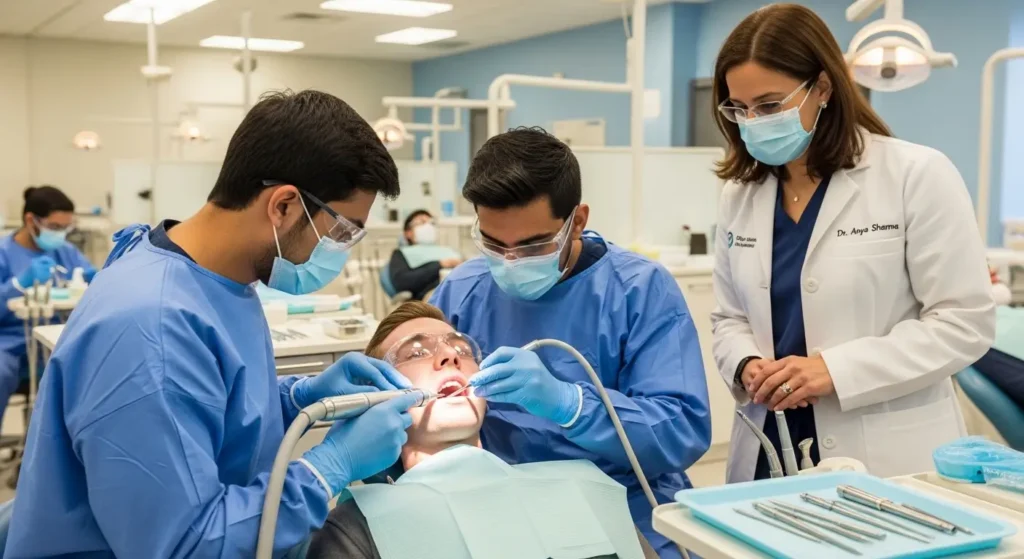
If the standard teeth deep cleaning cost in New York is beyond your budget even with payment plans, several low-cost alternatives offer significant savings.
Dental Schools in New York
Dental schools provide some of the most substantial savings on deep cleaning—typically 50-70% below private practice rates. The trade-off is longer appointments and less scheduling flexibility.
How Dental School Clinics Work:
Dental students in their clinical training years provide patient care under close supervision by licensed faculty dentists. Students are competent—they’ve completed years of coursework and pre-clinical training—but they work more slowly and methodically than experienced practitioners. Each step is checked by supervising faculty before proceeding.
The educational mission of dental schools allows them to charge significantly lower fees than private practices. They’re not profit-driven businesses; they’re training the next generation of dentists while providing affordable care to the community.
What to Expect:
Appointments typically take 3-4 hours compared to 1-2 hours at private practices. The student must consult with the supervising professor multiple times during the appointment. You might sit with your mouth open longer while waiting for the supervisor to check the student’s work.
Despite longer appointments, the quality of care is excellent. Faculty supervision ensures proper technique, and students often follow protocols very carefully as they’re being evaluated. Many patients report positive experiences and are happy to trade time for significant cost savings.
New York University College of Dentistry (Manhattan):
NYU’s dental clinic is located at 345 E 24th Street in Manhattan, accessible via the 6 train or multiple bus lines. The teeth deep cleaning cost here is approximately $100-$200 per quadrant—about half the cost of private Manhattan practices charging $300-$400 per quadrant.
For full mouth treatment, expect to pay $400-$800 compared to $1,200-$1,600 at area private practices. That’s a savings of $800 or more.
The process:
- Call (212) 998-9800 to schedule a new patient screening appointment
- Attend screening where they assess your needs
- Get assigned to a dental student for treatment
- Schedule treatment appointments (may take several weeks to get scheduled)
Waitlist possibility: NYU is popular and spots can be limited. Starting the process early is wise if you’re considering this option.
Columbia University College of Dental Medicine (Manhattan):
Located at 622 W 168th Street in the Washington Heights neighborhood, Columbia’s dental clinic offers deep cleaning at approximately $120-$220 per quadrant. Full mouth treatment costs $480-$880—substantially less than the $1,100-$1,600 typical in Manhattan.
Contact (212) 305-6100 for patient information and scheduling. Like NYU, there’s a patient screening process before treatment assignment.
Touro College of Dental Medicine (Hawthorne, Westchester):
Touro is newer (opened in 2019) and located at 19 Skyline Drive in Hawthorne, accessible from New York City via Metro-North Railroad to Hawthorne station. The cost is approximately $100-$180 per quadrant, or $400-$720 for full mouth.
While technically in Westchester County rather than New York City, it’s reachable via public transportation for those willing to make the trip. Contact (845) 594-4000 for information.
University at Buffalo School of Dental Medicine:
For Western New York residents, UB’s dental clinic at 355 Squire Hall in Buffalo offers deep cleaning at approximately $90-$160 per quadrant, or $360-$640 for full mouth. This represents some of the most affordable dental care in the state.
Contact (716) 829-2720 for patient services.
Stony Brook School of Dental Medicine (Long Island):
Located at 106 Rockland Hall in Stony Brook, this dental school serves Long Island and eastern New York. Costs are approximately $100-$200 per quadrant, or $400-$800 for full mouth treatment—considerably less than private Long Island practices.
Contact (631) 632-8989 for information.
Weighing the Trade-offs:
Dental schools make sense when:
- Budget is the primary concern
- You have a flexible schedule for longer appointments
- You’re patient and don’t mind the educational environment
- Saving $600-$1,000 justifies the extra time investment
They might not be ideal when:
- You have limited time availability
- You prefer faster appointment times
- You want treatment completed very quickly
- The travel distance is prohibitive
Federally Qualified Health Centers (FQHCs)
Federally Qualified Health Centers are community health centers that receive federal funding to provide care to underserved populations. They’re required to serve everyone regardless of ability to pay and offer sliding scale fees based on income.
How FQHCs Work:
FQHCs receive federal grants that help subsidize care. They must accept all patients, including those without insurance, Medicaid recipients, and people who can only afford reduced fees. This mission-driven approach creates access to affordable dental care.
Sliding Fee Scale:
Your cost at an FQHC is determined by your household income and family size, based on Federal Poverty Guidelines. The scale typically works like this:
- At or below 100% of poverty level: Deeply discounted fees (possibly free)
- 100-200% of poverty level: Significant discounts
- 200-300% of poverty level: Moderate discounts
- Above 300% of poverty level: Standard/full fees (but often still lower than private practices)
Example for context: The federal poverty level for a family of three is approximately $25,000 annually. A family earning $50,000 (200% of poverty level) would qualify for reduced fees at FQHCs.
Potential Savings:
Depending on income qualification, teeth deep cleaning costs at FQHCs can be 40-70% below standard New York rates. Someone qualifying for the steepest discounts might pay $300-$500 for full mouth deep cleaning instead of $800-$1,600.
New York City FQHCs with Dental Services:
Ryan Health operates multiple locations throughout Manhattan (Chelsea, Frederick Douglass) and one in the Bronx (Morrisania). They provide comprehensive dental services including deep cleaning with sliding scale fees available. Ryan Health accepts walk-ins for urgent care and also schedules routine appointments.
Institute for Family Health has locations throughout Manhattan and the Bronx, offering full dental services with sliding scale fees for uninsured and underinsured patients. Bilingual services are available.
Charles B. Wang Community Health Center serves the Asian American community and all others with locations in Manhattan’s Chinatown and Queens’ Flushing neighborhood. Multilingual services make them accessible to diverse communities. Sliding scale fees apply based on income.
Sunset Park Health Council serves the Brooklyn community from their Sunset Park location. They provide comprehensive dental care with sliding scale fees and accept most insurance including Medicaid.
Joseph P. Addabbo Family Health Center operates multiple locations in Queens, offering dental services with income-based fee structures. They serve diverse Queens communities with culturally competent care.
Bronx-Lebanon Hospital Center provides dental services at multiple Bronx locations with sliding fee scales for qualifying patients.
How to Access FQHC Care:
Step 1: Call the health center to schedule an intake appointment
Step 2: Bring documentation to your first visit:
- Photo ID
- Proof of address (utility bill, lease, mail)
- Proof of income (pay stubs, tax returns, benefits letters)
- If applicable: Insurance cards
Step 3: Complete intake paperwork and financial screening
Step 4: Your fee category is determined based on documentation
Step 5: Schedule dental appointments at your reduced rate
Annual Updates: Most FQHCs reassess your eligibility annually, so bring updated income documentation each year.
NYC Health + Hospitals Dental Clinics
New York City’s public hospital system operates dental clinics at several hospitals throughout the five boroughs. These clinics serve all New Yorkers with income-based sliding scales for those without insurance.
The Public Hospital System:
NYC Health + Hospitals is the largest public health system in the country. As a safety net provider, they’re required to treat everyone regardless of insurance status or ability to pay.
Sliding Scale Structure:
Similar to FQHCs, NYC Health + Hospitals uses income-based fee reductions. Uninsured patients with low to moderate incomes can receive teeth deep cleaning at 50-70% below standard market rates. Someone paying full price still generally pays less than private practices.
Locations with Dental Services:
Bellevue Hospital (Manhattan, First Avenue at 27th Street) offers comprehensive dental care including periodontal treatment.
Elmhurst Hospital (Queens, 79-01 Broadway) serves the diverse Queens community with full dental services.
Jacobi Medical Center (Bronx, 1400 Pelham Parkway) provides dental care to Bronx residents.
Kings County Hospital (Brooklyn, 451 Clarkson Avenue) offers dental services to Brooklyn communities.
Lincoln Medical Center (Bronx, 234 East 149th Street) provides accessible dental care in the South Bronx.
Metropolitan Hospital (Manhattan, 1901 First Avenue) serves East Harlem and surrounding areas.
Woodhull Medical Center (Brooklyn, 760 Broadway) offers dental services to northern Brooklyn residents.
How to Access Care:
Call the central appointment line at 1-844-692-4692 to schedule dental appointments at any NYC Health + Hospitals location. Bring income documentation to establish your fee category if uninsured.
All NYC Health + Hospitals facilities accept Medicaid and most major insurance plans. For insured patients, standard insurance coverage applies.
Community Dental Programs
Several community-based programs provide free or very low-cost dental care to specific populations throughout New York.
Dental Lifeline Network:
This national program connects volunteer dentists with people who are elderly, disabled, or medically vulnerable. If you meet eligibility criteria—which typically include disability, permanent medical compromise, or being age 65+—you may qualify for free or deeply discounted dental care including deep cleaning.
The program operates on a case-by-case basis with volunteer dentists in their private practices providing care. You must apply and be accepted into the program. Visit dentallifeline.org or call to learn about eligibility and application procedures.
Mission of Mercy (MOM) Events:
These are periodic free dental care events held throughout New York State, typically once or twice per year in different regions. They’re first-come, first-served events where volunteer dentists provide free basic care.
The focus is usually on extractions, fillings, and emergency care rather than deep cleaning, but periodontal services are sometimes available. These events serve hundreds of people over a weekend, so arrive very early (often people camp out overnight) to ensure being seen.
Watch for announcements about upcoming MOM events in New York through the New York State Dental Association or local health departments.
Local Health Department Programs:
Some county and city health departments operate dental clinics or sponsor dental programs. Check with your local health department to see what dental services they offer. These vary significantly by location—some offer comprehensive services while others provide only emergency care.
Comparing Low-Cost Options
Here’s a quick comparison to help you choose the best affordable option for your situation:
| Option | Cost Savings | Wait Time | Quality | Best For |
|---|---|---|---|---|
| Dental Schools | 50-70% | Moderate to Long | Excellent (close supervision) | Flexible schedule, patient personality |
| FQHCs | 40-70% (income-based) | Short to Moderate | Good | Low to moderate income, need convenient locations |
| NYC H+H | 50-70% (income-based) | Moderate | Good | Medicaid recipients, uninsured New Yorkers |
| Dental Lifeline | Free to minimal cost | Varies | Good to Excellent | Elderly, disabled, medically vulnerable |
| Discount Plans | 10-60% | Short (use immediately) | Varies by provider | Need to use network dentists |
Choose based on your specific circumstances:
- Tightest budget, flexible time: Dental schools
- Low income, need quick care: FQHCs or NYC H+H
- Elderly or disabled: Dental Lifeline Network
- Moderate income, want private practice: Dental discount plans
Getting Accurate Quotes: What to Ask Your Dentist
Whether you’re seeing a private practice dentist, visiting a dental school, or going to a community health center, asking the right questions ensures you understand exactly what you’ll pay for teeth deep cleaning in New York.
Essential Questions During Consultation
About Your Diagnosis:
Start by understanding the clinical basis for the recommendation. Ask:
“Can you show me my pocket depth measurements?” You’re entitled to see the actual numbers recorded for each tooth. Healthy gums measure 1-3mm, and treatment is typically indicated when pockets measure 4mm or more. Seeing your specific measurements helps you understand the severity and distribution of disease.
“Can I see the X-rays showing bone loss?” Visual evidence of bone loss around your teeth confirms the diagnosis. Your dentist should be able to point out areas where the bone level is lower than normal. This objective evidence supports the treatment recommendation.
“Which specific quadrants need treatment?” Not every patient needs all four quadrants treated. Get clarity on whether you need one, two, three, or all four quadrants. This directly affects your cost.
“How severe is my periodontal disease?” Understanding whether you have mild, moderate, or severe disease helps you assess urgency and appropriate treatment. Mild disease might respond to improved home care, while moderate to severe disease requires professional treatment.
“What happens if I delay treatment?” This question reveals how urgent the situation is. If your dentist says, “We could monitor it and see if it worsens,” that suggests less urgency than, “The disease is actively destroying bone and will lead to tooth loss without treatment.”
About the Treatment Plan:
Once you understand the diagnosis, clarify the proposed treatment:
“Do I need all 4 quadrants treated, or could we do fewer?” Some dentists recommend treating all quadrants when only some show significant disease. If your measurements show disease primarily in certain areas, treating just those areas might be appropriate.
“What’s the total cost breakdown by quadrant?” Get per-quadrant pricing clearly stated. Don’t accept vague “somewhere between $800-$1,600” estimates. Request specific numbers: “$275 per quadrant, so $1,100 total for four quadrants.”
“What’s included in the per-quadrant price?” Clarify whether local anesthesia is included or extra. Confirm that the price covers the entire scaling and root planing procedure with no hidden fees.
“Are there any additional fees I should know about?” Ask about exam fees, X-ray costs, follow-up appointment charges, or any other potential expenses beyond the per-quadrant fee.
About Costs and Payment:
Financial transparency prevents surprises:
“What is your per-quadrant fee?” Direct question, direct answer. This is the fundamental number you need.
“Is anesthesia included in that price?” Local anesthesia is usually included, but sedation options cost extra. Clarify what’s covered in the base price.
“What will the exam and X-rays cost?” If you need diagnostic procedures before treatment, understand those costs separately from the treatment cost.
“Are there any additional procedures you recommend?” Some dentists suggest antimicrobial treatments, laser therapy, or other adjuncts. Understand what these are, why they’re recommended, whether they’re necessary, and what they cost.
“What’s the all-in cost for everything you’re proposing?” Request a comprehensive total including every component of treatment and diagnosis.
About Insurance (If You Have Coverage):
“Can you verify my insurance benefits?” Most dental offices will check your coverage as a courtesy. They can tell you what your plan covers and estimate your out-of-pocket cost.
“What percentage will my insurance likely cover?” Based on their verification, they should be able to tell you whether your plan covers 50%, 80%, or some other percentage.
“What will my out-of-pocket cost be?” After applying your insurance coverage and deductible, what dollar amount will you owe?
“Do you require pre-authorization?” If so, understand that treatment can’t proceed until insurance approves coverage.
“How long does pre-authorization take?” Plan your timeline accordingly. Most pre-authorizations take 1-3 weeks.
“Do you bill insurance directly, or do I pay and get reimbursed?” Direct billing is more convenient. If you must pay upfront and seek reimbursement, that affects your cash flow.
About Payment Options:
“Do you offer payment plans?” Learn what financing options the office provides.
“Is there a discount for paying in full?” Cash/payment-in-full discounts are common but rarely advertised.
“Do you accept CareCredit or other financing?” Understand what third-party financing they work with.
“When is payment due?” Some offices require payment before treatment, others at time of service, others bill you afterward.
“Can I split treatment across multiple appointments to spread the cost?” Some dentists will accommodate treating fewer quadrants at a time for financial reasons.
What Should Be in Your Written Estimate
Never proceed with treatment based on verbal discussions alone. Request a written estimate that includes:
Patient identification: Your name and date to confirm it’s your estimate
Diagnosis: The specific periodontal diagnosis (e.g., “Moderate Chronic Periodontitis”)
Recommended treatment: Exact quadrants recommended for deep cleaning
Procedure codes: D4341 for each quadrant, plus codes for any additional procedures
Per-quadrant cost: Clear pricing for each quadrant
Number of appointments: Whether treatment will be completed in one, two, or more visits
Anesthesia details: Type of anesthesia and whether there’s an additional cost
Additional procedures and costs: Any recommended adjuncts like antibiotics or laser therapy with their costs
Exam and X-ray fees: If not already completed, the cost of diagnostic procedures
Subtotal before insurance: Total cost if paying out of pocket
Estimated insurance coverage: If applicable, what your insurance is expected to pay
Estimated patient responsibility: What you’re expected to pay out of pocket
Payment terms: When payment is due and what options are available
Estimate validity period: How long the quote is good for (prices can change)
Having everything in writing prevents misunderstandings and gives you documentation to compare if you’re getting multiple opinions.
Red Flags: When to Get a Second Opinion
Certain warning signs suggest you should seek another dentist’s evaluation before committing to teeth deep cleaning treatment in New York:
Recommending all 4 quadrants when you have no symptoms: While gum disease can be silent, if you have no bleeding, no pain, no bad breath, and no visible recession, treatment of all four quadrants should be supported by clear clinical evidence like deep pockets and bone loss on X-rays.
Pocket depths barely over 4mm with no other indicators: Borderline pockets of 4mm without bleeding, mobility, or bone loss might be managed with improved home care rather than immediate deep cleaning. A dentist recommending aggressive treatment for borderline findings might be overselling.
No X-rays taken before recommending treatment: Diagnosing periodontal disease without X-rays to confirm bone loss is inappropriate. X-rays are essential for proper diagnosis and insurance coverage.
Extreme pressure to start immediately: “We need to do this today” or “You’ll lose your teeth if we don’t start right now” pressure tactics are red flags. Periodontal disease develops over months and years; delaying a week or two for a second opinion won’t make a significant difference.
Cost significantly above area average: If you’re quoted $500 per quadrant in an area where the average is $300, question why. Premium pricing should come with explanation (specialist expertise, advanced technology, etc.).
Cost significantly below area average: If everyone else quotes $300 per quadrant but one office quotes $150, investigate. Sometimes this reflects quality concerns, though it could also indicate a newer practice building clientele.
Unwillingness to provide detailed breakdown: Dentists should be transparent about costs. Refusing to provide written estimates or detailed explanations of what you’re paying for is concerning.
Pushing expensive add-ons as “necessary”: Laser treatments, special antimicrobials, or other premium services might be beneficial but are rarely medically necessary. If the dentist says you must have these expensive additions, question why traditional deep cleaning wouldn’t be sufficient.
No insurance verification offered: Reputable practices routinely verify benefits for patients as a courtesy. Refusing to check your coverage is unusual and inconvenient.
Office won’t accept insurance: While some practices legitimately operate as out-of-network providers, be cautious if an office won’t file insurance claims for you even as a courtesy. It could indicate they charge significantly above usual and customary rates.
When Second Opinions Are Smart
Seeking a second opinion is always appropriate for:
- First-time diagnosis of periodontal disease (you’ve never been told you had gum disease before)
- Treatment with total cost exceeding $1,000
- Recommendations that differ dramatically from what a previous dentist told you
- Situations where you feel rushed or pressured
- Cases where the clinical evidence seems borderline
- Anytime you feel uncomfortable or uncertain
How to Get a Meaningful Second Opinion
Bring your X-rays: You have a legal right to copies of your dental records and X-rays. Request them from the first dentist (they may charge a nominal copying fee). Bringing these to the second opinion appointment saves money on duplicating X-rays and allows direct comparison of interpretations.
Don’t reveal the first diagnosis: To get an unbiased opinion, don’t tell the second dentist what the first dentist recommended. Let them perform their own independent examination and measurements. Afterward, you can discuss how their findings compare to the first opinion.
Compare pocket measurements: Both dentists should measure and record pocket depths. These are objective numbers. If one dentist measures 6mm pockets throughout your mouth and another measures mostly 3-4mm pockets, one of them is incorrect. Proper technique and calibration matter.
Compare X-ray interpretations: Ask the second dentist to show you bone levels on X-rays. If the first dentist said you had significant bone loss but the second dentist sees minimal bone loss looking at the same X-rays, this discrepancy needs explanation.
Compare treatment recommendations: If one dentist recommends all four quadrants and another recommends only two, understand why. Which specific teeth and areas show disease requiring treatment?
Trust but verify: If two independent dentists give similar diagnoses and recommendations, that confirms the treatment is appropriate. If they give wildly different opinions, seek a third opinion from a periodontist (specialist).
What Happens After Deep Cleaning: Ongoing Costs
Understanding the complete financial picture of periodontal care means knowing about the ongoing maintenance required after your initial teeth deep cleaning in New York.
Periodontal Maintenance Cleanings
Once you’ve completed deep cleaning treatment, you don’t simply return to regular six-month cleanings. Instead, you need periodontal maintenance cleanings every three to four months indefinitely.
What Is Periodontal Maintenance:
Periodontal maintenance (procedure code D4910) is different from regular preventive cleaning (code D1110). It’s a more thorough cleaning designed for patients with a history of periodontal disease. The hygienist cleans below the gum line in addition to above, monitoring for disease recurrence and removing any bacterial buildup before it causes problems.
Think of it like managing a chronic condition. Once you’ve had periodontal disease, you’re always at higher risk for recurrence. Maintenance cleanings every 3-4 months prevent the bacterial colonies from rebuilding to disease-causing levels.
Frequency Requirements:
Most patients need maintenance cleanings every three to four months based on:
- Severity of previous disease (more severe disease requires more frequent monitoring)
- Quality of home care (excellent brushing and flossing might extend to four months, poor home care might require three-month intervals)
- Risk factors (smoking, diabetes, genetics affect recurrence risk)
- Individual healing response
Some patients can eventually return to regular six-month cleanings if their disease remains stable for several years. Others need quarterly maintenance indefinitely.
Cost in New York:
Periodontal maintenance cleanings cost $150-$250 per visit depending on location:
- Manhattan: $200-$250 per visit
- Brooklyn/Queens: $175-$225 per visit
- Upstate cities: $150-$200 per visit
Annual Cost:
If you need maintenance four times per year (every three months):
- Manhattan: $800-$1,000 annually
- Brooklyn/Queens: $700-$900 annually
- Upstate: $600-$800 annually
If you can extend to three times per year (every four months):
- Manhattan: $600-$750 annually
- Brooklyn/Queens: $525-$675 annually
- Upstate: $450-$600 annually
Insurance Coverage:
Most dental insurance plans cover periodontal maintenance at 50-80%, similar to the initial deep cleaning. However, plans limit the total number of cleanings per year. Common structures include:
- Two periodontal maintenance cleanings plus one regular cleaning per year
- Four periodontal maintenance cleanings per year
- Total of three or four cleanings of any type per year
Check your specific plan to understand coverage. Your out-of-pocket cost per visit typically ranges from $45-$100 with insurance, resulting in annual costs of $135-$400 depending on frequency and coverage.
Lifetime Financial Consideration:
If you need periodontal maintenance for 20 years, the total cost ranges from $9,000-$20,000 (in today’s dollars). That’s substantial. However, compare this to the alternative: tooth loss requiring replacement.
A single dental implant in New York costs $3,000-$6,000. Losing four teeth and replacing them with implants costs $12,000-$24,000. Multiple tooth loss requiring dentures or extensive bridgework costs $5,000-$15,000. From this perspective, maintenance cleaning is preventive medicine that saves money long-term by preserving your natural teeth.
Potential Additional Treatments
Most patients who complete deep cleaning and maintain regular periodontal maintenance don’t need additional procedures. However, some cases require further treatment.
Localized Antibiotic Therapy:
For isolated deep pockets that don’t respond adequately to scaling and maintenance, dentists sometimes place time-release antibiotics directly into the pocket. Brand names include Arestin (minocycline microspheres) and Atridox (doxycycline gel).
Cost: $50-$150 per tooth or site
When needed: Only for stubborn problem areas, not routinely
Insurance: Sometimes covered, sometimes not
Gum Grafting:
Severe gum recession that occurred before or during periodontal disease sometimes requires grafting to cover exposed tooth roots. This involves taking tissue from the roof of your mouth (or using donor tissue) and attaching it to areas of recession.
Cost: $600-$1,200 per site in New York (one tooth or small area)
When needed: When recession is causing sensitivity, is progressing, threatens tooth stability, or creates aesthetic concerns. Many patients with mild to moderate recession don’t need grafting.
Insurance: Often covered at 50% when medically necessary (preventing further recession, protecting tooth) but may not be covered if purely cosmetic
Bone Grafting:
Significant bone loss around teeth can sometimes be treated with bone grafting procedures to regenerate lost bone and improve tooth stability.
Cost: $300-$800 per site
When needed: Moderate to severe bone loss when the goal is to rebuild support rather than just prevent further loss
Insurance: Sometimes covered at 50%, particularly if necessary for tooth preservation
Periodontal Surgery:
When deep cleaning doesn’t sufficiently reduce pocket depths—particularly pockets of 7mm or deeper—periodontal surgery might be recommended. This involves flap surgery where the gums are lifted back, the roots are cleaned, and sometimes bone is reshaped or augmented.
Cost: $1,000-$3,000 per quadrant in New York
When needed: Only for severe cases where non-surgical treatment proves insufficient
Insurance: Usually covered at 50% as it’s a major procedure
This is relatively uncommon. Most patients respond well to deep cleaning and maintenance, avoiding surgery.
Laser-Assisted Therapy:
Some dentists offer laser treatment as a supplement to traditional therapy, claiming benefits like enhanced bacterial reduction and tissue regeneration.
Cost: $200-$500 per quadrant in addition to scaling costs
Evidence: Scientific studies show mixed results; not definitively superior to traditional scaling
Insurance: Rarely covered, considered experimental or not medically necessary
Necessity: Not required for successful treatment in most cases
Cost of Prevention vs. Cost of Neglect
The financial case for treating periodontal disease becomes clear when comparing the cost of care versus the cost of tooth loss.
Getting Deep Cleaning and Maintaining:
- Initial deep cleaning: $800-$1,600 (one-time)
- Annual maintenance: $450-$1,000 per year
- 10-year cost: $5,300-$11,600
- Outcome: You keep your natural teeth, maintain oral health, avoid complications
Skipping Treatment and Facing Consequences:
Untreated periodontal disease progressively destroys bone, leading to tooth loss. Replacement options include:
Dental Implants: The gold standard for tooth replacement
- Cost: $3,000-$6,000 per tooth in New York
- Losing four teeth: $12,000-$24,000
- Implants last 20+ years with proper care
Dental Bridges: Fixed restoration replacing one or more teeth
- Cost: $2,500-$5,000 for three-unit bridge (replaces one tooth)
- Requires grinding down adjacent healthy teeth
- Lasts 10-15 years typically
Partial Dentures: Removable appliance replacing multiple teeth
- Cost: $1,500-$3,000 per arch
- Less stable than implants or bridges
- Requires replacement every 5-7 years
Complete Dentures: Full arch replacement if most/all teeth lost
- Cost: $1,500-$4,000 per arch (upper or lower)
- Both arches: $3,000-$8,000
- Significant adjustment period, reduced chewing ability
- Require replacement every 5-10 years
Real Cost Comparison:
Scenario: A 45-year-old with moderate periodontal disease has two choices:
Choice 1 – Treat and maintain:
- Deep cleaning now: $1,200
- Maintenance for 30 years (to age 75): $18,000 (assuming $600/year)
- Total: $19,200
- Result: Keep natural teeth
Choice 2 – Avoid treatment:
- Over 10 years, lose 6 teeth
- Replace with implants: $24,000
- Additional tooth loss over time: likely
- Result: $24,000+ and ongoing problems
The math clearly favors treatment and maintenance. Beyond the financial calculation, quality of life with natural teeth far exceeds life with extensive dental work or tooth loss.
Health Costs Beyond Money:
Untreated periodontal disease creates health risks beyond your mouth:
- Increased risk of heart disease and stroke (chronic inflammation affects cardiovascular system)
- Worsened diabetes control (inflammation affects blood sugar regulation)
- Higher risk of respiratory infections (bacteria aspirated into lungs)
- Pregnancy complications (higher risk of preterm birth and low birth weight)
- Potential links to Alzheimer’s disease and other conditions (emerging research)
Treating periodontal disease is an investment in overall health, not just dental health.
Is Teeth Deep Cleaning Worth the Cost? Making Your Decision
After understanding all the costs and factors, you face the fundamental question: should you proceed with teeth deep cleaning treatment?
Benefits of Deep Cleaning Treatment
Clinical Benefits:
Deep cleaning provides concrete medical benefits:
Stops disease progression: Periodontal disease doesn’t improve on its own. It’s a chronic infection that continues destroying tissue until treated. Deep cleaning removes the bacterial cause and halts progression.
Prevents bone loss: Bone destruction from periodontal disease is irreversible—bone doesn’t grow back once lost. Treatment prevents additional bone loss, preserving the foundation that holds your teeth in place.
Reduces pocket depths: By removing bacteria and smoothing root surfaces, deep cleaning allows gums to heal and reattach to teeth. Pocket depths shrink, making it easier to maintain good oral hygiene and preventing disease recurrence.
Eliminates infection: The chronic infection in your gums is removed, eliminating the constant bacterial presence and inflammatory response affecting your body.
Health Benefits Beyond Your Mouth:
Reduces cardiovascular risk: Chronic periodontal disease increases heart disease and stroke risk. Eliminating the chronic infection and inflammation reduces this risk.
Improves diabetes management: Inflammation from gum disease makes blood sugar control harder. Treating gum disease can improve glycemic control in diabetic patients.
Lowers respiratory infection risk: Bacteria from periodontal disease can be aspirated into lungs, causing pneumonia and other respiratory infections. Treatment reduces this risk.
Decreases systemic inflammation: Chronic inflammation anywhere in your body affects overall health. Eliminating the inflammatory burden from diseased gums benefits your entire system.
Quality of Life Improvements:
Eliminates bad breath: Periodontal disease causes persistent bad breath (halitosis) from bacterial waste products and tissue breakdown. Treatment eliminates this source of embarrassment.
Stops bleeding gums: Healthy gums don’t bleed when you brush or floss. Treatment restores healthy tissue that doesn’t bleed with normal care.
Reduces discomfort: While early periodontal disease is often painless, moderate to advanced disease can cause tender, uncomfortable gums. Treatment relieves this discomfort.
Preserves appearance: Tooth loss from untreated disease affects your smile and facial appearance. Keeping your natural teeth preserves your appearance and confidence.
Maintains function: Natural teeth allow you to eat all foods comfortably. Tooth loss restricts diet and affects nutrition.
Financial Protection:
Prevents expensive complications: Treating teeth deep cleaning in New York at $800-$1,600 prevents needing implants at $3,000-$6,000 per tooth. It’s dramatically cheaper to maintain teeth than replace them.
Predictable costs: Maintenance cleaning costs are predictable and manageable. Emergency treatment for abscessed teeth, extractions, and tooth replacement involves unpredictable, large expenses.
Risks of Skipping or Delaying Treatment
Progressive Disease:
Periodontal disease is chronic and progressive. Without treatment:
Disease worsens continuously: The infection doesn’t plateau or improve on its own. Bacterial populations grow, pockets deepen, and more bone is destroyed over time.
Affects additional teeth: Disease that starts in one area spreads to adjacent teeth. What might require treating two quadrants now could require all four quadrants if delayed.
Becomes harder to treat: Early periodontal disease often responds well to scaling and root planing alone. Advanced disease might require surgery in addition to or instead of deep cleaning, increasing costs and complexity.
Tooth Loss:
The ultimate consequence of untreated periodontal disease is tooth loss:
Teeth become loose: As bone support diminishes, teeth develop mobility. Eventually they become so loose they can’t be saved.
Extractions become necessary: Loose, infected teeth must be removed, creating the need for costly replacement options.
Multiple tooth loss: Periodontal disease typically affects multiple teeth. Losing several teeth dramatically impacts your quality of life and requires extensive restoration.
Increased Health Risks:
Systemic health effects: Chronic oral infection and inflammation contribute to cardiovascular disease, diabetes complications, respiratory problems, and potentially other conditions. Your overall health suffers.
Chronic infection burden: Maintaining a chronic bacterial infection anywhere in your body stresses your immune system and creates inflammatory mediators that affect distant organs.
Higher Long-Term Costs:
The financial impact of avoiding treatment is severe:
Tooth replacement costs: Implants, bridges, or dentures cost far more than deep cleaning and maintenance.
Emergency treatment: Avoiding preventive care leads to emergencies—abscesses, severe infections, broken teeth—that require expensive emergency treatment.
Ongoing problems: Losing teeth creates a cascade of problems. Remaining teeth shift, bite alignment changes, and chewing efficiency decreases, potentially requiring orthodontic treatment or additional dental work.
When Treatment Is Clearly Necessary
Proceed with confidence when you see these indicators:
X-rays show visible bone loss: This objective evidence confirms disease. Bone loss is irreversible and indicates the need for treatment.
Multiple pockets measuring 5mm or deeper: Healthy gums measure 1-3mm. Pockets of 5mm or more indicate active disease requiring treatment.
Bleeding on probing: When the dentist or hygienist measures your pockets, bleeding indicates inflammation and active disease.
Gum recession: Visible gum recession exposing tooth roots indicates attachment loss and disease.
Tooth mobility: Loose teeth indicate bone loss has progressed significantly. This is a serious sign requiring treatment.
History of periodontal disease: If you’ve been diagnosed with gum disease in the past, maintaining treatment is important even if current symptoms are mild.
Diagnosis from multiple independent dentists: If two or three dentists examining you independently reach similar conclusions about your need for treatment, the evidence is strong.
Clinical thresholds:
- Pockets 4-5mm: Borderline; might improve with better home care, but often benefit from professional treatment
- Pockets 5-7mm: Deep cleaning clearly indicated
- Pockets 7mm+: Deep cleaning essential, possibly combined with other treatments
When you have clear clinical evidence of disease, delaying treatment allows continued destruction of the supporting structures around your teeth.
When to Seek Second Opinion
Consider getting another evaluation when:
Only 1-2 isolated pockets slightly over 4mm: If most of your mouth shows healthy 1-3mm pockets but a few areas measure 4-5mm without other indicators, this borderline situation might not require immediate treatment. Improving brushing and flossing technique, using special interdental cleaners, and reassessing in 3-6 months could be appropriate.
No symptoms whatsoever: While periodontal disease can be silent, the complete absence of any bleeding, sensitivity, or discomfort combined with borderline measurements warrants a second evaluation.
No bone loss visible on X-rays: If pocket measurements suggest disease but X-rays show normal bone levels, questioning the diagnosis is reasonable.
First time seeing this dentist: When a new dentist immediately recommends extensive treatment while your previous dentist never mentioned periodontal issues, seek clarification. Either the previous dentist missed something, or the current dentist is overdiagnosing.
Pressure to treat immediately: Legitimate periodontal disease develops over months to years. A dentist creating urgency—”We need to start today or you’ll lose teeth next month”—raises questions about motivation.
Cost seems excessive: If the quoted teeth deep cleaning cost in New York is dramatically higher than the ranges discussed in this guide, understand why before proceeding.
Diagnosis conflicts with previous dentist: If your last dentist said your gums were healthy but a new dentist says you need all four quadrants treated, reconciling this discrepancy is important.
Making the Financial Decision
Questions to Guide Your Decision:
Can I afford this now? Consider your current finances, available payment options, insurance coverage if applicable, and whether you need time to save money or arrange financing.
What payment options work for my budget? Review CareCredit, office payment plans, splitting treatment over time, HSA/FSA funds, dental schools, or FQHCs based on your situation.
Is my insurance coverage maximized? If you have insurance, are you using it optimally? Would timing treatment differently maximize benefits?
Would a dental school or FQHC better fit my situation? If cost is the primary barrier, could the 50-70% savings at alternative providers make treatment accessible?
What are consequences of delaying? If you delay 6-12 months, will the disease progress significantly? Mild disease might remain stable while moderate-severe disease will likely worsen.
Decision Framework:
Proceed with treatment now if:
- Clinical evidence clearly shows active disease
- You have means to pay through savings, insurance, or financing
- Disease is moderate to severe (significant bone loss, multiple deep pockets)
- You understand the treatment and feel comfortable with the provider
- Delaying will likely result in disease progression
Delay might be acceptable if:
- Diagnosis is borderline (4-5mm pockets, minimal bone loss)
- Financial hardship requires saving for a few months
- You want to try improved home care first with close monitoring
- You’re seeking a second opinion
- You can treat the most severely affected areas now and others later
Important: Don’t delay indefinitely if you have moderate to severe disease. A few months to arrange finances or get a second opinion is reasonable. Delaying years while disease progresses is not.
Seek affordable alternatives if:
- Standard private practice fees are unaffordable
- Dental schools could provide 50-70% savings
- FQHCs with sliding scales match your income situation
- You qualify for community dental programs
- Payment plans make treatment accessible
The goal is getting needed treatment in a financially sustainable way, not avoiding treatment due to cost.
Frequently Asked Questions About Teeth Deep Cleaning Costs in New York
How much does deep cleaning cost per quadrant in New York?
Teeth deep cleaning costs $200-$400 per quadrant in New York. Geographic location significantly affects pricing, with Manhattan typically charging $275-$400 per quadrant while upstate cities like Buffalo and Syracuse charge $175-$250 per quadrant. Brooklyn and Queens fall in the middle range at $225-$350 per quadrant. Each quadrant represents one-quarter of your mouth and contains approximately six to eight teeth.
Does dental insurance cover deep cleaning in New York?
Most dental insurance plans cover deep cleaning at 50-80% after you meet your annual deductible. However, plans require pre-authorization and documentation of medical necessity including X-rays showing bone loss and pocket depth measurements of 4mm or greater. Coverage also depends on your remaining annual maximum—most plans have limits of $1,000-$2,000 per calendar year. Additionally, many plans restrict coverage to once every 24 months per quadrant.
How much is deep cleaning without insurance in NYC?
Without insurance, teeth deep cleaning in New York City costs $800-$1,600 for full mouth treatment of four quadrants. Manhattan averages $1,100-$1,600, Brooklyn ranges from $900-$1,400, Queens costs $800-$1,300, and the Bronx offers the most affordable NYC pricing at $800-$1,200. Many dentists offer 5-15% discounts for cash payment, which can reduce costs by $60-$240 on a $1,200 treatment.
What’s the difference between regular cleaning and deep cleaning cost?
Regular preventive cleaning costs $75-$200 in New York and involves cleaning above the gum line. It’s maintenance for healthy gums, takes 30-45 minutes, and doesn’t require anesthesia. Deep cleaning costs $800-$1,600 for full mouth treatment because it’s a therapeutic procedure treating gum disease below the gum line. It requires local anesthesia, takes 2-4 hours total across two appointments, and involves specialized techniques to remove bacteria from periodontal pockets and smooth tooth roots.
Does Medicaid cover teeth deep cleaning in New York?
New York Medicaid covers teeth deep cleaning for eligible adults when medically necessary, though coverage specifics vary by managed care plan such as Fidelis, Healthfirst, MetroPlus, or United Healthcare Community Plan. Documentation showing pocket depths, bone loss, and clinical necessity is required. The challenge for Medicaid recipients is finding providers who accept Medicaid—try Federally Qualified Health Centers, NYC Health + Hospitals facilities, or search your plan’s provider directory.
How long does teeth deep cleaning take?
Teeth deep cleaning typically requires two appointments of one to two hours each. Most dentists treat two quadrants per visit, allowing one side of your mouth to remain functional while the other heals. The total treatment process spans one to four weeks depending on scheduling. Each appointment involves administering local anesthesia, scaling below the gum line, root planing to smooth tooth surfaces, and sometimes applying antimicrobial rinses.
Is teeth deep cleaning painful?
Deep cleaning is performed with local anesthesia, so most patients feel minimal discomfort during the procedure itself. You’ll feel pressure and scraping sensations but not pain. Afterward, tenderness and sensitivity are normal for two to three days. Your gums may feel sore, and teeth might be sensitive to cold. Over-the-counter pain relievers like ibuprofen usually provide adequate relief. Most patients describe the experience as uncomfortable rather than painful.
How often do you need deep cleaning?
Deep cleaning is typically a one-time treatment to address active periodontal disease. However, after completing deep cleaning, you need periodontal maintenance cleanings every three to four months indefinitely rather than regular six-month cleanings. These maintenance cleanings cost $150-$250 per visit in New York and are necessary to prevent disease recurrence. Some patients with excellent home care and stable conditions can eventually extend to regular cleanings, but most require ongoing periodontal maintenance.
Can I negotiate the cost of deep cleaning?
Yes, you can negotiate teeth deep cleaning costs in New York. Start by asking about cash payment discounts—many practices offer 5-15% off for paying in full at time of service. Ask about payment plans that allow you to spread costs over several months. Consider treating fewer quadrants at once to reduce immediate costs. Alternatively, dental schools provide 50-70% savings, and community health centers offer income-based sliding scale fees that can reduce costs by 40-70% for qualifying patients.
Do all four quadrants need deep cleaning?
Not necessarily. Periodontal disease can be localized to specific areas of your mouth rather than affecting all teeth equally. Your dentist determines which quadrants need treatment by measuring pocket depths at six points around each tooth and evaluating X-rays for bone loss. Some patients only need one or two quadrants treated if disease is concentrated in certain areas. Ask to see your specific measurements and understand why each quadrant is being recommended for treatment.
What’s cheaper for deep cleaning: Manhattan or Brooklyn?
Brooklyn is generally 15-25% cheaper than Manhattan for teeth deep cleaning. Brooklyn averages $900-$1,400 for full mouth treatment compared to Manhattan’s $1,100-$1,600. Per-quadrant costs in Brooklyn range from $225-$350 versus $275-$400 in Manhattan. Within Brooklyn, neighborhoods vary—Park Slope and DUMBO charge more than Flatbush or East New York. Manhattan’s higher commercial rents and operating costs drive premium pricing compared to outer boroughs.
Can I use my HSA or FSA for deep cleaning?
Yes, teeth deep cleaning is an IRS-qualified medical expense eligible for both Health Savings Accounts and Flexible Spending Accounts. Using pre-tax dollars from these accounts reduces your effective cost by 20-35% depending on your tax bracket. For example, if you’re in the 25% tax bracket, a $1,200 treatment effectively costs you only $900 in after-tax earnings. You can pay the dental office directly using your HSA/FSA debit card or pay out of pocket and reimburse yourself from the account.
How much does deep cleaning cost at NYU dental school?
NYU College of Dentistry charges approximately $100-$200 per quadrant for teeth deep cleaning, representing 50-70% savings compared to private Manhattan practices charging $300-$400 per quadrant. Full mouth treatment costs $400-$800 at NYU versus $1,200-$1,600 at area private practices. Treatment is performed by dental students under close faculty supervision and takes longer than private practice appointments—typically three to four hours. Call (212) 998-9800 to schedule a screening appointment to determine eligibility.
What happens if I don’t get deep cleaning?
Without treatment, periodontal disease progressively destroys the bone supporting your teeth, ultimately leading to tooth loss. The infection continues spreading to adjacent teeth, causing more extensive damage over time. Missing teeth require expensive replacements—dental implants cost $3,000-$6,000 each in New York. Additionally, untreated gum disease increases your risk of heart disease, stroke, diabetes complications, and respiratory infections as chronic oral bacteria and inflammation affect your overall health.
Are there payment plans for deep cleaning in New York?
Yes, multiple payment options exist for teeth deep cleaning in New York. CareCredit offers 0% interest financing for 6-24 months on healthcare purchases over $200. Many dental offices provide in-house payment plans spanning 3-12 months, often interest-free. You can also split treatment by treating two quadrants at a time to spread costs across several weeks or months. Health Savings Accounts and Flexible Spending Accounts allow using pre-tax dollars for 20-35% effective savings.
Why does deep cleaning cost so much more than regular cleaning?
Deep cleaning costs three to four times more than regular cleaning because it’s a significantly more complex procedure. It requires local anesthesia to numb treatment areas, takes 2-4 hours total versus 30-45 minutes for regular cleaning, and treats disease below the gum line rather than just cleaning surface tartar. The procedure demands specialized instruments and techniques, extensive clinical expertise, and typically two separate appointments with healing time between. It’s therapeutic treatment for disease rather than preventive maintenance.
How can I find low-cost deep cleaning in New York?
Several options provide substantial savings on teeth deep cleaning costs in New York. Dental schools like NYU, Columbia, and Touro offer 50-70% discounts with student-provided care under faculty supervision. Federally Qualified Health Centers provide income-based sliding scale fees reducing costs by 40-70% for qualifying patients. NYC Health + Hospitals dental clinics offer similar sliding scales. Dental discount plans provide 10-60% discounts for annual membership fees of $100-$200. Each option has different advantages depending on your budget and circumstances.
Does CareCredit cover teeth deep cleaning?
CareCredit can be used for teeth deep cleaning at participating dental offices throughout New York. Most practices accept CareCredit, which provides promotional 0% APR financing for 6-24 months on purchases of $200 or more. The key requirement is paying off the entire balance before the promotional period ends—any remaining balance after the deadline incurs retroactive interest at 26.99% APR. Apply online or at your dental office for instant credit decisions based on your creditworthiness.
What should I ask my dentist about deep cleaning costs?
Ask these essential questions: “What is the per-quadrant cost?”, “How many quadrants do I need treated and why?”, “Is anesthesia included in that price?”, “What will my insurance cover?”, “What’s my total out-of-pocket cost?”, “Do you offer payment plans or cash discounts?”, “Are there any additional fees beyond the quoted price?”, “Can I see my pocket measurements and X-rays showing bone loss?”, and “Can you provide a written estimate?” Request documentation showing the clinical basis for treatment recommendations.
Is laser deep cleaning worth the extra cost?
Laser-assisted periodontal therapy adds $200-$500 per quadrant to teeth deep cleaning costs—potentially $800-$2,000 extra for full mouth treatment. While marketed as less invasive with faster healing, scientific evidence on significant advantages over traditional scaling is mixed. Most dental insurance plans don’t cover the laser premium, considering it experimental or not medically necessary. Traditional scaling and root planing provides excellent outcomes for most patients without this additional expense. Consider laser therapy optional rather than necessary unless your dentist explains specific clinical reasons for your case.
Conclusion: Making Informed Decisions About Deep Cleaning Costs

You now have comprehensive information about teeth deep cleaning costs in New York, from understanding what determines pricing to knowing where to find affordable care and how to finance treatment.
Key Takeaways:
Teeth deep cleaning in New York costs $800-$1,600 for full mouth treatment, with significant geographic variation. Manhattan pricing reaches the high end at $1,100-$1,600, while upstate cities offer more affordable options at $700-$1,000. Brooklyn and Queens provide middle-range pricing at $900-$1,400.
Insurance typically covers 50-80% of costs when properly documented and pre-authorized, reducing out-of-pocket expenses to $240-$640 for most insured patients. Those without insurance have multiple options including cash discounts, payment plans, CareCredit financing, and HSA/FSA accounts that reduce effective costs by 20-35%.
Low-cost alternatives exist throughout New York. Dental schools provide 50-70% savings, community health centers offer income-based sliding scales, and public hospital dental clinics serve all regardless of ability to pay. No matter your financial situation, affordable treatment options are available somewhere in the state.
Taking Action:
Schedule a consultation with specific questions ready. Request written estimates showing complete cost breakdowns. Verify insurance coverage before committing to treatment. Explore low-cost options if budget is tight. Don’t delay necessary treatment when clinical evidence is clear—periodontal disease doesn’t improve without intervention.
The Long View:
Investing $800-$1,600 now in teeth deep cleaning prevents $12,000-$24,000 in future tooth replacement costs. Maintaining natural teeth through periodontal maintenance cleanings costs $450-$1,000 annually but preserves your quality of life, appearance, and function. The most expensive choice—both financially and for your health—is doing nothing while disease progresses.
Your Health Matters:
Deep cleaning isn’t just about teeth—it’s about your overall health. Chronic oral infection and inflammation affect your cardiovascular system, diabetes control, and general wellbeing. Treating periodontal disease reduces these systemic health risks while preserving your natural teeth for decades to come.
Make informed decisions based on clinical evidence, not fear or confusion. Ask questions, understand your options, and choose the path that works for your health and your budget. Quality dental care is accessible to New Yorkers at every income level when you know where to look and how to ask.
Your oral health is an investment worth making. With the information in this guide, you’re equipped to navigate teeth deep cleaning costs in New York confidently and find the solution that works for you.


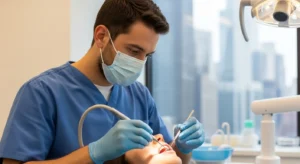
Pingback: Teeth Cleaning Cost NYC Without Insurance: Stop Overpaying