Finding out how much a teeth cleaning will actually cost you in New York City without insurance shouldn’t feel like solving a mystery. Yet here you are, probably calling dental offices and getting vague answers, or worse—sticker shock when the bill arrives.
Here’s the straightforward truth: teeth cleaning cost NYC without insurance typically ranges from $75 to $400 depending on where you go and what type of cleaning you need. But that’s just the starting point. Hidden fees, unnecessary upsells, and neighborhood price variations can dramatically change what you’ll actually pay.
This guide cuts through the confusion. You’ll discover exact pricing across all five boroughs, learn about options that cost under $100, and pick up strategies to avoid the common traps that make New Yorkers overpay. Whether you’re in Manhattan facing $200+ quotes or in the Bronx looking for the best value, you’ll know exactly where to go and what to expect.
One in four New Yorkers lacks dental insurance, so you’re far from alone in this search. The good news? Smart alternatives exist beyond expensive private practices, and this guide will show you every single one.
Table of Contents
NYC Teeth Cleaning Costs by Type

Not all teeth cleanings are created equal, and understanding the differences will save you from unnecessary expenses. The type of cleaning you actually need determines what you should pay.
Routine Prophylaxis Cleaning
This is the standard teeth cleaning most people with healthy gums need twice a year. During a routine cleaning, the dental hygienist removes plaque and tartar from above your gum line, polishes your teeth, and provides a visual examination of your mouth.
What you’ll pay for teeth cleaning cost NYC without insurance:
- Dental schools: $50-$75
- Community health centers: $60-$100
- Corporate chains (Aspen Dental, Western Dental): $90-$150
- Private practices: $100-$200
- Boutique Manhattan offices: $150-$300
The appointment typically takes 30 to 45 minutes. This is what you need if you’ve maintained regular dental care, have no gum disease, and your gums don’t bleed when you brush or floss.
A routine cleaning catches problems early when they’re cheap to fix. That small cavity detected now costs $150 to fill. Wait two years? You’re looking at a $1,200 root canal and crown.
Deep Cleaning (Scaling and Root Planing)
Deep cleaning goes below the gum line to remove bacteria and tartar from the tooth roots. This treatment addresses early to moderate gum disease and costs significantly more than routine cleaning. For detailed pricing breakdowns and what to expect during the procedure, see our complete guide to teeth deep cleaning costs in New York.
Cost breakdown for teeth cleaning cost NYC without insurance:
- Per quadrant (one quarter of your mouth): $150-$400
- Full mouth treatment: $600-$1,600
- Duration: 1-2 hours per session, often requiring multiple appointments
You genuinely need deep cleaning if you have:
- Periodontal pocket depths of 4mm or greater
- Bleeding gums during examination
- Visible tartar below the gum line
- X-ray evidence of bone loss around teeth
Here’s where things get tricky. Some dental offices aggressively push deep cleaning on patients who only need routine cleaning. It’s the most common upsell in dentistry, turning your expected $100 visit into an $800+ surprise.
Red flag alert: If a dentist recommends deep cleaning during your very first visit without showing you measurements or explaining pocket depths, get a second opinion before agreeing to anything.
Periodontal Maintenance Cleaning
After completing deep cleaning treatment, patients with gum disease history need more frequent maintenance cleanings. This specialized cleaning prevents gum disease from returning.
Typical costs:
- Per visit: $125-$300
- Frequency: Every 3-4 months (not the standard 6 months)
- Annual cost: $500-$1,200 for four visits
Periodontal maintenance is necessary if you’ve had gum disease treatment and your dentist has documented your condition. It’s more intensive than routine cleaning but less invasive than the initial deep cleaning treatment.
Comparison at a Glance
| Cleaning Type | Cost Range | How Often | Best For |
|---|---|---|---|
| Routine Prophylaxis | $75-$200 | Every 6 months | Healthy gums, preventive care |
| Deep Cleaning | $150-$400 per quadrant | As needed | Gum disease treatment |
| Periodontal Maintenance | $125-$300 | Every 3-4 months | Post-treatment care, disease history |
Understanding these distinctions protects you from paying for services you don’t need. The teeth cleaning cost NYC without insurance varies dramatically based on the type, so confirm exactly what’s being recommended and why before agreeing.
NYC Teeth Cleaning Costs by Borough
Where you get your teeth cleaned in New York City matters almost as much as what type of cleaning you need. Rental costs, local competition, and neighborhood demographics create dramatic price variations across the five boroughs.
Manhattan Teeth Cleaning Costs
Manhattan shows the widest price range in the city, with location within the borough making a substantial difference.
Upper Manhattan (Harlem, Washington Heights, Inwood)
Routine cleaning in Upper Manhattan typically costs $90-$150. These neighborhoods offer better value than Midtown or downtown areas, with several community health centers providing sliding-scale fees.
Columbia University’s dental school sits near Washington Heights, making this area particularly good for accessing affordable care. Local practices face lower overhead than their Midtown counterparts and often pass those savings to patients.
Midtown, Upper West Side, and Upper East Side
The teeth cleaning cost NYC without insurance in these areas ranges from $150-$250 for routine service. High commercial rent and affluent clientele drive prices upward.
However, competitive pressure means many offices offer new patient specials. You’ll frequently find promotions for $99-$149 comprehensive first visits that include cleaning, examination, and X-rays—regularly priced at $300-$400.
Downtown Manhattan (East Village, West Village, Tribeca, Financial District)
Expect to pay $120-$200 for routine cleaning downtown. The area mixes boutique dental practices with some chain options, creating moderate price competition.
Young professionals in these neighborhoods often lack insurance through gig economy work, so practices sometimes offer cash discounts or payment plans when asked directly.
Brooklyn Teeth Cleaning Costs
Brooklyn’s diverse neighborhoods create equally diverse pricing structures.
North Brooklyn (Williamsburg, Greenpoint, Bushwick)
Teeth cleaning cost NYC without insurance in North Brooklyn runs $100-$180 for routine service. These formerly affordable neighborhoods have seen dental pricing rise alongside gentrification.
Williamsburg now sports upscale practices charging Manhattan-level fees, while Bushwick and deeper into East Williamsburg still offer more reasonable rates.
Central Brooklyn (Bed-Stuy, Crown Heights, Flatbush)
These neighborhoods deliver the best value in Brooklyn, with routine cleanings ranging from $75-$140. The area has a high concentration of community health centers offering sliding-scale fees based on income.
Families in Central Brooklyn can often access the same quality care available in pricier neighborhoods for 40-50% less by choosing federally qualified health centers over private practices.
South Brooklyn (Park Slope, Bay Ridge, Bensonhurst)
South Brooklyn teeth cleaning prices fall in the $90-$160 range. The mix of established family practices and corporate chains creates competitive pricing.
Park Slope skews toward the higher end, while Bay Ridge and Bensonhurst offer more moderate pricing with several multi-generational practices serving long-term residents.
Queens Teeth Cleaning Costs
Queens combines affordability with excellent provider diversity.
Western Queens (Astoria, Long Island City, Sunnyside)
Routine cleaning costs $90-$150 in Western Queens. The area’s proximity to Manhattan influences pricing upward slightly, but the borough generally maintains better value than across the East River.
Long Island City’s rapid development has brought newer practices with modern equipment, though pricing remains competitive due to the large number of providers.
Central Queens (Flushing, Jamaica, Forest Hills)
Central Queens delivers some of the city’s best combination of quality and value, with teeth cleaning cost NYC without insurance ranging from $80-$140.
Flushing’s large immigrant population supports numerous dental practices competing on price and service. Forest Hills offers established practices serving multi-generational families at reasonable rates.
Eastern Queens (Bayside, Fresh Meadows, Glen Oaks)
Eastern Queens pricing runs $85-$150 for routine cleaning. The residential character and lower commercial rents compared to Western Queens translate to moderate pricing.
Bronx Teeth Cleaning Costs
The Bronx consistently offers the lowest teeth cleaning cost NYC without insurance, with routine services typically ranging from $70-$130.
The borough has the highest concentration of federally qualified health centers in the city, providing sliding-scale fees that can drop as low as $25-$50 for qualifying low-income residents. Even private practices maintain competitive pricing due to the abundance of community health options.
For New Yorkers willing to travel, the Bronx represents outstanding value without sacrificing quality. Several practices have built excellent reputations serving the community for decades.
Staten Island Teeth Cleaning Costs
Staten Island teeth cleaning prices range from $85-$145 for routine service. The borough has fewer options than Brooklyn or Queens, reducing competition slightly.
However, Staten Island’s lower cost of living compared to Manhattan keeps prices reasonable. Residents sometimes find better value traveling to Brooklyn, particularly if they work in the borough and can schedule appointments near their workplace.
Geographic Price Pattern Summary
The teeth cleaning cost NYC without insurance follows a clear pattern: Manhattan costs most, followed by North Brooklyn and Western Queens, with the Bronx offering the best value. But remember—the cheapest option isn’t necessarily crossing boroughs. Travel time and lost wages might offset savings, and dental schools in Manhattan can beat even Bronx private practice pricing.
What’s Actually Included in the Teeth Cleaning Price
Understanding exactly what you’re paying for prevents surprise bills and helps you compare quotes accurately. The advertised teeth cleaning cost NYC without insurance often covers less than you might assume.
Standard Routine Cleaning Typically Includes
When a dental office quotes you for a “cleaning,” this usually means:
Plaque and tartar removal – The hygienist uses specialized tools to scrape off hardened deposits from your teeth surfaces
Teeth polishing – A gritty paste and rotating brush remove surface stains and smooth your teeth
Flossing – Professional flossing reaches areas you might miss at home
Basic visual examination – The dentist performs a quick check for obvious problems
Oral hygiene instructions – Brief guidance on proper brushing and flossing technique
That’s it. Everything else typically costs extra, and this is where your $95 cleaning quote can suddenly become $350.
Common Add-Ons That Increase Costs
These services frequently appear on your bill without clear advance warning:
Comprehensive Dental Examination: $50-$150
Most offices require a full exam for new patients, separate from the cleaning fee. The exam includes:
- Detailed charting of all teeth conditions
- Periodontal measurements (gum pocket depths)
- Oral cancer screening
- TMJ evaluation
- Treatment planning
Many practices won’t perform a cleaning without this exam, making it effectively mandatory for your first visit. Established patients might need comprehensive exams annually or biennially.
X-Rays: $25-$250
X-ray costs vary dramatically by type:
- Bitewing X-rays (2-4 images): $25-$75 – Show cavities between teeth
- Full mouth series (18-20 images): $100-$250 – Comprehensive view of all teeth and bone
- Panoramic X-ray: $75-$200 – Single wide-angle image of entire mouth
Offices often present X-rays as required, but this represents office policy rather than legal requirement. You can negotiate down to basic bitewings instead of a full series if you’re healthy and had recent X-rays elsewhere.
The teeth cleaning cost NYC without insurance jumps significantly when X-rays enter the picture, so clarify this cost before your appointment.
Fluoride Treatment: $20-$50
Fluoride application strengthens enamel and helps prevent cavities. It’s valuable for cavity-prone patients but optional for most adults with good oral hygiene.
Staff may present fluoride as part of the standard cleaning, but you can decline it. Insurance typically covers fluoride for children but not adults, indicating its optional nature for grown-ups.
Dental Sealants: $30-$60 per tooth
Sealants are protective coatings applied to the chewing surfaces of back teeth. They’re primarily recommended for children and teenagers, though some adults benefit if they’re cavity-prone.
Each tooth sealed adds to your bill, so a full set of molars could add $180-$360 to your teeth cleaning cost NYC without insurance.
The Questions You Must Ask Before Booking
Protect yourself from surprise bills by asking these specific questions when scheduling:
“What’s the cost for just the cleaning itself, without any add-ons?”
This establishes the baseline price. If they can’t answer clearly, that’s a red flag.
“Is a comprehensive exam required for the first visit, and what does that cost separately?”
Get the exam fee stated explicitly. Some offices bundle it into first-visit pricing, others charge separately.
“Are X-rays required, or is that recommended? What would the X-rays cost if I get them?”
The word “required” matters. Challenge whether it’s genuinely required or office preference. Ask specifically about bitewings versus full series.
“What’s the total out-the-door price for a new patient visit including cleaning, exam, and basic X-rays?”
This forces them to give you the complete picture. A bundled price is often better than itemized charges.
“Do you offer any new patient promotions or discounts for uninsured patients?”
Many offices have specials they won’t mention unless you ask. A simple question can save you $100-$200.
“What payment methods do you accept, and do you offer payment plans?”
Confirms whether they take credit cards, CareCredit, or only cash/check. Payment plan options matter for expensive procedures.
Your Pre-Appointment Cost Checklist
Download or copy this list to use when calling dental offices:
- [ ] Base cleaning cost: $______
- [ ] Exam required? Yes / No → Cost: $______
- [ ] X-rays required? Yes / No → Type: ______ Cost: $______
- [ ] Fluoride included or extra? → Cost if extra: $______
- [ ] New patient special available? Yes / No → Total package price: $______
- [ ] Payment plans available? Yes / No
- [ ] Accepted payment methods: ________________
Having specific numbers for teeth cleaning cost NYC without insurance before you sit in the chair prevents unwelcome surprises and gives you leverage to comparison shop effectively.
Affordable Teeth Cleaning Options in NYC
Getting quality dental care without insurance doesn’t mean choosing between your teeth and your rent. New York City has numerous affordable options that deliver professional cleaning for a fraction of typical private practice fees.
Dental Schools: The Best-Kept Secret
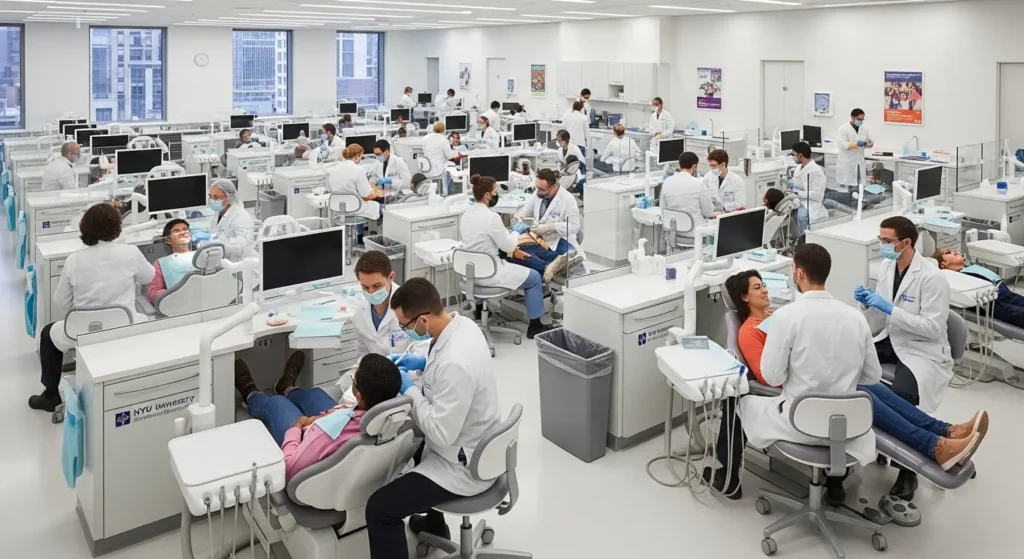
Dental schools provide the most dramatic savings on teeth cleaning cost NYC without insurance. Students perform the work under close faculty supervision, delivering thorough care while building their skills.
NYU College of Dentistry
- Location: 345 E 24th St, Manhattan (near Gramercy)
- Routine cleaning cost: $50-$75
- Comprehensive exam: $60-$100
- X-rays: $40-$80
- Phone: (212) 998-9800
- Booking: Online appointment system available
NYU’s dental school serves thousands of patients annually. The main tradeoff is time—appointments typically run 2-3 hours versus 45 minutes at private practices. Students work methodically with frequent faculty check-ins to ensure quality.
What to expect: Your first visit involves intake paperwork, medical history review, and comprehensive examination. The cleaning itself happens during a subsequent appointment. Budget 4-8 weeks from initial call to actual cleaning completion.
Quality level: Students are closely supervised by experienced faculty who inspect all work. Many patients report more thorough cleanings than they’ve received at rushed private practices. The care is excellent; you’re trading time for money.
Columbia College of Dental Medicine
- Location: 630 W 168th St, Manhattan (Washington Heights)
- Routine cleaning cost: $55-$80
- Phone: (212) 305-6100
- Process: Similar to NYU with multi-hour appointments and wait times
Columbia operates similarly to NYU but serves upper Manhattan neighborhoods. The location is convenient for residents of Washington Heights, Harlem, and the Bronx.
Practical tips for dental school appointments:
Bring a book, downloaded podcast, or work you can do on your phone. The extended appointment time allows you to multitask while receiving care. Schedule when you don’t have time pressure afterward—don’t book a dental school appointment before an important meeting.
Students appreciate patient, understanding clients. Being kind and conversational makes the experience pleasant for everyone and often results in even more attentive care.
The teeth cleaning cost NYC without insurance drops to its absolute lowest at dental schools without sacrificing quality. If you can spare the extra time, this option delivers unbeatable value.
Federally Qualified Health Centers (FQHCs)
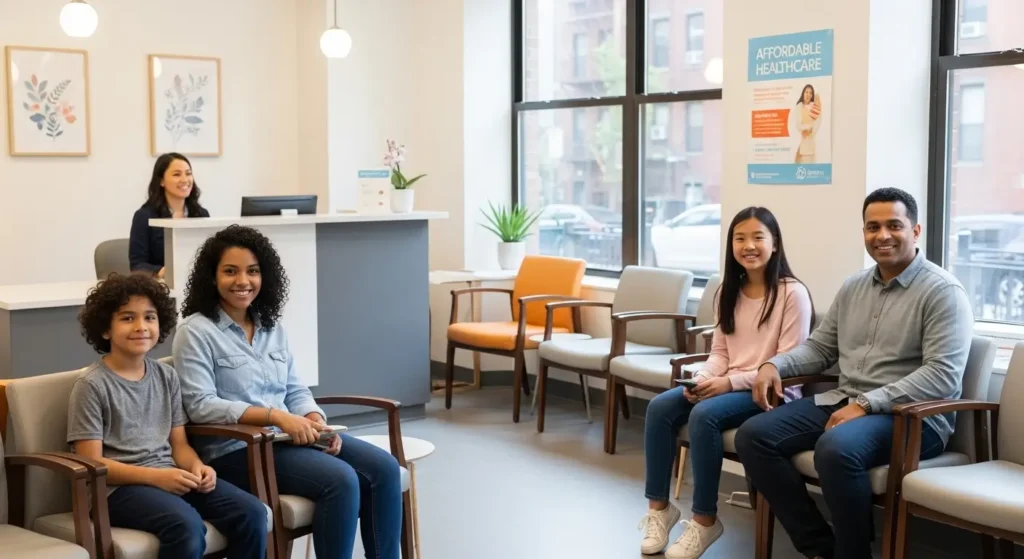
FQHCs are non-profit community health centers that serve everyone regardless of insurance status or ability to pay. They use sliding fee scales based on your household income and family size.
How sliding scales work:
You provide documentation of your income (recent pay stubs, tax returns, or proof of government benefits). The health center calculates your fee tier based on federal poverty guidelines. Fees can be reduced by 50-80% below standard rates.
For example, a single person earning $30,000 annually might pay $60 for a cleaning that costs $150 at a private practice. Someone earning $20,000 might pay $40. Those at the lowest income levels sometimes pay nothing.
Major NYC FQHCs with dental services:
Manhattan:
William F. Ryan Community Health Center
- Multiple locations across Manhattan
- Sliding scale fees starting around $25-$40 for lowest income tiers
- Phone: (212) 316-7906
- Serves: Upper West Side, Midtown West
Institute for Family Health
- 16 locations citywide including several in Manhattan
- Comprehensive dental services with sliding fees
- Accepts walk-ins at some locations
Brooklyn:
Brooklyn Plaza Medical Center
- Comprehensive health center with dental services
- Phone: (718) 596-9800
- Location: Downtown Brooklyn
Sunset Park Health Council
- Multiple Brooklyn locations
- Large immigrant community served
- Multilingual staff
Queens:
Joseph P. Addabbo Family Health Center
- Several Queens locations
- Phone: (718) 945-7150
- Strong dental program with evening hours
The Bronx:
The Bronx has the highest concentration of FQHCs in the city, making it the best borough for sliding-scale dental care.
Urban Health Plan
- Multiple Bronx locations
- Phone: (718) 991-6100
- Comprehensive dental services
Morris Heights Health Center
- Long-established Bronx provider
- Excellent reputation in community
Staten Island:
Island Family Health Care
- Main option for Staten Island residents
- Limited locations compared to other boroughs
Typical FQHC costs for teeth cleaning:
The teeth cleaning cost NYC without insurance at FQHCs ranges dramatically based on income:
- Highest income tier (still qualifying): $80-$120
- Middle income tier: $40-$80
- Lowest income tier: $10-$40 or free
FQHCs also offer payment plans if even the sliding scale fee creates hardship. They cannot turn patients away for inability to pay.
Free and Low-Cost Dental Clinics
Several organizations provide free or extremely low-cost dental care to qualifying New Yorkers.
NYC Free Clinic
- Location: 16 E 16th St, Manhattan
- Cost: Free for qualifying low-income residents
- Phone: (212) 777-0891
- Services: Basic cleanings, exams, limited restorative treatment
Eligibility is income-based, typically serving those at or below federal poverty level. The clinic operates on donations and volunteer dentist hours, so capacity is limited. Expect wait lists, but the completely free care makes it worth pursuing if you qualify.
Dental Van Programs
Mobile dental units travel throughout the five boroughs providing free or low-cost care at rotating locations. These programs often focus on underserved communities and may set up at:
- Community centers
- Public housing developments
- Churches and religious organizations
- Schools (primarily for children, but sometimes serve families)
Check the NYC Health Department website for current mobile dental clinic schedules. Locations and dates change monthly, so you’ll need to track when services come to your neighborhood.
Community Health Fairs
Free dental screenings and sometimes cleanings occur at periodic health fairs throughout the city. These events are announced through:
- Local community board websites
- Churches and community organizations
- Public library bulletin boards
- Neighborhood Facebook groups
While you can’t rely on health fairs for regular care, they provide excellent opportunities for free cleanings and can connect you with ongoing affordable providers.
Discount Dental Plans (Not Insurance)
Discount dental plans are membership programs that provide reduced fees at participating dentists. These aren’t insurance—you pay the dentist directly at discounted rates.
How they work:
You pay an annual membership fee ($80-$200). In return, you receive 15-50% discounts on dental services at participating providers. There are no claim forms, waiting periods, or annual maximums like with insurance.
Major plans with NYC networks:
Careington Dental Plan
- Annual fee: $99-$149 for individuals
- Savings on cleanings: Typically 20-40% off standard fees
- NYC participating dentists: 500+ locations across all boroughs
- Example savings: $150 cleaning becomes $90-$120
Aetna Dental Access
- Annual fee: $120-$180 per individual
- Network: Large NYC provider network
- Discount range: 15-50% depending on procedure type
DentalPlans.com Network Plans
- Annual fees: $80-$200 depending on specific plan
- Comparison shopping: Website lets you compare multiple plans
- Provider search: Find participating dentists by ZIP code
Is a discount plan worth it for teeth cleaning cost NYC without insurance?
Let’s do the math:
Scenario 1: Only getting cleanings
- Plan cost: $129/year
- Two cleanings with plan at $80 each = $160
- Total annual cost: $289
Compare to:
- Two cleanings without plan at $150 each = $300
- Savings: $11/year
Verdict: Barely worth it for cleanings alone.
Scenario 2: Cleanings plus other work
- Plan cost: $129/year
- Two cleanings at $80 = $160
- Two fillings at 40% discount ($240 vs. $400) = saves $160
- Total savings: $149/year
Verdict: Becomes worthwhile when you need additional procedures.
Bottom line on discount plans: They make sense if you need more than just preventive care. For cleanings only, dental schools and FQHCs provide better value. But if you need fillings, crowns, or other work and prefer private practices over dental schools, a discount plan can save money.
Before purchasing any discount plan, verify that:
- Dentists in your neighborhood actually participate
- The plan covers the specific procedures you need
- Reviews of participating dentists are positive
- You can cancel and get a refund if dissatisfied (some plans offer this)
New Patient Specials at Private Practices
Many dental offices offer promotional packages for new patients to build their practice. These specials can provide genuine value if you choose carefully.
Common promotional offers:
- $99 comprehensive first visit – Includes cleaning, exam, and X-rays (regularly $250-$400)
- $149 new patient package – Similar services at slightly higher price point
- Free exam with paid cleaning – Worth $50-$100 saved
Where to find legitimate specials:
- Practice websites (Google “dental cleaning specials NYC”)
- Yelp business pages (check “About this business” section)
- Chain dental offices (Aspen Dental, Gentle Dental often run promotions)
- Social media ads from local practices
Groupon and similar deal sites – Use extreme caution:
Groupon dental deals range from legitimate to predatory bait-and-switch schemes. The pattern works like this:
- You buy a $49 “comprehensive dental cleaning” Groupon
- You arrive and they claim you have gum disease, need deep cleaning instead
- The $49 doesn’t apply; you’re told you need $600-$1,200 in “necessary” treatment
- High-pressure sales tactics push you to commit immediately
Red flags when evaluating deals:
- Office has numerous reviews mentioning the bait-and-switch
- Deal seems impossibly cheap (under $50 for cleaning plus exam plus X-rays)
- Business has poor Better Business Bureau rating
- Reviews mention aggressive upselling or surprise charges
How to use new patient specials safely:
Check reviews thoroughly before booking. Look specifically for mentions of the promotional deal and whether the office honored it. A few negative reviews appear for every business, but if 30% of reviews mention bait-and-switch tactics, believe them.
Ask specific questions when booking: “I’m calling about the $99 new patient special. Assuming I have healthy gums and just need a routine cleaning, will that price include everything?” Get confirmation.
Be prepared to walk out if they claim you need expensive treatment you weren’t expecting. Getting a second opinion is always appropriate.
Legitimate new patient specials do exist and provide excellent value. The teeth cleaning cost NYC without insurance drops significantly with these promotions, but protect yourself by choosing carefully and staying alert for upselling pressure.
Payment Options and Financial Strategies
Even with affordable provider options, you might face unexpected dental costs or need financial flexibility. Understanding payment mechanisms helps you manage teeth cleaning cost NYC without insurance and any additional treatment.
Payment Plans and Medical Financing
CareCredit – The Most Common Option
CareCredit is a healthcare-specific credit card accepted at thousands of dental offices nationwide including hundreds in NYC.
How it works:
- Apply online or in the dental office
- Approval typically within minutes
- Use like a credit card for healthcare expenses
The promotional interest trap:
CareCredit offers 0% interest for 6, 12, 18, or 24 months depending on the amount charged. This sounds great, but there’s a massive catch: if you don’t pay the ENTIRE balance before the promotional period ends, you owe interest retroactively from day one at 26.99% APR.
Example of how it goes wrong:
- You charge $1,500 for dental work
- Get 12 months at 0% interest
- Pay $125/month for 11 months = $1,375 paid
- Balance remaining: $125
- Promotional period ends with balance remaining
- Now you owe interest on the FULL $1,500 for the entire year
- Interest charge: Approximately $400 added to your account
How to use CareCredit safely:
Set automatic payments for slightly more than the minimum required to pay off during the 0% period. If offered 12 months for a $1,200 procedure, set automatic payments of $105-110/month to ensure payoff before month 12.
Credit requirements:
CareCredit typically requires a credit score of 600 or higher, though some applicants with lower scores get approved for smaller credit lines. Having income documentation helps if your credit is borderline.
In-House Payment Plans
Many dental practices offer their own payment arrangements without involving outside financing companies. These vary widely by office.
Typical terms:
- Down payment required (often 20-30% of total cost)
- Remaining balance divided over 3-6 months
- Often interest-free if payments are made on schedule
- Some practices charge 5-10% interest on payment plans
Advantages over CareCredit:
- More flexible approval (office makes the decision, not a finance company)
- Sometimes available for smaller amounts ($200-$500) that don’t justify CareCredit
- Payment schedules can be more personalized to your situation
- Less risk of the retroactive interest trap
How to arrange an in-house plan:
Ask directly: “Do you offer payment plans for uninsured patients?” Don’t assume every office does, but many will work with you, especially for larger treatment plans.
Affirm and LendingClub Patient Solutions
Alternative financing companies increasingly partner with dental offices.
Affirm:
- Point-of-sale financing with fixed monthly payments
- Interest rates from 0-30% APR depending on creditworthiness
- Transparent terms (what you see at approval is what you get)
- No retroactive interest surprises
LendingClub:
- Medical financing specifically
- Interest rates vary widely based on credit
- Fixed payment terms
These alternatives to CareCredit can work better for people with good credit who won’t benefit from the 0% promotion or who want predictable fixed payments without the retroactive interest risk.
Using FSA and HSA Accounts
If you have access to Flexible Spending Accounts or Health Savings Accounts through employment or a high-deductible health plan, you can use pre-tax dollars for dental care.
Flexible Spending Account (FSA):
FSAs let you set aside pre-tax money from your paycheck for medical and dental expenses. The tax savings effectively give you a 20-30% discount on healthcare.
How it works:
- Elect a contribution amount during open enrollment (often $2,500-3,000 maximum)
- Money comes out of paycheck pre-tax throughout the year
- Use FSA debit card or submit receipts for reimbursement
- Use it or lose it – Funds expire at year end (some plans allow small rollover or grace period)
Strategy for teeth cleaning cost NYC without insurance:
Schedule dental cleanings and any needed work in November or December if you have FSA funds that will expire. Many people suddenly remember their use-it-or-lose-it FSA money in late December and scramble to book appointments.
What FSA covers:
- Teeth cleanings
- Exams and X-rays
- Fillings, crowns, root canals
- Braces and orthodontics
- Dentures and bridges
Health Savings Account (HSA):
HSAs pair with high-deductible health insurance plans and offer even better tax advantages than FSAs.
How it differs from FSA:
- Funds roll over year after year (no use-it-or-lose-it)
- You own the account even if you change jobs
- Triple tax advantage: pre-tax contributions, tax-free growth, tax-free withdrawals for medical expenses
- Can invest HSA funds for long-term growth
Contribution limits:
- Individual coverage: $4,150
- Family coverage: $8,300 (These amounts adjust annually)
Strategy for dental care:
If you have both an HSA and need significant dental work, consider paying current expenses out-of-pocket while letting HSA funds grow tax-free. You can reimburse yourself years later with no time limit, essentially using your HSA as a tax-advantaged investment account.
Direct payment at dental offices:
Many dental practices accept FSA and HSA debit cards directly, making payment seamless. If your card doesn’t work, pay with a regular card and submit documentation for reimbursement.
Negotiating and Getting Cash Discounts
You have more negotiating power for teeth cleaning cost NYC without insurance than you might think, especially at private practices.
The cash discount approach:
When calling to schedule or during the new patient intake, ask: “I’m paying out-of-pocket without insurance. Do you offer a cash discount or reduced rate for uninsured patients who pay in full at the time of service?”
Why this works:
Insurance billing creates administrative hassle and cost for dental practices. They must:
- Verify coverage before treatment
- Submit claims and wait for payment (30-90 days)
- Deal with claim denials and resubmissions
- Accept whatever the insurance pays (often less than their full fee)
When you pay cash immediately, you eliminate all that headache and the office gets money today rather than months from now. That’s worth something.
Realistic expectations:
- Private practices: 10-20% cash discount possible
- Chain offices: Limited flexibility, strict corporate pricing
- Dental schools and FQHCs: Already discounted, no room for negotiation
Best practices for negotiating:
Be polite and direct: “I need to be mindful of my budget. Is there any flexibility on the price, or do you have a standard rate for uninsured patients paying cash?”
Don’t be demanding: Frame it as a question, not a demand. You’re asking about their policies, not insisting they change prices.
Ask before treatment: Negotiate when booking or during the initial exam, not after services are rendered.
Be willing to walk away: If they won’t budge and you can get better value elsewhere (dental school, FQHC), politely decline and try another provider.
Timing your negotiation:
End of month can work in your favor. Some practices have monthly production goals or targets. A dentist who’s close to their goal might be more flexible to secure another patient.
What else to ask about:
Beyond direct discounts, inquire about:
- Payment plans without interest
- Package pricing if you need multiple family members seen
- New patient promotions they might not advertise
- Bundling services (if you need cleaning plus fillings, ask about package pricing)
The worst they can say is no. Many New Yorkers overpay for teeth cleaning simply because they never asked about alternatives.
Should You Buy Individual Dental Insurance Instead?
This question deserves honest analysis because insurance companies spend millions marketing to uninsured individuals.
How dental insurance typically works:
Coverage tiers:
- Preventive care (cleanings, exams, X-rays): Usually 100% coverage
- Basic care (fillings, simple extractions): Usually 70-80% coverage
- Major care (crowns, bridges, root canals): Usually 50% coverage
The catches that limit value:
Annual maximum benefit: Most plans cap benefits at $1,000-$1,500 per year. This hasn’t increased in decades despite inflation in dental costs. Major dental work easily exceeds this limit.
Waiting periods: Most individual plans impose waiting periods before coverage begins:
- Preventive care: Often immediate or 30 days
- Basic care: Typically 6 months
- Major care: Usually 12 months
This means you’ll pay premiums for a full year before you can use the plan for anything beyond cleanings.
Monthly premiums: Individual dental insurance costs $25-$60 per month ($300-$720 annually).
Missing tooth clauses: Many plans won’t cover replacing teeth you lost before buying the policy.
Pre-existing condition limits: Needed a crown that was diagnosed before buying insurance? Many plans won’t cover it.
Real-world math for teeth cleaning cost NYC without insurance:
Scenario 1: You only need preventive care (cleanings and exams)
With insurance:
- Monthly premium: $40
- Annual cost: $480
- Insurance covers: 2 cleanings, 2 exams
- Your out-of-pocket for covered services: $0
- Total annual cost: $480
Without insurance using affordable options:
- 2 cleanings at dental school: $100-$150
- 2 exams: Included or $60-$100 extra
- Total annual cost: $160-$250
Verdict: You save $230-$320 annually by skipping insurance and using dental schools or FQHCs.
Scenario 2: You need preventive care plus some fillings
With insurance:
- Monthly premium: $45
- Annual cost: $540
- 2 cleanings + exams: Covered 100% = $0
- 2 fillings: Insurance pays 80%, you pay 20%
- Filling cost: $200 each = $400 total
- Insurance pays: $320
- You pay: $80
- Total annual cost: $540 premium + $80 copay = $620
Without insurance:
- 2 cleanings at dental school: $150
- 2 fillings at dental school: $150-$200
- Total annual cost: $300-$350
Verdict: You save $270-$320 by skipping insurance and using affordable providers.
Scenario 3: You need a crown plus routine care
With insurance after 12-month waiting period:
- Monthly premium: $50
- Annual cost: $600
- 2 cleanings: Covered = $0
- Crown: $1,200 procedure
- Insurance pays 50%: $600
- You pay: $600
- Total cost: $600 premium + $600 copay = $1,200
Without insurance:
- 2 cleanings at dental school: $150
- Crown at dental school: $500-$700
- Total cost: $650-$850
Verdict: Even with major work, you save $350-$550 using dental schools.
When does insurance actually make sense?
Buy dental insurance if:
- Your employer subsidizes the premium (you pay $0-$15/month)
- You have multiple family members needing care (family plans can provide better value)
- You have chronic dental problems requiring frequent treatment beyond preventive care
- You strongly prefer private practice over dental schools and community health centers
- You already know you need major work and can plan around waiting periods
Skip dental insurance if:
- You’re paying full individual premium with no employer contribution
- You have good dental health and only need preventive care
- You’re willing to use dental schools or FQHCs for affordable care
- You’d rather save that premium money in an HSA for actual dental costs
For most uninsured New Yorkers, the math clearly favors skipping individual dental insurance and using the affordable provider options we’ve covered. The teeth cleaning cost NYC without insurance becomes far more manageable when you choose dental schools ($50-$75) or FQHCs ($25-$100 with sliding scale) rather than paying $300-$720 annually in insurance premiums that barely benefit you.
How to Avoid Overpaying for Teeth Cleaning
Beyond finding affordable providers, you need to protect yourself from common tactics that inflate teeth cleaning cost NYC without insurance beyond what’s necessary.
Common Upselling Tactics in NYC Dental Offices
The Deep Cleaning Bait-and-Switch
This is the most prevalent scam in dentistry, particularly targeting patients who see promotional deals.
How it works:
- Office advertises “$99 comprehensive teeth cleaning” to attract new patients
- You arrive and the hygienist or dentist performs periodontal measurements
- They claim you have gum disease and need deep cleaning (scaling and root planing)
- The promotional $99 cleaning doesn’t apply to deep cleaning
- You’re told you need $600-$1,600 in treatment
- They present this as urgent, medically necessary care
The reality:
Some patients genuinely need deep cleaning, but aggressive practices recommend it to almost everyone who walks through the door regardless of actual gum health.
How to protect yourself:
Ask to see your periodontal measurements. Healthy gums have pocket depths of 1-3mm. Deep cleaning becomes appropriate at:
- 4-5mm with bleeding and inflammation
- 6mm or deeper (definitely needs treatment)
If they claim you need deep cleaning, ask these questions:
“What are my specific pocket depth measurements? Can you show me which teeth have pockets over 4mm?”
“Is there bleeding and inflammation in those areas, or just the measurements?”
“Can we do localized treatment in problem areas rather than full-mouth deep cleaning?”
“What happens if I get a second opinion before proceeding?”
A legitimate dentist will answer these questions patiently and provide documentation. A scammer will pressure you to commit immediately.
Red flag statements:
- “Your insurance requires deep cleaning” (insurance doesn’t diagnose)
- “We have an opening today, we should do it now” (creating false urgency)
- “If you don’t do this, you’ll lose your teeth” (fear-mongering for borderline cases)
Your best defense: Get a second opinion from a dental school before agreeing to deep cleaning recommended during a first visit. Dental schools have no financial incentive to over-diagnose.
The X-Ray Requirement Tactic
Many offices claim X-rays are “required” for first visits or annual cleanings.
The truth: Very few states legally require X-rays before cleaning. Most of the time, “required” means “office policy,” not legal mandate.
Why they push X-rays:
- X-rays are profitable (minimal cost to take, charged at $25-$250)
- They can find treatment needs visible only on X-rays
- Some dentists genuinely believe comprehensive X-rays are medically necessary
X-rays do have value: They detect cavities between teeth, bone loss, abscesses, and other issues not visible during visual examination. The question is frequency and extent.
Reasonable X-ray protocol:
- New patient: Bitewing X-rays (4 images) to check for cavities = $25-$50
- Annual or biennial: Bitewings to monitor cavity development
- Every 3-5 years: Full mouth series if healthy, more often if you have dental disease
Excessive X-ray protocol:
- Full mouth series (18-20 images) for every new patient regardless of health = $100-$250
- Annual full mouth series for healthy patients
- Panoramic X-ray plus full series for new patients = $200-$400
How to handle X-ray pressure:
“I’d prefer to start with just bitewing X-rays today. If those show concerns, we can discuss additional imaging.”
“I had full X-rays taken last year at my previous dentist. Can I have those transferred here?”
“Is this legally required or office policy? I’d like to minimize radiation exposure.”
Most offices will agree to limited X-rays if you push back politely. If they refuse to see you without expensive X-rays and you’re a healthy patient, that’s a red flag about their priorities.
The “You Have 10 Cavities” Diagnosis
Some dentists take an extremely aggressive approach to diagnosing cavities, recommending fillings for tiny spots that could be monitored instead.
The gray area in dentistry:
Cavities exist on a spectrum from initial enamel demineralization to large decay. Where to draw the line for treatment varies by dentist philosophy:
- Conservative approach: Watch and monitor small areas, intervene when decay clearly progresses
- Aggressive approach: Fill anything that might potentially become a cavity
Both can be defended medically, but aggressive diagnosis is often financially motivated.
Warning signs of over-diagnosis:
- You’ve had good dental health, now suddenly you need 6-10 fillings
- The dentist doesn’t show you the X-rays or point out specific decay
- Every tooth has “something” that needs work
- Treatment is presented as urgent when you have no pain or symptoms
How to respond:
“Can you show me on the X-rays exactly where you see decay?”
“Which of these are definitely cavities versus areas you’re watching?”
“What happens if we monitor the questionable areas for six months and see if they progress?”
“I’d like a second opinion before proceeding with this much work.”
Get a second opinion from:
- A dental school (students have no financial incentive to over-diagnose; faculty supervise)
- Another private practice (don’t mention the first diagnosis)
- A third opinion if the first two drastically differ
The cost of a second opinion exam ($50-$150) is minor compared to the cost of unnecessary fillings ($150-$300 each).
The Fluoride Upsell
Staff may present fluoride treatment as standard or necessary, adding $20-$50 to your teeth cleaning cost NYC without insurance.
The reality: Fluoride treatment benefits children and adults at high risk for cavities. For adults with good oral hygiene and no cavity history, the benefit is minimal.
How it’s presented:
- “We’ll do your fluoride treatment now” (stated as if automatic)
- “Would you like fluoride today?” (presented as standard care)
How to respond if you don’t want it:
“I’ll skip the fluoride today, thank you.”
That’s it. You don’t need to justify or explain. Fluoride is optional for adults. If they push back with “but it’s recommended,” you can say “I understand, but I’d like to decline.”
Red Flags When Choosing a NYC Dental Office
Before booking an appointment, screen potential dentists for warning signs:
Warning signs to avoid:
❌ Aggressive treatment plans on first visit – Comprehensive care needed immediately for thousands of dollars
❌ High-pressure tactics – “This discount expires today if you don’t commit now”
❌ Won’t provide itemized cost breakdowns – Vague about what things cost until after services rendered
❌ Refuses to transfer records – Legally required to provide your records on request
❌ Terrible online reviews mentioning upselling – If 20-30% of reviews mention bait-and-switch or unnecessary treatment, believe them
❌ Won’t provide pre-treatment estimates – (Relevant if you have insurance, but shows transparency issues)
❌ Groupon deals with consistent complaint patterns – Dozens of reviews saying they were told they needed deep cleaning instead of the advertised service
❌ Office seems more interested in selling than healing – Feels more like a sales environment than healthcare
Green flags to seek out:
✅ Transparent pricing provided upfront – Willing to quote costs before treatment begins
✅ Conservative treatment philosophy – Recommends monitoring borderline issues rather than immediate intervention
✅ Takes time to educate patients – Explains options, shows X-rays, answers questions patiently
✅ No pressure tactics – Supports second opinions, doesn’t create false urgency
✅ Provides written treatment plans – Documents recommendations so you can review and consider
✅ Consistent positive reviews – Most reviews mention fair pricing, honest diagnoses, gentle care
✅ Established in community – Long-term presence suggests satisfied patient base
How to research NYC dentists before booking:
- Google the practice name + “reviews” and read both Google reviews and Yelp
- Check the New York State Education Department website to verify the dentist’s license is active and check for disciplinary actions
- Look for reviews specifically mentioning the costs and whether estimates matched final bills
- Search the practice on Reddit’s r/AskNYC or r/nyc to see if anyone has mentioned them
Five minutes of research can save you hundreds of dollars and protect you from predatory practices.
Getting a Second Opinion
Second opinions aren’t just okay—they’re smart healthcare practice, especially for teeth cleaning cost NYC without insurance when you’re paying out-of-pocket.
When you should definitely get a second opinion:
- Treatment plan exceeds $500
- Diagnosis of “needs deep cleaning” on your very first visit to that office
- Multiple cavities found (4+) when you’ve historically had good dental health
- Recommendation for extraction or root canal
- Any time you feel pressured, rushed, or uncomfortable with the diagnosis
- The explanation doesn’t make sense or wasn’t clearly communicated
How to get a second opinion effectively:
Request your records from the first dentist. They must provide them (it’s your legal right). Most will email X-rays or provide them on a CD.
Don’t reveal the first diagnosis to the second dentist. Simply say “I’d like a comprehensive exam” and let them make their own assessment. If they reach the same conclusion independently, it’s likely accurate.
Use a dental school for second opinions when possible. Faculty-supervised care and no financial incentive to over-diagnose makes dental schools ideal for objective second opinions.
Compare specific findings: If the first dentist said you have cavities on teeth #3, #14, and #19, does the second dentist identify decay on the same teeth? If they find completely different issues, that’s suspicious.
Consider a third opinion if the first two drastically differ. Three dentists rarely all disagree if there’s clear disease present.
Cost of second opinions:
- Dental school comprehensive exam: $60-$100
- Private practice second opinion exam: $75-$150
This cost is minor compared to potential savings from avoiding unnecessary treatment. A $100 second opinion that saves you from an unnecessary $800 deep cleaning provides 8x return on investment.
How to frame your request:
“I received a treatment recommendation from another dentist and want a second opinion before proceeding. I have my X-rays here. Could you do an examination and let me know your assessment?”
Professional dentists respect second opinions and won’t be offended by the request.
What Happens If You Skip Teeth Cleanings
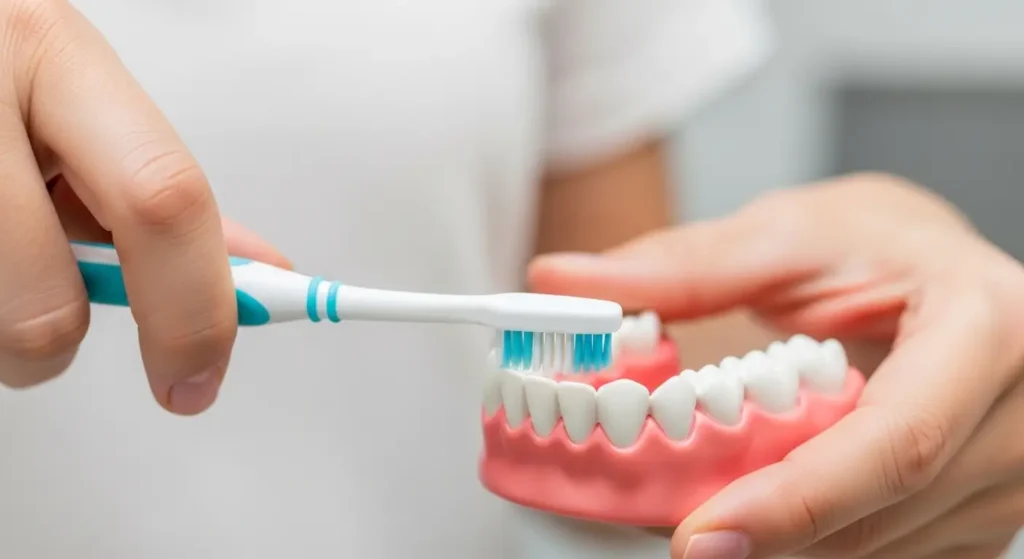
Understanding the consequences of postponing dental care helps you make informed decisions about prioritizing teeth cleaning cost NYC without insurance in your budget.
The Cost Escalation Timeline
Dental disease progresses predictably when preventive care is neglected. Here’s what typically happens:
Months 6-12 of Skipping Cleanings
What’s happening in your mouth:
- Plaque begins hardening into tartar (calculus) on tooth surfaces
- Tartar accumulates especially between teeth and along the gum line
- Early gingivitis develops (gum inflammation)
- Gums may bleed occasionally during brushing
- Minor surface staining appears
What you notice:
- Possibly nothing yet, or slight gum tenderness
- Mild bad breath that mouthwash doesn’t fully resolve
Cost to fix at this stage:
- Standard cleaning may still work: $75-$200
- Possible spot scaling for heavy tartar: $100-$150
Year 1-2 of Skipping Cleanings
What’s happening:
- Significant tartar buildup visible on teeth
- Gingivitis progresses toward early periodontitis
- Gum pockets begin deepening beyond normal 1-3mm depths
- Bacteria under the gum line causes persistent inflammation
- Early cavities may form, especially between teeth
- Bad breath becomes noticeable to others
What you notice:
- Bleeding every time you brush
- Gums appear redder, possibly puffy
- Persistent bad taste or odor
- Possible tooth sensitivity
Cost to fix at this stage:
- Deep cleaning (scaling and root planing): $600-$1,200 for full mouth
- Filling cavities that developed: $150-$300 each (possibly 1-3 cavities = $300-$900)
- Total potential cost: $900-$2,100
Skipping $150 in cleanings now costs you $900-$2,100 to fix. That’s 6-14x more expensive.
Year 3-5 of Skipping Cleanings
What’s happening:
- Moderate to advanced periodontitis (gum disease)
- Bone loss around teeth roots begins
- Deep gum pockets (6mm+) harbor bacteria
- Multiple cavities in various stages
- Possible tooth abscesses or infections
- Teeth may begin loosening as bone support deteriorates
- Some teeth may require extraction
What you notice:
- Gums receding, teeth appear longer
- Teeth feel loose or shift position
- Pain when chewing certain foods
- Severe bad breath despite oral hygiene efforts
- Possible pus between gums and teeth
- One or more teeth causing significant pain
Cost to fix at this stage:
- Periodontal surgery (gum disease treatment): $1,000-$3,000
- Multiple fillings or crowns: $1,500-$4,000
- Possible extractions: $150-$300 per tooth
- Tooth replacement (implant, bridge, or partial denture): $1,500-$5,000 per tooth
- Total potential cost: $5,000-$15,000+
Skipping $450 worth of cleanings over three years can result in $5,000-$15,000 in necessary treatment.
Year 5+ of Complete Dental Neglect
What’s happening:
- Severe periodontal disease with major bone loss
- Multiple teeth loose or lost
- Remaining teeth with extensive decay
- Chronic oral infections
- Systemic health impacts from oral bacteria
What you notice:
- Multiple missing teeth affecting ability to eat properly
- Significant pain or discomfort
- Embarrassment about appearance
- Difficulty speaking clearly
- Overall health impacts (more on this below)
Cost to fix at this stage:
- Full mouth rehabilitation: $15,000-$40,000+
- Multiple implants or full dentures: $20,000-$50,000
- Periodontal treatment for remaining teeth: $3,000-$8,000
The compounding cost principle:
Every $1 spent on preventive care (cleanings, exams) saves an average of $8-$50 in restorative treatment. This isn’t scare tactics—it’s documented dental economics.
Health Consequences Beyond Your Mouth
The impact of skipping teeth cleaning extends far beyond teeth cleaning cost NYC without insurance. Oral health connects directly to overall health.
Gum Disease Links to Systemic Health Conditions:
Cardiovascular disease and stroke
Research shows people with periodontal disease have 2-3 times higher risk of heart attack and stroke. The connection appears to be inflammatory: bacteria from diseased gums enter the bloodstream, contributing to arterial inflammation and plaque buildup.
Diabetes complications
The relationship between gum disease and diabetes flows both directions. Diabetes makes gum disease worse by impairing immune response, and gum disease makes diabetes harder to control by increasing insulin resistance. If you have diabetes, dental care becomes even more critical.
Respiratory infections
Bacteria from periodontal disease can be aspirated into the lungs, contributing to pneumonia, bronchitis, and worsening of chronic obstructive pulmonary disease (COPD).
Pregnancy complications
Pregnant women with gum disease show higher rates of preterm birth and low birth weight babies. The inflammatory response to oral bacteria may trigger early labor.
Alzheimer’s disease and dementia
Emerging research suggests associations between periodontal disease and cognitive decline. The bacteria Porphyromonas gingivalis, common in gum disease, has been found in the brains of Alzheimer’s patients.
The bacteria-inflammation pathway:
Diseased gums create openings for oral bacteria to enter your bloodstream. Your immune system responds with chronic low-level inflammation throughout your body. This persistent inflammation contributes to the development and progression of numerous chronic diseases.
Why this matters for cost decisions:
When you’re struggling with teeth cleaning cost NYC without insurance, remember you’re not just paying for dental care—you’re investing in prevention of far more expensive medical problems. A $5,000 dental crisis is manageable compared to a $50,000 heart attack or $200,000+ stroke with long-term disability.
Minimum Care Recommendations for Tight Budgets
If you absolutely cannot afford regular professional cleanings right now, follow this minimum protection protocol:
Priority #1: Daily Home Care (Cost: ~$8/month)
Brush twice daily with fluoride toothpaste
- Morning and night, minimum 2 minutes each time
- Use a soft-bristled toothbrush
- Replace brush every 3 months
- Toothpaste cost: $4-$5 for 6-month supply
Floss daily
- Every single day, not occasionally
- Reaches the 40% of tooth surfaces brushing misses
- Floss cost: $3-$4 for 3-month supply
Proper technique matters: Brush at 45-degree angle to gum line with gentle circular motions. Floss gently curves around each tooth in a C-shape, going below the gum line.
This basic routine prevents most cavities and slows gum disease progression dramatically. It’s the absolute foundation.
Priority #2: At Least One Professional Cleaning Annually
Even if you can’t afford twice-yearly cleanings, get ONE professional cleaning every 12-18 months at minimum. Use the most affordable option available:
- Dental school cleaning: $50-$75
- FQHC with sliding scale: $25-$75 (based on income)
- New patient special at private practice: $99-$149
Save $5-$10 monthly in a jar or separate account specifically for this annual cleaning. It’s easier to manage than finding $75 all at once.
Priority #3: Address Problems Immediately
Don’t ignore warning signs requiring urgent care:
- Persistent toothache – Indicates cavity reaching the nerve; delays lead to infection
- Bleeding gums – Sign of gum disease; gets worse if ignored
- Loose tooth – Indicates bone loss; may be savable if treated quickly
- Swelling or abscess – Dental infection requiring immediate treatment
- Broken tooth – Needs protection to prevent further damage
Dental schools and FQHCs treat emergencies and offer payment plans. An emergency visit at a dental school costs far less than an emergency room visit that can’t actually fix the problem.
Total minimum annual investment:
- Home care products: $96/year ($8/month)
- One professional cleaning: $50-$100
- Total: $146-$196/year
This bare minimum approach prevents most catastrophic dental problems and maintains basic oral health until your financial situation improves enough to afford regular care.
Compare this to the alternative: ignoring all dental care and facing $5,000-$15,000 in treatment needs after several years of neglect.
NYC-Specific Resources and Programs
New York City offers numerous assistance programs that reduce teeth cleaning cost NYC without insurance for qualifying residents.
NYC Government Dental Programs
NYC Health + Hospitals Dental Services
The city’s public hospital system operates dental clinics across all boroughs serving everyone regardless of insurance or immigration status.
How it works:
- Sliding fee scale based on household income
- Payment plans available
- No one turned away for inability to pay
- Same-day emergency dental care at some locations
Locations across NYC:
- Bellevue Hospital (Manhattan) – 462 1st Ave
- Harlem Hospital (Manhattan) – 506 Lenox Ave
- Metropolitan Hospital (Manhattan) – 1901 1st Ave
- Woodhull Hospital (Brooklyn) – 760 Broadway
- Coney Island Hospital (Brooklyn) – 2601 Ocean Pkwy
- Kings County Hospital (Brooklyn) – 451 Clarkson Ave
- Elmhurst Hospital (Queens) – 79-01 Broadway
- Queens Hospital Center (Queens) – 82-68 164th St
- Jacobi Medical Center (Bronx) – 1400 Pelham Pkwy S
- Lincoln Medical Center (Bronx) – 234 E 149th St
- North Central Bronx Hospital (Bronx) – 3424 Kossuth Ave
How to access:
- Call 1-844-NYC-4NYC (1-844-692-4692)
- Visit any location during clinic hours
- Bring proof of NYC residency and income documentation for sliding scale
Emergency Dental Clinic – Bellevue Hospital
For dental emergencies, Bellevue operates a walk-in clinic.
- Location: 462 1st Avenue, Manhattan (Dental Clinic, Ground Floor)
- Hours: Extended hours including evenings (call to confirm current schedule)
- Services: Emergency treatment for pain, infection, trauma
- Cost: Sliding scale based on ability to pay
What qualifies as emergency: Severe pain, swelling, broken teeth from trauma, abscesses, uncontrolled bleeding.
Programs for Specific Populations
Seniors Age 65 and Older
Department for the Aging (DFTA) Dental Programs
Some NYC senior centers offer dental services including cleanings through DFTA partnerships.
How to access:
- Call 311 and ask for senior dental services in your area
- Visit your local senior center and inquire about dental programs
- Services vary by location—some offer on-site care, others provide referrals
DFTA also coordinates:
- Transportation to dental appointments for homebound seniors
- Dental care for residents in senior housing facilities
- Education programs about oral health for older adults
Children and Teens Under 19
Child Health Plus
Child Health Plus State-sponsored health insurance for children under 19 in families that earn too much for Medicaid but still need affordable coverage. Just as families need to budget for pediatrician costs in New York, dental care is a critical component of children’s health that shouldn’t be overlooked.
Coverage includes:
- Unlimited dental cleanings
- All preventive and restorative dental care
- Orthodontics if medically necessary
- No copays or deductibles for dental services
Eligibility:
- Based on household income (varies by family size)
- Many working families qualify
- Children in families earning up to 400% of federal poverty level may qualify
How to apply:
- Visit nystateofhealth.ny.gov
- Call 1-855-355-5777
- Apply in person at community enrollment centers
School-based dental programs:
Many NYC public schools offer dental screenings and sometimes treatment through mobile dental units or school health centers. Ask your school’s parent coordinator about available services.
Pregnant Women
Medicaid Prenatal Care Coverage
New York’s Medicaid program provides comprehensive dental coverage during pregnancy with no waiting period.
Coverage includes:
- Routine cleanings and exams
- X-rays (safe with proper shielding)
- Fillings and extractions
- Treatment of gum disease
- Emergency dental care
Why this matters:
Pregnancy hormones increase risk of gum disease, and untreated gum disease raises risk of pregnancy complications. Getting dental care during pregnancy is safe and important.
Eligibility:
- Pregnant women with household income up to 218% of federal poverty level
- No immigration status restrictions for prenatal care
How to apply:
- Apply through NYC Human Resources Administration
- Online at ACCESS NYC (access.nyc.gov)
- Emergency Medicaid often approved quickly for pregnant women
Veterans
VA NY Harbor Healthcare System
Veterans enrolled in VA healthcare may qualify for dental services.
Eligibility for comprehensive dental:
- 100% service-connected disability
- Service-connected dental condition or disability
- Former prisoner of war
- Recently separated (within 180 days) from active duty
Eligibility for limited dental:
- Enrolled in VA healthcare
- Specific service-connected dental issues
- Dental treatment needed related to other VA medical care
Contact:
- Manhattan VA: (212) 686-7500 – 423 E 23rd St
- Brooklyn VA: (718) 836-6600 – 800 Poly Pl
- Bronx VA: (718) 584-9000 – 130 W Kingsbridge Rd
People with Disabilities
Several organizations provide specialized dental care for people with physical, developmental, or cognitive disabilities.
Special Care Dentistry Programs:
- Helen Keller Services for the Blind – Dental program for vision-impaired New Yorkers
- YAI/National Institute for People with Disabilities – Dental care for adults with developmental disabilities
- United Cerebral Palsy of NYC – Dental services for members with cerebral palsy and related conditions
These programs understand the unique needs of patients with disabilities and provide adapted care, including sedation dentistry when appropriate.
Nonprofit Organizations Offering Dental Assistance
New York Mission Society
Provides comprehensive health services including dental care to underserved communities.
- Multiple locations in Manhattan and Bronx
- Sliding fee scale
- Multi-generational family programs
- Call (212) 674-3500 for information
Community Healthcare Network
Large network of community health centers with dental services across NYC.
- 12 locations in Manhattan, Bronx, Brooklyn
- FQHC status means sliding scale fees
- Multilingual services
- Same-day appointments sometimes available
- Visit www.chnnyc.org for locations
The Bowery Mission
Provides free dental care specifically for individuals experiencing homelessness.
- Location: 227 Bowery, Manhattan
- Services: Emergency dental care, cleanings, extractions
- Eligibility: Must be unhoused or in extreme poverty
- No appointment needed: Walk-in clinic days
Hispanic Federation Member Organizations
Network of community organizations serving Latino communities, many offering dental services or referrals.
- Locations throughout NYC
- Culturally competent care
- Spanish-speaking staff
- Sliding scale fees at many locations
Visiting Nurse Service of New York (VNSNY)
For homebound individuals, VNSNY coordinates dental care including mobile dental units that come to patients’ homes.
- Serves patients unable to travel to dental offices
- Covered by some insurance; sliding scale for others
- Call (212) 609-1900 for information
These organizations exist specifically to help New Yorkers access dental care regardless of ability to pay. Using these resources isn’t charity—it’s utilizing systems designed for exactly this purpose.
Frequently Asked Questions
How much is a teeth cleaning in NYC without insurance?
Routine teeth cleaning cost NYC without insurance ranges from $75 to $200 at most providers. Dental schools like NYU charge $50-$75, community health centers with sliding scales charge $25-$100 based on income, and upscale Manhattan practices may charge $200-$300. The citywide average is approximately $120-$150 for a basic cleaning.
Does NYC have free dental clinics?
Yes. NYC Free Clinic at 16 E 16th Street in Manhattan offers free care for qualifying low-income residents. Additionally, Federally Qualified Health Centers like William F. Ryan Community Health Center provide sliding-scale fees that can be $0 for the lowest income levels. Mobile dental vans also offer periodic free cleanings throughout the five boroughs.
Is teeth cleaning at NYU dental school worth it?
Absolutely for budget-conscious patients. While appointments take 2-3 hours versus 45 minutes at private practices, you receive thorough, faculty-supervised care for $50-$75 compared to $150-$200 elsewhere. Wait time for first appointments is typically 4-8 weeks. The quality is excellent—students are closely monitored and often provide more detailed care than rushed private practices.
Can I negotiate teeth cleaning prices in NYC?
Yes, especially at private practices. Politely ask about cash discounts (10-20% possible), uninsured patient rates, or payment plans. Corporate chains have less flexibility on pricing. The best time to negotiate is when booking your appointment or at the end of the month when offices may have production goals to meet.
What’s the difference between regular cleaning and deep cleaning?
Regular cleaning (prophylaxis) removes plaque above the gum line and costs $75-$200. Deep cleaning (scaling and root planing) goes below the gum line to treat gum disease and costs $150-$400 per quadrant. Only get deep cleaning if you have periodontal pocket depths of 4mm or greater with bleeding gums. Always get a second opinion if deep cleaning is recommended during your very first visit to a new dentist.
Do I need X-rays for a teeth cleaning in NYC?
Not legally. While many offices require X-rays for new patients as “office policy,” this is discretionary rather than legally mandated. You can decline or negotiate basic bitewing X-rays ($25-$50) instead of a full series ($150-$250). X-rays are genuinely useful for detecting cavities and bone loss, but annual frequency may be excessive for healthy patients with no symptoms.
How often should I get my teeth cleaned?
The standard recommendation is twice yearly (every 6 months). However, people with excellent oral hygiene and no gum disease may only need annual cleanings, while those with periodontal disease may need quarterly maintenance. Discuss your individual risk factors with your dentist rather than blindly following the 6-month rule. Insurance covering two cleanings per year doesn’t mean everyone medically requires that frequency.
What’s cheaper: dental insurance or paying out-of-pocket in NYC?
For routine preventive care only (2 cleanings per year), paying out-of-pocket at affordable providers ($100-$150 yearly) is cheaper than insurance premiums ($300-$720 yearly). Insurance may save money if you need major work, but annual maximums ($1,000-$1,500) limit benefits. Most uninsured New Yorkers save money using dental schools or FQHCs rather than buying individual insurance.
Can I use my HSA or FSA for teeth cleaning?
Yes. Both Health Savings Accounts (HSA) and Flexible Spending Accounts (FSA) cover teeth cleanings, exams, and most dental procedures. This provides a 20-30% tax savings by using pre-tax dollars. Some dental offices accept HSA/FSA cards directly; otherwise, pay with regular funds and submit receipts for reimbursement.
What questions should I ask before booking a cleaning?
Ask these essential questions: (1) What’s the total cost for just the cleaning itself? (2) Is an exam required for first visits and what does it cost separately? (3) Are X-rays required and what’s the cost? (4) Do you have new patient specials or discounts for uninsured patients? (5) What payment methods do you accept? (6) Are payment plans available? Get itemized pricing to avoid surprise fees when the bill arrives.
How can I tell if a dentist is recommending unnecessary work?
Red flags include aggressive treatment plans on first visit, pressure to commit immediately (“this discount expires today”), diagnosis of many cavities when you’ve historically had good dental health, and refusing to provide written estimates or show you X-rays. For treatment over $500 or deep cleaning recommendations during first visits, always get a second opinion from a dental school or independent provider.
What’s the cheapest way to get teeth cleaned in Manhattan?
NYU College of Dentistry at $50-$75 is the cheapest option in Manhattan. Federally Qualified Health Centers like William F. Ryan Community Health Center offer sliding-scale fees ($25-$100 based on income). For those who don’t qualify for income-based assistance, new patient specials at chain offices ($99-$149 for cleaning, exam, and X-rays) can provide good value.
Are Groupon dental deals safe?
Use extreme caution. While some legitimate practices use Groupon, many deals are bait-and-switch tactics where the advertised cleaning is unavailable and you’re told you need expensive deep cleaning instead. Always read reviews carefully, verify the dentist’s license on the New York State Education Department website, and confirm exact services included before purchasing. Avoid any offer with numerous complaints about upselling.
What happens if I haven’t had a cleaning in 5 or more years?
You’ll likely have significant tartar buildup and may need deep cleaning ($600-$1,600 full mouth) rather than routine cleaning. You may also have developed cavities and gum disease requiring additional treatment. Start at a dental school for an honest, conservative assessment. Don’t let embarrassment prevent you from going—dentists see this situation regularly and won’t judge you for past neglect.
Your Action Plan: What To Do Next

You now understand teeth cleaning cost NYC without insurance across all options, from the $50 dental school cleanings to the $200+ private practices. You know about sliding-scale community health centers, new patient specials, and how to avoid common pricing traps.
Information only helps when you act on it. Here’s your specific next step based on your situation.
Determine Your Best Option
If your household income is below 200% of federal poverty level:
Start with Federally Qualified Health Centers (FQHCs) offering sliding-scale fees, or apply for NYC Health + Hospitals dental services. You likely qualify for care at $25-$75 per visit, possibly free.
Action: Call the FQHC nearest your home or work tomorrow and ask about their sliding fee scale. Bring recent pay stubs or proof of income to your first appointment.
If you have a flexible schedule and tight budget:
Book an appointment at NYU College of Dentistry or Columbia dental school. The 2-3 hour appointments and 4-8 week wait times are worth the $50-$75 cost savings.
Action: Call NYU Dental at (212) 998-9800 this week to start the new patient process. Ask specifically about wait times so you can plan accordingly.
If you need care quickly and can afford $100-$150:
Look for new patient specials at reputable private practices. The $99-$149 packages including cleaning, exam, and X-rays provide good value without long wait times.
Action: Search “dental cleaning specials near [your neighborhood]” and call three offices with good reviews to compare their new patient offers.
If you have moderate income but want affordable ongoing care:
Consider establishing care at a dental school or FQHC even if your first visit needs to be elsewhere due to urgency. Building a relationship with an affordable provider saves money long-term.
Action: Get the immediate care you need now, then schedule a second appointment at a dental school or FQHC for 6 months from now.
Make the Call This Week
Use this script when calling dental offices:
“Hi, I’m looking to schedule a teeth cleaning without insurance. I have a few quick questions:
- What’s your cost for a routine cleaning?
- What additional fees should I expect for the first visit, like exam or X-rays?
- Do you offer any new patient promotions?
- What payment options do you have?
- What’s your next available appointment?
Thank you.”
Write down the answers from each office you call. Compare at least three options before booking.
Prepare for Your Appointment
Bring these items:
- Photo ID (driver’s license or state ID)
- Proof of income if using sliding scale (pay stubs, tax return, benefit letter)
- Payment method (credit card, debit card, cash, HSA/FSA card)
- List of current medications
- Previous dental records if you have them (though not required)
Prepare these questions to ask during your visit:
- “Do I truly need deep cleaning, or is routine cleaning sufficient for my situation?”
- “Can you show me on the X-rays where you see concerns?”
- “What happens if I monitor this issue for six months rather than treating immediately?”
- “What are all my treatment options for this problem?”
Don’t be intimidated—these are reasonable questions that good dentists answer gladly.
Maintain Your Investment Between Cleanings
Professional cleaning is only part of oral health. Your daily habits determine whether that cleaning prevents problems or just temporarily cleans up neglect.
The non-negotiable daily routine:
Morning and evening: Brush for 2 full minutes with fluoride toothpaste using gentle circular motions at a 45-degree angle to your gum line.
Every night: Floss between all teeth, curving the floss around each tooth in a C-shape and going gently below the gum line.
Throughout the day: Drink water instead of sugary beverages. If you consume acidic or sugary foods, rinse your mouth with water afterward.
This routine costs about $8 monthly in toothbrush and floss and prevents hundreds to thousands in future dental work.
Schedule your next cleaning before leaving the office. The appointment six months away seems far off and easy to forget. Booking it while you’re there ensures you maintain consistent preventive care.
Stop Overpaying, Start Protecting Your Health
Teeth cleaning cost NYC without insurance doesn’t have to mean choosing between dental care and other necessities. Whether you spend $50 at a dental school, $75 with a sliding-scale fee at a community health center, or $150 at a private practice with a new patient special, affordable options exist in every borough.
The key points to remember:
Know the real costs: Routine cleanings range $75-$200, but affordable alternatives consistently deliver quality care for $50-$100 when you know where to look.
Use affordable providers strategically: Dental schools and FQHCs aren’t “lesser” options—they provide excellent care at dramatically lower prices because of their educational or nonprofit missions.
Ask questions before committing: Knowing what services cost before you sit in the dental chair prevents surprise bills and gives you negotiating power.
Get second opinions for expensive recommendations: A $100 second opinion exam can save you from $1,000+ in unnecessary treatment.
Skipping care costs more long-term: The $150 cleaning you skip today can easily become $2,000 in treatment you need tomorrow.
The most expensive dental care is the care you need because you avoided preventive services. Every six months you skip professional cleaning increases the likelihood of expensive problems developing.
Make one phone call this week to schedule a cleaning at a provider within your budget. Your teeth, your wallet, and your overall health will benefit from taking this single action.
Protecting your oral health protects your overall health and financial security. You now have the information you need to access affordable care in New York City. The next step is yours.


Pingback: Cost of Living in New York: 100+ Real Prices & Budgets