Home Blog Page 2

The Complete Guide to Pediatrician Cost in New York: Save Hundreds on Your Child’s Healthcare (2026)

You’re about to take your child to a pediatrician in New York, but the nagging worry about cost won’t go away. Will insurance cover it? What if you don’t have insurance? Why does your neighbor in Manhattan pay three times what your cousin in Buffalo pays for the same visit?

Understanding pediatrician cost in New York doesn’t have to be overwhelming. This comprehensive guide reveals exactly what you’ll pay across every region of New York State—from the Bronx to Buffalo—and shows you proven strategies to slash your out-of-pocket expenses.

Here’s what you’ll discover:

  • Actual costs you’ll pay for pediatrician visits across New York (with real numbers by borough and city)
  • How insurance transforms your bill from $300 to $0
  • Free and low-cost pediatric care options hiding in plain sight
  • Step-by-step guidance to find affordable care, even without insurance
  • Money-saving strategies that put hundreds of dollars back in your pocket

Whether you’re navigating Medicaid in the Bronx, comparing private practices in Westchester, or searching for sliding-scale clinics upstate, this guide gives you the pricing transparency you deserve.

Let’s dive into the real costs of pediatric care in New York—and how to afford it.

Table of Contents


Understanding Pediatrician Visit Types & What They Cost
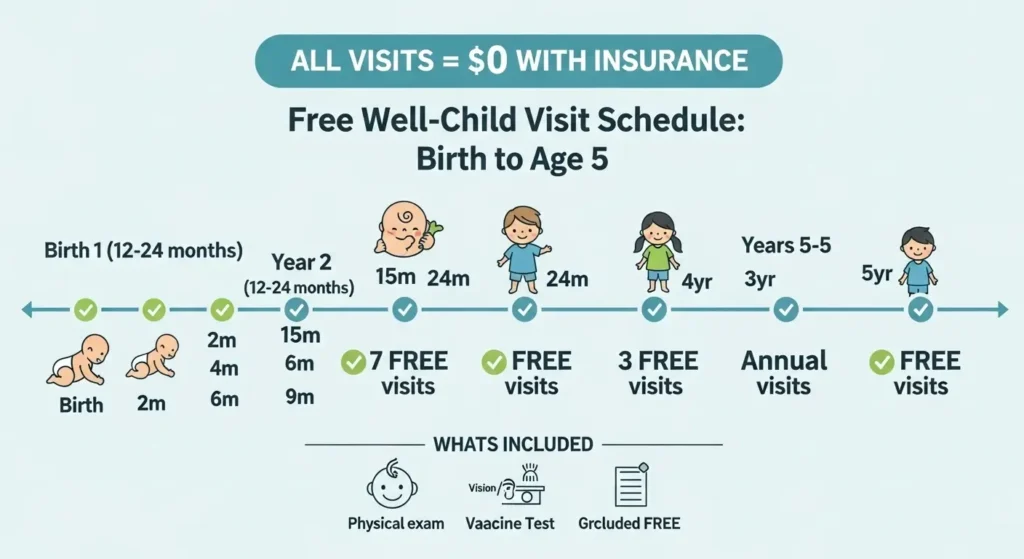
Well-child visit timeline showing recommended schedule from birth to age 5, with 7 visits in first year, all free with insurance

Before we break down pediatrician cost in New York by region, you need to understand what you’re paying for. Not all pediatric visits are created equal, and the type of visit dramatically affects your final bill.

Well-Child Visits (Preventive Care)

Well-child visits are the cornerstone of pediatric care. These scheduled checkups monitor your child’s growth, development, and overall health.

What’s included:

  • Complete physical examination
  • Developmental and behavioral screenings
  • Growth measurements (height, weight, head circumference)
  • Vision and hearing tests
  • Age-appropriate counseling on nutrition, safety, and sleep

Recommended schedule:

  • First year: Birth, 1 month, 2 months, 4 months, 6 months, 9 months, 12 months (7 visits)
  • Second year: 15 months, 18 months, 24 months (3 visits)
  • Ages 3-21: Annual checkups (19 visits)

Cost breakdown:

  • With insurance: $0-$30 copay (most plans cover at $0 under ACA preventive care)
  • Without insurance in NYC: $150-$300 per visit
  • Without insurance upstate: $100-$200 per visit

Here’s the great news: Well-child visits are covered at 100% by all ACA-compliant insurance plans when you use an in-network provider. This includes standard vaccinations administered during these visits.

Sick Visits

When your child wakes up with a fever, ear pain, or persistent cough, you’ll need a sick visit. These are unscheduled appointments addressing acute illness or injury.

Common reasons for sick visits:

  • Ear infections
  • Strep throat
  • Respiratory infections (colds, flu, bronchitis)
  • Stomach issues (diarrhea, vomiting)
  • Rashes and skin conditions
  • Minor injuries

Cost breakdown:

  • With insurance: $20-$50 copay
  • Without insurance in NYC: $150-$250 per visit
  • Without insurance upstate: $100-$175 per visit

Additional costs to anticipate:

  • Strep test: $25-$75 (often $0-$20 with insurance)
  • Flu test: $40-$80 (often $10-$30 with insurance)
  • Urinalysis: $30-$100 (often $0-$30 with insurance)
  • Prescriptions: $5-$50 depending on medication and insurance

New Patient Appointments

Your child’s first visit to a new pediatrician typically costs more because it involves comprehensive history-taking and establishing a care relationship.

What’s included:

  • Detailed medical history review
  • Family health history
  • Complete physical examination
  • Discussion of concerns and care philosophy
  • Records transfer coordination

Cost breakdown:

  • With insurance: $30-$50 copay
  • Without insurance in NYC: $200-$400
  • Without insurance upstate: $150-$300

Money-saving tip: Schedule your new patient visit as a well-child checkup if your child is due for one. It’ll be coded as preventive care and covered at 100% with most insurance plans.

Follow-Up Visits

Follow-up appointments check on a previous condition, monitor chronic issues, or adjust medications.

Cost breakdown:

  • With insurance: $20-$40 copay
  • Without insurance in NYC: $100-$200
  • Without insurance upstate: $75-$150

Specialist Referrals

When your pediatrician identifies issues requiring specialized care—developmental delays, severe allergies, chronic conditions, or complex diagnoses—they’ll refer you to a pediatric specialist.

Common pediatric specialists:

  • Pediatric allergist/immunologist
  • Pediatric cardiologist
  • Pediatric endocrinologist
  • Pediatric gastroenterologist
  • Pediatric pulmonologist
  • Developmental-behavioral pediatrician

Cost breakdown:

  • With insurance: $40-$75 specialist copay (higher than primary care)
  • Without insurance in NYC: $250-$500+ per visit
  • Without insurance upstate: $200-$400+ per visit

Insurance note: Most plans require a referral from your pediatrician before covering specialist visits. Always verify this requirement to avoid unexpected bills.


Pediatrician Cost in New York: Regional Price Breakdown
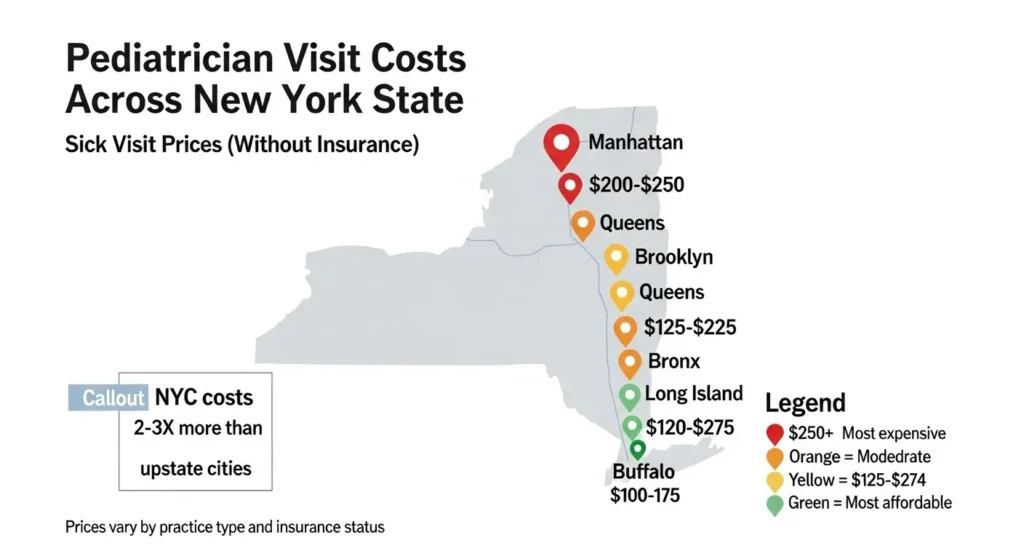
New York State map showing pediatrician visit costs by region, with Manhattan highest at $200-350 and upstate cities lowest at $100-200

The pediatrician cost in New York varies dramatically based on where you live. A sick visit in Manhattan can cost triple what you’d pay in Syracuse. Here’s your complete regional pricing guide.

New York City: The Five Boroughs

Manhattan

Manhattan pediatricians command the highest prices in New York State, reflecting premium real estate costs, higher operating expenses, and a concentration of concierge-style practices.

Average costs (without insurance):

  • New patient visit: $250-$500
  • Established patient sick visit: $200-$350
  • Well-child visit: $175-$300
  • Specialist referral: $300-$600

Neighborhood variations exist: Upper East Side and Tribeca practices often charge 20-30% more than Washington Heights or East Harlem.

With insurance: Most plans have standard copays of $30-$50 regardless of the practice’s full price, which is why staying in-network matters tremendously.

Brooklyn

Brooklyn offers more moderate pricing than Manhattan, though costs vary significantly by neighborhood.

Average costs (without insurance):

  • New patient visit: $200-$400
  • Established patient sick visit: $150-$275
  • Well-child visit: $150-$250

Neighborhood price guide:

  • Higher cost areas: Park Slope, DUMBO, Brooklyn Heights, Williamsburg
  • Moderate cost areas: Bay Ridge, Sunset Park, Bensonhurst
  • Lower cost areas: East New York, Brownsville, Canarsie

Community health centers in Brooklyn offer sliding-scale fees from $0-$50, providing excellent alternatives to high-priced private practices.

Queens

Queens provides diverse options with generally lower prices than Manhattan and Brooklyn’s expensive neighborhoods.

Average costs (without insurance):

  • New patient visit: $175-$350
  • Established patient sick visit: $150-$250
  • Well-child visit: $125-$225

Notable: Queens has numerous community health centers and practices accepting Medicaid, making it easier to find affordable care.

The Bronx

The Bronx typically has the most affordable private practice rates in NYC, plus extensive community health resources.

Average costs (without insurance):

  • New patient visit: $150-$300
  • Established patient sick visit: $125-$225
  • Well-child visit: $125-$200

Major advantage: The Bronx has strong community health infrastructure, including multiple NYC Health + Hospitals locations and FQHCs offering care regardless of ability to pay.

Staten Island

Staten Island’s pediatrician cost falls in the middle range among NYC boroughs.

Average costs (without insurance):

  • New patient visit: $175-$325
  • Established patient sick visit: $150-$225
  • Well-child visit: $125-$200

Surrounding Metro Areas

Long Island (Nassau & Suffolk Counties)

Long Island pediatricians charge rates comparable to outer NYC boroughs, with some variation between the North Shore and South Shore.

Average costs (without insurance):

  • New patient visit: $200-$375
  • Established patient sick visit: $150-$275
  • Well-child visit: $150-$250

Insurance tip: Many Long Island residents work in NYC and have insurance networks that don’t cover Long Island providers well. Always verify in-network status.

Westchester County

Westchester’s affluent communities support pediatric practices with pricing similar to Manhattan.

Average costs (without insurance):

  • New patient visit: $200-$400
  • Established patient sick visit: $175-$300
  • Well-child visit: $150-$275

Geographic note: Southern Westchester (Yonkers, New Rochelle) tends toward lower pricing than northern areas (Scarsdale, Armonk).

Upstate New York: Major Cities

Albany

New York’s capital city offers significantly lower pediatric costs than downstate.

Average costs (without insurance):

  • New patient visit: $150-$275
  • Established patient sick visit: $125-$200
  • Well-child visit: $100-$175

Buffalo

Western New York’s largest city provides some of the state’s most affordable pediatric care.

Average costs (without insurance):

  • New patient visit: $125-$250
  • Established patient sick visit: $100-$175
  • Well-child visit: $100-$150

Rochester

Rochester’s medical community, anchored by strong teaching hospitals, offers competitive pricing.

Average costs (without insurance):

  • New patient visit: $125-$250
  • Established patient sick visit: $100-$175
  • Well-child visit: $100-$160

Syracuse

Central New York provides affordable access to quality pediatric care.

Average costs (without insurance):

  • New patient visit: $125-$250
  • Established patient sick visit: $100-$175
  • Well-child visit: $100-$150

Why Such Dramatic Differences?

The pediatrician cost in New York varies by 200-300% from Manhattan to upstate cities. Here’s why:

NYC pediatricians face:

  • Commercial rent: $50-$200+ per square foot annually
  • Higher malpractice insurance: 40-60% more than upstate
  • Elevated staffing costs: Receptionists, nurses, and medical assistants command NYC wages
  • Increased operational expenses: Utilities, supplies, and services cost more

Upstate pediatricians benefit from:

  • Lower real estate costs: $10-$30 per square foot
  • Reduced malpractice premiums
  • Lower salary requirements for staff
  • Generally lower cost of doing business

Bottom line: Your ZIP code can determine whether you pay $100 or $300 for the same pediatric visit—making insurance coverage and knowledge of low-cost alternatives absolutely critical.


How Insurance Affects Your Pediatrician Cost in New York
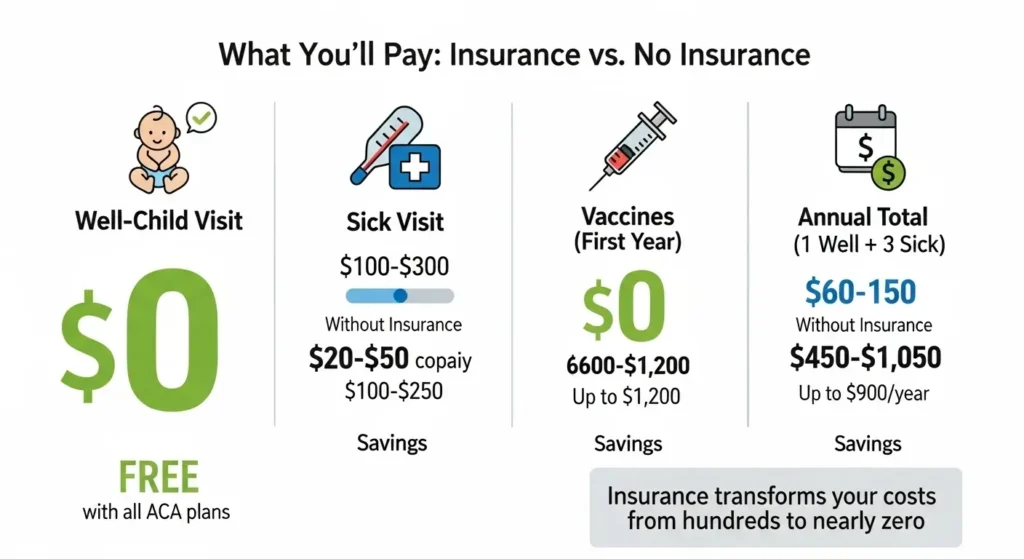
Cost comparison chart showing pediatrician visits with insurance ($0-50 per visit) versus without insurance ($100-300 per visit)

Insurance transforms the pediatrician cost in New York from potentially unaffordable to manageable. Understanding how your coverage works saves you hundreds of dollars annually.

Understanding Your Insurance Coverage: Key Terms

Before you can navigate pediatric costs, you need to understand these essential insurance terms:

Copay (Copayment)

  • Fixed amount you pay per visit
  • Typical pediatrician copays: $20-$50
  • Due at time of service
  • Example: $30 copay for sick visit, regardless of what the doctor charges

Deductible

  • Amount you pay out-of-pocket before insurance starts paying
  • Common range: $500-$5,000 per year for family plans
  • Preventive care (well-child visits) typically exempt from deductibles
  • Example: $2,000 deductible means you pay the first $2,000 of non-preventive medical costs

Coinsurance

  • Percentage you pay after meeting your deductible
  • Typical rate: 20% (insurance pays 80%)
  • Example: After meeting deductible, you pay 20% of a $200 specialist visit ($40)

Out-of-Pocket Maximum

  • Most you’ll pay in a year
  • Common range: $3,000-$9,000 for families
  • After reaching this, insurance pays 100%
  • Gives you financial protection against catastrophic costs

In-Network vs. Out-of-Network

  • In-network: Providers with contracted rates with your insurance
  • Out-of-network: Providers without contracts, costing you significantly more
  • Price difference: Often 50-200% more for out-of-network care
  • Critical: Always verify in-network status before appointments

Common Insurance Plans in New York

Private Insurance (Employer-Sponsored and Individual Plans)

The majority of New Yorkers with children receive insurance through an employer or purchase individual plans through NY State of Health.

Major insurance carriers in New York:

  • Anthem Blue Cross Blue Shield
  • UnitedHealthcare
  • Aetna
  • Cigna
  • EmblemHealth (GHI, HIP)
  • Oscar Health
  • Fidelis Care

Typical pediatrician copays:

  • Primary care visit: $20-$50
  • Specialist visit: $40-$75
  • Urgent care visit: $50-$100
  • Emergency room: $150-$300 (waived if admitted)

Well-child visits: Covered at $0 on all ACA-compliant plans (no copay, no deductible)

What you must verify:

  1. Is your pediatrician in-network?
  2. What’s your specific pediatric copay?
  3. Do well-child visits require authorization?
  4. Are vaccines covered during well visits?

Real example: Maria in Queens has Anthem BCBS through her employer. Her plan has a $30 primary care copay, but well-child visits cost her nothing. When her daughter gets an ear infection, she pays $30. Her annual cost for 2 well visits and 3 sick visits: $90.

Medicaid (New York State)

Medicaid provides comprehensive healthcare coverage to eligible low-income families with zero copays for pediatric care.

Coverage details:

  • Cost: $0 for all pediatric visits
  • Copays: None for children
  • Coverage includes: All preventive care, sick visits, specialist referrals, vaccines, prescriptions, dental, vision

Eligibility (2026 guidelines):

  • Children under 19 in families with income up to 223% of federal poverty level
  • Example: Family of four earning up to $69,090 annually
  • Pregnant women and infants have higher income limits

Important consideration: Not all private pediatricians accept Medicaid. Community health centers, NYC Health + Hospitals, and many group practices do accept it. Always call ahead to confirm.

How to apply:

  • Online: mybenefits.ny.gov
  • Phone: 1-855-355-5777
  • In person: Local Department of Social Services
  • Processing time: Typically 45 days (expedited for children)

Real example: James in the Bronx has three children covered by Medicaid. His family pays exactly $0 for all pediatric visits, vaccines, prescriptions, and dental care. His annual out-of-pocket cost: $0.

Child Health Plus

Child Health Plus is New York’s health insurance program for children under 19 who don’t qualify for Medicaid but need affordable coverage.

Cost structure:

  • Monthly premium: $0-$45 based on family income
  • Copays: $0-$30 per visit depending on income level
  • Coverage: Comprehensive including medical, dental, vision, prescription drugs, immunizations, hospital care

Income eligibility:

  • Families earning up to 400% of federal poverty level
  • Example: Family of four earning up to $124,800 annually can qualify

Premium tiers (2026):

  • Income 160-222% FPL: $9/month per child
  • Income 223-250% FPL: $15/month per child
  • Income 251-300% FPL: $30/month per child
  • Income 301-350% FPL: $45/month per child
  • Income 351-400% FPL: $60/month per child

No copays for:

  • Well-child visits
  • Immunizations
  • Lead screening
  • Preventive dental care

Real example: Linda in Rochester earns $55,000 annually with two children. She pays $18/month ($9 per child) for Child Health Plus. Her pediatrician copays are $15 per sick visit, and well-child visits cost nothing. Her annual cost: $216 premiums + ~$45 copays = $261 total.

NY State of Health (Marketplace Plans)

New York’s health insurance marketplace offers private insurance plans with federal subsidies for eligible families.

Plan tiers and typical pediatrician copays:

Bronze Plans (lowest premium, highest out-of-pocket):

  • Primary care copay: $35-$70 after deductible
  • Deductible: $3,000-$6,000
  • Well-child visits: $0 (exempt from deductible)
  • Best for: Healthy families wanting catastrophic coverage

Silver Plans (moderate premium and costs):

  • Primary care copay: $25-$50
  • Deductible: $1,000-$3,000
  • Well-child visits: $0
  • Best for: Most families, especially those qualifying for cost-sharing reductions

Gold Plans (higher premium, lower costs):

  • Primary care copay: $15-$30
  • Deductible: $500-$1,500
  • Well-child visits: $0
  • Best for: Families with chronic conditions or frequent healthcare needs

Platinum Plans (highest premium, lowest costs):

  • Primary care copay: $10-$20
  • Deductible: $0-$500
  • Well-child visits: $0
  • Best for: Families with very high healthcare utilization

Subsidy eligibility:

  • Available for families earning 138-400% of federal poverty level
  • Example: Family of four earning $43,056-$124,800
  • Subsidies reduce monthly premiums, sometimes to under $50/month

Real example: Carmen in Yonkers earns $65,000 with one child. She qualifies for subsidies and pays $175/month for a Silver plan (would be $400 without subsidies). Her pediatrician copay is $30. Annual cost: $2,100 premiums + ~$90 copays = $2,190.

No Insurance: Self-Pay Options

If you don’t have insurance, you’ll pay the full pediatrician cost in New York—but strategies exist to reduce these expenses.

Full self-pay rates: See regional pricing in Section 2

Cash-pay discounts:

  • Many practices offer 10-30% discounts for immediate payment
  • You must ask—these aren’t advertised
  • Some pediatricians have separate, lower cash-pay fee schedules

Payment plans:

  • Most practices offer interest-free installment plans
  • Typical terms: 3-12 months
  • No credit check required at many offices

Real example: Tom in Buffalo doesn’t have insurance. His pediatrician charges $150 for sick visits but offers a 20% cash discount, reducing the cost to $120. The practice also allows him to pay $40/month for three months. Annual cost for 3 sick visits + 1 well visit: ~$480 (vs. $600 full price).

What ACA Preventive Care Means for Your Child

The Affordable Care Act revolutionized pediatric care by mandating that all ACA-compliant insurance plans cover specific preventive services at 100%—no copay, no deductible, no coinsurance.

Covered at $0 for children on all ACA-compliant plans:

Well-child visits:

  • Newborn to 21 years
  • 30+ visits over childhood following AAP schedule
  • Must be coded as preventive (not sick visit)

Immunizations:

  • All ACIP-recommended vaccines
  • Must be given during preventive visit
  • Includes: DTaP, Hepatitis A & B, Hib, HPV, Influenza, MMR, Meningococcal, Pneumococcal, Polio, Rotavirus, Tdap, Varicella

Screenings:

  • Autism screening (18 and 24 months)
  • Behavioral/developmental assessments
  • Depression screening (adolescents)
  • Hearing screening (newborns, regular intervals)
  • Vision screening (newborns, regular intervals)
  • Lead screening (at-risk children)
  • Tuberculosis testing (high-risk children)
  • Obesity screening and counseling
  • STI counseling and screening (adolescents)

Critical requirement: You MUST use an in-network provider and the visit must be coded as preventive. If you mention a current illness or concern during a well-child visit, the doctor might bill it as a sick visit, triggering your copay.

Pro tip: Schedule separate appointments for well-child exams and sick visits when possible. This ensures your preventive visit remains free.

Real example: The Martinez family in Manhattan has three children. They schedule all recommended well-child visits and receive all vaccines on schedule. Despite living in the most expensive pediatric care market in New York, they pay exactly $0 for preventive care—saving approximately $2,500 annually compared to uninsured families.


Additional Costs to Expect Beyond the Visit

The base pediatrician cost in New York is just the beginning. Understanding additional charges helps you budget accurately and avoid surprise bills.

Vaccinations & Immunizations

Vaccines represent a significant healthcare expense in your child’s first two years—unless you have insurance or access free programs.

Cost with insurance:

  • $0 when administered during well-child visits (covered as preventive care)
  • Must use in-network provider
  • Vaccines given during sick visits may incur copays

Cost without insurance (per vaccine):

Individual vaccine costs in New York:

  • DTaP (Diphtheria, Tetanus, Pertussis): $70-$100
  • Hepatitis A: $50-$75 (2-dose series = $100-$150)
  • Hepatitis B: $40-$75 (3-dose series = $120-$225)
  • Hib (Haemophilus influenzae type b): $60-$90
  • HPV (Human papillomavirus): $200-$250 (3-dose series = $600-$750)
  • Influenza (Flu shot): $25-$50 annually
  • MMR (Measles, Mumps, Rubella): $75-$100
  • Meningococcal: $100-$150
  • Pneumococcal (PCV13): $150-$200
  • Polio (IPV): $50-$75
  • Rotavirus: $100-$150 (2-3 doses = $200-$450)
  • Tdap (Tetanus, diphtheria, pertussis booster): $50-$75
  • Varicella (Chickenpox): $90-$120

First-year vaccine costs (without insurance):

  • Total for all recommended vaccines: $600-$1,200
  • Given across 7 well-child visits

Administration fees: Some practices charge $10-$25 per vaccine injection on top of vaccine costs—verify this beforehand.

Free vaccine options in New York:

Vaccines for Children (VFC) Program:

  • Provides free vaccines to eligible children
  • Eligibility: Medicaid-enrolled, uninsured, underinsured, or American Indian/Alaska Native
  • Available at enrolled providers, health departments, and FQHCs

County Health Departments:

  • All 62 NY counties offer free or low-cost vaccines
  • Some restrict to VFC-eligible children; others serve all residents
  • Call your county health department for details

NYC Department of Health:

  • Free vaccine clinics throughout five boroughs
  • No appointment necessary at many locations
  • Serves all children regardless of insurance or immigration status

Community health centers:

  • FQHCs provide vaccines on sliding scale ($0-$25 typically)
  • Must be established patient at most centers

Money-saving strategy: Get your child’s well-child exam at a pediatrician ($0 with insurance) and vaccines at the county health department (free or low-cost). Verify your insurance won’t penalize this approach.

Real example: Sarah in Syracuse doesn’t have insurance. Instead of paying $750 for her baby’s 6-month vaccines at a pediatrician, she goes to Onondaga County Health Department and pays $0 through the VFC program. She schedules a separate well-child visit at a community health center for $25. Total cost: $25 instead of $900.

Lab Tests & Diagnostic Services

Many pediatric visits require diagnostic testing to confirm illnesses or rule out serious conditions.

Common tests and costs:

Strep throat rapid test:

  • Without insurance: $25-$75
  • With insurance: $0-$30
  • Often done in-office during sick visit

Urinalysis:

  • Without insurance: $30-$100
  • With insurance: $0-$30
  • Used for suspected UTIs, kidney issues

Complete Blood Count (CBC):

  • Without insurance: $50-$150
  • With insurance: $10-$50 (may apply to deductible)
  • Checks for infections, anemia, other blood disorders

Lead screening:

  • Without insurance: $25-$50
  • With insurance: $0 (covered as preventive care)
  • Required at 12 and 24 months in high-risk areas

Flu test:

  • Without insurance: $40-$80
  • With insurance: $10-$30
  • Rapid test provides results in 15 minutes

Allergy testing:

  • Without insurance: $200-$600 for panel
  • With insurance: $50-$200 (often requires specialist)
  • Skin prick or blood test

Where tests are performed matters:

In-office testing:

  • Convenient
  • Often same copay as visit
  • Limited to simple tests (strep, flu, urinalysis)

Lab facility testing:

  • Required for complex tests
  • Separate facility fee may apply
  • May have separate copay/deductible

Hospital lab testing:

  • Most expensive option
  • Can include facility fees of $50-$200
  • Avoid unless medically necessary

Insurance tip: If your pediatrician orders lab work, ask if it can be done in-office to avoid separate facility charges. If it must go to a lab, verify the lab is in-network.

Procedures Done in Office

Some pediatric issues require minor procedures beyond examination.

Common in-office procedures and costs:

Ear wax removal:

  • Without insurance: $50-$150
  • With insurance: Often included in visit copay
  • May require separate procedure fee

Nebulizer treatment:

  • Without insurance: $75-$200
  • With insurance: $20-$75
  • For asthma, bronchiolitis, severe respiratory symptoms
  • May require medication cost ($15-$50)

Wound care/stitches:

  • Without insurance: $150-$400
  • With insurance: $30-$100
  • Includes cleaning, numbing, stitching, bandaging
  • Suture removal follow-up often included

Foreign object removal:

  • Without insurance: $100-$300
  • With insurance: $30-$75
  • Common: Items in nose, ears, or swallowed objects

Abscess drainage:

  • Without insurance: $200-$400
  • With insurance: $50-$150
  • Includes drainage, cleaning, bandaging, antibiotics

Splinting for minor fractures:

  • Without insurance: $150-$350
  • With insurance: $50-$150
  • May require X-ray (additional cost) and follow-up

Tip: Ask if the procedure can wait for urgent care or if it’s appropriate for the pediatrician’s office. Sometimes urgent care has better insurance coverage for procedures.

After-Hours & Urgent Care Costs

Childhood illnesses don’t follow office hours. Knowing your after-hours options and their costs prevents panic decisions.

Pediatrician after-hours phone consultations:

  • Many practices: Included in care at no charge
  • Some practices: $25-$50 phone consultation fee
  • Nurse triage lines: Usually free
  • Video visits: $40-$75 without insurance, $0-$30 with insurance

Pediatric urgent care:

  • Without insurance: $150-$300
  • With insurance: $50-$100 copay (higher than regular office visit)
  • Best for: Non-emergency situations outside office hours
  • Examples: Suspected broken bone, deep cuts, high fever, severe ear pain

Emergency room:

  • Without insurance: $500-$3,000+ (avoid unless true emergency)
  • With insurance: $150-$300 copay (waived if admitted)
  • Learn more: Complete breakdown of emergency room costs in New York
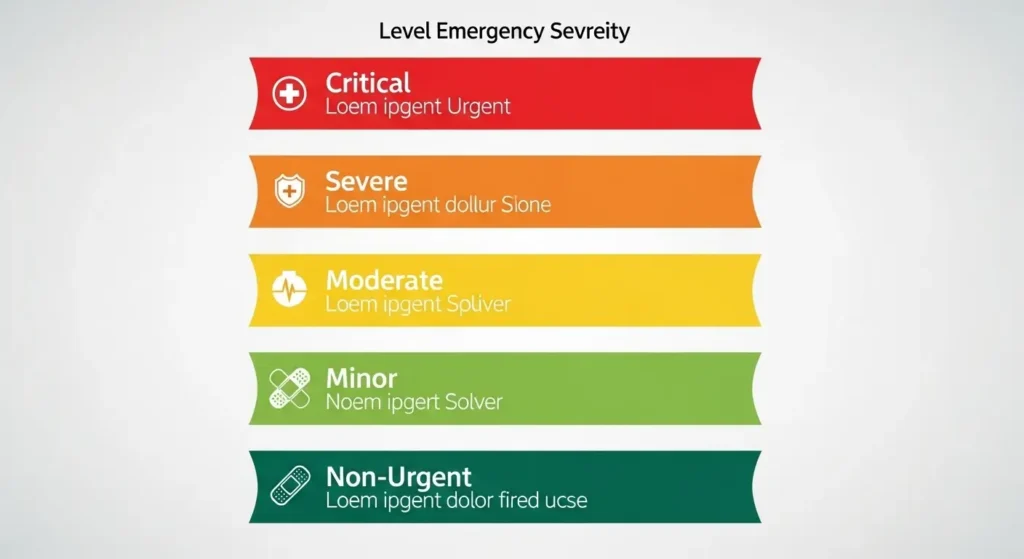
  • Use only for: Difficulty breathing, severe injury, uncontrolled bleeding, seizures, altered consciousness

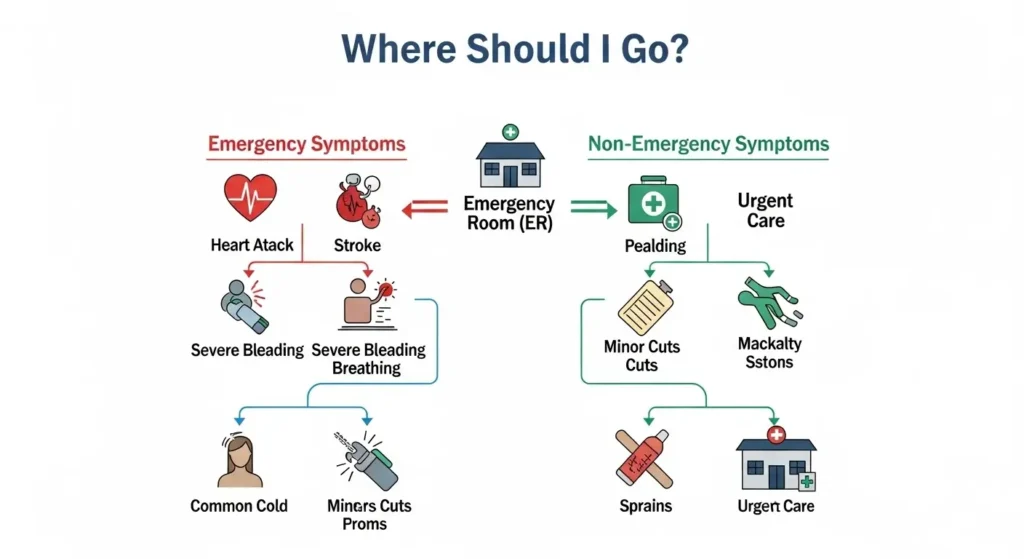
When to use each option:

Phone consultation/telemedicine:

  • Mild fever, minor rashes, feeding questions, medication questions

Next-day office appointment:

  • Non-urgent concerns that can wait overnight

Urgent care:

  • After-hours issues needing same-day evaluation but not life-threatening
  • Suspected fractures, moderate injuries, persistent vomiting/diarrhea

Emergency room:

  • Life-threatening conditions only
  • Severe breathing problems, serious injuries, high fever with altered mental status

Money-saving strategy: Call your pediatrician’s after-hours line first. Many issues can be handled with phone advice, saving you $100-$300 in urgent care or ER costs.

Real example: At 9 PM, little Alex develops a 102°F fever. His parents call the pediatrician’s after-hours line (free). The on-call doctor advises Tylenol and monitoring. If the fever exceeds 104°F or Alex seems lethargic, they should go to urgent care. The fever breaks overnight. Cost: $0 instead of $150-$300 for unnecessary urgent care.


Free & Low-Cost Pediatric Care Options in New York
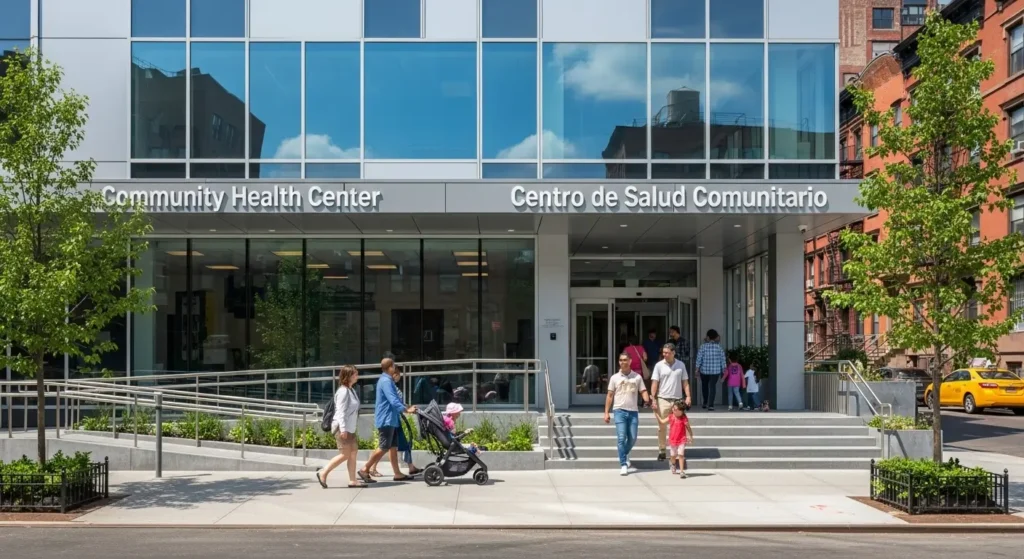
Families entering community health center in New York offering affordable pediatric care

Even in expensive healthcare markets, New York offers extensive free and low-cost pediatric care. These resources can reduce your pediatrician cost in New York to nearly zero—regardless of insurance status or immigration status.

NYC Health + Hospitals

NYC Health + Hospitals operates the largest public hospital system in the United States, serving New York City’s five boroughs.

What it is:

  • 11 hospitals
  • 50+ community health centers
  • 5 long-term care facilities
  • Hundreds of school-based health centers

Cost structure:

  • Income-based sliding scale fees
  • Many services free for uninsured children
  • $0 copay for Medicaid patients
  • Accepts all insurance plans

Pediatric services offered:

  • Well-child visits and developmental screenings
  • Sick visits for acute illnesses
  • Immunizations
  • Chronic disease management (asthma, diabetes)
  • Dental care
  • Mental health services
  • Specialty care referrals

Locations by borough:

Manhattan:

  • NYC Health + Hospitals/Bellevue
  • NYC Health + Hospitals/Gouverneur
  • NYC Health + Hospitals/Harlem
  • NYC Health + Hospitals/Metropolitan

Brooklyn:

  • NYC Health + Hospitals/Coney Island
  • NYC Health + Hospitals/Kings County
  • NYC Health + Hospitals/Woodhull

Queens:

  • NYC Health + Hospitals/Elmhurst
  • NYC Health + Hospitals/Queens

Bronx:

  • NYC Health + Hospitals/Jacobi
  • NYC Health + Hospitals/Lincoln
  • NYC Health + Hospitals/North Central Bronx

Staten Island:

  • NYC Health + Hospitals/Gotham Health Centers

How to access:

  • Walk-in appointments available at most locations
  • Call for scheduled appointments
  • Online scheduling available
  • Patient navigators help with enrollment and insurance

Financial assistance:

  • No one turned away for inability to pay
  • Sliding scale can reduce costs to $0
  • Assistance with Medicaid/Child Health Plus applications

Contact:

  • Website: nychealthandhospitals.org
  • Phone: 844-NYC-4NYC (844-692-4692)

Real example: Maria in the Bronx has three children and earns $35,000 annually. She brings them to NYC Health + Hospitals/Lincoln for all care. Because of sliding scale fees, she pays $0 for well-child visits, sick visits, and vaccines. Her annual out-of-pocket cost: $0.

Federally Qualified Health Centers (FQHCs)

FQHCs are community health centers that provide care regardless of ability to pay. New York has over 70 FQHC organizations operating hundreds of sites.

What makes FQHCs special:

  • Mandated to serve everyone
  • Sliding fee scale based on income (can be $0-$25 per visit)
  • Comprehensive services including dental, mental health, pharmacy
  • Cultural competency and language services
  • Help enrolling in insurance programs

Cost structure:

  • Full-pay patients charged nominal fees
  • Sliding scale adjusts based on family income and size
  • Typical range: $0-$50 per visit
  • No one denied care due to inability to pay

Services provided:

  • All pediatric primary care
  • Immunizations through VFC program (often free)
  • Chronic disease management
  • Behavioral health services
  • Case management and social services
  • Assistance with insurance enrollment

Major FQHC networks in New York:

NYC and surrounding areas:

  • Institute for Family Health – 40+ locations in NYC and Hudson Valley
  • Community Healthcare Network – 15 locations across NYC
  • William F. Ryan Community Health Center – Manhattan
  • Brightpoint Health – Brooklyn, Queens, Manhattan
  • VillageCare – Manhattan (LGBTQ+-focused)
  • Charles B. Wang Community Health Center – Manhattan, Queens
  • Sunset Park Health Council – Brooklyn
  • Morris Heights Health Center – Bronx
  • Montefiore Medical Group – Bronx

Westchester:

  • Open Door Family Medical Centers – 15 locations
  • Hudson River HealthCare – Multiple locations

Upstate:

  • Rochester Regional Health – Rochester area
  • Finger Lakes Community Health – Central NY
  • Whitney M. Young Jr. Health Center – Albany
  • Jericho Road Community Health Center – Buffalo
  • Anthony L. Jordan Health Center – Rochester

How to find an FQHC near you:

Eligibility:

  • Everyone is eligible
  • No immigration status requirements
  • No insurance requirements
  • Income verification for sliding scale only

Real example: The Johnson family in Buffalo earns $48,000 with two children. At Jericho Road Community Health Center, their sliding scale fee is $25 per visit. Well-child visits are free through a special program. Vaccines are free through VFC. Annual cost for 4 well visits + 2 sick visits: $50 total.

School-Based Health Centers

New York operates over 350 school-based health centers providing comprehensive healthcare directly in schools.

What they offer:

  • Primary care sick visits
  • Sports physicals and health screenings
  • Immunizations
  • Mental health counseling
  • Reproductive health services (age-appropriate)
  • Dental services at some locations
  • Case management

Cost:

  • Most services free
  • Some centers charge nominal fees ($0-$15)
  • All accept Medicaid and Child Health Plus
  • Never deny care due to inability to pay

Eligibility:

  • Must attend participating school
  • Parental consent required
  • Available to all students regardless of insurance

Availability:

  • 200+ locations in NYC alone
  • Over 150 upstate locations
  • Primarily in underserved communities

Advantages:

  • Convenient access during school day
  • Reduces missed school/parent work time
  • Culturally competent care
  • Builds trust with consistent providers

How to access:

  • Ask your child’s school if they have a health center
  • Complete parental consent forms
  • Student can visit during school hours

Find school-based health centers:

  • NYC: Search “NYC school-based health centers” + your borough
  • Upstate: Contact your school district

Real example: Tanya in Jamaica, Queens works two jobs and struggles to take her son to appointments. His school has a health center where he gets his sports physical, flu shot, and treatment for a sprained ankle—all for free during the school day. She saves $150+ and three missed work hours.

County Health Departments

All 62 New York counties operate health departments providing pediatric services.

Services typically offered:

  • Immunizations (free or low-cost)
  • Well-child checkups (varies by county)
  • Lead screening
  • WIC (Women, Infants, and Children) program
  • Health education and resources

Immunization programs:

  • VFC program provides free vaccines
  • Walk-in vaccine clinics common
  • No appointment needed at many locations

Cost:

  • Vaccines: Free to $20 per shot
  • Well-child visits: $0-$50 where offered
  • Many services free for low-income families

Major county health departments:

Downstate:

  • NYC Department of Health and Mental Hygiene (all boroughs)
  • Nassau County Department of Health
  • Suffolk County Department of Health Services
  • Westchester County Department of Health
  • Rockland County Department of Health

Upstate:

  • Erie County Department of Health (Buffalo)
  • Monroe County Department of Public Health (Rochester)
  • Onondaga County Health Department (Syracuse)
  • Albany County Department of Health

How to find your county health department:

  • Search “[Your County] Department of Health New York”
  • Call 211 for referrals
  • Visit health.ny.gov for directory

Real example: Lisa in Nassau County needs vaccines for her 4-year-old but doesn’t have insurance. She goes to Nassau County Department of Health’s vaccine clinic and receives all shots free through VFC. She saves $400-$600.

Free Clinics & Charitable Programs

Volunteer-run free clinics supplement the formal healthcare system, though pediatric services are less common than adult care.

Free clinic organizations in New York:

NYC:

  • NYC Free Clinic – Manhattan, volunteer-staffed
  • Brooklyn Free Clinic – Limited pediatric services
  • Project Renewal – Homeless services including health

Upstate:

  • Volunteers in Medicine – Multiple locations statewide
  • Community Health Center of Buffalo Free Clinic
  • Rochester Zen Center Free Clinic

Limitations:

  • Most focus on adult care
  • Limited hours (evenings/weekends typically)
  • May have wait times
  • Services vary by location

Hospital charity care programs:

Every hospital in New York must provide charity care to qualifying patients.

How it works:

  • Apply through hospital financial assistance department
  • Typically available to families earning 200-400% of federal poverty level
  • Retroactive applications sometimes accepted
  • Can reduce bills to $0 or very low amounts

Eligibility varies by hospital:

  • NYC Health + Hospitals: Most generous, often 100% discount up to 200% FPL
  • Private hospitals: Policies vary, typically discounts at 200-300% FPL

How to apply:

  • Contact hospital billing department
  • Request financial assistance application
  • Provide income documentation
  • Submit before or within 30-90 days of service

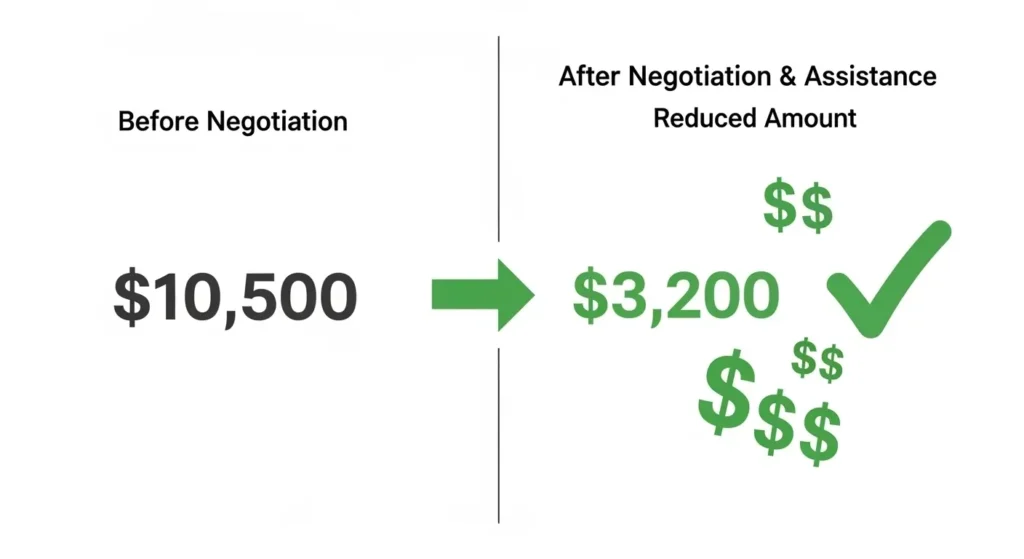
Real example: Ahmed’s daughter needed emergency appendectomy surgery at a private hospital in Manhattan. The bill was $35,000. He earns $55,000 annually and qualified for 70% charity care discount. His bill reduced to $10,500, then arranged on a 2-year payment plan of $440/month.

Emergency Medicaid for Children

New York provides emergency healthcare coverage to all children regardless of immigration status.

What it covers:

  • Emergency room visits
  • Emergency surgeries
  • Urgent medical conditions
  • Hospitalization for emergencies

Eligibility:

  • All children under 19 in New York
  • Regardless of immigration status
  • Income-based (similar to regular Medicaid)

How to apply:

  • Apply at hospital during emergency visit
  • Hospital social workers assist with application
  • Can be applied for retroactively

What it doesn’t cover:

  • Routine well-child visits
  • Non-emergency sick visits
  • Chronic disease management

For comprehensive coverage: Children can qualify for full Medicaid or Child Health Plus regardless of immigration status if they meet income requirements and have lived in NY for 5+ years (or fall under exceptions).

Important: Seeking healthcare for your child will NOT affect immigration status. Healthcare privacy laws (HIPAA) protect medical information.


What Affects Pediatrician Cost in New York

Understanding why pediatrician cost in New York varies helps you make informed decisions and find the best value.

Geographic Location: The Primary Driver

Location determines 60-70% of price variation in pediatric care.

Why NYC costs more:

Commercial real estate:

  • Manhattan medical office space: $50-$200+ per square foot annually
  • Upstate medical space: $10-$30 per square foot
  • A 2,000 sq ft pediatric office costs $100,000-$400,000/year in Manhattan vs. $20,000-$60,000 upstate

Malpractice insurance:

  • NYC pediatricians: $15,000-$40,000 annually
  • Upstate pediatricians: $8,000-$20,000 annually
  • Higher litigation risk in dense urban areas

Staff salaries:

  • NYC medical assistant: $40,000-$55,000
  • Upstate medical assistant: $32,000-$42,000
  • Receptionist, nurses, billing staff all command urban premiums

Cost of living adjustments:

  • Pediatricians in Manhattan require higher salaries to afford housing
  • Practice overhead includes utilities, supplies at NYC prices

Within-city variations:

  • Manhattan’s Upper East Side charges 30-50% more than Inwood
  • Brooklyn’s Park Slope charges more than East New York
  • Even within boroughs, neighborhood matters

Practice Type: Structure Affects Pricing

Independent private practice:

  • Mid-range to higher pricing
  • More flexibility in fee structures
  • Often offer cash-pay discounts
  • Personalized care, continuity
  • Typical cost: Region’s average rate

Hospital-affiliated practice:

  • Often highest prices
  • May include facility fees ($50-$200)
  • Better equipped for complex cases
  • Seamless referrals to specialists
  • Typical cost: 20-40% above independent practices

Multi-specialty group practice:

  • Competitive pricing due to efficiency
  • Standardized fees across locations
  • May negotiate better insurance rates
  • Less personalized than solo practice
  • Typical cost: At or slightly below regional average

Concierge/boutique pediatrics:

  • Premium pricing model
  • Annual membership: $1,500-$3,000+
  • Benefits: Same-day appointments, 24/7 access, longer visits, smaller patient panels
  • Additional per-visit fees may apply
  • Found primarily in Manhattan, Westchester, North Shore Long Island
  • Typical cost: Membership + standard visit fees

Community health centers/FQHCs:

  • Lowest cost option
  • Sliding scale based on income
  • Mission-driven, non-profit
  • May have longer wait times
  • Typical cost: $0-$50 per visit

Cost comparison example (same sick visit):

  • Community health center: $25
  • Independent practice in Queens: $175
  • Hospital-affiliated practice in Manhattan: $275
  • Concierge practice in Upper East Side: $350 + membership

Provider Credentials: Limited Impact on Cost

Contrary to what you might expect, provider credentials have minimal effect on pediatrician cost in New York.

MD (Medical Doctor) vs. DO (Doctor of Osteopathic Medicine):

  • Training: Both complete 4 years medical school + 3 years pediatric residency
  • Board certification: Both by American Board of Pediatrics
  • Licensing: Both fully licensed physicians in NY
  • Cost difference: Essentially none ($0-$20 variation)
  • Quality: Equivalent

Pediatric Nurse Practitioner (PNP) or Physician Assistant (PA):

  • Advanced practice providers
  • Can provide most pediatric care independently
  • Often handle routine visits, allowing MD/DO to see complex cases
  • Cost difference: Typically $20-$40 less per visit
  • Common in group practices and health centers

Board certification:

  • Most pediatricians are board-certified
  • Indicates passing rigorous exams
  • Cost impact: None (doesn’t affect pricing)
  • Quality indicator: Yes (choose board-certified when possible)

Years of experience:

  • More experienced pediatricians don’t typically charge more
  • Exception: Well-known specialists may command premium
  • Cost difference: Minimal in general practice

Bottom line: Focus on in-network status and practice location over credentials when cost is a concern. A board-certified pediatrician in Queens costs less than a concierge practice NP in Manhattan.

Services Included in Visit

What happens during the appointment significantly affects your bill.

Basic examination only:

  • Vital signs, physical exam, discussion
  • Lowest cost: $100-$200 without insurance

Exam + vaccines:

  • Adds $100-$600 depending on number of vaccines
  • Well-child visit with vaccines: Often covered at $0 with insurance
  • Sick visit with catch-up vaccines: May trigger copays

Exam + lab tests:

  • Strep test adds $25-$75
  • Urinalysis adds $30-$100
  • Blood work adds $50-$150
  • Most tests have separate copays or apply to deductible

Exam + procedures:

  • Ear wax removal, wound care, nebulizer treatment
  • Adds $50-$200 to visit cost
  • May have separate procedure copays

Ask beforehand:

  • “What will this visit include?”
  • “Will there be additional charges beyond the exam?”
  • “Can we separate the well-child visit from treatment of current illness?”

Billing Codes & Documentation

How your pediatrician documents and codes the visit determines your cost.

Office visit codes (CPT codes 99211-99215):

Different levels based on complexity:

  • 99211: Minimal visit, often nurse-only = Lowest cost
  • 99212: Straightforward problem, brief visit = Low-moderate cost
  • 99213: Moderately complex, typical sick visit = Moderate cost
  • 99214: Moderate-high complexity, detailed exam = Higher cost
  • 99215: High complexity, comprehensive = Highest cost

Example: Ear infection might be coded 99213 (moderate) or 99214 (if complicated by fever, multiple symptoms). The higher code costs 30-50% more.

Preventive visit codes (99381-99395):

  • Based on patient age
  • Covered at $0 with insurance
  • Cannot mix with problem-focused codes easily

The “mixed visit” problem:

Your child has a well-child exam scheduled but also has a rash. The pediatrician might:

Option 1: Code as preventive only (99381-99395)

  • Cost: $0 with insurance
  • Risk: Insurance audit if significant problem addressed

Option 2: Code as preventive + sick visit

  • Preventive: $0
  • Problem visit: Regular copay ($20-$50)
  • Total: One copay

Option 3: Reschedule preventive, today is sick only

  • Cost: Regular copay
  • Preserves your free preventive visit for later

Pro tip: If you have concerns beyond routine checkup, tell the receptionist when scheduling. They can help you decide whether to schedule separately or address both in one visit.

Real example: Danielle brings her son for a well-child visit. She mentions he’s been having stomach aches. The pediatrician addresses both. The visit is coded as preventive + problem-focused. She pays $0 for preventive portion and $30 copay for problem portion. Total: $30 instead of $0, but she got two services.


How to Find Out Your Exact Pediatrician Cost in New York

Don’t let surprise medical bills catch you off guard. These step-by-step strategies reveal your exact pediatrician cost in New York before you walk into any office.

Before Your First Visit: Essential Steps
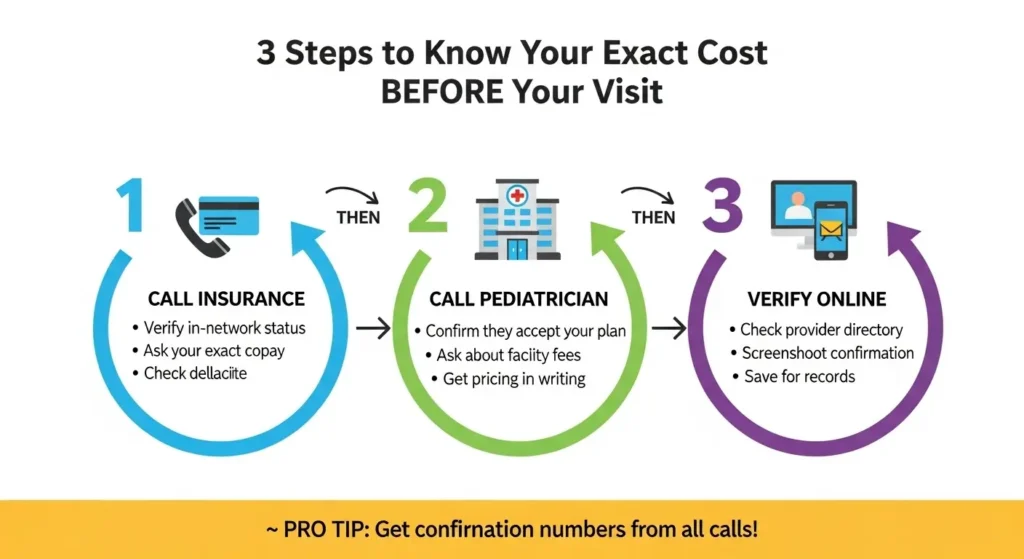
Three-step process infographic showing how to verify pediatrician costs call insurance, call pediatrician, verify online

Step 1: Call Your Insurance Company

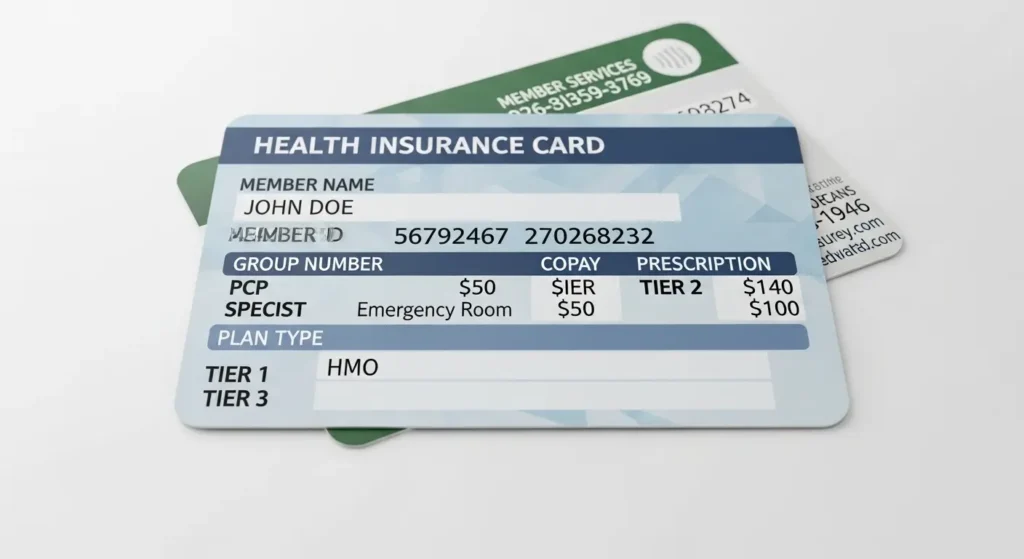
Before scheduling with any pediatrician, call the customer service number on your insurance card.

Questions to ask:

  1. “Is [pediatrician name/practice] in my network?”
    • Verify this even if the office says they accept your insurance
    • Get the representative’s name and confirmation number
    • Networks change—verify before each visit with a new provider
  2. “What is my copay for pediatric office visits?”
    • Primary care sick visit copay
    • Specialist copay (if you need referrals)
    • Urgent care copay
    • Preventive care copay (should be $0)
  3. “Have I met my deductible for the year?”
    • How much you’ve paid toward deductible
    • How much remains
    • Whether pediatric visits apply to deductible (most preventive visits don’t)
  4. “Do I need a referral to see a pediatrician?”
    • Most plans don’t require referrals for pediatric primary care
    • Some HMOs may require PCP designation
    • Specialist referrals usually required
  5. “Are immunizations covered?”
    • Should be free during well-child visits
    • Ask about coverage if given during sick visits
    • Verify specific vaccines if child needs catch-up immunizations
  6. “What’s my out-of-pocket maximum?”
    • Maximum you’ll pay in one year
    • Helpful for budgeting if child has chronic condition

Write down:

  • Date and time of call
  • Representative’s name
  • Confirmation or reference number
  • Answers to all questions

Pro tip: If the representative says the pediatrician is in-network but you’re unsure, ask for the specific provider ID or NPI number that matches your pediatrician.

Step 2: Call the Pediatrician’s Office

Armed with insurance information, call the pediatric practice before your first appointment.

Questions to ask:

  1. “Do you accept [your specific insurance plan]?”
    • Don’t just ask if they accept “Blue Cross”—there are dozens of BCBS plans
    • Provide your exact plan name from insurance card
    • Ask if they’re in-network or out-of-network
  2. “What is the copay for [visit type]?”
    • They should be able to tell you based on your insurance
    • Ask about both sick visits and well-child visits
    • Request written confirmation if possible
  3. “Is there a facility fee?”
    • Hospital-affiliated practices may charge facility fees
    • These can add $50-$200 to your bill
    • Often not mentioned until you get the bill
  4. “What is your cash-pay rate if I don’t have insurance?”
    • Get pricing for new patient, established patient, and well-child visits
    • Ask about cash-pay discounts
    • Inquire about payment plans
  5. “Do you offer payment plans?”
    • Terms: How long? Interest?
    • Minimum payment requirements
    • Credit check required?
  6. “What vaccines will my child receive, and are they covered?”
    • For well-child visits, get list of scheduled vaccines
    • Verify coverage before visit
    • Ask about any vaccines not covered by insurance
  7. “Do you participate in the Vaccines for Children program?”
    • If your child qualifies, vaccines may be free
    • VFC eligibility: Medicaid, uninsured, underinsured, American Indian/Alaska Native

Red flags:

  • Office can’t or won’t quote prices
  • Vague answers about insurance acceptance
  • Resistance to questions about costs
  • Consider finding a more transparent practice

Step 3: Verify In-Network Status Independently

Never rely solely on the doctor’s office confirmation. Verify in-network status yourself.

How to verify:

  1. Use your insurance company’s online provider directory:
    • Login to insurer’s website
    • Access “Find a Doctor” or “Provider Search”
    • Search by pediatrician name, address, or NPI number
    • Verify they’re listed as in-network
  2. Check for in-network date ranges:
    • Some providers are in-network only for part of the year
    • Verify current in-network status
    • Ask about any upcoming network changes
  3. Verify the specific location:
    • Multi-location practices may be in-network at some sites but not others
    • Confirm the exact address where you’ll receive care
  4. Check for facility fee warnings:
    • If practice is hospital-affiliated, look for notices about facility fees
    • These fees can significantly increase costs
    • Consider asking hospital billing department about typical facility fees

Download or print:

  • Screenshot of provider directory showing in-network status
  • Date you verified
  • Keep for your records in case of billing disputes

Real example: Melissa found a pediatrician in Brooklyn who said they accepted her Oscar Health plan. She verified on Oscar’s website and discovered the practice was in-network—but only at their Manhattan location, not Brooklyn. She chose a different practice, saving herself 40% higher out-of-network costs.

Understanding Your Bill: Key Sections Explained

Medical bills confuse most people. Here’s how to read yours.

Section 1: Provider charges

  • Amount the pediatrician billed
  • This is often 2-3x what insurance actually pays
  • You typically won’t pay this amount if you have insurance

Section 2: Insurance adjustment

  • Amount insurance “writes off” as part of contracted rate
  • This reduces provider charge to agreed-upon amount
  • You never pay this portion

Section 3: Insurance payment

  • What your insurance actually paid the provider
  • May be subject to deductible and coinsurance

Section 4: Your responsibility

  • What you owe
  • Includes: copays, deductible, coinsurance
  • This is your actual bill

Example bill breakdown:

Provider charges:               $275.00
Insurance adjustment:          -$125.00
Contracted rate:                $150.00
Insurance paid (80%):          -$120.00
Your copay:                     -$30.00
Your total responsibility:       $30.00

Understanding CPT codes:

Every service has a CPT (Current Procedural Terminology) code.

Common pediatric CPT codes:

  • 99381-99395: Preventive care visits (well-child)
  • 99201-99215: Office visits (sick visits, new patient)
  • 90460-90461: Immunization administration
  • 90633-90750: Specific vaccine codes
  • 85025: Complete blood count (CBC)
  • 87880: Strep test

Why codes matter:

  • Determines what insurance pays
  • Some codes are covered 100% (preventive)
  • Others subject to copay/deductible (problem-focused)

How to read codes on your bill:

  • Look for code number (5 digits)
  • Google “CPT code [number]” to see what service was billed
  • Verify you actually received that service

Red flags to watch for:

  1. Duplicate charges
    • Same CPT code listed twice
    • Common billing error
    • Request correction
  2. Services not rendered
    • Codes for tests or procedures you didn’t receive
    • Verify each line item
    • Dispute immediately
  3. Incorrect coding level
    • Simple visit coded as complex (99215 instead of 99213)
    • Increases cost by 40-60%
    • Ask provider to review if seems wrong
  4. Balance billing (out-of-network)
    • Provider charging you the difference between their fee and insurance payment
    • Illegal in many situations in New York
    • Contact your insurance and NY Department of Financial Services
  5. Facility fees not disclosed
    • Hospital-affiliated practices may charge these
    • Should be disclosed in advance
    • Can add $50-$200 to bill

Your rights in New York:

  • Right to itemized bill
  • Right to explanation of charges
  • Right to appeal insurance denials
  • Protection from surprise billing (No Surprises Act)

If You Can’t Afford the Bill: Immediate Steps

Don’t panic and don’t ignore medical bills. You have options.

Action 1: Call the Billing Department Immediately

Why this matters:

  • Shows good faith effort to resolve
  • Prevents collections process
  • Opens negotiation opportunity

What to say: “I received a bill for $[amount] but cannot afford to pay it all at once. What options are available?”

They may offer:

  • Payment plans (0% interest, 3-24 months typical)
  • Financial assistance application
  • Cash-pay discount if you pay a portion upfront
  • Charity care if you qualify

Be prepared to provide:

  • Income information
  • Family size
  • Current financial situation

Don’t be afraid to negotiate:

  • “Can you reduce this bill if I pay $X today?”
  • “Can you extend the payment plan to 18 months?”
  • “Is there a prompt-pay discount?”

Action 2: Request an Itemized Bill

Why:

  • Reveals billing errors (common in 30-40% of bills)
  • Shows exactly what you’re paying for
  • Required for disputing charges

How to request:

  • Call billing department
  • Request “fully itemized bill with CPT codes”
  • Get it in writing (email or mail)

Review carefully:

  • Verify each service was actually provided
  • Check for duplicate charges
  • Ensure codes match services received
  • Compare to your notes from the visit

Real example: Todd received a $425 bill for his daughter’s sick visit. The itemized bill showed he was charged for a comprehensive exam (99215) when she only had a simple ear infection check. He called, and they corrected it to 99213, reducing his bill to $275.

Action 3: Apply for Financial Assistance/Charity Care

Most hospitals and many private practices offer financial assistance programs.

Who qualifies:

  • Typically families earning 200-400% of federal poverty level
  • Some programs more generous (up to 500% FPL)
  • Uninsured or underinsured patients prioritized

Income limits (2026):

Family of 4 federal poverty level = $31,200

  • 200% FPL = $62,400 → Often qualify for 100% discount
  • 300% FPL = $93,600 → Often qualify for 50-75% discount
  • 400% FPL = $124,800 → May qualify for 25-50% discount

How to apply:

  1. Request application:
    • Call hospital/practice financial counseling department
    • Ask for “financial assistance application” or “charity care application”
    • Available online at most hospital websites
  2. Gather documentation:
    • Recent pay stubs (last 2-3 months)
    • Tax returns (most recent year)
    • Bank statements
    • Proof of expenses (rent, utilities)
    • Insurance denial letters if applicable
  3. Submit application:
    • Complete thoroughly
    • Include all requested documentation
    • Keep copies for your records
    • Submit within deadline (usually 30-90 days of service)
  4. Follow up:
    • Call weekly to check status
    • Response typically within 30 days
    • Request written approval

Retroactive applications:

  • Many programs accept applications after service
  • Can apply up to 180 days after bill in many cases
  • Stops collections while under review

Action 4: Negotiate a Cash-Pay Discount

If you can pay a portion immediately, you may secure significant discounts.

How it works:

  • Practices save on billing and collection costs
  • They prefer immediate payment to long payment plans
  • Discounts range from 10-40%

How to negotiate:

Your opening: “I have $[amount] I can pay today. If I pay this now, can you settle the bill in full?”

Start low: If bill is $500, offer $300-$350

Be ready to meet in middle: They counter at $425, you settle at $375

Get it in writing: “Please send written confirmation that $[amount] settles this bill in full”

Pay only after receiving written agreement: Protects you from future collection attempts

Real example: Janine’s son had urgent care visit costing $350 without insurance. She offered $225 cash to settle immediately. After negotiation, they agreed to $275. She saved $75 (21% discount) and avoided a payment plan.

Action 5: Set Up a Payment Plan

If you can’t pay the full amount but can make monthly payments, most providers offer plans.

Typical terms:

  • 0% interest (ask to confirm)
  • 3-24 months duration
  • Minimum payments: $25-$100/month
  • No credit check at most practices
  • Automatic payment options available

How to set up:

  1. Contact billing department: “I’d like to set up a payment plan”
  2. Propose monthly payment: “I can afford $50/month”
  3. Ask about terms:
    • Is there interest?
    • What’s the minimum payment?
    • What happens if I miss a payment?
    • Can I pay it off early without penalty?
  4. Get agreement in writing: Request payment plan terms via email or mail
  5. Set up auto-pay: Prevents missed payments

Protect yourself:

  • Never agree to more than you can afford
  • Ask about grace periods for missed payments
  • Verify no interest or fees
  • Keep records of all payments

If you can’t afford minimum payment:

  • Ask about hardship programs
  • Apply for financial assistance
  • Explain your situation honestly
  • Providers prefer small payments to no payments

Action 6: Dispute Billing Errors

Found errors on your bill? You have the right to dispute.

Common billing errors:

  • Duplicate charges (same service billed twice)
  • Services not received
  • Incorrect coding (wrong CPT code or level)
  • Insurance processed incorrectly
  • Out-of-network charges when provider is in-network

How to dispute:

  1. Document the error:
    • Note date of service
    • What you actually received
    • What you were billed for
    • Why they don’t match
  2. Contact billing department:
    • “I’m disputing charges on bill #[number]”
    • Explain the error specifically
    • Reference your documentation
  3. Submit written dispute:
    • Email or letter
    • Include supporting documents
    • Request written response
  4. Follow up:
    • Call weekly
    • Document all conversations
    • Don’t pay disputed charges until resolved
  5. Escalate if needed:
    • Request supervisor
    • Contact insurance company
    • File complaint with NY Department of Financial Services
    • Consider medical billing advocate

Sample dispute language:

“I am disputing the charge for CPT code 99215 on my bill dated [date]. My child had a routine ear infection check that should be coded as 99213, not a comprehensive high-complexity visit. Please review the medical record and correct this billing error.”

Keep records:

  • All correspondence
  • Names and dates of phone calls
  • Written confirmations
  • Corrected bills

Your protection: New York law requires providers to investigate billing disputes and respond in writing. Don’t pay disputed amounts until resolved.


Money-Saving Strategies for Pediatric Care in New York
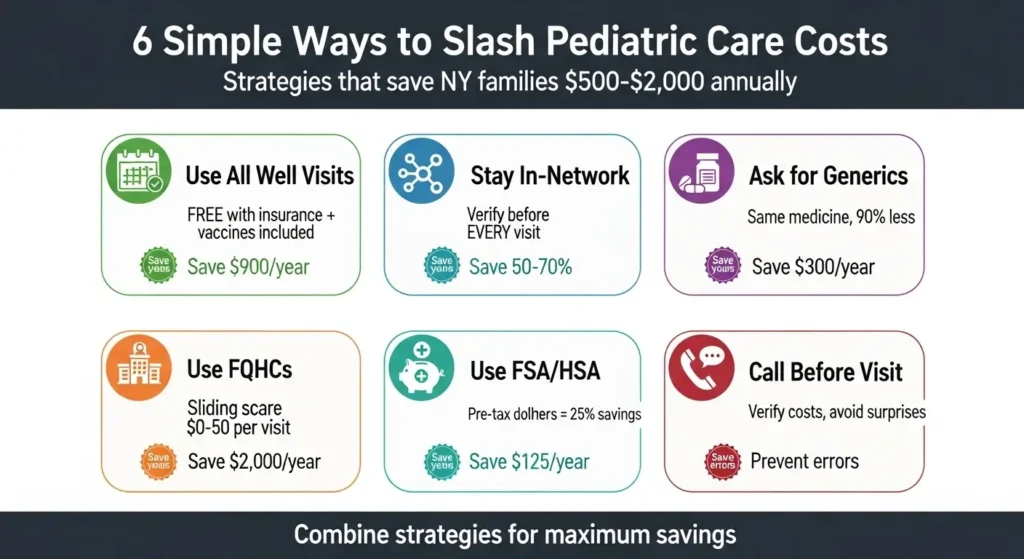
Six money-saving tips for pediatric care in New York use well visits, stay in-network, request generics, use community health centers, use FSAHSA, and verify costs before visits

These proven strategies can reduce your pediatrician cost in New York by 50-80% annually, putting hundreds of dollars back in your family budget.

Maximize Your Insurance Benefits

If you have insurance, using it strategically saves the most money.

Strategy 1: Schedule All Recommended Well-Child Visits

Well-child visits are free with all ACA-compliant insurance—but only if you actually schedule them.

The recommended schedule:

  • Ages 0-1: 7 visits (birth, 1m, 2m, 4m, 6m, 9m, 12m)
  • Ages 1-2: 3 visits (15m, 18m, 24m)
  • Ages 3+: Annual visits

Why this saves money:

  1. Preventive care is free: No copay, no deductible
  2. Catches problems early: Prevents expensive treatments later
  3. Vaccines included: $600-$1,200 value per year for infants
  4. Screenings included: Developmental, vision, hearing, lead tests all free

Cost comparison:

Family that skips well-child visits:

  • Missed developmental delay (discovered later in ER): $2,000
  • Delayed vaccines (catch-up at sick visit): $400 + copay
  • Undiagnosed anemia (ER visit): $1,500
  • Total unnecessary costs: $3,900+

Family that attends all well-child visits:

  • 7 well visits with vaccines: $0
  • Developmental delay caught early: Free
  • Anemia detected and treated: $0
  • Total cost: $0

How to remember:

  • Set calendar reminders when scheduling
  • Many practices send recall notices
  • Bundle with birthday celebrations (“Doctor visit month!”)

Strategy 2: Always Use In-Network Providers

This single strategy saves 50-70% compared to out-of-network care.

In-network vs. out-of-network cost example:

Sick visit in Queens:

  • In-network copay: $30
  • Out-of-network: $175 (you pay difference after insurance)
  • Savings: $145 per visit

Annual savings for family with 4 sick visits:

  • In-network total: $120
  • Out-of-network total: $700
  • Savings: $580

How to stay in-network:

  1. Verify before every appointment:
    • Check insurance website
    • Call to confirm
    • Networks change quarterly
  2. Get referrals to in-network specialists:
    • Ask pediatrician for list
    • Verify with insurance
    • Don’t assume referred doctor is in-network
  3. Use in-network urgent care:
    • Check insurance app for locations
    • Keep list in phone for emergencies
  4. Verify in-network labs:
    • If pediatrician orders lab work, confirm lab is in-network
    • Quest Diagnostics and LabCorp contracts vary by insurance

Exception: Emergency care is covered at in-network rates even if hospital is out-of-network (thanks to No Surprises Act).

Strategy 3: Understand Visit Coding

How your pediatrician codes the visit affects your cost. Use this knowledge strategically.

The “combined visit” decision:

Your child has a scheduled well-child visit but also has a cold. You have three options:

Option A: Address both today

  • Pediatrician codes: Preventive visit + problem-focused visit
  • You pay: $0 (preventive) + $30 copay (problem) = $30
  • Advantage: One trip, both issues addressed
  • Disadvantage: Costs $30 instead of $0

Option B: Skip mentioning the cold

  • Pediatrician codes: Preventive visit only
  • You pay: $0
  • Advantage: Free visit
  • Disadvantage: Cold not addressed, may worsen
  • Not recommended if child is truly ill

Option C: Reschedule well-child visit, today is sick visit

  • Today coded as: Problem-focused visit
  • You pay: $30 copay
  • Schedule well visit: Next week at $0
  • Advantage: Both issues properly addressed
  • Disadvantage: Two appointments required

Best practice:

  • Mention concerns when scheduling: “She’s due for well-child but also has a cough”
  • Receptionist can advise best approach
  • For minor issues (small rash, mild concern): Often fine to address in well visit
  • For significant illness: Schedule separate sick visit

Maximize preventive visit value:

During well-child visits, you can discuss (without triggering sick visit codes):

  • Growth and development questions
  • Nutrition and feeding
  • Sleep habits and schedules
  • Behavioral concerns
  • Safety (car seats, childproofing)
  • School performance
  • Developmental milestones

What triggers sick visit coding:

  • Treatment of acute illness
  • Prescription medications for current condition
  • Detailed examination of specific problem
  • Procedures beyond routine screening

Real example: At Lucas’s 4-year well-child visit, his mom asks about his picky eating, bedtime struggles, and whether his growth is normal. All addressed within the free well visit. Two weeks later, Lucas develops strep throat—that’s billed as a separate sick visit with $30 copay. Total annual cost: $30 instead of $60+ if she’d tried to address everything at sick visits.

For Uninsured Families: Maximizing Savings

Without insurance, you must be strategic about every healthcare dollar.

Strategy 1: Apply for Medicaid or Child Health Plus Immediately

Don’t assume you don’t qualify. New York’s income limits are generous.

Why this is strategy #1:

  • Reduces costs to $0-$30 per visit
  • Comprehensive coverage including dental, vision
  • Retroactive coverage possible
  • Free vaccines and medications

Income eligibility (family of 4, 2026):

  • Medicaid: Up to $69,090 annually
  • Child Health Plus: Up to $124,800 annually

“But I work full-time!”

  • You can still qualify
  • Many working families receive these benefits
  • Part-time work, seasonal work, or lower wages often qualify
  • Even moderate income may qualify for Child Health Plus

How to apply:

  • Online: nystateofhealth.ny.gov
  • Phone: 1-855-355-5777
  • In person: Local Department of Social Services
  • Free application assistance available

Processing time:

  • Applications processed within 45 days
  • Often faster for children
  • Coverage can be retroactive to application date

Real example: The Garcia family earns $55,000 with two children. They assumed they wouldn’t qualify but applied anyway. Both children qualified for Child Health Plus at $15/month per child. Annual cost went from $2,500 (uninsured) to $360 (premiums) + $60 (copays) = $420. Savings: $2,080.

Strategy 2: Use Community Health Centers Exclusively

FQHCs offer the best value for uninsured families.

Why FQHCs save money:

  • Sliding scale fees: $0-$50 per visit
  • Income-based pricing
  • Free vaccines through VFC program
  • Comprehensive services (medical, dental, behavioral)
  • Help applying for insurance

Cost comparison (uninsured family, 3 children, Bronx):

Private pediatrician:

  • 6 well-child visits: $1,200
  • 4 sick visits: $700
  • Vaccines: $800
  • Total: $2,700

Community health center:

  • 6 well-child visits (sliding scale): $150
  • 4 sick visits (sliding scale): $100
  • Vaccines (VFC program): $0
  • Total: $250

Savings: $2,450 (91% reduction)

How to find:

  • HRSA locator: findahealthcenter.hrsa.gov
  • Call 211
  • Ask neighbors, community organizations
  • See Section 5 for specific locations

First visit process:

  • Bring income documentation
  • Proof of address
  • Children’s information
  • They’ll calculate your sliding scale fee
  • Get assigned fee schedule for future visits

Strategy 3: Separate Vaccines from Office Visits

Vaccines are often the most expensive part of pediatric care. Get them free, pay only for the exam.

How this works:

Traditional approach (private pediatrician, uninsured):

  • 6-month well visit + vaccines: $250 + $400 = $650

Separated approach:

  • County health department vaccines (VFC program): $0
  • Community health center well visit: $25
  • Total: $25

Savings: $625

Where to get free/low-cost vaccines:

  1. County health departments (VFC program)
  2. NYC Department of Health clinics
  3. Community health centers (often $0 for VFC-eligible)
  4. Some pharmacies (ages 3+, limited selection)

VFC eligibility:

  • Medicaid-enrolled
  • Uninsured
  • Underinsured (insurance doesn’t cover vaccines)
  • American Indian/Alaska Native

Process:

  1. Schedule well-child visit at affordable provider
  2. Get free vaccines at health department
  3. Bring vaccine records to well-child visit
  4. Pediatrician reviews records, confirms child is up-to-date

Important: Some pediatricians require vaccines be given in their office. Ask their policy beforehand.

Real example: The Chen family in Queens has no insurance. Instead of paying $750 for their baby’s 2-month visit with vaccines at a private pediatrician, they get free vaccines at Queens County Health Department and a $25 well-child exam at a community health center. Total: $25 vs. $750. Savings: $725.

Strategy 4: Negotiate Cash-Pay Discounts

Paying cash upfront often yields 10-30% discounts.

Why providers offer discounts:

  • Eliminates billing costs ($20-$40 per claim)
  • Avoids insurance payment delays (30-90 days)
  • Reduces collection risk
  • Cash flow improvement

How to negotiate:

Before the visit:

  • Call and ask: “What’s your cash-pay rate for [visit type]?”
  • “Do you offer a discount for paying at time of service?”
  • “I can pay $[amount] today. What can you do for me?”

Most effective approach:

  • Be polite but direct
  • Emphasize immediate payment
  • Ask to speak with office manager or billing specialist
  • Don’t be afraid to compare with other practices

What to expect:

  • Simple sick visit: 15-25% discount typical
  • Well-child visit: 10-20% discount
  • Larger bills (procedures): Up to 30-40% discount possible

Get written confirmation:

  • “Please provide written confirmation of the cash-pay price”
  • Keep for records
  • Protects against future billing

Real example: David in Syracuse needs to bring his daughter for a sick visit. The regular uninsured rate is $150. He calls ahead and asks about cash-pay discounts. They offer $120 if he pays at time of service. He saves $30 (20%) simply by asking.

General Cost-Saving Tips for All Families

These strategies work whether you have insurance or not.

Timing Matters

Schedule strategically:

Early week appointments:

  • Avoid weekend urgent care surcharges
  • Better availability
  • More time to get prescriptions filled

First appointment of the day:

  • Less waiting time
  • Doctor isn’t running behind
  • Fresh attention

Off-peak seasons:

  • Summer often less crowded
  • Easier to get appointments
  • May have more time with provider

Use Telehealth for Minor Issues

Many concerns don’t require in-person visits.

Perfect for telehealth:

  • Minor rashes (can show via video)
  • Medication questions
  • Follow-up on improving condition
  • Feeding/nutrition questions
  • Behavioral concerns
  • Sleep issues

Cost comparison:

  • In-person visit: $30-$50 copay (or $150-$250 uninsured)
  • Telehealth visit: $0-$30 copay (or $40-$75 uninsured)
  • Savings: $20-$175 per visit

Insurance coverage:

  • Most plans cover telehealth same as in-person
  • Check your specific plan
  • Some charge slightly lower copays for telehealth

Availability:

  • Many practices offer telehealth
  • Same-day appointments often available
  • Evening/weekend options common

Ask Before Additional Services

Every test, procedure, or service adds cost.

Questions to ask:

“Is this test necessary?”

  • Providers often order tests out of abundance of caution
  • Some are essential; others are optional
  • You have the right to understand why

“What will this cost?”

  • Ask before agreeing to any test/procedure
  • Especially important if you haven’t met deductible

“Will insurance cover this?”

  • Not all tests covered by all plans
  • Find out before, not after

“What happens if we don’t do this test?”

  • Understand the risks and benefits
  • Make informed decision

“Can we wait and see if symptoms improve?”

  • Some conditions resolve without intervention
  • “Watchful waiting” sometimes appropriate

Real example: Emma’s pediatrician suggests blood work to check for anemia because Emma seems pale. Emma’s mom asks, “Is this necessary or precautionary?” Doctor explains it’s precautionary given family history. Mom asks cost: $85 with her insurance. She decides to improve Emma’s diet first, recheck in 2 weeks. Pale appearance was just winter skin. Saved $85.

Use FSA/HSA Accounts

If your employer offers Flexible Spending Accounts (FSA) or Health Savings Accounts (HSA), maximize them.

How they work:

  • Pre-tax dollars set aside for medical expenses
  • Reduces taxable income
  • Saves 20-35% depending on tax bracket

What’s covered for pediatric care:

  • Copays
  • Deductibles
  • Coinsurance
  • Prescription medications
  • Over-the-counter medications (with prescription)
  • Medical equipment (thermometers, bandages, etc.)

Example savings:

Without FSA:

  • Annual pediatric costs: $500
  • Paid with after-tax dollars
  • Tax bracket: 25%
  • Actual cost: $500

With FSA:

  • Annual pediatric costs: $500
  • Paid with pre-tax dollars
  • Effective cost: $375 (25% tax savings)
  • Savings: $125

How to maximize:

  • Estimate annual pediatric costs
  • Contribute that amount to FSA/HSA
  • Use FSA/HSA debit card for all medical expenses
  • Keep receipts for documentation

FSA vs. HSA:

  • FSA: Use it or lose it annually, available with any health plan
  • HSA: Rolls over year to year, requires high-deductible health plan, can invest for growth

Choose Generic Prescriptions

When your pediatrician writes a prescription, always ask for generic.

Cost savings:

  • Generic: 50-90% cheaper than brand name
  • Same active ingredients
  • FDA-approved equivalent effectiveness

Examples:

Amoxicillin (antibiotic):

  • Brand name: $25-$40
  • Generic: $4-$10
  • Savings: $15-$30

Albuterol inhaler (asthma):

  • Brand name (Ventolin): $60-$80
  • Generic albuterol: $30-$50
  • Savings: $30

Cetirizine (allergy):

  • Brand name (Zyrtec): $15-$20
  • Generic: $5-$8
  • Savings: $10

How to ensure generic:

  • “Please write this as generic”
  • Verify at pharmacy before filling
  • Ask pharmacist for generic version if not specified

When brand may be necessary:

  • Some medications don’t have generics
  • Doctor specifies “brand necessary” (rare)
  • Child has specific reaction to generic formulation (very rare)

Real example: Miguel’s son needs an asthma medication. The brand-name prescription would cost $80. Miguel asks the pediatrician, “Is there a generic?” Yes—generic version costs $35. Miguel saves $45 every month = $540 annually.


Common Scenarios & What You’ll Actually Pay

Let’s look at real-world examples of pediatrician cost in New York across different situations.

Scenario 1: 2-Month Well-Baby Visit with Good Insurance (Queens)

The situation: Baby Sophia is 2 months old. Parents have Anthem BCBS through employer.

The visit includes:

  • Complete physical exam
  • Developmental screening
  • Growth measurements
  • Parental guidance
  • 5 vaccines: DTaP, Hib, Hepatitis B, Pneumococcal, Rotavirus, Polio

The bill:

  • Pediatrician charges: $275 (office visit) + $650 (vaccines) = $925
  • Insurance adjustment: -$425
  • Insurance approved amount: $500
  • Insurance pays (100% preventive): $500
  • Parent pays: $0

Why it’s free:

  • Well-child visit = preventive care
  • All ACA plans cover at 100%
  • In-network provider

Annual projection:

  • 3 more well visits this year: $0 each
  • Total first-year well-child cost: $0

Scenario 2: 2-Month Well-Baby Visit WITHOUT Insurance (Manhattan)

The situation: Baby Noah is 2 months old. Parents are between jobs, no current insurance.

Traditional approach (private pediatrician in Manhattan):

  • Office visit: $300
  • 5 vaccines: $550-$750
  • Total: $850-$1,050

Smart approach (using free resources):

  • Vaccines at NYC Health Department clinic: $0
  • Well-child visit at community health center: $0-$25 (sliding scale)
  • Total: $0-$25

Savings: $825-$1,050

What they did:

  1. Visited Charles B. Wang Community Health Center
  2. Provided income documentation
  3. Qualified for sliding scale fee of $0
  4. Received all vaccines through VFC program
  5. Total cost: $0

Scenario 3: Sick Visit for Ear Infection with Insurance (Buffalo)

The situation: 7-year-old Aiden has ear pain and fever. Parents have Excellus BCBS.

The visit includes:

  • Physical exam focused on ears, nose, throat
  • Ear examination with otoscope
  • Diagnosis: Acute otitis media (ear infection)
  • Prescription: Amoxicillin antibiotic

The bill:

  • Pediatrician charges: $175
  • Insurance adjustment: -$50
  • Insurance approved amount: $125
  • Insurance pays: $95
  • Parent copay: $30
  • Prescription (generic): $8
  • Total out-of-pocket: $38

If out-of-network:

  • Parent pays: $175 (full charge) – $95 (insurance) = $80
  • Prescription: $8
  • Total: $88
  • Extra cost for out-of-network: $50

Scenario 4: Sick Visit for Ear Infection WITHOUT Insurance (Brooklyn)

The situation: 7-year-old Isabella has ear infection. Family has no insurance.

Private pediatrician option:

  • Office visit: $200
  • Amoxicillin prescription: $12
  • Total: $212

Community health center option:

  • Office visit (sliding scale, moderate income): $35
  • Amoxicillin prescription: $12
  • Total: $47

What makes the difference:

  • Family earns $58,000 (family of 4)
  • Income is 186% of federal poverty level
  • Qualifies for reduced fees at FQHC
  • Pediatrician noted child qualifies for Child Health Plus
  • Family applied and now has $15/month coverage

After getting Child Health Plus:

  • Monthly premium: $15
  • Office visit copay: $15
  • Prescription: $0
  • Total: $30

Long-term savings by getting insurance:

  • Annual premium: $180
  • Expected 3 sick visits: $45
  • 1 well visit: $0
  • Annual cost with insurance: $225
  • Annual cost without (3 sick + 1 well at FQHC): $200

Note: Even though slightly more expensive, insurance provides catastrophic protection and specialist coverage worth having.


Scenario 5: First Year of Pediatric Care – Complete Breakdown
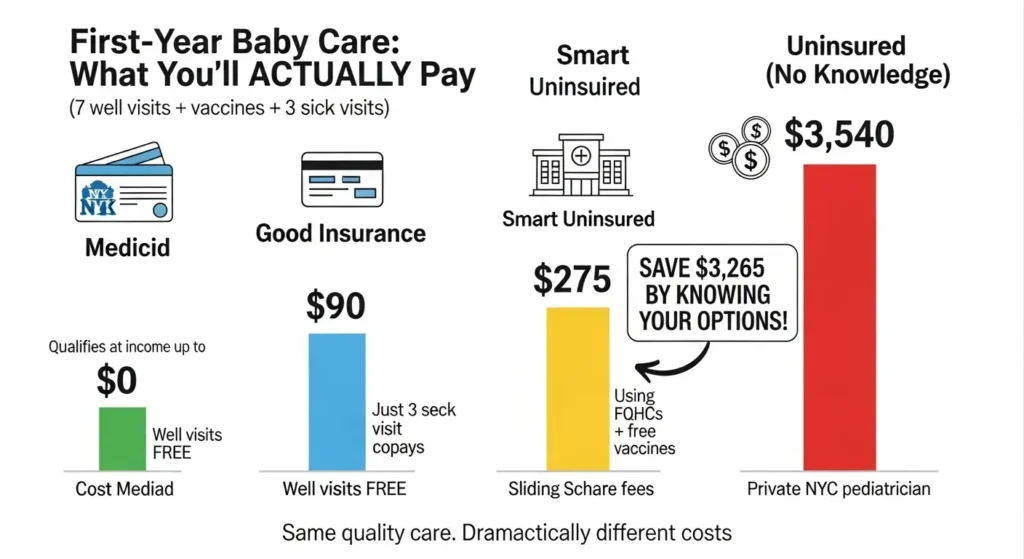
Bar chart comparing first-year baby care costs $0 with Medicaid, $90 with insurance, $275 using community health centers, versus $3,540 at private NYC pediatrician

The situation: Baby Emma, born healthy in Manhattan. Let’s compare three families’ first-year costs.

Family A: Good Insurance (UnitedHealthcare PPO)

Well-child visits (7 visits):

  • All covered at $0 (preventive care)
  • Includes all vaccines
  • Cost: $0

Sick visits (average 3 in first year):

  • Copay: $30 each
  • Cost: $90

One urgent care visit (weekend):

  • Copay: $75
  • Cost: $75

Prescriptions (2 antibiotics, gas drops):

  • Cost: $20

Annual premium contribution:

  • Employer covers most, family pays $150/month
  • Cost: $1,800

Total first-year cost: $1,985


Family B: Medicaid

Well-child visits (7 visits):

  • Cost: $0

Sick visits (3 visits):

  • Cost: $0

Urgent care visit:

  • Cost: $0

Prescriptions:

  • Cost: $0

Premium:

  • Cost: $0

Total first-year cost: $0


Family C: No Insurance, Using Smart Strategies

Well-child visits (7 visits at FQHC):

  • Sliding scale at $20 per visit
  • Cost: $140

Vaccines (through VFC program):

  • Cost: $0

Sick visits (3 visits at FQHC):

  • Sliding scale at $25 per visit
  • Cost: $75

Urgent care visit (community health center weekend hours):

  • Cost: $35

Prescriptions (generics at discount pharmacy):

  • Cost: $25

Total first-year cost: $275


Family D: No Insurance, No Knowledge of Resources

Well-child visits (7 visits at private Manhattan pediatrician):

  • Average $250 per visit
  • Cost: $1,750

Vaccines:

  • Included in well visits
  • Cost: $800

Sick visits (3 visits):

  • Average $225 per visit
  • Cost: $675

Urgent care visit:

  • Cost: $275

Prescriptions:

  • Cost: $40

Total first-year cost: $3,540

Comparison:

  • Family D pays $3,265 MORE than Family C
  • Simply by lacking knowledge of available resources
  • This is why this guide exists

Scenario 6: Specialist Referral for Allergies

The situation: 5-year-old Lucas has persistent rashes and suspected food allergies. Pediatrician refers to pediatric allergist.

With Insurance (Aetna HMO, Westchester)

Pediatrician visit (referral):

  • Copay: $30

Pediatric allergist initial visit:

  • Specialist copay: $50

Allergy skin prick testing (15 allergens):

  • Insurance negotiated rate: $400
  • Patient responsibility after deductible: $80 (20% coinsurance)

Follow-up allergist visit:

  • Specialist copay: $50

EpiPen prescription:

  • Brand: $350
  • Generic: $150
  • With insurance: $40

Total cost: $250


Without Insurance (Used Smart Resources)

Pediatrician visit at FQHC:

  • Sliding scale: $30

Pediatric allergist at hospital charity care program:

  • Applied for financial assistance
  • Qualified at 250% FPL
  • 75% discount approved

Allergy testing:

  • Full price: $600
  • After charity care discount (75%): $150

Follow-up visit:

  • After discount: $50

EpiPen prescription:

  • Generic with GoodRx coupon: $110

Total cost: $340

Still higher than insured cost, but $750+ cheaper than full uninsured price


Scenario 7: Chronic Condition Management (Asthma)

The situation: 9-year-old Mia has asthma requiring regular care.

First Year After Diagnosis – With Insurance (Annual Costs)

Well-child visit:

  • Copay: $0 (preventive)

Asthma follow-up visits (4 per year):

  • Copay: $30 each
  • Cost: $120

Pulmonologist specialist (2 visits):

  • Specialist copay: $50 each
  • Cost: $100

Medications:

  • Albuterol inhaler (rescue): $30 × 3 = $90
  • Fluticasone inhaler (controller): $40 × 6 = $240
  • Copay per fill

Total: $330

Peak flow meter:

  • $25

Annual asthma care cost: $575


First Year After Diagnosis – Medicaid

All visits: $0

All medications: $0

Equipment: $0

Annual asthma care cost: $0


First Year After Diagnosis – No Insurance, Smart Resources

Well-child visit (FQHC):

  • Sliding scale: $25

Asthma follow-up visits (FQHC, 4 visits):

  • Sliding scale: $30 each = $120

Pulmonologist (hospital charity care):

  • 2 visits at 50% discount
  • $150 each, discounted to $75 each = $150

Medications (generic with discount programs):

  • Albuterol: $15 × 3 = $45
  • Fluticasone generic: $25 × 6 = $150

Peak flow meter: $25

Annual asthma care cost: $515

Comparable to insured cost when using available resources


Frequently Asked Questions About Pediatrician Cost in New York

How much does a pediatrician visit cost in New York without insurance?

Without insurance, pediatrician cost in New York ranges from $100-$500 depending on location and visit type. Manhattan averages $200-$350 for sick visits, while upstate cities like Buffalo and Syracuse run $100-$200. Well-child visits cost $150-$300 in NYC and $100-$200 upstate.

However, you have affordable alternatives. Community health centers (FQHCs) offer sliding-scale fees from $0-$50 per visit based on income. NYC Health + Hospitals provides care on a sliding scale that can reduce costs to $0. County health departments offer free or low-cost vaccines and some pediatric services.

If you’re uninsured, apply for Medicaid (free for qualifying families) or Child Health Plus ($0-$60/month premium) immediately. Both provide comprehensive coverage and can be retroactive to your application date.

Are well-child visits free with insurance in New York?

Yes. All ACA-compliant health insurance plans in New York cover well-child visits at 100% with no copay, deductible, or coinsurance when you use an in-network provider. This includes all recommended well-child visits from birth through age 21, following the American Academy of Pediatrics schedule.

Well-child visit coverage also includes:

  • Standard vaccinations administered during the visit
  • Developmental and behavioral screenings
  • Vision and hearing tests
  • Growth measurements
  • Age-appropriate health counseling

The visit must be coded as preventive care (CPT codes 99381-99395). If you mention current illness or the doctor treats an acute problem during the visit, part of it may be billed as a sick visit, triggering your copay.

To keep it free: Schedule separate appointments for well-child exams and sick visits when possible.

Does Medicaid cover pediatrician visits in New York?

Yes. New York Medicaid provides comprehensive pediatric coverage with $0 copays for all services, including:

  • All well-child visits
  • Sick visits
  • Specialist referrals
  • Immunizations
  • Lab tests and X-rays
  • Prescriptions
  • Emergency care
  • Dental and vision care

Children under 19 in families earning up to 223% of the federal poverty level qualify. For a family of four in 2026, that’s annual income up to $69,090.

Important consideration: Not all private pediatricians accept Medicaid. Community health centers, NYC Health + Hospitals facilities, and many group practices do accept it. Always call ahead to verify the pediatrician accepts Medicaid before your appointment.

Apply at mybenefits.ny.gov or call 1-855-355-5777.

How can I find a low-cost pediatrician in New York?

The best options for low-cost pediatric care in New York are:

1. Federally Qualified Health Centers (FQHCs)

  • Sliding scale fees based on income ($0-$50 typically)
  • Find locations at findahealthcenter.hrsa.gov
  • Provide comprehensive care regardless of ability to pay

2. NYC Health + Hospitals

  • 11 hospitals and 50+ community health centers
  • Income-based sliding scale
  • Many services free for low-income families
  • Call 844-NYC-4NYC or visit nychealthandhospitals.org

3. County Health Departments

  • Free or low-cost vaccines
  • Some offer well-child visits
  • Available in all 62 NY counties

4. Apply for Medicaid or Child Health Plus

  • Medicaid: Free for qualifying families (income up to $69,090 for family of 4)
  • Child Health Plus: $0-$60/month (income up to $124,800 for family of 4)
  • Apply at nystateofhealth.ny.gov

5. School-Based Health Centers

  • 350+ locations across NY
  • Free or very low-cost
  • Convenient during school hours

Don’t pay high prices when these resources exist. Thousands of New York families use them for quality pediatric care.

What’s the difference between a pediatrician copay and deductible?

Copay:

  • Fixed amount you pay per visit (like $30)
  • Due at time of service
  • Same amount regardless of what doctor charges
  • Example: Your plan has $30 pediatrician copay—you pay $30 whether the visit costs $150 or $300

Deductible:

  • Total amount you must pay out-of-pocket before insurance starts paying
  • Applies annually (resets January 1st)
  • Ranges from $500-$5,000 for family plans
  • Example: $2,000 deductible means you pay the first $2,000 of covered medical costs each year

Key difference for pediatric care:

  • Sick visits: Usually just copay (deductible typically doesn’t apply to primary care copays)
  • Well-child visits: $0 copay and exempt from deductible (preventive care)
  • Specialist visits: May require copay AND deductible
  • Lab tests/procedures: Often apply to deductible

Real example: Your plan has $30 copay and $2,000 deductible. Your child’s sick visit costs $30 copay only. But if your child needs $500 specialist visit and you haven’t met your deductible, you pay the full $500 (counts toward deductible).

Once you meet your deductible, you typically pay only copays or coinsurance (like 20% of costs).

Do all pediatricians in New York accept Medicaid?

No. While many pediatricians accept Medicaid, not all do—especially in private practices in affluent areas.

Who typically accepts Medicaid:

  • Community health centers (FQHCs) – Always
  • NYC Health + Hospitals facilities – Always
  • Hospital-affiliated pediatric practices – Usually
  • Multi-specialty group practices – Often
  • County health department clinics – Always

Who may not accept Medicaid:

  • Solo private practices in wealthy neighborhoods
  • Concierge/boutique pediatric practices
  • Some suburban practices

Geographic acceptance patterns:

  • High acceptance: Bronx, Brooklyn, Queens, upstate cities
  • Moderate acceptance: Manhattan (varies by neighborhood), Long Island
  • Lower acceptance: Upper East Side Manhattan, Westchester affluent areas, North Shore Long Island

How to find Medicaid-accepting pediatricians:

  1. Use NY Medicaid provider directory online
  2. Call practices directly: “Do you accept NY Medicaid?”
  3. Ask for referrals from community health centers
  4. Contact your Medicaid managed care plan for provider list

Important: Pediatricians cannot discriminate against existing patients who become Medicaid-eligible. If you’re already established with a pediatrician and then qualify for Medicaid, they must continue treating your child.

If you have trouble finding a Medicaid-accepting pediatrician, community health centers provide excellent care and always accept Medicaid.

Can I negotiate pediatrician costs in New York?

Yes, especially if paying cash or facing financial hardship.

Most effective negotiations:

1. Cash-pay discounts (10-30% typical)

  • “What’s your cash-pay rate?”
  • “I can pay $X today to settle this bill. Is that acceptable?”
  • Best results when offering immediate payment

2. Payment plans

  • “I can’t pay $500 at once, but I can pay $75/month”
  • Most practices offer 0% interest plans
  • Negotiate terms that work for your budget

3. Bill reduction for errors

  • Review itemized bill carefully
  • Dispute any errors or duplicate charges
  • Request correction before paying

4. Financial hardship discounts

  • Explain your situation honestly
  • Many practices have hardship policies
  • Can reduce bills 20-50% for qualifying patients

What you can’t negotiate:

  • Insurance-contracted rates (copays are fixed)
  • In-network pricing (set by insurance contracts)
  • Preventive care coverage ($0 is already the best deal)

Best practices for negotiating:

  • Be polite and respectful
  • Explain financial situation clearly
  • Offer specific payment you can afford
  • Get any agreement in writing
  • Don’t agree to more than you can pay

Real example: Bill for $400. Patient offers $250 cash today. After discussion, they settle at $300—25% discount. Patient saves $100; practice gets immediate payment without billing costs.

How much do pediatric vaccines cost without insurance in NY?

Individual vaccines range from $25-$250 each without insurance. The complete first-year vaccine schedule costs $600-$1,200 if paying out-of-pocket.

Individual vaccine costs:

  • DTaP: $70-$100
  • Hepatitis A: $50-$75
  • Hepatitis B: $40-$75
  • Hib: $60-$90
  • HPV: $200-$250
  • Influenza (flu): $25-$50
  • MMR: $75-$100
  • Meningococcal: $100-$150
  • Pneumococcal (PCV13): $150-$200
  • Polio: $50-$75
  • Rotavirus: $100-$150
  • Varicella (chickenpox): $90-$120

Free vaccine options in New York:

Vaccines for Children (VFC) Program:

  • Provides free vaccines to eligible children
  • Eligibility: Medicaid-enrolled, uninsured, underinsured, or American Indian/Alaska Native
  • Available at health departments, FQHCs, and enrolled pediatricians

County health departments:

  • Free or low-cost ($0-$20) vaccines
  • Walk-in clinics in all 62 counties
  • No appointment needed at many locations

NYC Department of Health:

  • Free vaccine clinics throughout five boroughs
  • Serves all children regardless of insurance or immigration status

Community health centers:

  • Provide VFC vaccines at no charge for eligible children
  • Nominal administration fees ($0-$10) for some centers

Don’t pay hundreds for vaccines when free options exist. Call your county health department or visit findahealthcenter.hrsa.gov to locate free vaccine providers.

Is it cheaper to go to urgent care or a pediatrician in New York?

For routine sick visits, your pediatrician is cheaper. For after-hours emergencies, urgent care is cheaper than the ER but more expensive than regular office visits.

Cost comparison:

Regular pediatrician office visit:

  • With insurance: $20-$50 copay
  • Without insurance: $100-$250
  • Best for: Non-emergency illness during office hours

Pediatric urgent care:

  • With insurance: $50-$100 copay (higher than regular visit)
  • Without insurance: $150-$300
  • Best for: After-hours or weekend non-emergency issues

Emergency room:

  • With insurance: $150-$300 copay
  • Without insurance: $500-$3,000+
  • Only for: True medical emergencies

Cost-saving strategy:

  1. During office hours: Always use your regular pediatrician first
  2. After hours, minor issue: Call pediatrician’s after-hours line (often free telephone advice)
  3. After hours, needs evaluation: Use urgent care, not ER
  4. True emergency: ER is appropriate (and ER copay is waived if admitted)

Examples:

Ear infection at 10 AM: Pediatrician visit = $30 copay

Ear infection at 8 PM: Urgent care = $75 copay (or call after-hours line first for advice)

Suspected broken arm: Urgent care with X-ray capability = $100 copay

Difficulty breathing: Emergency room = appropriate regardless of cost

Real example: Saturday evening, child develops 103°F fever. Parent calls pediatrician’s after-hours line (free). Nurse advises Tylenol and monitoring. If fever exceeds 105°F or child becomes lethargic, go to urgent care. Fever breaks overnight. Cost: $0 instead of $100+ urgent care visit.

What should I do if I can’t afford my pediatrician bill?

Don’t panic and don’t ignore it. You have multiple options:

Immediate actions:

1. Call the billing department

  • Explain your situation honestly
  • Ask about payment plans (usually 0% interest)
  • Most practices work with you

2. Request an itemized bill

  • Check for errors (found in 30-40% of bills)
  • Dispute any incorrect charges
  • Verify services were actually received

3. Apply for financial assistance

  • Hospitals and many practices have charity care programs
  • Can reduce bills 25-100% based on income
  • Usually available to families earning up to 400% of federal poverty level ($124,800 for family of 4)

4. Negotiate

  • Offer cash payment at reduced amount
  • “I can pay $X today to settle this bill”
  • Many providers accept 50-75% to avoid collection costs

5. Set up payment plan

  • Most practices offer $25-$100/month plans
  • Usually no interest if you make consistent payments
  • Get terms in writing

Resources:

If bills are ongoing and you’re uninsured:

  • Apply for Medicaid or Child Health Plus immediately
  • Visit nystateofhealth.ny.gov or call 1-855-355-5777
  • Coverage can be retroactive

If you have insurance but bills are high:

  • Verify services were in-network
  • Check if you’re being incorrectly balance-billed
  • Contact your insurance to dispute charges

What NOT to do:

  • Ignore the bills (goes to collections, damages credit)
  • Pay with high-interest credit cards (creates bigger problem)
  • Agree to payment you can’t afford

Real example: $850 bill for well-child visit that should have been free. Parent called insurance company—visit was incorrectly coded as “sick visit.” Insurance company fixed the coding, bill reduced to $0.


Resources & Next Steps
Quick reference card with contact information for four essential New York pediatric health resources insurance marketplace, NYC hospitals, health center locator, and eligibility checker

You now understand pediatrician cost in New York and how to afford quality care for your child. Here are the resources to take action.

Find Affordable Care

NY State of Health (Health Insurance Marketplace):

  • Website: nystateofhealth.ny.gov
  • Phone: 1-855-355-5777
  • Services: Apply for insurance, Medicaid, Child Health Plus
  • Free application assistance available
  • Open enrollment: November 1 – January 31 annually
  • Special enrollment periods for qualifying life events (job loss, moving, having baby)

HRSA Health Center Locator:

  • Website: findahealthcenter.hrsa.gov
  • Find Federally Qualified Health Centers near you
  • Filter by pediatric services
  • Shows sliding scale fee information

NYC Health + Hospitals:

  • Website: nychealthandhospitals.org
  • Phone: 844-NYC-4NYC (844-692-4692)
  • 11 hospitals, 50+ health centers across five boroughs
  • Income-based sliding scale
  • No one turned away for inability to pay

County Health Departments:

  • Find your county: health.ny.gov/health_care/medicaid/ldss.htm
  • Free/low-cost vaccines
  • Some offer well-child services
  • WIC programs with health screenings

School-Based Health Centers:

  • NYC: schools.nyc.gov/school-life/health-and-wellness/school-based-health-centers
  • Upstate: Ask your child’s school or search “[city name] school-based health center”

Verify Insurance Coverage

Major insurance provider directories:

  • Anthem Blue Cross Blue Shield: anthem.com/find-care
  • UnitedHealthcare: uhc.com/find-a-physician
  • Aetna: aetna.com/docfind
  • Cigna: cigna.com/find-care-costs
  • EmblemHealth: emblemhealth.com/find-a-doctor
  • Oscar Health: hioscar.com/find-a-doctor
  • Fidelis Care: fideliscare.org/find-a-provider

To verify in-network status:

  1. Login to your insurance website
  2. Navigate to “Find a Doctor” or “Provider Search”
  3. Enter pediatrician’s name and location
  4. Confirm they’re listed as in-network
  5. Print or screenshot for your records

Financial Assistance Applications

Medicaid eligibility calculator:

  • Access My Benefits: mybenefits.ny.gov
  • Determine if you qualify before applying
  • Takes 5 minutes

Child Health Plus information:

  • Phone: 1-800-698-4543
  • Website: health.ny.gov/health_care/child_health_plus
  • Income guidelines and application

Hospital charity care:

  • Contact hospital’s financial counseling department
  • Request financial assistance application
  • Provide income documentation
  • Submit within 180 days of service (policies vary)

Additional Helpful Resources

American Academy of Pediatrics:

  • Website: healthychildren.org
  • Vaccine schedules and explanations
  • What to expect at well-child visits
  • Developmental milestones
  • Find a pediatrician tool

New York State Department of Health:

  • Website: health.ny.gov
  • Child health insurance programs
  • Immunization requirements and schedules
  • Public health resources
  • County health department directory

NYC Department of Health and Mental Hygiene:

  • Website: nyc.gov/health
  • Free vaccine clinic locations and schedules
  • School-based health center listings
  • Child health resources
  • Poison control, lead testing, and more

Immunization Action Coalition:

  • Website: immunize.org
  • Vaccine information sheets
  • Immunization schedules in multiple languages
  • Resources for parents

New York State of Health Navigator:

  • Free, in-person help with insurance applications
  • Find local navigator: info.nystateofhealth.ny.gov/IPANavigator
  • Assistance in multiple languages
  • Help understanding insurance options

GoodRx (Prescription Discount Program):

  • Website: goodrx.com
  • Free prescription price comparison
  • Discount coupons (save 50-80% on medications)
  • Shows prices at pharmacies near you

NeedyMeds:

  • Website: needymeds.org
  • Database of patient assistance programs
  • Free/low-cost clinic directory
  • Prescription assistance programs

Conclusion

Understanding pediatrician cost in New York empowers you to make informed healthcare decisions for your child without breaking your budget.

Key takeaways:

1. Costs vary dramatically by location Manhattan pediatrician visits can cost 2-3 times more than upstate cities. ZIP code matters.

2. Insurance changes everything With insurance, well-child visits cost $0 and sick visits run $20-$50. Without insurance, you’ll pay $100-$500 per visit at private practices.

3. Free and low-cost options exist everywhere Medicaid, Child Health Plus, community health centers, NYC Health + Hospitals, county health departments, and school-based health centers ensure every New York child can access quality care.

4. Knowledge saves money Families using the strategies in this guide save $1,000-$3,000 annually compared to those who don’t know their options.

5. Don’t let cost prevent care Your child’s health is too important. New York offers extensive resources to help families afford pediatric care regardless of income or insurance status.

Your next steps:

If you have insurance:

  • Verify your pediatrician is in-network
  • Schedule all recommended well-child visits (they’re free)
  • Understand your copays and deductibles
  • Use preventive care to maximum benefit

If you don’t have insurance:

  • Apply for Medicaid or Child Health Plus today (nystateofhealth.ny.gov)
  • Find a community health center near you (findahealthcenter.hrsa.gov)
  • Get free vaccines at your county health department
  • Don’t delay care—sliding scale options available immediately

If you’re struggling with bills:

  • Call billing departments and negotiate
  • Apply for financial assistance/charity care
  • Set up affordable payment plans
  • Never ignore medical bills

The bottom line: Quality pediatric care is available and affordable in New York when you know where to look and how to navigate the system.

Your child deserves excellent healthcare. This guide has given you the knowledge to provide it without financial stress.

Share this guide with other New York parents who need help understanding pediatric costs. Together, we can ensure every child in New York receives the healthcare they need.


Disclaimer: This guide provides general information about pediatrician costs in New York as of January 2026. Actual costs vary by provider, insurance plan, and individual circumstances. Always verify pricing with your specific healthcare provider and insurance company before receiving services. This information is for educational purposes and does not constitute medical or financial advice.

For medical decisions, always consult your child’s pediatrician. For insurance questions, contact your insurance company directly.


About This Guide

This comprehensive resource was created to address the lack of transparent, actionable information about pediatric healthcare costs in New York. Every New York parent deserves to know what they’ll pay and how to access affordable care for their children.

We’ve compiled data from insurance companies, healthcare providers, government agencies, and real families across New York State to provide the most accurate, up-to-date cost information available.

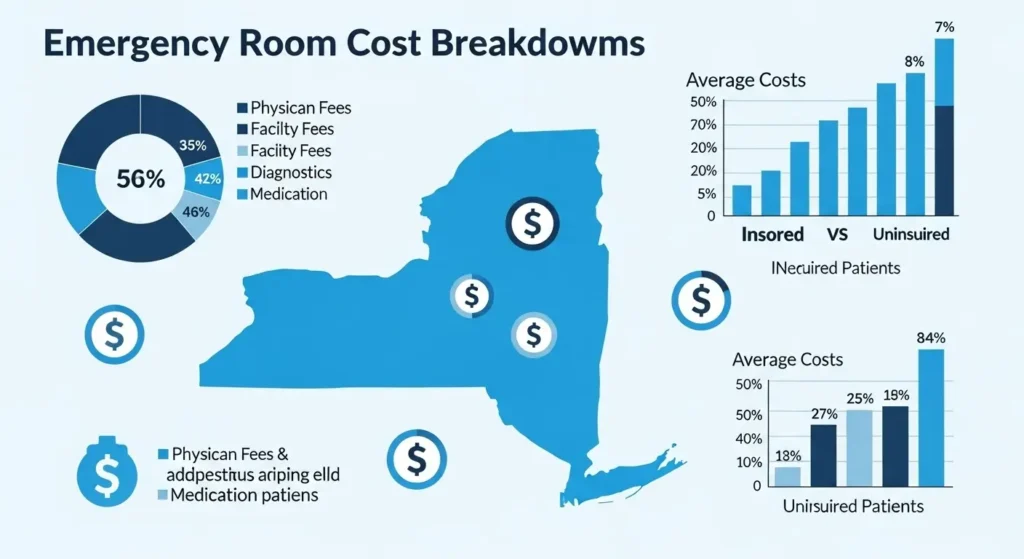
Emergency Room Cost in New York: The Complete 2026 Guide (Stop Overpaying for ER Visits)

You’re experiencing severe chest pain at 2 AM in Manhattan. Your first thought should be getting help, not worrying about the bill. But let’s be honest—the emergency room cost in New York is a legitimate concern that keeps many residents anxious about seeking urgent medical care.

Here’s what you need to know right now: The average emergency room cost in New York ranges from $600 to $3,000 for non-life-threatening conditions, but this number tells only part of the story. Your actual bill depends on your insurance status, which hospital you visit, the severity of your condition, and whether you know how to navigate New York’s complex healthcare billing system.

This comprehensive guide walks you through everything New York residents need to know about ER costs in 2026. You’ll learn exact prices at major New York hospitals, how to use your insurance effectively, when urgent care makes more financial sense, and most importantly—how to dramatically reduce or even eliminate your ER bill through programs most New Yorkers don’t know exist.

By the time you finish reading, you’ll understand your rights as a patient, know which financial assistance programs can help you, and have actionable strategies to avoid overpaying for emergency care. Your health matters more than any bill, but you deserve to know what you’re facing and how to handle it.

Table of Contents

How Much Does an ER Visit Cost in New York?

Let’s start with the numbers you actually need. The emergency room cost in New York varies significantly, but understanding the ranges helps you prepare financially and make informed decisions about where to seek care.

New York State averages $1,668 per ER visit, placing it as the 22nd most expensive state in the nation according to the most recent comprehensive state-by-state analysis. However, this average masks substantial regional variation between New York City and upstate areas, as well as differences between hospital systems.

Here’s what you’ll typically pay based on your insurance status:

Insurance StatusTypical Cost RangeWhat You Actually Pay
With insurance (after deductible met)$100-$500 copayJust your copay amount
With insurance (before deductible)Full cost until deductible met$600-$3,000+ until deductible satisfied
Without insurance (self-pay)$600-$3,000+Full amount, but negotiable
Critical/complex cases$5,000-$20,000+Varies by insurance/assistance programs
Infographic comparing emergency room costs in New York with and without insurance

National context matters: While the national average for an ER visit sits between $1,500 and $3,000, New York falls in the middle range. You’ll pay significantly more than residents of Maryland (average $623) or Maine (average $952), but considerably less than patients in Florida (average $3,102) or New Jersey (average $3,087).

The reality for uninsured New Yorkers: Without insurance, you’re looking at $600-$3,000 for straightforward visits like treating a sprained ankle, minor cuts requiring stitches, or UTIs. More complex situations involving extensive testing, imaging, or specialist consultations can easily reach $5,000-$10,000. Life-threatening emergencies requiring surgery or intensive care can exceed $20,000.

The insurance advantage: With insurance, your out-of-pocket responsibility typically consists of your copay ($100-$500 for most plans) plus any deductible you haven’t met yet. Many insurance plans waive the copay if you’re admitted to the hospital, and under the Affordable Care Act, your maximum out-of-pocket expenses for the year are capped at $9,450 for individuals and $18,900 for families in 2026.

Understanding these baseline numbers helps you evaluate whether alternative care options like urgent care make financial sense for your situation—a topic we’ll explore in detail later in this guide.

What Determines Your Emergency Room Bill in New York

The emergency room cost in New York isn’t a fixed number. Multiple factors influence what you’ll ultimately pay, and understanding these variables empowers you to ask better questions and potentially reduce your expenses.

Facility Type Makes a Massive Difference

Not all emergency rooms charge the same rates. The type of facility you visit significantly impacts your final bill.

Hospital-based emergency departments represent the traditional ER model. These are emergency departments physically located within hospitals like Mount Sinai, NYU Langone, or NYC Health + Hospitals facilities. They generally charge standard emergency room rates.

Freestanding emergency departments look and feel like regular ERs but aren’t attached to hospitals. While convenient, they typically charge 50% more than hospital-based ERs for similar services. If you have a choice, hospital-based facilities usually cost less.

Teaching hospitals versus community hospitals also show pricing variations. Major academic medical centers in New York City (Columbia, NYU, Cornell) often charge premium rates reflecting their advanced capabilities and specialist availability. Smaller community hospitals, particularly upstate, generally have lower baseline charges.

Public versus private hospital systems: NYC Health + Hospitals, the city’s public hospital system, typically offers more affordable rates and more generous financial assistance programs compared to private hospital networks.

Level of Care Required

Emergency departments use the Emergency Severity Index (ESI) to classify patients from Level 1 (most critical) to Level 5 (least urgent). This classification directly determines your facility fee—the base charge just for walking through the ER doors.

Severity LevelDescriptionFacility Fee Range (NY)Typical Examples
Level 1Life-threatening, immediate care needed$1,200-$4,500Cardiac arrest, severe trauma, stroke
Level 2Emergency, potentially life-threatening$900-$2,500Chest pain, severe breathing difficulty
Level 3Urgent, not immediately life-threatening (most common)$700-$1,500Moderate pain, broken bones, lacerations
Level 4Semi-urgent, stable condition$400-$900Minor injuries, mild infections
Level 5Non-urgent, can be delayed$250-$600Prescription refills, minor complaints

The vast majority of ER visits—approximately 60%—fall into Level 3. Understanding this classification helps you anticipate costs and also explains why seemingly similar conditions might generate different bills based on how the triage nurse assesses your initial presentation.

Chart showing five levels of emergency room severity and corresponding costs

Additional Services and Tests

Beyond the facility fee, every diagnostic test, medication, and supply adds to your bill. These charges accumulate quickly:

Laboratory work:

  • Basic blood work (CBC, metabolic panel): $100-$300
  • Comprehensive testing panels: $300-$500
  • Specialized tests (cardiac enzymes, toxicology): $200-$400

Imaging studies:

  • X-rays (single view): $200-$400
  • X-rays (multiple views): $400-$600
  • CT scans: $500-$3,000
  • MRI: $1,000-$5,000
  • Ultrasound: $300-$1,000

Medications and treatments:

  • IV fluids and administration: $100-$400
  • Injectable medications: $50-$300 per dose
  • Oral medications: $20-$100
  • IV antibiotics: $200-$500

Medical supplies:

  • Splints and braces: $50-$300
  • Casting materials: $100-$500
  • Suture kits and wound closure: $100-$400
  • Bandages and dressings: $20-$150

A patient visiting the ER with abdominal pain might receive a basic exam (facility fee), blood work ($300), CT scan ($1,500), IV fluids ($200), and pain medication ($100), totaling over $2,800 before insurance.

Time of Visit

Evening, overnight, and weekend visits often incur higher charges due to staffing differentials and premium pay requirements. While you shouldn’t delay emergency care to save money, understanding this factor explains some billing variations.

Hospital Location

Geography significantly impacts the emergency room cost in New York. Manhattan hospitals typically charge 20-40% more than similar facilities in the Bronx, Queens, or Staten Island. Upstate New York hospitals generally charge 20-30% less than New York City facilities across the board.

This regional variation reflects differences in operating costs, local wage standards, and market competition rather than quality of care.

Length of Stay

Time spent in the emergency department affects your bill. A quick two-hour visit for stitches costs considerably less than an eight-hour stay for observation and multiple rounds of testing. If you’re placed in “observation status” (not quite admitted but not discharged), expect higher charges for extended facility use.

ER Costs at Major New York Hospitals (2026)

New York City skyline featuring major hospital buildings and medical centers

The emergency room cost in New York varies substantially between hospital systems. While exact prices depend on your specific condition and treatment, understanding general cost ranges at major facilities helps you make informed decisions.

Important note: Federal law requires that you receive emergency care regardless of which hospital you visit or whether it’s in your insurance network. However, knowing typical pricing helps with financial planning and post-visit bill management.

NYC Health + Hospitals (Public System)

New York City’s public hospital network operates 11 acute care hospitals across the five boroughs, including Bellevue, Elmhurst, Harlem Hospital, Kings County, Jacobi, Coney Island, and Lincoln.

Estimated cost range: $600-$2,000 for typical ER visits

Key advantages:

  • Generally lower baseline charges than private hospitals
  • Most generous financial assistance programs in NYC
  • “Options” program for uninsured patients
  • Sliding scale fees based on income
  • No one turned away for inability to pay
  • Multilingual services standard

Best for: Uninsured patients, low-income residents, those needing financial assistance

NYC Health + Hospitals facilities have explicit policies to help New Yorkers access care regardless of immigration status or ability to pay. If you’re uninsured or underinsured, starting here often results in significantly lower out-of-pocket costs.

Mount Sinai Health System

Mount Sinai operates multiple emergency departments across Manhattan, Queens, Brooklyn, and Long Island, including Mount Sinai Hospital, Mount Sinai West, Mount Sinai Beth Israel, and Mount Sinai Queens.

Estimated cost range: $1,200-$3,000+ for typical ER visits

Characteristics:

  • Advanced tertiary care capabilities
  • Specialized emergency services (cardiac, pediatric, trauma)
  • Prices vary by specific campus
  • Robust financial assistance program available
  • Major teaching hospital with latest technology

Mount Sinai’s flagship Manhattan locations typically charge at the higher end of this range, while outer borough facilities may be slightly lower.

NYU Langone Health

NYU Langone operates emergency departments in Manhattan (Tisch Hospital, Kimmel Pavilion) and Brooklyn (NYU Langone Hospital—Brooklyn), plus specialized pediatric emergency services.

Estimated cost range: $1,500-$3,500+ for typical ER visits

Characteristics:

  • Premium pricing reflecting advanced capabilities
  • Nationally ranked specialties
  • State-of-the-art facilities
  • Comprehensive financial counseling available
  • Known for shorter wait times at some locations

NYU Langone facilities rank among New York’s more expensive options, but they offer cutting-edge diagnostic capabilities and specialist availability 24/7.

NewYork-Presbyterian Hospital

NewYork-Presbyterian’s massive network includes Columbia campus, Weill Cornell campus, and multiple community hospitals throughout the New York metro area.

Estimated cost range: $1,400-$3,200+ for typical ER visits

Characteristics:

  • One of the nation’s largest hospital systems
  • High patient volume ERs
  • Academic medical center pricing
  • Excellent specialist access
  • Financial assistance programs available

The specific campus significantly affects pricing, with Manhattan locations generally charging more than Westchester County facilities.

Northwell Health (Long Island/Queens)

Northwell Health, New York’s largest health system, operates 23 hospitals including Long Island Jewish Medical Center, North Shore University Hospital, Lenox Hill Hospital, and multiple facilities across Long Island and Queens.

Estimated cost range: $1,100-$2,800 for typical ER visits

Characteristics:

  • Wide geographic coverage
  • Range of facility types from community to tertiary care
  • Generally competitive pricing
  • Strong community hospital network
  • Comprehensive financial assistance policies

Northwell facilities in Queens and Long Island often provide slightly lower costs than comparable Manhattan hospitals while maintaining high-quality emergency care.

Upstate New York Hospitals

Major upstate emergency departments include University Hospital (Syracuse), Strong Memorial Hospital (Rochester), Albany Medical Center, and Buffalo General Medical Center.

Estimated cost range: $800-$2,200 for typical ER visits

Key differences:

  • 20-30% lower than NYC on average
  • Reflect lower regional operating costs
  • Equally capable emergency care
  • Less congestion, often shorter wait times
  • Financial assistance programs widely available

If you live upstate, you’ll generally face lower baseline emergency room costs than New York City residents, though the same factors (severity, tests, treatments) still apply.

How to Find Specific Hospital Prices

New York hospitals are legally required to post their “chargemaster” prices online. Here’s how to access them:

  1. Visit the hospital’s website
  2. Look for “Price Transparency,” “Standard Charges,” or “Price Estimator” links (usually in footer)
  3. Search for CPT codes 99281-99285 (emergency department visit levels)
  4. Download their machine-readable file for detailed pricing

Reality check: Chargemaster prices represent the hospital’s list prices before insurance negotiations or financial assistance. Almost no one pays these full amounts. They serve as a starting point for understanding relative costs between facilities rather than what you’ll actually owe.

What You’ll Pay for Common ER Visits in New York

Understanding condition-specific costs helps you anticipate expenses and evaluate whether urgent care might be a more cost-effective alternative for non-emergencies. Here’s what New Yorkers typically pay for common emergency room visits.

Condition/Reason for VisitWithout Insurance (NY Estimate)With Insurance (Typical Copay)Urgent Care Alternative Cost
Minor cut requiring stitches$600-$1,800$100-$300$150-$350 ✓
Sprained ankle or wrist$800-$2,000$100-$350$125-$300 ✓
Mild allergic reaction$500-$1,500$100-$300$100-$200 ✓
Urinary tract infection (UTI)$900-$2,500$150-$400$100-$250 ✓
Migraine headache$700-$2,000$100-$350$125-$275 ✓
Minor burns (1st or 2nd degree)$600-$1,800$100-$350$150-$300 ✓
Flu or high fever$700-$2,000$100-$300$100-$200 ✓
Ear infection$600-$1,500$100-$300$100-$200 ✓
Minor asthma attack$900-$2,500$150-$400$150-$350 ✓
Chest pain (ruled out cardiac)$1,500-$4,000$200-$500Not appropriate ✗
Broken bone (no surgery needed)$1,200-$3,500$200-$500Not appropriate ✗
Severe abdominal pain$1,500-$4,500$200-$500Not appropriate ✗
Deep laceration/severe bleeding$1,000-$3,000$150-$500Not appropriate ✗
Broken bone requiring surgery$10,000-$30,000+$500-$3,000+ (deductible/coinsurance)Not appropriate ✗
Heart attack$15,000-$50,000+$1,000-$5,000+ (varies widely)Not appropriate ✗

Why such wide ranges? Several factors explain the cost variation:

Diagnostic testing drives costs: A patient with chest pain might receive basic monitoring and be discharged ($1,500), or undergo extensive cardiac enzyme testing, EKG, chest X-ray, and CT scan ($4,000+). The presenting symptoms are similar, but the diagnostic pathway dramatically affects the final bill.

If you’ve experienced chest pain that turned out to be non-cardiac, working with a fitness professional and getting baseline cardiovascular assessments like VO2 max testing can help you understand your heart health and avoid future ER visits.

NYC premium: New York City hospitals typically charge 25-40% more than upstate facilities for identical conditions. A UTI treated in Buffalo might cost $900, while the same treatment at a Manhattan ER could reach $2,500.

Hospital variation: Even within NYC, public hospitals (NYC Health + Hospitals) generally charge less than private academic medical centers for comparable care.

Insurance negotiation: The “without insurance” prices shown represent what hospitals bill self-pay patients. However, these are negotiable, and financial assistance programs can reduce them by 50-100% for eligible patients.

Real Cost Examples from New York Patients

Case 1: Sprained ankle in Manhattan

  • Hospital: Private academic medical center
  • Services: ER visit, X-ray (2 views), splint, crutches
  • Billed charges: $2,847
  • With insurance (after copay): $250
  • Self-pay negotiated: $1,200 (58% discount)

Case 2: Child with high fever in Queens

  • Hospital: Community hospital
  • Services: ER visit, rapid flu test, throat culture, oral medication
  • Billed charges: $1,456
  • Medicaid patient: $0
  • Without insurance (before assistance): $1,456

Case 3: Chest pain (false alarm) in Brooklyn

  • Hospital: Large health system
  • Services: ER visit Level 2, EKG, chest X-ray, cardiac enzymes, 4-hour observation
  • Billed charges: $5,234
  • With insurance (after deductible): $500 copay + $1,047 coinsurance = $1,547
  • Self-pay with financial assistance: $0 (100% charity care)

These real examples illustrate how the same condition can generate vastly different patient responsibility based on insurance status, hospital choice, and knowledge of financial assistance programs.

When the Same Condition Costs Dramatically Different Amounts

Consider two New York patients with identical UTIs:

Patient A: Goes to urgent care in the Bronx

  • Visit fee: $175
  • Urinalysis: $30
  • Antibiotic prescription: $15
  • Total: $220
  • Time: 45 minutes

Patient B: Goes to Manhattan ER

  • ER facility fee (Level 3): $1,200
  • Physician fee: $450
  • Urinalysis: $125
  • Additional blood work: $275
  • IV fluids: $200
  • IV antibiotics: $300
  • Prescription: $40
  • Total: $2,590
  • Time: 4 hours

Both patients receive effective treatment, but Patient B pays nearly 12 times more and waits five times longer. Understanding when urgent care suffices can save you thousands of dollars—a topic we’ll cover in detail shortly.

How Insurance Affects Emergency Room Costs in New York

Sample health insurance card showing important information for emergency room visits

Your insurance status fundamentally changes the emergency room cost in New York. Understanding how different insurance types handle ER visits helps you anticipate expenses and use your coverage effectively.

Medicaid (New York State Medicaid)

New York’s Medicaid program provides the most comprehensive ER coverage with minimal patient cost.

ER copay: $0 for most enrollees Coverage includes:

  • All medically necessary emergency services
  • Ambulance transportation
  • All diagnostic tests and imaging
  • Medications administered in the ER
  • Follow-up care related to the emergency

Who qualifies:

  • Income limits vary by household size and category
  • Pregnant women qualify at higher income thresholds
  • Children eligible through Child Health Plus
  • Elderly and disabled individuals under specific programs

Emergency Medicaid: Even if you don’t qualify for regular Medicaid, Emergency Medicaid covers emergency services regardless of immigration status. You can apply at the hospital or local Medicaid office, and coverage applies retroactively to the date of service.

Medicare (Original Medicare Parts A & B)

Medicare beneficiaries face different cost structures depending on whether they’re admitted to the hospital.

If treated and released:

  • Part B covers ER services
  • You pay 20% of Medicare-approved amount after Part B deductible ($240 in 2026)
  • Example: Medicare-approved amount is $1,500. You pay $240 deductible + $252 (20% of $1,260) = $492

If admitted to hospital:

  • Part A hospital insurance applies
  • You pay $1,632 deductible per benefit period (2026 amount)
  • ER copay typically waived when admitted

Medicare Advantage plans:

  • Copays typically $50-$350 for ER visits
  • Often waived if admitted within 24 hours
  • Out-of-pocket maximums apply (varies by plan, typically $3,000-$8,000 annually)

Commercial Insurance (Private Plans)

Most employed New Yorkers have commercial insurance through employers. Major carriers in New York include Empire BlueCross BlueShield, Healthfirst, Oscar Health, Emblem Health, Fidelis Care, United Healthcare, and Aetna.

Typical ER copay structure:

  • Standard copay: $100-$500 per ER visit
  • High-deductible plans: You pay full cost until deductible met, then copay applies
  • Many plans waive copay if admitted to hospital

How deductibles work: If you haven’t met your annual deductible, you typically pay the full negotiated rate (not the chargemaster price) until your deductible is satisfied.

Example with $2,000 deductible:

  • ER visit costs $3,000 (hospital’s charge)
  • Insurance negotiated rate: $1,800
  • You’ve paid $500 toward deductible this year
  • You pay: $1,500 (remaining deductible) + copay if applicable
  • Insurance pays: $300

After deductible is met:

  • You pay only your copay ($150-$500 typically)
  • Insurance pays the rest

Out-of-pocket maximum protection: Under the Affordable Care Act, your maximum annual out-of-pocket costs are capped at $9,450 for individuals and $18,900 for families in 2026. Once you hit this limit, insurance pays 100% of covered services for the rest of the year.

In-Network vs. Out-of-Network: Critical Protection for ER Visits

Here’s extremely important news for New York residents: You cannot be balance-billed for emergency services, even at out-of-network hospitals.

Under the No Surprises Act (federal law, effective January 2022):

  • Emergency services must be covered at in-network cost-sharing rates
  • Applies even if you go to an out-of-network hospital
  • Protects you from surprise bills for out-of-network ER doctors
  • You pay only your in-network copay/coinsurance/deductible

New York’s additional protections:

  • NY had surprise billing protections before the federal law
  • Provides even stronger consumer safeguards in some situations
  • Independent Dispute Resolution (IDR) process available
  • Limits your financial responsibility to in-network amounts

What this means practically: If you have a medical emergency in Manhattan but the nearest hospital is out-of-network for your insurance, you’ll pay the same copay as if you’d gone to an in-network facility. The hospital and your insurance company resolve payment disputes through arbitration—you’re protected from the difference.

Important exception: These protections apply only to emergency services. If you’re admitted and receive non-emergency follow-up care or elective procedures at an out-of-network hospital, different rules apply.

What Insurance Typically Covers in the ER

Always covered for emergencies:

  • Medical screening examination
  • Emergency physician services
  • Facility fees
  • Diagnostic tests necessary for emergency care
  • Emergency medications and treatments
  • Medical supplies used during emergency care

May have limitations:

  • Ambulance transportation (often separate copay/deductible)
  • Non-emergency follow-up care
  • Elective procedures performed during ER visit
  • Experimental or investigational treatments
  • Cosmetic procedures

The Surprise Billing Problem (and New York’s Solution)

Before 2022, many New York patients faced shocking bills when out-of-network doctors treated them in in-network ERs. A common scenario: You go to an in-network hospital for chest pain, but the emergency physician, radiologist, or specialist who treats you is out-of-network. You’d receive separate bills for thousands of dollars beyond your copay.

New York solved this problem:

State protections (2014-present):

  • Banned balance billing for emergency services
  • Established Independent Dispute Resolution for billing disputes
  • Protected consumers from unexpected charges

Federal No Surprises Act (2022-present):

  • Extended similar protections nationwide
  • Strengthened consumer safeguards
  • Created uniform federal standards

Your rights:

  1. You cannot be asked to waive your protections, even if you sign forms
  2. Your consent is not required for these protections to apply
  3. Out-of-network providers cannot bill you more than in-network cost-sharing
  4. Disputes between providers and insurers don’t involve you

If you receive a surprise bill:

  1. Contact your insurance company immediately
  2. File a complaint with the New York State Department of Financial Services (1-800-342-3736)
  3. Don’t pay disputed amounts
  4. Request Independent Dispute Resolution if needed

New York’s protections mean you can focus on getting emergency care without fear of financial ambush from out-of-network billing.

Emergency Room Costs for Uninsured New Yorkers

Lacking health insurance doesn’t mean you’ll face the full emergency room cost in New York without help. Multiple programs, laws, and negotiation strategies can dramatically reduce your financial burden.

What to Expect as an Uninsured Patient

You will receive care: Federal EMTALA (Emergency Medical Treatment and Labor Act) law requires every ER to provide medical screening and stabilizing treatment regardless of your ability to pay. Immigration status, employment status, and financial resources don’t affect your right to emergency care.

Initial billing: Hospitals typically bill uninsured patients their “chargemaster” rates—the list prices before insurance discounts. These are often 2-3 times higher than what insurance companies pay for identical services.

Average costs for uninsured New Yorkers:

  • Simple ER visits (Level 3-4): $600-$2,000
  • Moderate complexity (Level 2-3): $1,500-$4,000
  • High complexity or observation (Level 1-2): $3,000-$10,000
  • Critical care with admission: $10,000-$50,000+

The good news: These billed amounts are rarely what you’ll actually pay if you know how to navigate the system.

Self-Pay Discounts

Many New York hospitals offer “prompt pay” or “self-pay” discounts ranging from 20% to 50% off chargemaster prices if you pay within a specified timeframe (typically 30-90 days).

How to request:

  1. When registering at the ER, inform staff you’re self-pay
  2. Ask to speak with a financial counselor before or immediately after treatment
  3. Specifically request: “What self-pay discounts do you offer?”
  4. Ask for the discount in writing
  5. Negotiate the discount percentage if possible

Example:

  • ER bill: $3,200
  • 40% self-pay discount if paid within 30 days: -$1,280
  • Your cost: $1,920
  • Additional 15% discount if paid in full immediately: -$288
  • Final cost: $1,632

Some hospitals extend better discounts for immediate payment. If you have savings or access to low-interest credit, this strategy can save substantially.

New York’s Financial Assistance Law (FAL)

Patient completing hospital financial assistance application form

This is the most powerful tool for uninsured and underinsured New Yorkers. New York State law requires non-profit hospitals to provide financial assistance to eligible low-income patients.

Key provisions:

  • Applies to patients with household income up to 300% of federal poverty level (varies by hospital)
  • Can reduce your bill by 75% to 100%
  • Retroactive applications accepted up to 2 years after service
  • Hospitals must screen patients and provide applications
  • Credit reporting prohibited while application is pending (up to 2 years)

2026 Income eligibility (approximate—hospitals vary):

  • Individual: Up to ~$45,000/year may qualify for full or partial assistance
  • Family of 2: Up to ~$60,000/year
  • Family of 4: Up to ~$93,000/year

Typical discount tiers:

  • 0-150% FPL: 100% discount (free care)
  • 150-200% FPL: 75% discount
  • 200-250% FPL: 50% discount
  • 250-300% FPL: 25% discount

What you need to apply:

  • Proof of income (pay stubs, tax returns, benefit letters)
  • Proof of residency in New York
  • Household size documentation
  • Bank statements (sometimes)
  • Application form (available from hospital financial counseling department)

How to apply:

  1. Contact the hospital’s financial counseling department
  2. Request a financial assistance application
  3. Submit documentation promptly
  4. Follow up weekly on application status
  5. Appeal if denied

Critical timing: You can apply for financial assistance up to 2 years after your ER visit. Even if you’ve already received bills or been contacted by collections, you can still apply and qualify retroactively.

Charity Care Programs at Major New York Hospitals

Beyond state-mandated financial assistance, many hospitals operate charity care programs with even more generous terms.

NYC Health + Hospitals:

  • Most generous financial assistance in New York City
  • “Options” program for uninsured patients
  • Sliding scale fees based on income
  • Many services free for patients under 200% FPL
  • No citizenship or immigration status requirements
  • Application assistance available in multiple languages

Major private systems:

  • Mount Sinai: Financial assistance up to 400% FPL for some services
  • NYU Langone: Charity care and payment plans
  • NewYork-Presbyterian: Financial Assistance Program with sliding scale
  • Northwell Health: Comprehensive financial assistance policies

What charity care typically covers:

  • Emergency department services
  • Inpatient hospital care
  • Outpatient procedures
  • Necessary follow-up care

Real example: An uninsured patient in Queens received a $7,800 ER bill for abdominal pain requiring CT scan and observation. Household income: $38,000 (single person). Applied for charity care at the NYC Health + Hospitals facility. Result: 100% discount, $0 final bill.

Emergency Medicaid in New York

Even if you don’t qualify for regular Medicaid, Emergency Medicaid covers emergency services for anyone who:

  • Meets Medicaid income requirements
  • Requires emergency medical care
  • Is ineligible for regular Medicaid only due to immigration status

Who qualifies:

  • Undocumented immigrants
  • Visitors to the U.S.
  • Others ineligible for regular Medicaid due to immigration status

What it covers:

  • Emergency room services
  • Emergency surgery
  • Dialysis
  • Labor and delivery
  • Other emergency medical conditions

How to apply:

  • Apply at the hospital or local Department of Social Services
  • Bring identification and proof of income
  • Coverage applies retroactively to date of service
  • No citizenship or immigration questions affect emergency care

Important protection: New York has sanctuary policies protecting immigrants seeking healthcare. Your immigration status information will not be shared with federal immigration authorities when you seek emergency care.

Payment Plans: Making ER Bills Manageable

If you don’t qualify for full financial assistance, most New York hospitals offer interest-free payment plans making large bills manageable over time.

Typical payment plan terms:

  • $25-$100 minimum monthly payment
  • 12-24 month standard plans
  • Extended plans (36-48 months) for larger balances
  • No interest or fees if you maintain payments
  • No credit check required

How to set up:

  1. Contact hospital billing department before due date
  2. Propose monthly payment you can afford
  3. Get agreement in writing
  4. Set up automatic payments to avoid missed payments
  5. Keep records of all payments

Avoiding collections: As long as you maintain regular payments—even small amounts—hospitals typically don’t send accounts to collections. A $5,000 ER bill paid at $100/month over 50 months is better than damaging your credit with unpaid debt.

What NOT to Do as an Uninsured Patient

Don’t ignore bills: This leads to collections, credit damage, and potential lawsuits. Even if you can’t pay, communicate with the hospital.

Don’t pay immediately without investigating options: Take time to apply for financial assistance, request itemized bills, and negotiate.

Don’t assume you don’t qualify for help: Income limits are higher than most people expect. Always apply.

Don’t use high-interest credit cards without exploring all options first: Paying 18-24% interest on medical debt should be your last resort after exhausting financial assistance, charity care, and payment plans.

Don’t avoid future emergency care due to outstanding bills: Your health matters more than debt. Hospitals must treat emergencies regardless of past balances.

ER vs. Urgent Care: Making the Smart Financial Choice

Decision flowchart helping patients choose between emergency room and urgent care

Understanding when to choose urgent care over an emergency room can save New York residents $500 to $2,500 per visit. Here’s how to make the right decision for both your health and your wallet.

Cost Comparison: The Numbers That Matter

Care SettingAverage Cost NYWait TimeHours of OperationCapabilities
Emergency Room$600-$3,000+2-6 hours24/7/365Full diagnostic, life-threatening emergencies
Urgent Care$100-$25015-60 minutesExtended hours, 7 days/week (typically 8am-8pm)Basic diagnostics, non-life-threatening
Primary Care$100-$200Scheduled appointmentBusiness HoursPreventive care, chronic conditions
Telehealth$40-$75Immediate-30 min24/7 (varies by provider)Consultation, simple diagnoses

Real savings examples:

UTI treatment:

  • ER cost: $900-$2,500
  • Urgent care cost: $100-$250
  • Savings: $800-$2,250

Sprained ankle:

  • ER cost: $800-$2,000
  • Urgent care cost: $125-$300
  • Savings: $675-$1,700

Minor cut requiring stitches:

  • ER cost: $600-$1,800
  • Urgent care cost: $150-$350
  • Savings: $450-$1,450

When You MUST Go to the ER

Never hesitate to visit an emergency room for these life-threatening conditions. Your life is worth infinitely more than any bill.

Go to ER immediately for:

Cardiovascular symptoms:

  • Chest pain or pressure
  • Pain radiating to arm, jaw, or back
  • Severe shortness of breath
  • Irregular or rapid heartbeat with dizziness

Neurological symptoms:

  • Sudden weakness or numbness on one side of body
  • Difficulty speaking or understanding speech
  • Sudden severe headache (“worst headache of my life”)
  • Vision changes in one or both eyes
  • Loss of consciousness
  • Seizures (especially first-time)
  • Confusion or altered mental status

Trauma:

  • Major injuries from car accidents, falls, or violence
  • Head injuries with loss of consciousness
  • Severe bleeding that won’t stop
  • Deep wounds or large cuts
  • Suspected broken bones (especially long bones or spine)
  • Severe burns (over 10% of body, face, hands, feet, or genitals)

Respiratory emergencies:

  • Severe difficulty breathing
  • Choking
  • Inability to speak in full sentences due to breathing difficulty

Other true emergencies:

  • Severe allergic reactions (anaphylaxis)
  • Coughing or vomiting blood
  • Severe abdominal pain (especially if pregnant)
  • Poisoning or drug overdose
  • Suicidal or homicidal thoughts with intent
  • High fever with stiff neck or altered mental status
  • Sudden severe pain anywhere

When in doubt about whether symptoms are life-threatening, always choose the ER. False alarms cost money but save lives.

When Urgent Care Is the Better Choice

Urgent care centers handle non-life-threatening conditions that need same-day attention but aren’t emergencies. Here’s what they treat effectively:

Perfect for urgent care:

Infections:

  • Urinary tract infections
  • Ear infections
  • Sinus infections
  • Strep throat
  • Pink eye (conjunctivitis)
  • Skin infections

Minor injuries:

  • Sprains and strains
  • Minor cuts requiring stitches (under 2 inches, not deep)
  • Minor burns (1st or 2nd degree, small area)
  • Minor fractures (fingers, toes)
  • Insect bites and stings
  • Minor animal bites

Respiratory issues:

  • Cough and cold symptoms
  • Flu symptoms
  • Mild asthma attacks (if you can speak in full sentences)
  • Bronchitis

Digestive issues:

  • Vomiting or diarrhea without severe dehydration
  • Mild to moderate abdominal pain
  • Food poisoning

Skin conditions:

  • Rashes
  • Mild allergic reactions (no breathing difficulty)
  • Minor skin abscess

Other conditions:

  • Fever (without severe symptoms)
  • Back pain (without neurological symptoms)
  • Minor eye injuries (no penetrating trauma)
  • Mild dehydration
  • Simple STI testing

Finding Urgent Care in New York

New York, particularly NYC, has extensive urgent care coverage with over 200 centers across the five boroughs and hundreds more throughout the state.

Major urgent care chains in New York:

CityMD:

  • 140+ locations across NYC, Long Island, Westchester
  • Open 365 days/year, 8am-8pm (most locations)
  • Accepts most insurance plans
  • Walk-in and online check-in available
  • Average cost: $150-$250 without insurance

Northwell Health-GoHealth Urgent Care:

  • 40+ locations in NYC and Long Island
  • Extended hours including weekends
  • Part of Northwell Health system
  • Seamless referrals if you need ER

PM Pediatrics (for children):

  • Pediatric-focused urgent care
  • Multiple NYC locations
  • Evening and weekend hours
  • Board-certified pediatricians

Immediate Care Centers (various providers):

  • Community urgent care centers throughout NYS
  • Often more affordable than chains
  • Check if they accept your insurance

How to find nearby urgent care:

  1. Search “urgent care near me” on Google Maps
  2. Check your insurance app/website for in-network facilities
  3. Call ahead to confirm hours and insurance acceptance
  4. Use online check-in to reduce wait time

Decision-Making Framework

Still unsure where to go? Use this simple decision tree:

Is this a potential emergency? (chest pain, severe bleeding, difficulty breathing, stroke symptoms, severe trauma)GO TO ER IMMEDIATELY

Are you experiencing moderate symptoms that need care today but aren’t life-threatening? (UTI, sprained ankle, minor cut, ear infection)TRY URGENT CARE FIRST

  • If urgent care is closed: ER
  • If urgent care can’t handle your condition: They’ll direct you to ER

Can you wait 1-2 days for an appointment? (routine illness, chronic condition management, preventive care)CALL YOUR PRIMARY CARE DOCTOR

Need medical advice but no physical exam required? (medication questions, minor symptoms, general health questions)TRY TELEHEALTH

Still not sure?Call your insurance company’s 24/7 nurse line (number on your insurance card)

Most insurance plans offer free 24/7 nurse hotlines where registered nurses help you determine appropriate care setting. They’ll ask about symptoms and advise whether you need an ER, urgent care, or can wait for your doctor.

Other Lower-Cost Alternatives to Consider

Community Health Centers (Federally Qualified Health Centers – FQHCs):

  • Sliding scale fees based on income
  • Comprehensive services including urgent care
  • Many open evenings and weekends
  • Found throughout NYC and NY State
  • Search: findahealthcenter.hrsa.gov

Retail Clinics:

  • Located in CVS, Walgreens, Rite Aid pharmacies
  • Treat minor conditions (colds, flu, vaccines, minor skin conditions)
  • Cost: $60-$125 per visit
  • Very limited scope compared to urgent care
  • No appointments needed

Telehealth Services:

  • Available through most insurance plans
  • Direct-to-consumer options (Teladoc, MDLive, Doctor on Demand)
  • Cost: $40-$75 without insurance, often $0-$20 copay with insurance
  • Available 24/7
  • Can prescribe medications
  • Good for: flu, UTI, rashes, pink eye, minor issues
  • Cannot do physical exams or diagnostic tests

NYC Health + Hospitals ExpressCare:

  • Virtual urgent care for NYC residents
  • Free or low-cost based on insurance/income
  • Available daily 8am-midnight
  • Access via app or website

10 Proven Ways to Reduce Your Emergency Room Bill in New York

Comparison showing emergency room bill reduction through financial assistance and negotiation

Even after receiving an ER bill, you have significant power to reduce what you actually pay. These strategies have helped thousands of New Yorkers save 50-90% on their emergency room costs.

1. Request an Itemized Bill Immediately

Studies show that up to 80% of medical bills contain errors. An itemized bill reveals exactly what you’re being charged for and makes errors visible.

How to request:

  • Call hospital billing department
  • Ask for: “A detailed, itemized bill with CPT codes and service descriptions”
  • Federal law requires they provide this
  • Request within 30 days of receiving summary bill

What to look for:

  • Duplicate charges (same service billed twice)
  • Services you didn’t receive
  • Incorrect quantities (billed for 3 X-rays when you had 1)
  • Unbundled charges (separate billing for services that should be bundled)
  • Upcoded services (billed for higher complexity than received)

Common errors in ER bills:

  • Operating room charges (when only ER was used)
  • Discharge planning fees (for simple ER visits)
  • Supplies charged individually that should be in facility fee
  • Incorrect emergency level code

Real example: Brooklyn patient received $4,200 ER bill for chest pain. Itemized bill revealed:

  • Duplicate charge for cardiac monitoring: $600
  • Two EKGs billed, only one performed: $200
  • Level 2 ER visit coded as Level 1: $400 difference Errors totaled: $800 (19% of bill)

After disputing errors, bill reduced to $3,400. Then applied for financial assistance, final responsibility: $0.

2. Challenge Charges You Don’t Understand

Don’t pay for anything you can’t verify or don’t understand.

Questions to ask billing department:

  • “What is CPT code [number] and when was this service provided?”
  • “Why am I being charged for [specific item]?”
  • “Can you explain the difference between the facility fee and physician fee?”
  • “Are these charges at Medicare rates or chargemaster rates?”

Compare to Medicare rates: Medicare publishes what it pays for services. If your charge is 300-400% of the Medicare rate, it’s likely inflated. Use this as negotiation leverage.

Challenge these common questionable charges:

  • Facility fees for services that should be bundled
  • “Trauma activation” fees (if you weren’t a trauma patient)
  • Separate charges for basic supplies (gloves, bandages)
  • Consultation fees for specialists who didn’t actually consult

3. Apply for Financial Assistance (Even If You Think You Won’t Qualify)

This is the single most powerful strategy. Many New Yorkers who think they earn “too much” actually qualify.

Why you might qualify even with decent income:

  • Income limits often extend to 300-400% of federal poverty level
  • That’s up to $60,000 for an individual, $120,000 for a family of 4 at some hospitals
  • Extraordinary medical expenses count
  • Recent job loss or income reduction matters
  • Household size includes dependents

Application process:

  1. Contact hospital financial counseling within 30 days of bill
  2. Ask specifically about “financial assistance policy” and “charity care”
  3. Request application (must be provided in your language)
  4. Gather documentation: pay stubs, tax returns, proof of expenses
  5. Submit application with all required documents
  6. Follow up weekly on status
  7. Appeal if denied (many denials are reversed on appeal)

What happens to your bill while applying:

  • Collections must pause
  • Credit reporting prohibited for up to 2 years in NY
  • Payment deadlines extended
  • Interest typically frozen

Approval timelines:

  • Most hospitals respond within 30-45 days
  • Complex cases may take 60-90 days
  • You can apply up to 2 years after service

4. Negotiate Your Bill Directly

Medical bills are negotiable, especially for self-pay patients. Hospitals would rather receive partial payment than send bills to collections.

Negotiation strategies:

Start with a reasonable offer:

  • For bills under $2,000: Offer 30-40% of billed amount
  • For bills $2,000-$10,000: Offer 25-35%
  • For bills over $10,000: Offer 20-30%

Justification points to use:

  • “I’m self-pay and this is what I can afford”
  • “This charge is [X]% higher than Medicare rates for the same service”
  • “I found these billing errors [list them]”
  • “I can pay [amount] today if you’ll settle in full”

Get everything in writing:

  • Settlement amount
  • “Paid in full” language
  • Deadline for payment
  • Confirmation no remaining balance

Real negotiation example: Staten Island patient with $6,800 ER bill for broken arm (no surgery):

  • Requested itemized bill: Found $400 in errors
  • Adjusted bill: $6,400
  • Made offer: $2,000 (31% of adjusted bill) if paid within 30 days
  • Hospital countered: $3,200 (50%)
  • Final settlement: $2,500 (39% of original bill)
  • Total savings: $4,300 (63%)

5. Request Self-Pay Discounts

Many hospitals automatically offer discounts to uninsured patients who pay quickly.

Typical discount structures:

  • 20-30% if paid within 30 days
  • 15-20% if paid within 60 days
  • Additional 5-10% for payment in full vs. payment plan

How to request:

  1. Ask at registration: “What self-pay discounts do you offer?”
  2. Request written policy
  3. Confirm discount percentage and deadline
  4. Get agreement in writing before paying

Can be combined with:

  • Billing error corrections
  • Further negotiation
  • Financial assistance (sometimes)

6. Set Up an Interest-Free Payment Plan

If you can’t pay the full amount or negotiated settlement, payment plans prevent collections and credit damage.

Standard payment plan terms:

  • No interest charges
  • No credit check
  • Minimum payments: $25-$100/month
  • Duration: 12-36 months (some extend to 48-60 months)

How to maximize payment plan benefits:

  1. Propose lowest monthly payment you can reliably make
  2. Set up automatic payments (reduces missed payment risk)
  3. Pay extra when possible to reduce principal
  4. Keep all payment records
  5. Request confirmation when paid in full

Payment plan protects you:

  • Prevents collection agency involvement
  • Stops credit reporting
  • Avoids legal action
  • Maintains your credit score

Important: Even $25/month shows good faith and typically prevents collections. A $3,000 bill paid at $50/month takes 60 months but preserves your credit.

7. Use Medical Bill Advocacy Services

Professional advocates review bills, identify errors, and negotiate on your behalf.

Free or low-cost options:

Dollar For (Non-Profit):

  • Website: dollarfor.org
  • Free service for low-income individuals
  • Reviews bills and negotiates
  • Success rate: ~70% achieve reduction

Patient Advocate Foundation:

  • Website: patientadvocate.org
  • Free case management
  • Helps with financial assistance applications
  • Mediates billing disputes

For-profit medical billing advocates:

  • Charge 20-35% of amount saved
  • Only pay if they reduce your bill
  • Handle all negotiations
  • Good for complex or very large bills

When to use advocates:

  • Bills over $5,000
  • Multiple billing errors
  • Insurance claim denials
  • Complex cases with multiple providers
  • You’re overwhelmed by the process

8. Appeal Insurance Denials

If your insurance denies coverage for ER services, you have the right to appeal.

Common denial reasons:

  • “Not medically necessary”
  • “Should have gone to urgent care”
  • “Non-emergency condition”

New York’s “prudent layperson” standard: Your insurance must cover ER visits if a reasonable person would believe the symptoms required emergency care—regardless of final diagnosis.

Example: Severe chest pain turns out to be indigestion. Insurance must still cover because chest pain reasonably suggests possible heart attack to a non-medical person.

Appeal process:

  1. Request written denial reason
  2. Get medical records from ER visit
  3. Write appeal explaining why symptoms warranted ER care
  4. Include physician statement supporting medical necessity
  5. Submit within timeframe specified in denial letter (typically 30-180 days)
  6. Escalate to external review if internal appeal denied

New York appeal rights:

  • Internal appeal to insurance company
  • External appeal to independent reviewer
  • File complaint with NY Department of Financial Services

9. Check for Billing Code Errors

Medical billing uses standardized CPT (procedure) and ICD-10 (diagnosis) codes. Incorrect codes can dramatically inflate charges.

Common coding errors:

Upcoding:

  • Billed as Level 1 ER visit (most severe) when you had Level 3 (moderate)
  • Simple procedure coded as complex
  • Higher code used than medical record supports

Unbundling:

  • Charging separately for services that should be billed together
  • Example: Billing for individual IV supplies when they should be included in IV therapy code

Wrong codes:

  • Copy-paste errors from previous patients
  • Administrative mistakes
  • Deliberate overbilling

How to check:

  1. Get itemized bill with all CPT codes
  2. Look up codes: www.aapc.com or www.cms.gov
  3. Compare codes to actual services received
  4. Check medical record matches billed codes
  5. Challenge discrepancies with billing department

For very large bills or when hospitals refuse reasonable resolution, consider legal assistance.

When to consult an attorney:

  • Bills over $25,000 with no financial assistance approval
  • Hospital threatens lawsuit
  • Wages being garnished
  • Believe you’re victim of fraudulent billing
  • Discrimination in financial assistance application

Free legal resources in New York:

  • Legal Aid Society: legal-aid.org
  • New York Legal Assistance Group: nylag.org
  • Empire Justice Center: empirejustice.org
  • LawHelpNY.org: Find local legal aid

Consumer protection laws: New York has strong consumer protection laws regarding medical billing. Attorneys can help if hospitals violate:

  • Fair debt collection practices
  • Financial assistance law requirements
  • Billing transparency rules
  • Patient rights protections

Understanding Your ER Bill: What You’re Actually Paying For

Itemized medical bill with calculator showing emergency room charges

The emergency room cost in New York isn’t one simple charge. Understanding the components helps you identify errors and negotiate effectively.

Facility Fee (Emergency Department Charge)

This is typically the largest component of your ER bill—the charge for using the emergency department itself.

What it covers:

  • Use of ER space and equipment
  • Nursing care
  • Medical supplies (basic)
  • Overhead costs (24/7 staffing, maintaining ER)
  • Administrative services

Typical range in New York: $250-$4,500 depending on visit level

Coded as: CPT codes 99281-99285

  • 99281 (Level 5): Minor, self-limited problem ($250-$600)
  • 99282 (Level 4): Low to moderate severity ($400-$900)
  • 99283 (Level 3): Moderate severity ($700-$1,500) — Most common
  • 99284 (Level 2): High severity ($900-$2,500)
  • 99285 (Level 1): Life-threatening ($1,200-$4,500)

The level assigned depends on:

  • Severity of presenting symptoms
  • Number of body systems examined
  • Complexity of medical decision-making
  • Amount of physician time required

Physician/Provider Fees

Emergency physicians typically bill separately from the hospital facility. You’ll receive two bills for one ER visit.

Professional services billed separately:

  • Emergency physician evaluation and management
  • Procedures performed by physicians
  • Specialist consultations

Typical range in New York: $200-$1,500 depending on complexity

Why separate billing: Many emergency physicians are contracted independent providers, not hospital employees. This is why surprise billing was such a problem before legal protections.

Under current law: You pay only in-network rates for emergency physician services, even if the physician is out-of-network.

Laboratory Services

Each lab test is billed individually with separate professional (pathologist reading) and technical (running the test) components.

Common ER lab tests and typical costs:

  • Complete Blood Count (CBC): $50-$150
  • Basic Metabolic Panel: $50-$150
  • Comprehensive Metabolic Panel: $75-$200
  • Urinalysis: $30-$100
  • Pregnancy test (urine): $30-$80
  • Cardiac enzymes (troponin): $100-$300
  • Blood alcohol level: $50-$150
  • Drug screening: $100-$300
  • Cultures (blood, urine, throat): $100-$400 each

Each test billed separately: If you had 5 different blood tests, expect 5 separate lab charges.

Radiology/Imaging

Imaging studies are often the most expensive component of ER bills.

Typical costs for common imaging:

  • Single X-ray view: $100-$300
  • Multiple X-ray views (2-3): $200-$600
  • CT scan (head, abdomen, chest): $500-$3,000
  • MRI: $1,000-$5,000
  • Ultrasound: $300-$1,000

Billed in two parts:

  1. Technical component: Equipment use, technician
  2. Professional component: Radiologist interpretation

Why CT scans are expensive:

  • Advanced equipment costs
  • Radiologist expertise
  • Image processing and storage
  • May be billed with and without contrast (two separate charges)

Medications and Treatments

Medications administered in the ER are billed separately and often marked up significantly from retail pharmacy prices.

Common medications and costs:

  • IV antibiotics: $200-$500 per dose
  • Pain medications (injected): $50-$200
  • Nausea medications: $50-$150
  • IV fluids (saline): $100-$400
  • Nebulizer treatments: $100-$300
  • Oral medications: $20-$100

Why ER medications cost more:

  • Immediate availability 24/7
  • IV administration complexity
  • Pharmaceutical stocking costs
  • Regulatory compliance costs

Medical Supplies

Every supply item can be billed separately:

  • Splints and braces: $50-$300
  • Crutches: $50-$150
  • Casting materials: $100-$500
  • Suture kits: $100-$400
  • Bandages and dressing materials: $20-$150
  • IV supplies (catheters, tubing): $50-$200
  • Oxygen delivery: $50-$300

Procedures

Specific procedures have their own codes and charges:

  • Laceration repair (stitches): $200-$1,000 depending on complexity
  • Splinting or casting: $100-$500
  • Incision and drainage (abscess): $200-$800
  • Foreign body removal: $200-$600
  • Wound debridement: $300-$1,200

Timeline: When to Expect Bills

ER billing doesn’t happen all at once. Expect multiple bills arriving over 2-3 months:

Week 1-2 after visit:

  • Facility bill (hospital ER charge) often arrives first

Week 3-6:

  • Emergency physician bill
  • Laboratory bills (may be separate from facility)

Week 4-10:

  • Radiology/imaging professional fees
  • Specialist consultation bills (if any)
  • Ambulance bill (if separate company)

Week 8-12:

  • Straggler bills from various providers
  • Corrected or adjusted bills

Don’t panic if bills trickle in. This is normal. Keep all bills together and note they’re for the same visit when reviewing or applying for financial assistance.

Reading Your Bill: Key Terms

Chargemaster price: The hospital’s list price before any discounts Allowed amount: What insurance agrees to pay (negotiated rate) Patient responsibility: What you owe after insurance Copay: Fixed amount you pay (e.g., $250) Coinsurance: Percentage you pay (e.g., 20% of allowed amount) Deductible: Amount you must pay before insurance coverage kicks in Out-of-pocket maximum: Most you’ll pay in a year Balance billing: Charging you the difference between provider’s charge and insurance payment (illegal for emergency services in NY) Adjustment: Reduction in charges (insurance discount, financial assistance, error correction)

Understanding these components empowers you to question charges, identify errors, and negotiate from an informed position.

Your Rights as an ER Patient in New York

New York provides some of the nation’s strongest patient protections. Knowing your rights helps you avoid unfair charges and access the care you need.

Right to Emergency Care Regardless of Ability to Pay (EMTALA)

Diverse New York residents representing patient rights and healthcare access

The federal Emergency Medical Treatment and Labor Act (EMTALA) guarantees emergency care rights:

Hospitals must:

  • Provide medical screening examination to anyone requesting emergency care
  • Stabilize any emergency medical condition before discharge or transfer
  • Not inquire about ability to pay before providing stabilizing treatment
  • Not transfer unstable patients to other facilities

You cannot be:

  • Turned away due to inability to pay
  • Asked to pay before receiving emergency treatment
  • Transferred while medically unstable
  • Required to provide insurance information before being seen (though registration will ask)

Violations to report:

  • Being told to go elsewhere due to lack of insurance
  • Delayed treatment while insurance verification occurs
  • Transfer request before medical stabilization
  • Discharge while emergency condition persists

How to report EMTALA violations:

No Surprises Act: Federal Protection Against Balance Billing

Effective January 1, 2022, the No Surprises Act provides comprehensive protection against unexpected medical bills.

Key protections for emergency services:

You cannot be balance-billed for:

  • Emergency services at out-of-network facilities
  • Emergency services from out-of-network providers
  • Out-of-network ground ambulance services

Your cost-sharing (copay, coinsurance, deductible) must be:

  • Calculated at in-network rates
  • Applied to in-network out-of-pocket maximums
  • No higher than if you’d received care in-network

Providers cannot:

  • Ask you to waive your balance billing protections
  • Bill you the difference between their charge and insurance payment
  • Require you to sign forms waiving these protections

Good faith estimates:

  • Uninsured/self-pay patients can request cost estimates
  • Must be provided within 3 business days
  • Helps you plan for expenses
  • If final bill is $400+ higher than estimate, you can dispute

Dispute resolution:

  • If you receive improper balance bill, don’t pay
  • Contact your insurance immediately
  • File complaint with federal agencies
  • Use IDR (Independent Dispute Resolution) process

New York’s Surprise Billing Protections

New York State had surprise billing protections before the federal No Surprises Act, and some provisions remain stronger.

New York’s protections include:

  • Coverage for emergency services at in-network rates regardless of network status
  • Independent Dispute Resolution process for billing disputes
  • Prohibition on balance billing for most surprise bills
  • Consumer assignment of benefits to resolve disputes without patient involvement

How NY’s IDR process works:

  1. Provider and insurer attempt to negotiate payment
  2. If no agreement within 30 days, either party can request IDR
  3. Independent arbitrator decides payment amount
  4. Patient never involved in the dispute
  5. Patient pays only in-network cost-sharing

Financial Assistance Rights Under New York Law

New York’s Financial Assistance Law (FAL) creates powerful consumer protections:

Hospitals must:

  • Post financial assistance policies publicly (in English and other common languages)
  • Screen patients for eligibility during registration and billing
  • Provide applications in multiple languages
  • Process applications within reasonable timeframes
  • Provide written decision with appeal rights

Patients have the right to:

  • Apply for financial assistance up to 2 years after service
  • Receive application in their language
  • Appeal denials with additional documentation
  • Protection from credit reporting while application pending (up to 2 years)
  • Written explanation if denied

Hospitals cannot:

  • Report to credit agencies for 2 years after service if FAL application is pending
  • Commence collection actions before reviewing FAL application
  • Deny emergency care while discussing financial assistance

Eligibility considerations:

  • Household income relative to Federal Poverty Level
  • Household size including dependents
  • Available assets (varies by hospital)
  • Extraordinary medical expenses

Patient Bill of Rights in New York

New York law guarantees comprehensive patient rights:

Right to information:

  • Full explanation of diagnosis, treatment options, and risks
  • Access to your medical records within reasonable time
  • Understandable information about costs before elective procedures

Right to make decisions:

  • Accept or refuse treatment (with rare exceptions)
  • Consent to treatment in language you understand
  • Designate healthcare proxy

Right to privacy:

  • HIPAA protections for medical information
  • Confidential treatment of records
  • Consent required before information sharing (with specific exceptions)

Right to language services:

  • Free interpretation services if you don’t speak English
  • Translated consent forms and key documents
  • No requirement to use family members as interpreters

Right to respectful care:

  • Treatment without discrimination
  • Cultural and religious considerations respected
  • Accommodations for disabilities

How to File Complaints About Billing or Care

If you believe your rights have been violated or you’ve been unfairly billed:

Hospital Patient Advocate/Ombudsman (First Step):

  • Every New York hospital has patient advocate
  • Request meeting to discuss concerns
  • Often resolves issues without formal complaint
  • Document all conversations

New York State Department of Health:

  • Phone: 1-800-804-5447
  • Online: health.ny.gov (complaint portal)
  • Investigates billing complaints, quality of care issues
  • Can result in corrective action against hospital

New York State Department of Financial Services:

  • For insurance-related disputes
  • Consumer hotline: 1-800-342-3736
  • Online complaint form available
  • Handles surprise billing complaints

Consumer Financial Protection Bureau (CFPB):

  • For medical debt collection issues
  • File online: consumerfinance.gov/complaint
  • Monitors patterns of unfair debt collection

Attorney General’s Office:

  • Health Care Bureau: 1-800-771-7755
  • Handles fraud and abuse complaints
  • Can investigate systematic billing problems

Statute of Limitations on Medical Debt in New York

Medical debt collection timeframe:

  • 6 years from date of service or last payment
  • After 6 years, debt is time-barred (uncollectible through lawsuit)
  • Hospitals cannot sue for payment after statute expires

Financial assistance application window:

  • 2 years from date of service under New York FAL
  • Can apply even if bills are in collections
  • If approved, previously paid amounts may be refunded

Credit reporting:

  • Medical debt under $500 no longer reported by major credit bureaus
  • Paid medical debt removed from credit reports
  • Medical debt must be at least 1 year old before reporting (industry standard)
  • New York FAL prohibits reporting while application pending (up to 2 years)

Protection From Aggressive Collection Practices

New York and federal law limit what debt collectors can do:

Collectors cannot:

  • Call before 8am or after 9pm
  • Contact you at work if you’ve asked them not to
  • Harass, threaten, or abuse you
  • Misrepresent amount owed or legal status
  • Contact family/friends/employers about your debt (except to locate you)
  • Add unauthorized fees or interest (medical debt is typically interest-free)

You have the right to:

  • Request debt validation (proof you owe the debt)
  • Dispute incorrect amounts
  • Request collectors stop calling (must be in writing)
  • Negotiate payment arrangements
  • Apply for financial assistance even after collections begin

Fair Debt Collection Practices Act (FDCPA) violations: Report to:

  • Consumer Financial Protection Bureau: consumerfinance.gov/complaint
  • New York Attorney General: 1-800-771-7755
  • Federal Trade Commission: ftc.gov/complaint

Understanding your rights transforms you from a passive recipient of bills into an empowered consumer who can navigate New York’s healthcare billing system effectively.

Special Situations: Emergency Room Costs in Unique Circumstances

Emergency ambulance responding to call on New York City street

Certain situations create unique considerations for emergency room costs in New York. Here’s what you need to know if you’re in special circumstances.

Ambulance Costs in New York

Ambulance transportation is typically billed separately from your ER visit, adding significant cost.

Average ambulance costs in New York:

  • Basic Life Support (BLS): $500-$1,000
  • Advanced Life Support (ALS): $800-$1,500
  • Critical Care Transport: $1,500-$3,000+
  • Mileage charges: $15-$50 per mile (added to base rate)

New York City EMS (911):

  • NYC Fire Department operates 911 ambulances
  • Generally lower cost than private ambulances
  • Still billed to patients/insurance
  • Financial assistance available

Private ambulance services:

  • Typically more expensive
  • Often out-of-network even when hospital is in-network
  • Subject to surprise billing protections (ground ambulances only)

Insurance coverage:

  • Most insurance covers emergency ambulance transport
  • Copays typically $100-$500
  • May require medical necessity documentation
  • Non-emergency transport may not be covered

If you can’t afford ambulance bill:

  • Apply for financial assistance separately from ER bill
  • Request itemized bill and check for errors
  • Negotiate payment amount
  • Set up payment plan

When to call 911: Don’t let ambulance cost concerns delay calling 911 for true emergencies (chest pain, severe bleeding, difficulty breathing, stroke symptoms, unconsciousness).

Out-of-State Residents Visiting New York

If you experience a medical emergency while visiting New York:

Insurance coverage:

  • Most insurance plans cover emergency care nationwide
  • You’ll pay your standard copay/deductible
  • Emergency services covered at in-network rates even if hospital is out-of-network (No Surprises Act)

What to do:

  • Keep insurance card accessible while traveling
  • Know your policy’s emergency coverage
  • Call insurance company after ER visit to notify them
  • Keep all receipts and medical records

If you’re uninsured:

  • You’ll receive care regardless (EMTALA)
  • Costs same as for New York residents
  • Financial assistance typically requires New York residency (varies by hospital)
  • Negotiate bill and request payment plan

Medicare coverage:

  • Medicare covers emergency care anywhere in U.S.
  • Pay standard Medicare cost-sharing
  • Medicare Advantage plans cover emergency care out of service area

Medicaid:

  • Emergency coverage varies by state
  • Some states have reciprocal agreements
  • Contact your state Medicaid office

Undocumented Immigrants and Emergency Care

New York provides strong protections for immigrants regardless of status.

Your rights:

  • Cannot be denied emergency care due to immigration status
  • EMTALA requires treatment for all emergency conditions
  • No citizenship questions affect emergency care provision
  • Immigration enforcement cannot occur in healthcare settings (sanctuary policies)

Emergency Medicaid:

  • Covers emergency services for those ineligible for regular Medicaid only due to immigration status
  • Includes ER visits, emergency surgery, dialysis, labor and delivery
  • Apply at hospital or local Department of Social Services
  • No immigration consequences for applying

NYC Health + Hospitals:

  • Explicit policy: no one turned away due to immigration status
  • Options program for uninsured regardless of status
  • Confidentiality protections
  • Interpretation services available

Financial assistance:

  • Many hospital financial assistance programs available regardless of immigration status
  • NYC Health + Hospitals doesn’t require citizenship/legal status
  • Private hospitals vary – ask about eligibility

Privacy protections:

  • Healthcare providers cannot share immigration status information with ICE
  • Medical records are protected under HIPAA
  • Hospital staff are not immigration enforcement agents

What to know:

  • Bring any available ID (doesn’t need to be government-issued)
  • Provide emergency contact information
  • Ask about financial assistance in your language
  • Don’t let fear prevent seeking emergency care

Pregnancy emergencies have unique coverage considerations:

Common pregnancy-related ER visits:

  • Severe abdominal pain
  • Vaginal bleeding
  • Severe headache with vision changes (preeclampsia)
  • Decreased fetal movement
  • Labor and delivery
  • Pregnancy complications

Insurance coverage:

  • Emergency pregnancy care covered by all insurance plans
  • Maternity coverage included in all ACA-compliant plans
  • Medicaid covers pregnant women at higher income levels (up to 218% FPL in NY)
  • Emergency Medicaid covers labor and delivery regardless of immigration status

Presumptive eligibility:

  • Pregnant women can receive temporary Medicaid approval same day
  • Covers pregnancy-related emergency care immediately
  • Full application processed later
  • Available at many hospitals and clinics

Labor and delivery in ER:

  • If you deliver in ER (before transfer to L&D), billed as ER visit plus delivery
  • Can be more expensive than planned delivery
  • Usually covered same as standard delivery under insurance

Uninsured pregnant women:

  • Medicaid expansion covers more pregnant women
  • NYC Health + Hospitals provides prenatal and delivery care on sliding scale
  • Emergency delivery cannot be denied due to ability to pay

Mental Health and Psychiatric Emergencies

Mental health crises warrant emergency care just like physical emergencies:

When to go to ER for mental health:

  • Suicidal thoughts with intent or plan
  • Homicidal thoughts
  • Severe psychotic symptoms
  • Inability to care for yourself
  • Dangerous behavior

Costs:

  • Psychiatric emergency evaluation: Similar to medical ER visit
  • Crisis stabilization: $1,000-$5,000 per day
  • Inpatient psychiatric admission: $1,000-$3,000 per day

Insurance coverage:

  • Mental health parity laws require equal coverage
  • Cannot have higher copays for psychiatric ER vs. medical ER
  • Inpatient psychiatric care covered like medical hospitalization

Lower-cost alternatives for non-emergency mental health:

  • NYC Well: 1-888-NYC-WELL – Free confidential mental health support 24/7
  • Mobile Crisis Teams: Come to you, often avoid ER
  • Crisis Respite Centers: Short-term stabilization, less expensive than ER
  • Community mental health centers: Sliding scale fees

Rights during psychiatric emergency:

  • Cannot be held against your will unless danger to self/others
  • Right to refuse medication (with exceptions)
  • Right to contact family/attorney
  • Must receive least restrictive appropriate care

Pediatric Emergency Room Visits

Parent comforting child while waiting for emergency medical care

Children’s emergency care has special considerations:

Pediatric ERs vs. General ERs:

  • Children’s hospitals have pediatric specialists
  • Often better equipped for kids
  • Costs generally similar to adult ERs
  • Shorter wait times at dedicated pediatric ERs

Major NYC pediatric ERs:

  • NYC Health + Hospitals/Bellevue Pediatric ER
  • NewYork-Presbyterian Morgan Stanley Children’s Hospital
  • NYU Langone Hassenfeld Children’s Hospital
  • Children’s Hospital at Montefiore

Insurance for children:

  • Child Health Plus (CHIP): Low-cost insurance for children
  • Higher income limits than adult Medicaid
  • Emergency care fully covered
  • No copays for most services

Common pediatric ER visits:

  • High fever (especially under 3 months)
  • Respiratory distress
  • Severe allergic reactions
  • Head injuries
  • Fractures
  • Ingestion of toxic substance

PM Pediatrics (Urgent Care for Children):

  • Pediatric-focused urgent care
  • Board-certified pediatricians
  • Open evenings and weekends
  • Cost: $150-$300 (much less than ER)
  • Good alternative for non-life-threatening issues

Financial assistance for pediatric care:

  • All hospital financial assistance programs cover children
  • NYC Health + Hospitals especially generous for pediatric care
  • Many hospitals have special pediatric charity programs

Essential Resources for Managing ER Costs in New York

Smartphone showing healthcare resources and hotline numbers for New York residents

Having the right resources at your fingertips can save you thousands of dollars and significant stress when dealing with emergency room costs in New York.

Finding Financial Assistance

NYC Health + Hospitals Financial Assistance:

  • Website: nychhc.org/care-access
  • Phone: 844-NYC-4NYC (844-692-4692)
  • Services: Options program for uninsured, sliding scale fees, financial screening
  • Eligibility: New York City residents regardless of immigration status
  • Languages: Services available in 200+ languages

New York State of Health (Health Insurance Marketplace):

  • Website: nystateofhealth.ny.gov
  • Phone: 1-855-355-5777
  • Services: Enroll in Medicaid, Child Health Plus, Essential Plan, private insurance
  • Open Enrollment: November-January annually
  • Special Enrollment: Qualifying life events (job loss, birth, marriage, etc.)

Emergency Medicaid:

  • Apply at: Hospital financial counseling office or local Department of Social Services
  • Covers: Emergency services for those ineligible for regular Medicaid due to immigration status
  • Who qualifies: Anyone meeting income requirements experiencing emergency medical condition

Patient Access Network Foundation:

  • Website: panfoundation.org
  • Services: Assistance with copays and medical expenses
  • Eligibility: Varies by program, generally moderate income

Price Transparency Tools

Fair Health Consumer:

  • Website: fairhealthconsumer.org
  • Free tool: Look up typical costs by ZIP code
  • Coverage: Dental, medical, and hospital costs
  • How to use: Enter procedure code or keyword, your ZIP, and insurance status
  • Benefit: Compare what others paid for same services in your area

Hospital Price Transparency Pages: Most New York hospitals must post standard charges:

  • Search hospital name + “price transparency”
  • Look for “standard charges” or “chargemaster” links
  • Download machine-readable files
  • Use price estimator tools where available

Medicare Physician Fee Schedule:

  • Website: cms.gov/medicare/physician-fee-schedule/search
  • Use: Compare hospital charges to what Medicare pays
  • Benefit: Identify inflated charges during negotiation

Healthcare Bluebook:

  • Website: healthcarebluebook.com
  • Services: Fair price estimates
  • Coverage: Medical procedures, medications, doctor visits
  • Some features: Free; detailed reports may require payment

Help with Medical Bills and Debt

Dollar For (Non-Profit):

  • Website: dollarfor.org
  • Services: Free help negotiating medical debt
  • Eligibility: Income under 400% Federal Poverty Level
  • Process: Submit bill, they review and negotiate
  • Success rate: ~70% achieve reduction

Patient Advocate Foundation:

  • Website: patientadvocate.org
  • Phone: 1-800-532-5274
  • Services: Case management, financial aid resources, mediation
  • Free: All services
  • Helps with: Billing disputes, financial assistance applications, insurance appeals

RIP Medical Debt:

  • Website: ripmedicaldebt.org
  • Services: Buys and forgives medical debt
  • Note: You cannot apply directly; they identify qualifying debt
  • Eligibility: Generally low-income, high medical debt
  • If selected: Debt forgiven, you receive notification

Medical Bill Advocates (For-Profit):

  • Services: Review bills, negotiate on your behalf
  • Cost: Typically 20-35% of amount saved
  • No savings = no fee: Only pay if they reduce your bill
  • When to use: Complex bills over $5,000, overwhelming situations

Community Health Centers and Low-Cost Care

Federally Qualified Health Centers (FQHCs):

  • Search tool: findahealthcenter.hrsa.gov
  • Enter: New York ZIP code
  • Services: Primary care, dental, mental health, often urgent care
  • Cost: Sliding scale based on income
  • Benefit: Prevent ER visits for non-emergencies, establish regular care

NYC Free Clinics Project:

  • Website: nycfreeclinics.med.nyu.edu
  • Services: Free healthcare at student-run clinics
  • Locations: Throughout NYC
  • Eligibility: Uninsured or underinsured

NY Urgent Care Association:

  • Website: nyurgentcare.org
  • Services: Find urgent care centers across New York
  • Benefit: Locate lower-cost alternatives to ER

Insurance Enrollment and Navigation Assistance

NY State of Health Navigators (Free Help):

  • Website: info.nystateofhealth.ny.gov/navigators
  • Services: Free enrollment assistance
  • Available in: Multiple languages
  • Help with: Choosing plans, completing applications, understanding coverage
  • Where: Community organizations throughout NYS

Community Health Advocates:

  • Phone: 1-888-614-5400
  • Services: Free health insurance information and advocacy
  • Helps with: Understanding benefits, resolving coverage issues, appeals

Legal Aid Society (Health Law Unit):

  • Phone: 212-577-3300
  • Services: Legal assistance with insurance denials, Medicaid issues
  • Eligibility: Low-income New Yorkers
  • Free: All services

Emergency and Crisis Hotlines

NYC Well (Mental Health Crisis):

  • Phone: 1-888-NYC-WELL (1-888-692-9355)
  • Text: “WELL” to 65173
  • Services: Free, confidential mental health support
  • Available: 24/7 in over 200 languages

National Suicide Prevention Lifeline:

  • Phone: 988
  • Services: Crisis intervention, suicide prevention
  • Available: 24/7

Poison Control:

  • Phone: 1-800-222-1222
  • Services: Poison exposure guidance
  • Available: 24/7
  • Note: Can often prevent unnecessary ER visit

NYS Domestic Violence Hotline:

  • Phone: 1-800-942-6906
  • Services: Safety planning, shelter referrals, support
  • Available: 24/7

211 (Community Resources):

  • Phone: Dial 211 or 1-877-690-5742
  • Services: Referrals to community resources
  • Helps find: Food, housing, healthcare, financial assistance
  • Available: 24/7

Complaint and Advocacy Resources

New York State Department of Health:

  • Complaint Hotline: 1-800-804-5447
  • Website: health.ny.gov
  • File complaints: Billing issues, quality of care, patient rights violations

New York State Department of Financial Services:

  • Consumer Hotline: 1-800-342-3736
  • Website: dfs.ny.gov
  • File complaints: Insurance denials, surprise billing, coverage disputes

Consumer Financial Protection Bureau:

  • Website: consumerfinance.gov/complaint
  • File complaints: Medical debt collection issues
  • Track: Complaint status online

New York Attorney General Health Care Bureau:

  • Phone: 1-800-771-7755
  • File complaints: Healthcare fraud, systematic billing problems

Medicare Complaint Hotline:

  • Phone: 1-800-MEDICARE (1-800-633-4227)
  • For: Medicare beneficiaries with billing or coverage issues

Apps and Online Tools

GoodRx:

  • Website/App: goodrx.com
  • Use: Compare prescription medication prices
  • Benefit: May be cheaper than insurance copay

Medibid:

  • Website: medibid.com
  • Services: Get price quotes for planned procedures
  • Note: Not for emergencies, but helps with follow-up care

Fair Health Consumer Mobile App:

  • Download: iOS or Android
  • Features: Price estimates on the go

Your Insurance Company’s App:

  • Find in-network providers
  • Check deductible status
  • Access virtual care
  • Review claims

Common Questions About Emergency Room Costs in New York

These frequently asked questions address the most common concerns New Yorkers have about emergency room costs.

Can I be denied emergency care if I can’t pay?

No. Absolutely not. Federal law (EMTALA) requires all hospital emergency departments to provide:

  1. Medical screening examination to determine if emergency exists
  2. Stabilizing treatment for any emergency medical condition
  3. Care regardless of insurance status or ability to pay

Hospitals cannot:

  • Refuse to see you due to lack of insurance
  • Delay treatment while verifying insurance
  • Ask for payment before providing emergency care
  • Transfer you while medically unstable

Your legal right to emergency care is unconditional. Financial discussions happen after medical stabilization, never before.

If a hospital violates EMTALA by denying you emergency care, report immediately to:

  • Centers for Medicare & Medicaid Services: 1-800-MEDICARE
  • NY Department of Health: 1-800-804-5447

What if I don’t have insurance?

You’ll still receive full emergency care. Afterwards:

Immediately:

  1. Ask to speak with financial counselor at hospital
  2. Request information about financial assistance programs
  3. Don’t leave without exploring your options

Within 30 days:

  1. Apply for financial assistance under NY Financial Assistance Law
  2. Apply for Emergency Medicaid if eligible
  3. Enroll in health insurance through NY State of Health
  4. Request self-pay discount if you can pay quickly

Most uninsured patients qualify for:

  • 50-100% discount through financial assistance (if income-eligible)
  • Payment plans (if assistance doesn’t cover full amount)
  • Medicaid or Essential Plan enrollment (going forward)

NYC Health + Hospitals is especially helpful for uninsured patients with sliding scale fees and the Options program.

Will going to the ER hurt my credit score?

Not immediately, and possibly never if you take the right steps.

Timeline:

  • 0-90 days after visit: Hospital sends bills, collections haven’t started, no credit impact
  • 90-180 days: Hospital may send to collections if unpaid and no payment arrangement
  • 6-12 months: Medical debt must be at least 1 year old before appearing on credit report (industry standard)
  • At collections: Medical debt under $500 no longer reported by major credit bureaus
  • Paid medical debt: Removed from credit reports once paid

New York Financial Assistance Law protection: Hospitals cannot report to credit agencies for up to 2 years if you’ve applied for financial assistance, even if application is pending.

How to protect your credit:

  1. Apply for financial assistance within 30 days
  2. Set up payment plan if you don’t qualify for full assistance
  3. Make even small monthly payments ($25-$50) showing good faith
  4. Keep records of all payments and communication
  5. Don’t ignore bills—communicate with hospital

Payment plans prevent credit damage: As long as you’re making regular payments under an agreement, hospitals typically don’t send to collections.

How long do I have to pay my ER bill?

There’s no single answer—it varies by hospital, but you have more time than you might think:

Initial payment deadline:

  • Most hospitals give 30-90 days before first late notice
  • Billing cycles typically monthly

Before collections:

  • 90-180 days before account sent to collections
  • Hospitals want to work with you before this step

Financial assistance application window:

  • Up to 2 years under New York Financial Assistance Law
  • Can apply even if bills already in collections
  • If approved, previously paid amounts may be refunded

Payment plan terms:

  • Typically 12-24 months for smaller balances
  • Up to 36-60 months for larger amounts
  • Interest-free if you maintain payments

Statute of limitations:

  • 6 years from date of service in New York
  • After 6 years, debt is time-barred (uncollectible through lawsuit)

Best practice: Don’t wait for deadlines. Contact hospital financial counseling within 30 days of receiving bill to maximize your options.

Can I negotiate my ER bill?

Yes! Medical bills are almost always negotiable. Hospitals would rather receive partial payment than send bills to collections.

What’s negotiable:

  • Total amount owed
  • Payment timeline
  • Monthly payment amounts
  • Settlement for less than full amount

Who can negotiate:

  • Uninsured patients (most negotiating power)
  • Insured patients with high deductibles
  • Anyone who finds billing errors
  • Patients experiencing financial hardship

Typical negotiation results:

  • 20-50% reduction for self-pay patients
  • Correction of billing errors (can reduce bill 10-30%)
  • Interest-free payment plans
  • Removal of certain fees

Negotiation strategies:

  1. Request itemized bill first (find errors)
  2. Point out charges higher than Medicare rates
  3. Mention financial hardship
  4. Offer lump sum for immediate payment (30-40% of bill)
  5. Be polite but persistent
  6. Get all agreements in writing

Example: $5,000 bill → Request itemized bill → Find $400 in errors = $4,600 → Negotiate 40% discount for cash payment within 30 days = $2,760 final payment. Total savings: $2,240 (45%)

What’s the difference between the ER and urgent care?

Emergency Room:

  • For: Life-threatening or potentially life-threatening conditions
  • Cost: $600-$3,000+ in New York
  • Hours: 24/7/365
  • Capabilities: Full diagnostic equipment, surgery, specialists, intensive care
  • Wait time: 2-6 hours typical
  • Examples: Chest pain, severe bleeding, stroke symptoms, major trauma

Urgent Care:

  • For: Non-life-threatening issues that need same-day care
  • Cost: $100-$250 in New York
  • Hours: Extended hours, typically 8am-8pm, 7 days/week
  • Capabilities: Basic diagnostics (X-rays, simple labs), minor procedures
  • Wait time: 15-60 minutes
  • Examples: UTIs, sprains, minor cuts, ear infections, flu

Key differences:

FeatureERUrgent Care
Can handle life-threatening emergencies✓ Yes✗ No
Open at 3am✓ Yes✗ No
Can perform surgery✓ Yes✗ No
Advanced imaging (CT, MRI)✓ Yes✗ Limited
Treats heart attacks, strokes✓ Yes✗ No
Treats UTIs, sprains, minor cuts✓ Yes✓ Yes (at lower cost)
No appointment needed✓ Yes✓ Yes

Financial decision: For non-emergency conditions, urgent care saves $500-$2,500 per visit.

When unsure: Call your insurance’s 24/7 nurse line or go to ER if any doubt about severity.

Why did I receive multiple bills for one ER visit?

This is completely normal. ER visits generate multiple bills because different providers bill separately:

Typical bills you’ll receive:

  1. Hospital facility fee (emergency department charge)
    • Usually arrives first
    • Largest component of bill
    • From the hospital itself
  2. Emergency physician fee
    • Doctor who treated you
    • Often separate billing company
    • Arrives 2-6 weeks after visit
  3. Laboratory services
    • Blood work, urine tests, cultures
    • May be separate lab company
    • Arrives 3-8 weeks after
  4. Radiology services
    • X-rays, CT scans, ultrasounds
    • Professional fee (radiologist reading)
    • Arrives 3-10 weeks after
  5. Specialist consultations (if applicable)
    • Cardiologist, surgeon, etc.
    • Separate billing
    • Timing varies
  6. Ambulance service (if used)
    • Often separate company
    • May arrive weeks after visit

Why separate billing: Many ER physicians, specialists, and service providers are contracted independent providers, not hospital employees.

What to do:

  1. Keep all bills together
  2. Note they’re all for same visit date
  3. Add up total when applying for financial assistance
  4. Review each for errors
  5. Contact each billing entity separately if needed

Don’t panic if bills arrive over 2-3 months. This is standard ER billing practice.

Does my insurance cover ER visits at any hospital?

For true emergencies: Yes. Your insurance must cover emergency services regardless of whether the hospital is in your network.

Federal No Surprises Act protections:

  • Emergency services covered at in-network rates
  • Even if hospital is out-of-network
  • Even if treating physician is out-of-network
  • You pay only your in-network copay/coinsurance/deductible

What counts as “emergency”: Severe symptoms that would lead a reasonable person to believe immediate medical attention is necessary, including:

  • Chest pain
  • Difficulty breathing
  • Severe bleeding
  • Stroke symptoms
  • Severe injuries
  • Acute severe pain

Your responsibility: Only your normal emergency room copay, typically $100-$500, regardless of which hospital you visit.

Important exception: If you’re admitted to an out-of-network hospital and receive non-emergency follow-up care, those services may be out-of-network. Ask about network status if admitted.

Non-emergency visits: If you go to ER for clearly non-emergency reasons (prescription refill, mild cold), insurance might apply higher cost-sharing or deny coverage. However, insurers must use “prudent layperson” standard—if you reasonably believed it was an emergency based on symptoms, it should be covered.

What if the hospital says I don’t qualify for financial assistance?

Don’t give up. Many initial denials are reversed on appeal.

Common reasons for denial:

  • Income slightly over threshold
  • Missing documentation
  • Incomplete application
  • Assets considered
  • Residency questions

Steps to take:

1. Request written denial

  • Must include specific reason
  • Should explain appeal process
  • Note deadline for appeal

2. Review denial carefully

  • Is income calculation correct?
  • Did they include all household members?
  • Are extraordinary expenses considered?
  • Is there missing documentation you can provide?

3. File an appeal

  • Submit additional documentation
  • Explain extenuating circumstances
  • Include pay stubs showing reduced income
  • Document other medical expenses
  • Have physician write letter supporting medical necessity

4. Seek help from patient advocates

5. Try different assistance programs

  • Hospital may have multiple programs with different eligibility
  • Apply for state/federal programs (Medicaid, Essential Plan)
  • Contact charitable organizations

6. File complaint if appropriate

  • NY Department of Health: 1-800-804-5447
  • If hospital violated Financial Assistance Law

Alternative strategies if denial upheld:

  • Negotiate bill reduction even without formal assistance
  • Request extended payment plan
  • Apply for medical debt relief programs
  • Consider medical bill advocacy services

Real example: Patient denied financial assistance for income of $48,000 (just over 300% FPL threshold). Appealed with documentation of $12,000 in other medical expenses that year. Appeal granted, bill reduced 75%.

Are ambulance rides covered by insurance?

Usually yes, but with important caveats:

Emergency ambulance transport:

  • Most insurance plans cover when medically necessary
  • Copay typically $100-$500
  • Ground ambulances protected under No Surprises Act
  • Cannot be balance-billed for out-of-network emergency ambulance

Air ambulance (helicopter):

  • Also covered for emergencies
  • Much higher costs ($15,000-$50,000)
  • Special protections under No Surprises Act
  • May have higher out-of-pocket costs

Non-emergency ambulance:

  • May not be covered
  • Requires prior authorization for some plans
  • Medicare covers only if medically necessary
  • Often denied if alternatives available

Common issues:

  • Ambulance company may be out-of-network
  • Separate copay from ER copay
  • Bills arrive separately, often weeks later
  • Subject to deductible on many plans

NYC EMS (911 ambulances):

  • Run by NYC Fire Department
  • Generally lower cost than private
  • Still bill insurance and patients
  • Financial assistance available

If you receive high ambulance bill:

  1. Verify it was emergency transport
  2. Check if insurance covered (call insurer)
  3. Appeal if denied
  4. Apply for financial assistance with ambulance company
  5. Negotiate payment if uninsured
  6. File complaint if balance-billed improperly

Medicare ambulance coverage:

  • Covers when medically necessary
  • You pay 20% of Medicare-approved amount
  • Must transport to nearest appropriate facility

Medicaid ambulance coverage:

  • Covered for emergencies
  • Usually no copay
  • Prior authorization sometimes required for non-emergency

What happens if I leave the ER before being seen?

You may still be charged, even if you didn’t see a doctor.

What you might be billed for:

  • Registration fee (if applicable)
  • Triage nurse assessment
  • Any tests taken before you left
  • Reduced facility fee

Typical charges if you left after triage:

  • $100-$500 (much less than full ER visit)
  • Varies significantly by hospital

Why charges occur:

  • Resources were used (triage, registration)
  • Bed/space was held
  • Staff time was spent

Your rights:

  • Request itemized bill
  • Challenge charges if you weren’t registered or triaged
  • Apply for financial assistance for any charges
  • Negotiate reduction

Medical advice: If you’re experiencing a medical emergency, don’t leave before treatment. Your health is more important than the bill, which can be addressed later through financial assistance and negotiation.

If you need to leave:

  • Inform staff you’re leaving
  • Ask to speak with physician first
  • Request AMA (Against Medical Advice) form
  • Get discharge instructions if available
  • Note time and reason in your records

Can hospitals in New York sue me for unpaid bills?

Yes, but it’s typically a last resort and you have protections.

When hospitals can sue:

  • After exhausting other collection efforts
  • After financial assistance application period expires
  • Within 6-year statute of limitations

New York protections:

  • Cannot sue while financial assistance application pending (up to 2 years)
  • Must screen for financial assistance before collection actions
  • Must follow Fair Debt Collection Practices Act

Warning signs lawsuit might be coming:

  • Certified mail from hospital or collection agency
  • Final notice letters
  • Calls from legal department
  • No response to payment arrangement requests

What to do if threatened with lawsuit:

  1. Apply for financial assistance immediately (if within 2 years)
  2. Propose payment plan in writing
  3. Document all communication
  4. Seek legal help:
    • Legal Aid Society: 212-577-3300
    • LawHelpNY.org for local legal aid
  5. Don’t ignore court papers if served

If sued:

  • Respond to lawsuit (don’t default)
  • Bring evidence of financial hardship
  • Show good-faith payment efforts
  • Many judges order payment plans rather than judgments

Wage garnishment in New York:

  • Limited protections for low-income workers
  • 10% of gross wages or 25% of disposable income (whichever is less)
  • Exempt if income below certain threshold
  • Head of household protections available

Best prevention:

  • Communicate with hospital before it reaches this point
  • Make even small regular payments
  • Apply for financial assistance within timeframe
  • Keep records of all payment efforts

Reality check: Most hospitals prefer payment arrangements over lawsuits, which are expensive and time-consuming. Proactive communication and even modest payments usually prevent legal action.

Taking Control of Your Emergency Room Costs in New York

The emergency room cost in New York doesn’t have to be a financial catastrophe. Armed with the information in this guide, you now understand:

Your baseline costs: Emergency room visits in New York typically range from $600 to $3,000 for non-life-threatening conditions, with significant variation based on hospital, severity, and insurance status. New York ranks 22nd nationally in ER costs, with an average of $1,668 per visit.

What drives the costs: Facility fees, physician charges, diagnostic tests, medications, and supplies all contribute to your final bill. Understanding these components helps you identify errors and negotiate effectively.

Your insurance advantages: Whether you have Medicaid ($0 copay), Medicare (20% after deductible), or commercial insurance ($100-$500 copay), knowing your coverage prevents surprise bills. The No Surprises Act protects you from balance billing for emergency services, even at out-of-network facilities.

Powerful assistance programs: New York’s Financial Assistance Law can reduce your bill by 75-100% if you qualify based on income. NYC Health + Hospitals and other systems offer generous charity care. Emergency Medicaid covers emergency services regardless of immigration status.

Smart alternatives: Urgent care costs $100-$250 versus $600-$3,000 for ERs, saving you thousands for non-emergency conditions like UTIs, sprains, minor cuts, and ear infections.

Negotiation strategies: Bills are negotiable. Request itemized bills, identify errors, apply for financial assistance, negotiate settlements, and set up payment plans to reduce your financial burden by 50% or more.

Your legal rights: You cannot be denied emergency care due to inability to pay. You cannot be balance-billed for emergency services. You have up to 2 years to apply for financial assistance. Hospitals cannot sue while your application is pending.

Your Action Plan

Checklist of action steps for managing emergency room costs in New York

If you’re planning ahead:

  1. Understand your current insurance coverage (copays, deductibles, out-of-pocket maximums)
  2. Save important phone numbers (insurance, hospital financial assistance, 24/7 nurse line)
  3. Locate nearby urgent care centers for non-emergencies
  4. Keep your insurance card accessible

If you just had an ER visit:

  1. Request itemized bills when they arrive
  2. Review carefully for errors
  3. Contact hospital financial counseling if you can’t afford the bill
  4. Apply for financial assistance within 30 days if income-eligible
  5. Negotiate if you don’t qualify for full assistance
  6. Set up payment plan for any remaining balance

If you’re having an emergency right now:

  • Go to the ER or call 911 immediately
  • Your health is infinitely more valuable than any bill
  • Financial concerns can be addressed after medical stabilization
  • Multiple assistance programs exist to help you

Remember: Emergency medical care is your right under federal law. New York provides some of the strongest patient protections and financial assistance programs in the nation. Don’t let fear of costs prevent you from seeking necessary emergency care.

The bills are negotiable. The assistance is real. The resources are available.
You now have the knowledge to navigate New York’s emergency healthcare system without being financially overwhelmed. Save this guide, share it with family members, and refer to it whenever you need emergency care.

Your health matters most. The rest we can figure out together.

Note: While understanding emergency room costs is crucial, the best strategy is avoiding ER visits when possible through preventive care, regular exercise, and healthy lifestyle choices. Programs like Club Pilates in NYC can help you build strength and flexibility to prevent injuries.


Did this guide help you? Share it with other New Yorkers who might benefit from understanding their emergency room costs and rights.

Club Pilates Prices NYC: The Essential 2026 Cost Guide (All Locations)

If you’re researching club pilates prices nyc, you’ve likely discovered one frustrating reality: the company doesn’t publish specific pricing on their website. Each New York City studio sets its own rates, and finding transparent cost information feels like solving a puzzle. This comprehensive guide cuts through the confusion with real pricing data, neighborhood-by-neighborhood breakdowns, and honest comparisons to help you make an informed decision.

New Yorkers searching for club pilates prices nyc want straightforward answers about monthly membership costs, hidden fees, and whether the investment makes financial sense in one of America’s most expensive fitness markets. This guide delivers exactly that—no promotional fluff, just the pricing facts you need.

Club Pilates NYC Pricing Overview

Club Pilates NYC membership pricing tiers comparison chart showing monthly costs

Understanding club pilates prices nyc starts with knowing the membership structure. Club Pilates operates on a tiered system designed to accommodate different workout frequencies and budgets.

Membership Types & Estimated NYC Cost Ranges

4-Class Monthly Membership

  • Estimated NYC range: $99–$129/month
  • Best for: Casual practitioners attending once weekly
  • Per-class cost: approximately $25–$32 per class
  • Commitment: typically month-to-month or 12-month options

This tier works for people supplementing other fitness routines or testing whether reformer Pilates fits their lifestyle. At one class per week, you’ll build foundational strength without overwhelming time commitments.

8-Class Monthly Membership

  • Estimated NYC range: $159–$189/month
  • Best for: Regular practitioners attending twice weekly
  • Per-class cost: approximately $20–$24 per class
  • Commitment: typically month-to-month or 12-month options

The most popular middle-ground option. Two weekly sessions provide enough frequency to see measurable results while maintaining budget flexibility. Many members report this sweet spot balances cost with consistent progress.

Unlimited Monthly Membership

  • Estimated NYC range: $229–$289/month
  • Best for: Dedicated practitioners attending 3+ times weekly
  • Per-class cost: approximately $12–$19 per class (based on 12-16 classes monthly)
  • Commitment: typically month-to-month or 12-month options

For committed practitioners, unlimited access delivers the lowest per-class rate. If you attend four times weekly (16 classes monthly), costs drop to roughly $14–$18 per session—competitive for NYC boutique fitness.

Annual Memberships

  • Prepaid annual unlimited: estimated $2,400–$3,000 (paid upfront)
  • Potential savings: 10-15% compared to monthly unlimited
  • No monthly billing, full year commitment required

Drop-In & Class Pack Options

Single Class Drop-In

  • Estimated NYC range: $35–$45 per class
  • No commitment required
  • Useful for: visitors, schedule testing, occasional workouts

Based on member reports from West 57th Street location, single classes run approximately $39. This represents the highest per-class cost but offers maximum flexibility.

Multi-Class Packs While specific NYC pack pricing varies by studio, national averages suggest:

  • 4-Class Pack: ~$120–$140 (expires 2-3 months)
  • 8-Class Pack: ~$200–$230 (expires 3-6 months)
  • 10-Class Pack: ~$229–$260 (expires 3-6 months)

Class packs work for people wanting commitment without recurring monthly charges. Per-class costs decrease as pack size increases, though still higher than membership rates.

Introductory Offers

Free Intro Class (30 minutes) Every Club Pilates location offers a complimentary 30-minute intro session. This abbreviated class introduces reformer basics and studio atmosphere without financial commitment.

New Member Specials (as of 2026) Promotional offers vary by location and season, but common deals include:

  • First month discounted (e.g., $99 for unlimited)
  • Waived enrollment fees for new members
  • Limited-time package discounts

January and summer months typically feature the strongest promotional pricing as studios capitalize on resolution season and vacation planning.

Club Pilates NYC Locations & Neighborhood Pricing

Map of Club Pilates locations across NYC neighborhoods in Manhattan, Brooklyn and Queens

Each Club Pilates franchise operates independently, setting prices based on local rent, competition, and market demand. Here’s what we know about specific NYC locations.

Manhattan Locations

Upper West Side
📍 580 Columbus Avenue, New York, NY
Estimated pricing: Higher end of NYC range due to premium neighborhood location
Neighborhood context: Upscale residential area with affluent demographics supports premium pricing. Expect costs toward $130+ for 8-class, $270+ for unlimited.

Upper East Side (East 89th)
📍 1715 First Avenue, New York, NY
Estimated pricing: Premium tier
Neighborhood context: One of Manhattan’s wealthiest zip codes. Pricing likely matches or exceeds Upper West Side rates given similar demographics.

East 62nd Street
📍 1181 2nd Avenue, New York, NY
Estimated pricing: Premium Manhattan pricing
Neighborhood context: Midtown East location serving professionals and residents in high-income corridor.

West 57th Street
📍 601 W 57th Street, New York, NY
Verified pricing (from member reports): ~$339/month unlimited, ~$39 drop-in
Neighborhood context: Hell’s Kitchen/Midtown West. This verified data point suggests NYC unlimited memberships trend toward $300+ at premium locations.

Midtown East
📍 381 2nd Avenue, New York, NY (Gramercy area)
Estimated pricing: Mid-to-high Manhattan range
Neighborhood context: Dense professional population, high competition from boutique studios keeps pricing competitive yet elevated.

West Village
📍 389 6th Avenue, Manhattan, NY
Estimated pricing: Premium tier
Neighborhood context: Trendy, expensive neighborhood with health-conscious residents willing to pay premium for convenience and quality.

Penn Station
📍 7th Avenue & 37th Street, New York, NY
Estimated pricing: Mid-range Manhattan (potentially more accessible)
Neighborhood context: High-traffic commuter location may price competitively to attract working professionals. Potentially lower than residential neighborhood studios.

Tribeca
Address varies by specific location
Estimated pricing: Highest tier
Neighborhood context: One of NYC’s most expensive neighborhoods, pricing reflects ultra-premium market position.

Professional Pilates reformer machine used at Club Pilates NYC studios

Brooklyn Locations

Park Slope
📍 336 Flatbush Avenue, Brooklyn, NY
Estimated pricing: Mid-range Brooklyn ($220–$260 unlimited)
Neighborhood context: Family-friendly, affluent Brooklyn neighborhood. Slightly lower than Manhattan but premium for Brooklyn.

Cobble Hill
📍 181 Pacific Street, Brooklyn, NY
Estimated pricing: Mid-range Brooklyn
Neighborhood context: Upscale Brooklyn Heights adjacent area, pricing competitive with Park Slope.

Downtown Brooklyn
Location details vary
Estimated pricing: Moderate Brooklyn range
Neighborhood context: Commercial district with dense office population may offer slightly more competitive pricing.

Bay Ridge
Location details vary
Estimated pricing: Lower end of Brooklyn range
Neighborhood context: Residential outer Brooklyn neighborhood, likely most affordable Brooklyn option.

Kings Highway
Location details vary
Estimated pricing: Lower-to-mid Brooklyn range
Neighborhood context: Southern Brooklyn residential area with moderate pricing.

Queens Locations

Long Island City
Location details vary
Estimated pricing: Moderate Queens range ($199–$249 unlimited)
Neighborhood context: Rapidly gentrifying area with new development, pricing reflects growing affluent population.

Astoria, Bayside, Fresh Meadows
Various Queens neighborhoods
Estimated pricing: Generally lower than Manhattan, competitive with Brooklyn
Neighborhood context: Queens locations typically offer most affordable club pilates prices nyc, appealing to budget-conscious practitioners.

Important Location Note

Club Pilates pricing isn’t published online because each franchise owner sets rates based on their specific operating costs. Two studios five miles apart might differ by $50–$100 monthly. Always contact your preferred location directly for current pricing before assuming costs match nearby studios.

Additional Costs & Fees Breakdown

Club Pilates NYC hidden fees and additional costs breakdown infographic

Understanding total club pilates prices nyc means accounting for expenses beyond base membership rates.

Required Equipment & Purchases

Grip Socks: $15–$20

Every Club Pilates participant must wear grip socks for hygiene and safety. Studios sell branded socks at the front desk, typically $15–$20 per pair. You can purchase compatible grip socks online for less, but verify they meet studio requirements.

Reusable Water Bottle

Bring your own. Most studios lack water fountains or complimentary bottles.

Enrollment & Setup Fees

Initiation/Enrollment Fee: $49–$99

Most NYC locations charge one-time enrollment fees ranging from $49–$99. These fees are often waived during promotional periods (January, summer) or for members signing 12-month commitments.

Some studios may also charge small annual technology or maintenance fees ($25–$50) billed yearly, though this varies by franchise owner.

Contract Terms & Cancellation

Contract Length Options

  • Month-to-month: Higher monthly rate, cancel anytime with 30-day notice
  • 6-month commitment: Moderate monthly rate, early termination may incur fees
  • 12-month commitment: Lowest monthly rate, early termination fees apply

Cancellation Notice Period

Standard cancellation requires 30 days advance written notice. Canceling without proper notice may result in one additional month’s charge. Notice must be submitted by the 5th of the month to avoid next month’s billing.

Cancellation Fees

Early termination of annual contracts typically incurs penalties equivalent to 1-2 months of membership fees, though specific policies vary by location.

Freeze/Pause Options

Most locations allow membership freezes for $15–$35 per month, typically limited to 1-3 months per year. Medical freezes may require documentation. Freezing preserves your membership rate without full cancellation.

Late Cancellation & No-Show Fees

Late Cancellation Fee: $10–$15

Canceling a reserved class with less than 12 hours notice triggers late cancellation fees. NYC studios typically charge $10–$15 per occurrence.

No-Show Fee: $15–$20

Missing a reserved class without canceling results in no-show fees, usually $15–$20. These fees help studios manage limited reformer capacity.

Multi-Location Access

Standard Membership

Basic memberships typically restrict you to your home studio only. You cannot visit other NYC Club Pilates locations without upgrading.

All-Access/Passport Membership

Upgraded memberships (usually $30–$50 more monthly) grant access to Club Pilates locations nationwide, including all NYC studios. This proves valuable for:

  • Professionals commuting between neighborhoods
  • People traveling frequently within the US
  • Members wanting variety across different studio atmospheres

According to Club Pilates FAQ, “Destination Studios” with All-Access include: Tribeca, East 89th, West 57th, West Chelsea, Penn Station, Upper West Side, Austin Street, Gramercy, Midtown East, West Village, East 62nd, Bayside, Fresh Meadows, Astoria, Park Slope, and Downtown Brooklyn.

How Club Pilates NYC Pricing Compares

NYC Pilates studio pricing comparison showing Club Pilates vs competitors

New York City’s boutique Pilates market commands premium pricing nationwide. Here’s how club pilates prices nyc stack up against direct competitors.

Direct Competitor Comparison

StudioUnlimited Monthly8-Class PackageDrop-InKey Differences
Club Pilates$229–$289$159–$189$35–$45Multiple locations, reformer-based group classes
SolidCore$325–$433$227–$257$35–$43High-intensity, cardio-focused, smaller class sizes
Equinox PilatesIncluded with membershipN/AN/ARequires $200–$300+ gym membership

Value Analysis

What You Get at Each Price Point

Club Pilates positions itself as affordable reformer Pilates—not luxury boutique, not budget gym classes. For $229–$289 monthly unlimited:

  • Group classes (8-12 participants typically)
  • Certified instructors with 500+ hours training
  • Multiple class types (Reformer Flow, Cardio Sculpt, Control, Suspend, etc.)
  • Four progressive skill levels (Foundations → Mastery)
  • Modern equipment (reformers, TRX, springboards, Exo chairs)

SolidCore charges $325–$433 for unlimited because they offer:

  • Smaller class sizes (often 8-10 people max)
  • Dimly lit, club-like atmosphere
  • Extremely high-intensity focus
  • Premium boutique branding

Equinox Pilates requires base gym membership ($200–$300+) but includes:

  • Full gym access beyond Pilates
  • Luxury amenities (spa, pool, steam rooms where available)
  • Premium locker room experience

Studio Amenities Comparison

Club Pilates facilities are functional rather than luxurious. Expect:

  • Clean, well-maintained studios
  • Basic changing areas (often minimal)
  • Limited storage/lockers
  • No showers at most locations
  • Straightforward, fitness-focused design

Competitors like Equinox or upscale boutiques offer more extensive amenities justifying higher costs.

Instructor Quality

All Club Pilates instructors complete 500+ hour comprehensive training programs covering anatomy, modifications, and technique. This standardization ensures consistent quality across locations, though individual teaching styles vary.

SolidCore and premium studios often hire instructors with additional certifications (STOTT, BASI, physical therapy backgrounds), though Club Pilates instructors can also hold these credentials.

Community & Atmosphere

Club Pilates emphasizes inclusive, welcoming environments for all ages and fitness levels. Classes attract diverse demographics from teenagers to seniors.

SolidCore and similar studios cultivate more intense, performance-oriented communities attracting younger, highly fitness-focused clientele.

Value Calculator: Which Membership Makes Sense?

Club Pilates NYC cost per class calculator based on attendance frequency

Choosing the right tier dramatically impacts your effective cost per class. Here’s how to calculate true value for club pilates prices nyc.

Break-Even Analysis

Attend 1x/Week (4 classes monthly)

4-class membership recommended:

  • Monthly cost: $99–$129
  • Per-class cost: $25–$32
  • Compared to drop-in: saves $6–$13 per class
  • Annual savings vs. drop-in: $288–$624

The 4-class tier makes sense if you attend exactly 4 times monthly. More frequent attendance wastes the membership; less means you’re paying for unused classes.

Attend 2x/Week (8 classes monthly)

8-class membership recommended:

  • Monthly cost: $159–$189
  • Per-class cost: $20–$24
  • Compared to 4-class (adding drop-ins): saves ~$40–$60 monthly
  • Break-even vs. unlimited: need to attend 12+ times monthly

At twice weekly, the 8-class package offers solid value. Unlimited only makes financial sense if you can commit to 3+ weekly sessions consistently.

Attend 3+ Times/Week (12-16 classes monthly)

Unlimited membership recommended:

  • Monthly cost: $229–$289
  • Per-class cost at 12 classes: $19–$24
  • Per-class cost at 16 classes: $14–$18
  • Per-class cost at 20 classes: $11–$14

Unlimited memberships reward frequency. At 4 classes weekly (16 monthly), your per-class cost drops to $14–$18—comparable to budget gym classes while receiving boutique instruction.

Decision Framework

Questions to Ask Yourself

  1. Can I realistically attend [X] times weekly?
    Be honest about your schedule, energy levels, and competing commitments. Buying unlimited then attending 6 times monthly wastes $10–$15 per class compared to the 8-class pack.
  2. What’s my workout variety tolerance?
    Pilates-only practitioners benefit more from unlimited than people cross-training with running, cycling, or other activities.
  3. Do I need location flexibility?
    If you commute between Manhattan and Brooklyn or travel frequently, All-Access membership ($30–$50 more) provides convenience worth the premium.
  4. What’s my injury/health risk?
    People with chronic conditions or injury-prone should consider month-to-month over annual commitments for maximum flexibility.
  5. Can I afford the annual upfront cost?
    Prepaid annual memberships save 10-15% but require $2,400–$3,000 cash outlay—substantial for many budgets.

NYC Cost-of-Living Context

The average NYC household spends 4-6% of income on recreation and fitness. At $229–$289 monthly, Club Pilates unlimited represents a significant discretionary expense:

  • For $60,000 income: ~5.7% of pre-tax earnings
  • For $100,000 income: ~3.5% of pre-tax earnings
  • For $150,000 income: ~2.3% of pre-tax earnings

Compare this to your other fitness/wellness spending, dining out, and entertainment to determine if club pilates prices nyc align with your financial priorities.

Money-Saving Strategies for NYC Members

Money-saving tips and discount opportunities for Club Pilates NYC memberships

Smart timing and strategic planning can substantially reduce your club pilates prices nyc costs.

Timing Your Purchase

Best Months for Promotions

January (New Year’s Resolution Season)
Studios aggressively market to resolution-makers with discounted first months, waived enrollment fees, and package deals. Expect offers like “$99 for the first month unlimited” or “50% off enrollment fees.”

June-August (Summer Slowdown)
Many members travel or spend time outdoors during summer, creating capacity gaps. Studios offer promotions to fill classes during slower months.

Studio Openings
New location launches feature the most aggressive promotions—sometimes waiving enrollment fees entirely and offering founding member discounts for life.

Holiday Specials
Black Friday, New Year’s Eve, and other holidays occasionally feature flash sales or gift package discounts.

Discounts & Special Programs

Corporate Wellness Discounts

Many NYC employers partner with fitness providers offering subsidized memberships. Check with your HR department about:

  • Gym reimbursement programs (up to $50–$100 monthly)
  • Corporate discount codes (typically 10-15% off)
  • FSA/HSA eligibility for medically necessary Pilates (requires documentation)

Referral Programs

Club Pilates locations typically offer referral credits. When you refer a friend who joins:

  • You receive: $25–$50 account credit or one free month (varies by location)
  • Friend receives: discounted enrollment or first-month discount

Both parties benefit, making referrals worthwhile if you know interested participants.

Student Discounts

Availability varies significantly by location. Some franchises offer 10-15% student discounts with valid .edu email addresses, while others don’t participate. Always ask—worst case, they say no.

Senior Discounts

Select locations provide senior discounts (typically ages 60-65+) ranging from 10-20% off standard rates. Not universally available but worth inquiring about.

Military/First Responder Discounts

The American Hero Program at participating locations offers 10% discounts to:

  • Active military and veterans
  • Nurses and healthcare workers
  • Police officers and firefighters
  • Teachers (at select locations)

Verification usually requires ID or employment documentation.

Multi-Month Prepay Discounts

Paying 3, 6, or 12 months upfront sometimes unlocks discounts of 5-15% versus month-to-month billing. Calculate whether the reduced rate offsets the loss of flexibility.

Alternative Access Options

ClassPass

Several NYC Club Pilates studios appear on ClassPass, allowing you to use ClassPass credits for reservations. This works well for:

  • Occasional practitioners not needing dedicated memberships
  • People wanting variety across multiple studio brands
  • Budget-conscious fitness enthusiasts maximizing ClassPass value

Note: ClassPass access varies by location and may restrict peak times or high-demand classes.

Mindbody App Credits

Some studios list on Mindbody, occasionally offering promotional credits or first-time user discounts through the platform.

Off-Peak Pricing

While not officially advertised, a few locations may offer reduced rates for guaranteed off-peak-only attendance (midday weekday classes). This requires negotiation directly with studio management and isn’t standard policy.

What’s Included in Your Membership

Variety of Club Pilates class types including reformer, cardio sculpt, and TRX training

Understanding what your club pilates prices nyc actually buy ensures you maximize value.

Class Types Available

Club Pilates offers nine signature class formats:

Reformer Flow (Signature Class)
The cornerstone format blending traditional Pilates with modern equipment. Flow between reformer, springboard, chair, and mat for comprehensive full-body strengthening. Available at all skill levels.

Control
Slower-paced, precision-focused class emphasizing proper form and alignment. Ideal for beginners building foundations or experienced practitioners refining technique.

Cardio Sculpt
High-energy class incorporating jumpboard work for cardiovascular conditioning while maintaining low joint impact. Combines strength with cardio elements.

Center + Balance
Apparatus-assisted stretching and light movement focused on flexibility, mobility, and recovery. Perfect post-workout recovery or gentle movement days.

F.I.T. (Flexibility, Intervals, Tone)
Dynamic intervals alternating between flexibility work and strength training. Varied pace keeps workouts engaging.

Suspend (TRX Integration)
Combines reformer Pilates with TRX suspension training for enhanced stability challenges, coordination, and functional strength.

Restore
Foam rolling and myofascial release using TriggerPoint therapy alongside reformer movements. Focuses on muscle recovery and injury prevention.

Teen Classes
Age-appropriate sessions (14-19 years old) building healthy movement patterns in growing bodies. Available at select locations.

Circuit
Three progressive rounds combining strength, mobility, and cardio across multiple apparatus. Athletic, fast-paced format for experienced practitioners.

Class Levels & Progression

Club Pilates uses a four-level system ensuring appropriate challenge:

Level 1: Foundations
Beginner-friendly introduction to Pilates fundamentals. Focuses on form, alignment, and basic movement patterns. No prior experience required. Modifications available for all fitness levels and physical limitations.

Level 1.5: Progression
Builds on foundational skills with slightly more complex movements and equipment variations. Requires completion of Level 1 classes.

Level 2: Evolution
Intermediate exercises with coordinated movements, balance challenges, and increased pace. Assumes solid grasp of Pilates principles. Requires Level 1.5 experience.

Level 2.5: Mastery
Advanced movements requiring precision, coordination, and strong mind-body connection. Minimum 3 months Level 2 experience or instructor approval required. Not recommended for those with physical limitations.

This progression system allows continuous challenge as your skills develop, preventing plateaus and maintaining engagement.

Equipment & Facilities

Reformer Machines
The primary apparatus using spring resistance and sliding carriage for hundreds of exercise variations. Studios typically house 10-15 reformers per location.

Additional Equipment

  • Exo Chair (Pilates chair for standing and seated work)
  • Springboards (wall-mounted resistance systems)
  • TRX suspension trainers
  • Bosu balance trainers
  • Foam rollers and therapy balls
  • Free weights and resistance bands

Facilities
Most Club Pilates studios offer:

  • Main studio space (reformer area)
  • Small reception/waiting area
  • Basic changing rooms (often minimal)
  • Bathrooms
  • Limited storage for personal belongings

Do not expect luxury amenities like showers, steam rooms, or extensive locker facilities—this isn’t a full-service gym.

Instructor Qualifications

Training Requirements
Every Club Pilates instructor completes 500+ hours of comprehensive Pilates training covering:

  • Anatomy and biomechanics
  • Modification techniques for injuries and limitations
  • Equipment usage and safety protocols
  • Teaching methodology and cueing
  • Progressive exercise programming

Ongoing Education
Instructors participate in continuing education to maintain certification and learn new techniques, class formats, and modifications.

Instructor-to-Student Ratios
Group classes typically accommodate 8-12 participants with one instructor. This allows some individual attention while maintaining group class economics.

Private training sessions provide one-on-one instruction for personalized programming, though these cost extra (typically $75-$150 per session depending on NYC location).

Booking & Practical Considerations

Maximizing your club pilates prices nyc investment requires understanding how to actually use your membership.

Class Availability

Peak Times (High Demand)

  • Early morning: 6:00-9:00 AM (before-work crowd)
  • Lunch hour: 12:00-1:30 PM (midday break takers)
  • After work: 5:00-8:00 PM (post-work peak)
  • Weekend mornings: 8:00-11:00 AM

Peak time classes fill quickly, often requiring reservations 3-7 days in advance, especially at popular instructors’ sessions.

Off-Peak Availability

  • Mid-morning: 9:30 AM-12:00 PM
  • Mid-afternoon: 2:00-4:30 PM
  • Late evening: 8:00 PM+
  • Weekend afternoons

Off-peak times offer easier booking but may have fewer class type options.

Booking Window
Most locations open scheduling 7-14 days in advance. Unlimited members may receive priority booking at some studios.

Waitlist Policies
Full classes allow waitlist sign-ups. If spots open (from cancellations), waitlist members receive automatic notification via app/email and have limited time to confirm before the spot moves to the next person.

Membership Management

Club Pilates mobile app for booking NYC classes and managing membership

How Billing Works
Memberships auto-renew monthly via credit/debit card on file. Billing dates typically align with your join date (e.g., joining on the 15th means the 15th monthly billing).

Failed payments trigger holds on class booking privileges until resolved. Multiple failed payments may result in membership cancellation and collections.

Account Management
Club Pilates uses a branded app and web portal where members can:

  • View and book classes
  • Manage waitlists
  • Track attendance history
  • Update payment information
  • Communicate with studio staff
  • Purchase class packs or retail items

The app provides essential functionality, though some users find the interface less intuitive than competitor platforms.

Changing Membership Tiers
Upgrading (4-class to 8-class or 8-class to unlimited) typically takes effect immediately or next billing cycle.

Downgrading often requires notice by the 5th of the month to apply the following month, preventing last-minute tier-gaming.

Transferring Locations
If you move within NYC, you can request home studio transfers. This process varies by franchise ownership—transferring between commonly-owned locations is straightforward, while transferring to different franchise owners may require canceling one membership and starting another.

Is Club Pilates Worth It in NYC?

Decision flowchart for determining if Club Pilates NYC membership is right for you

The ultimate question: do club pilates prices nyc deliver value justifying the cost?

When Club Pilates Makes Sense

You’re new to Pilates and want structured progression
The four-level class system provides clear advancement pathways. Beginners benefit from standardized instruction and safe, supervised learning.

You value multiple location access
All-Access memberships let you attend different NYC studios, perfect for commuters or people with varied schedules across boroughs.

You prefer group classes to private instruction
Group reformer classes cost $14-$32 per session (depending on membership tier), while private Pilates instruction runs $100-$200+ per NYC session. Group format delivers huge savings.

You’re seeking equipment-based Pilates under $400/month
Club Pilates provides full reformer access at lower costs than luxury boutiques charging $400-$600+ monthly.

You need class schedule flexibility
With 60+ weekly classes at most locations, finding convenient times proves easier than studios offering limited schedules.

When Alternatives Might Be Better

You want ultra-luxury studio experience
Competitors offering high-end amenities, smaller class sizes, and boutique atmosphere charge premium pricing but deliver premium experience. Club Pilates is good quality, not luxury.

You prefer private or semi-private sessions only
Boutique studios and personal trainers provide more individualized attention than large group classes, though at significantly higher costs ($100-$200+ per session).

You’re on a tight budget
YouTube Pilates channels, home reformer purchases (starting around $300-$500 for basic equipment), and mat Pilates classes at budget gyms offer lower-cost alternatives sacrificing professional instruction and community.

You need mat Pilates only
Many yoga studios offer mat Pilates classes included in general memberships costing $100-$150 monthly—cheaper than reformer-based Club Pilates.

You already have Equinox membership
Equinox includes Pilates classes with gym membership. If you already pay $200-$300+ monthly for Equinox, adding separate Club Pilates membership ($229-$289) means spending $400-$600+ total on fitness—probably overkill unless you’re extremely dedicated.

Real Value Assessment

Club Pilates occupies the “accessible premium” niche—higher quality than big-box gym classes, more affordable than ultra-boutique studios. For NYC residents, this positioning makes sense if:

  1. You’ll attend 2-4 times weekly consistently (maximizing per-class value)
  2. Equipment-based training matters more than luxury amenities
  3. Your budget allows $200-$300 monthly discretionary fitness spending
  4. Group instruction meets your learning style and attention needs

The membership isn’t worth it if you attend sporadically, prefer individualized attention, or can’t sustain the monthly cost comfortably.

Frequently Asked Questions

Frequently asked questions about Club Pilates NYC pricing and membership

Q: Does Club Pilates NYC pricing vary by location?
Yes, dramatically. Each franchise sets its own rates based on neighborhood costs. Manhattan studios typically charge $229-$289 for unlimited, while Queens locations may offer $199-$249 for the same tier. Always confirm pricing with your specific preferred location.

Q: Can I freeze my membership if I travel or get injured?
Most NYC locations allow 1-3 month freezes per year for $15-$35 monthly. Medical freezes may require doctor documentation. Freezing preserves your rate without full cancellation, but you cannot attend classes during freeze periods.

Q: Are there family or couple discounts?
Policies vary by franchise owner. Some locations offer modest discounts (5-10%) for multiple family members joining simultaneously, while others don’t. This isn’t standard across all Club Pilates, so ask your local studio.

Q: Can I use my membership at any NYC location?
Only with All-Access/Passport upgraded membership (typically $30-$50 more monthly). Standard memberships restrict you to one home studio. Visiting other locations requires the upgrade or paying drop-in rates.

Q: What’s the cancellation policy?
30-day advance written notice typically required, submitted by the 5th of the month to avoid next month’s billing. Canceling without proper notice may result in additional month’s charge. Annual contracts may incur early termination fees equivalent to 1-2 months dues.

Q: Do prices ever go on sale?
Yes, primarily during January (New Year’s) and summer months. New studio openings feature the most aggressive promotions. Discounts typically include reduced first-month rates, waived enrollment fees, or package deals rather than permanent rate reductions.

Q: Is there a senior or student discount?
Availability varies significantly by location. Some franchises offer 10-20% student or senior discounts, while others don’t participate in any discount programs. Always inquire directly—policies aren’t standardized across the brand.

Q: Can I share my membership with someone else?
No. Memberships are individual and non-transferable. Studios track attendance via app check-in and may request ID verification. Account sharing violates terms of service and risks membership termination.

Q: What payment methods are accepted?
Credit cards and debit cards primarily. Most locations require automatic payment method on file for recurring monthly billing. Some may accept bank account ACH transfers. Cash and check are typically not accepted for monthly memberships.

Q: Are private sessions available and how much do they cost?
Yes, though pricing varies by location and instructor. Expect $75-$150 per private session in NYC. Package deals (5-10 sessions) may offer 10-15% savings. Private training provides personalized programming for specific goals or injury rehabilitation.

Final Thoughts

Researching club pilates prices nyc reveals a complex landscape where neighborhood location, membership tier, and promotional timing significantly impact total costs. NYC memberships typically range from $99-$129 for 4 classes monthly to $229-$289 for unlimited access, positioning Club Pilates as mid-premium reformer Pilates—more affordable than luxury boutiques, more expensive than big-box gyms.

The investment makes sense for consistent practitioners attending 2-4 times weekly who value equipment-based training and instructor-led group classes. Sporadic attendance or preference for individualized attention diminishes value.

Before committing to any club pilates prices nyc membership:

  1. Book the free intro class at your preferred location to experience the teaching style and studio atmosphere
  2. Ask about current promotions directly—website pricing is often outdated or absent
  3. Compare competitor pricing in your specific neighborhood (New York Pilates, SolidCore, local boutiques)
  4. Calculate realistic per-class costs based on your honest attendance expectations
  5. Read the full contract before signing, especially cancellation terms and freeze policies

Remember that club pilates prices nyc vary by location, and published estimates here may not reflect current rates at your specific studio. Always contact locations directly for accurate, current pricing.

The most valuable insight? Don’t overpay for classes you won’t attend. An unused unlimited membership at $289 monthly costs more per class than drop-in rates. Match your membership tier to realistic attendance—your wallet will thank you.

Ready to start? Find your nearest Club Pilates NYC location and book that free intro class. No credit card required, no commitment, just 30 minutes to see if reformer Pilates fits your fitness journey.


Disclaimer: Pricing information accurate as of January 2026 based on member reports, location research, and industry averages. Club Pilates prices nyc change periodically and vary by franchise owner. Always verify current rates with your specific preferred location before making financial commitments. This guide provides educational comparison only and does not constitute professional financial or fitness advice.

The Complete Guide to VO2 Max Test in NYC: Prices, What to Expect, and How to Choose

When New York City residents search for “bespoke treatments VO2 Max test price NYC,” they’re typically serious athletes or health-conscious individuals ready to invest in understanding their cardiovascular fitness. This comprehensive guide covers everything you need to know about VO2 Max testing in New York City – from pricing and what’s included to how to prepare and interpret your results.

Table of Contents


Understanding VO2 Max Testing Costs in NYC

What Does VO2 Max Testing Cost in New York City?

VO2 Max testing in NYC typically ranges from $175 to $400 for a single test, depending on the facility type, technology used, and services included.

Standard Pricing Breakdown:

VO2 Max testing price comparison chart showing NYC facility costs
  • Basic Testing (Hospital Labs, Universities): $175-$225
    • Usually just VO2 Max measurement
    • Minimal consultation time
    • Basic printed report
    • Traditional lab cart equipment
  • Mid-Range Testing (Performance Labs): $195-$275
    • VO2 Max plus 2-3 additional metrics
    • 5-10 minute results review
    • Digital report emailed after test
    • Modern equipment options
  • Premium Testing (Boutique Performance Centers): $250-$400
    • Comprehensive biomarker analysis (7-9 metrics)
    • Extended consultation and review time
    • Personalized training recommendations
    • Advanced wireless technology
    • Follow-up support included

What’s Typically Included in the Price?

Understanding what you’re actually paying for helps you compare facilities accurately:

Standard Inclusions (Most Facilities):

  • The actual VO2 Max test (15-30 minutes)
  • Basic equipment usage (treadmill or bike)
  • Your VO2 Max score
  • Brief results explanation (5-10 minutes)
  • Printed or emailed report

Premium Add-Ons (Varies by Facility):

  • Pre-test consultation with exercise physiologist or PT
  • Choice of testing modality (treadmill, bike, rower, or your own equipment)
  • Extended results analysis session (15-20 minutes)
  • Personalized training zone calculations
  • Heart rate recovery metrics
  • Metabolic efficiency data
  • Resting metabolic rate (RMR) measurement
  • Fat oxidation zone identification
  • 30-day follow-up consultation
  • Online dashboard for tracking progress
  • Retesting discounts

Package Pricing and Bundles

Many NYC facilities offer package deals that provide better value:

Progress Tracking Packages:

  • 3-Test Package: $450-$650 (saves $75-$150)
  • Best for athletes tracking improvements over 6-9 months
  • Ideal timing: test every 12-16 weeks

Comprehensive Assessment Bundles:

  • VO2 Max + DEXA Body Composition: $325-$475
  • VO2 Max + RMR Testing: $295-$425
  • VO2 Max + Lactate Threshold Test: $350-$500
  • Complete Performance Package (multiple tests): $600-$900

Payment Options to Consider

Insurance and Health Accounts:

  • Most facilities are out-of-network for insurance
  • VO2 Max testing is typically HSA/FSA eligible
  • Request a superbill for potential reimbursement
  • Some preventive care plans may cover testing

Payment Plans:

  • Some facilities offer payment plans for packages over $300
  • Typically 3-month interest-free options
  • Corporate wellness programs may cover costs
  • Ask about membership discounts if available

What is VO2 Max and Why Does This Number Matter?

The Simple Definition

Diagram explaining VO2 Max oxygen consumption in the body

VO2 Max measures the maximum amount of oxygen your body can use during intense exercise. It’s expressed as milliliters of oxygen per kilogram of body weight per minute (mL/kg/min).

Think of it as your engine size – the bigger your VO2 Max, the more aerobic capacity and endurance you have available.

If someone has a VO2 Max of 50 mL/kg/min, it means at maximum effort, their body uses 50 milliliters of oxygen per kilogram of bodyweight every minute.

Why This Number Is Critical

#1 Predictor of Cardiovascular Health

VO2 Max is a better indicator of overall health than cholesterol levels, blood pressure, or BMI. Research consistently shows that higher VO2 Max correlates with lower risk of cardiovascular disease, diabetes, and metabolic syndrome.

Longevity Marker

Studies published in JAMA (Journal of the American Medical Association) demonstrate that improving your VO2 Max from “low” to even “below average” is associated with a 50% reduction in all-cause mortality. It’s one of the most powerful predictors of lifespan we have.

VO2 Max scores by age and fitness level comparison chart

Athletic Performance Ceiling

Your VO2 Max determines your maximum sustainable pace or power output. Two athletes with identical training might perform differently because one has a higher aerobic capacity. Knowing this number helps you understand your current ceiling and potential for improvement.

Training Effectiveness Tracker

Without objective measurement, how do you know if your training is actually working? VO2 Max testing every 3-4 months provides concrete data showing whether your cardiovascular fitness is improving, plateauing, or declining.

Injury Risk Indicator

Research shows that low aerobic capacity correlates with higher injury rates. Athletes with poor cardiovascular fitness relative to their training volume are more likely to suffer overuse injuries.

Who Should Get VO2 Max Testing?

Ideal Candidates:

  • Serious runners, cyclists, triathletes, and rowers
  • Athletes training for endurance events (marathons, century rides, Ironman races)
  • CrossFit athletes optimizing Zone 2 aerobic work
  • People over 40 focused on longevity and healthspan
  • Anyone whose smartwatch VO2 Max estimate doesn’t match their performance
  • Athletes who’ve been training consistently but not seeing improvements
  • Individuals returning from injury who need baseline data
  • Competitive athletes seeking every possible advantage

When Testing Is Most Valuable:

  • Beginning a new training program (establish baseline)
  • 12-16 weeks into a program (measure progress)
  • Pre-season preparation for competitive athletes
  • Post-rehabilitation from injury
  • When training feels ineffective despite consistent effort
  • For major life events (significant weight loss, lifestyle changes)

Who Should NOT Get Tested (Medical Contraindications)

VO2 Max testing requires maximum effort and isn’t appropriate for everyone:

Absolute Contraindications:

  • Recent heart attack or stroke (within 6 months)
  • Unstable angina or chest pain at rest
  • Uncontrolled high blood pressure (>180/110 mmHg)
  • Severe aortic stenosis
  • Acute myocarditis or pericarditis
  • Suspected or known dissecting aneurysm
  • Active respiratory infection or COVID-19

Relative Contraindications (Discuss with Doctor First):

  • Moderate aortic stenosis
  • Significant arrhythmias
  • Uncontrolled diabetes
  • Severe obesity (may limit testing accuracy)
  • Pregnancy (especially third trimester)
  • Orthopedic limitations preventing maximum effort

Most facilities provide a medical screening questionnaire before your appointment. If you have any cardiac history or chronic conditions, consult your physician before scheduling testing.


Understanding VO2 Max Score Ranges

What the Numbers Mean

VO2 Max scores vary significantly by age, gender, and training status. Here are general ranges for adults:

For Men (Age 30-39):

  • Superior/Elite: 55+ mL/kg/min
  • Excellent: 48-54 mL/kg/min
  • Good: 43-47 mL/kg/min
  • Average: 39-42 mL/kg/min
  • Below Average: 35-38 mL/kg/min
  • Poor: <35 mL/kg/min

For Women (Age 30-39):

  • Superior/Elite: 49+ mL/kg/min
  • Excellent: 43-48 mL/kg/min
  • Good: 38-42 mL/kg/min
  • Average: 34-37 mL/kg/min
  • Below Average: 30-33 mL/kg/min
  • Poor: <30 mL/kg/min

Elite Athlete Benchmarks:

  • Professional male cyclists: 65-85 mL/kg/min
  • Professional female cyclists: 55-70 mL/kg/min
  • Elite male runners: 70-85 mL/kg/min
  • Elite female runners: 60-75 mL/kg/min
  • Professional soccer players: 55-68 mL/kg/min
VO2 Max score ranges chart from poor to elite performance levels

VO2 Max naturally declines approximately 10% per decade after age 30 without consistent training. However, trained athletes can maintain high scores well into their 50s and 60s with proper training.

Expected Scores by Age (Active Individuals):

  • Ages 20-29: Baseline
  • Ages 30-39: 5-10% lower than peak
  • Ages 40-49: 10-15% lower than peak
  • Ages 50-59: 15-20% lower than peak
  • Ages 60+: 20-30% lower than peak

Regular endurance training significantly slows this decline. A fit 50-year-old can easily have a higher VO2 Max than an untrained 25-year-old.


The Complete VO2 Max Testing Experience: What to Expect

Total Time Commitment

Plan for 60-90 minutes at the facility, depending on the level of service:

  • Basic facilities: 45-60 minutes total
  • Premium facilities: 75-90 minutes total

Step-by-Step Testing Process

Professional VO2 Max testing facility showing treadmill, bike, and rowing equipment options

Step 1: Pre-Test Consultation (5-15 minutes)

You’ll meet with an exercise physiologist, physical therapist, or performance specialist who will:

  • Review your medical history and current health status
  • Discuss your training background and athletic goals
  • Address any injuries or physical limitations
  • Explain the testing protocol and what to expect
  • Answer questions and address concerns
  • Review your preparation (fasting, caffeine avoidance, etc.)
  • Choose your testing modality (treadmill, bike, rower)

Step 2: Equipment Setup (5-10 minutes)

The specialist will fit you with testing equipment:

  • Chest strap heart rate monitor – Worn around your chest for accurate HR tracking
  • VO2 mask – Either wireless (modern facilities) or connected to a cart (traditional labs)
  • Mask sizing – Multiple sizes available to ensure comfortable fit
  • Calibration – Equipment calibrated while you warm up
  • Practice breaths – Get comfortable breathing through the mask before starting

Modern vs. Traditional Equipment:

Wireless Systems (Premium Facilities):

  • Bluetooth-connected mask with no tubes or wires
  • Complete freedom of movement
  • More comfortable and less intimidating
  • Used by professional athletes
  • Medical-grade accuracy (±2% error)

Traditional Lab Carts (Standard Facilities):

  • Mask connected to analysis cart via tubes/hoses
  • Restricts movement slightly
  • Same accuracy as wireless systems
  • Less comfortable but proven technology
  • May affect natural running or cycling gait
Comparison of traditional vs wireless VO2 Max testing masks

Step 3: Warm-Up Phase (3-5 minutes)

Before the actual test begins:

  • Start at very easy intensity on your chosen equipment
  • Get comfortable with breathing through the mask
  • Allow your body to warm up gradually
  • System continues calibration during this time
  • Specialist checks mask fit and comfort

Step 4: The Actual Test (12-20 minutes)

This is the main event – a progressive test to maximum effort:

How It Works:

  • Intensity increases gradually every 1-2 minutes
  • For treadmill: speed and/or incline increases
  • For bike: resistance/power increases
  • For rower: target pace increases
  • You continue until you can no longer maintain the intensity

What It Feels Like:

First 5-10 minutes: Relatively comfortable with controlled breathing. You could hold a conversation in short sentences. Feels like a normal warm-up progressing to moderate intensity.

Middle phase (minutes 10-15): Breathing rate increases noticeably. Effort becomes significant but manageable. You’re working hard but still in control.

Final 2-3 minutes: Very hard effort. Breathing is rapid and deep. Legs burning (runners/cyclists) or full-body fatigue (rowers). You know you’re approaching your limit.

Last 30-60 seconds: Maximum sustainable effort. Cannot speak. Focused entirely on continuing. Most people naturally stop when they’ve reached true maximum – you’ll know.

Progressive intensity stages during VO2 Max testing from easy to maximum effort

Important Facts:

  • You control when to stop – no one forces you to continue
  • Most fit individuals reach maximum in 12-18 minutes
  • Less fit individuals might reach max in 8-12 minutes
  • The test is challenging but safe with proper supervision
  • Reaching absolute maximum isn’t always necessary for useful data

Step 5: Cool Down and Recovery (5-10 minutes)

After reaching maximum effort:

  • Intensity gradually decreases
  • Keep moving at very low intensity
  • Remove mask and heart rate monitor
  • Specialist monitors your recovery
  • Heart rate recovery rate is often measured (important health metric)
  • Catch your breath and hydrate

Premium facilities often provide:

  • Complimentary electrolyte drinks
  • Protein shakes or recovery snacks
  • Towels and comfortable recovery area
  • Time to shower if needed

Step 6: Results Review (5-20 minutes)

This is where facilities differ dramatically:

Basic Facilities (5-10 minutes):

  • Quick explanation of your VO2 Max score
  • Brief comparison to age/gender norms
  • Printed report to take home
  • Minimal training recommendations

Premium Facilities (15-20 minutes):

  • Detailed explanation of all biomarkers measured
  • Your score in context of age, gender, and sport
  • Specific training zone calculations with heart rate ranges
  • Personalized recommendations for improvement
  • Opportunity to ask questions
  • Discussion of next steps and retest timing

Step 7: Follow-Up Report and Support

Within 24-48 Hours: Most facilities email a comprehensive report containing:

  • Your complete test data and metrics
  • Graphs showing your performance curve
  • Training zone recommendations
  • Peer comparison benchmarks
  • Personalized insights based on your goals

Premium Services May Include:

  • Access to online dashboard for tracking progress
  • 30-day follow-up consultation (phone or email)
  • Answers to questions as you apply the data
  • Adjustments to zones based on real-world training
  • Retest scheduling and progress planning

How to Prepare for Your VO2 Max Test

Why Preparation Matters

Proper preparation ensures accurate results and optimal performance. An unprepared test can underestimate your true VO2 Max by 5-15%, wasting your investment and providing misleading data.

48 Hours Before Your Test

VO2 Max test preparation essentials and timeline checklist

Training:

  • Maintain your normal training schedule
  • Don’t taper excessively or try to rest extra
  • Avoid unusually long or intense workouts
  • Train as you normally would

Lifestyle:

  • Avoid heavy alcohol consumption
  • Stay well-hydrated throughout the day
  • Get adequate sleep (7-9 hours per night)
  • Don’t make dramatic diet changes
  • Manage stress levels

24 Hours Before Your Test

Exercise:

  • Light workout only (easy Zone 1-2 intensity)
  • No hard intervals, tempo runs, or heavy lifting
  • Active recovery is fine (easy swim, walk, yoga)
  • Rest is also perfectly acceptable

Nutrition and Hydration:

  • Continue normal eating patterns
  • Stay well-hydrated but don’t overdo it
  • Avoid trying new foods or supplements
  • No excessive carbohydrate loading necessary
  • Limit sodium if you’re sensitive to bloating

Sleep:

  • Aim for 7-9 hours of quality sleep
  • Avoid staying up unusually late
  • Don’t stress about sleep – anxiety affects results more than one poor night

Test Day – 4 Hours Before

Fasting Requirements:

  • No food for 4 hours before your test
  • Water is allowed and encouraged
  • Black coffee is typically NOT allowed (see caffeine below)
  • No pre-workout supplements or energy drinks

Caffeine Restriction:

  • Avoid all caffeine for at least 4 hours (some facilities request 12 hours)
  • Caffeine artificially elevates heart rate by 5-10 beats per minute
  • Can skew results and training zone calculations
  • Includes coffee, tea, energy drinks, and caffeine pills

Other Restrictions:

  • No nicotine products (cigarettes, vaping, nicotine gum)
  • No stimulant medications unless medically necessary
  • Avoid cold medicine or antihistamines if possible
  • If you must take medication, inform the facility

Test Day – 2 Hours Before

For Morning Tests:

  • Fast from the night before (last meal by 8-9pm)
  • Wake up 2 hours before appointment
  • Drink water as desired
  • Empty bladder before leaving for the facility

For Afternoon Tests:

  • Light breakfast 4+ hours before is acceptable
  • Examples: Toast with peanut butter, oatmeal, banana
  • Continue drinking water
  • Avoid large or heavy meals

Final Preparation:

  • Wear or bring appropriate athletic clothing
  • Use the bathroom before your appointment
  • Arrive 10 minutes early for paperwork
  • Bring any required medical documentation

What to Bring to Your Test

Required Items:

  • Athletic shoes appropriate for your test modality
    • Runners: running shoes
    • Cyclists: cycling shoes (if using your own pedals)
    • Rowers: athletic sneakers
  • Comfortable workout clothes
    • Shorts or leggings
    • Moisture-wicking shirt
    • Sports bra for women

Optional But Helpful:

  • Water bottle (most facilities provide)
  • Hair tie for long hair
  • Small towel (usually provided)
  • Change of clothes if returning to work
  • Earbuds if facility allows music during test

For Cyclists Bringing Own Bike:

  • Your road or triathlon bike
  • Pedals (if not standard)
  • Any specific equipment you train with
  • Call ahead to confirm compatibility with their trainer
Essential items to bring for VO2 Max testing appointment

What NOT to Do Before Your Test

Avoid These Common Mistakes:

Don’t consume caffeine – Even one cup of coffee can affect results significantly

Don’t eat a large meal within 4 hours – You risk nausea during maximum effort

Don’t do a hard workout the morning of – You need to be fresh, not fatigued

Don’t take cold medicine or decongestants – These affect breathing and heart rate

Don’t use bronchodilators unless medically necessary – Inform the facility if you must

Don’t come sick or with respiratory infection – Reschedule to get accurate results

Don’t try new foods or supplements – Stick with what you know works

Don’t stress excessively – Anxiety can affect results more than you think

Optimal Testing Times

Morning Testing (9am-11am):

  • Many people feel freshest in the morning
  • Easier to fast overnight
  • Avoid afternoon work fatigue
  • Cooler temperatures may help performance

Afternoon Testing (2pm-4pm):

  • Body temperature peaks in afternoon
  • May perform slightly better physiologically
  • Allows for light breakfast earlier
  • Good if you train in afternoons normally

Avoid:

  • Very early morning (before 7am) – body not fully awake
  • Immediately after work (fatigue affects results)
  • Late evening (if it disrupts sleep patterns)

Rescheduling and Cancellation

When to Reschedule:

  • You’re sick with cold, flu, or respiratory infection
  • You didn’t follow preparation guidelines
  • You’re injured and can’t safely reach maximum effort
  • You’re unusually fatigued from recent training or life stress
  • Severe weather makes travel unsafe

Typical Facility Policies:

  • Free rescheduling with 24-48 hours notice
  • Same-day cancellation may incur $50-75 fee
  • No-show may forfeit full test cost
  • Illness/emergency usually accommodated – just call

The goal is to test when you’re at your best, so facilities generally work with you to find the right timing.


Understanding Your VO2 Max Results

The Complete Biomarker Breakdown

Sample VO2 Max test results report showing biomarkers and training zones

While basic facilities only measure VO2 Max, comprehensive testing provides multiple valuable metrics:

1. VO2 Max (Maximum Oxygen Consumption)

  • Your primary score – the maximum oxygen your body can use
  • Expressed as mL/kg/min
  • Determines your aerobic capacity ceiling
  • Best predictor of cardiovascular health and longevity

2. Anaerobic Threshold (Lactate Threshold)

  • The intensity where lactate begins accumulating faster than clearance
  • Your maximum sustainable pace/power for 30-60 minutes
  • Critical for race pacing and tempo training
  • Typically 80-90% of VO2 Max for trained athletes

3. Aerobic Efficiency

  • How much oxygen you consume at different intensities
  • Better efficiency = same pace with less oxygen/energy
  • Improves with consistent aerobic training
  • Indicates running/cycling economy

4. Resting Metabolic Rate (RMR)

  • Calories burned at complete rest
  • Useful for weight management and nutrition planning
  • Typically 1,200-2,000 calories per day depending on body size
  • More accurate than online calculators

5. Fat Oxidation Zone (Fat-Max)

  • The intensity where you burn the most fat
  • Usually falls within Zone 2 training range
  • Critical for endurance athletes and weight loss
  • Improves metabolic flexibility

6. Heart Rate Recovery

  • How quickly heart rate decreases after maximum effort
  • Excellent indicator of cardiac health
  • Faster recovery = better cardiovascular fitness
  • Should drop 12+ beats in first minute

7. Ventilatory Threshold 1 (VT1)

  • First significant increase in breathing rate
  • Marks transition from easy to moderate intensity
  • Top of “true” Zone 2 training
  • You can still speak in sentences but with more effort

8. Ventilatory Threshold 2 (VT2)

  • Second sharp increase in breathing rate
  • Transition from moderate to hard intensity
  • Close to anaerobic threshold
  • Speaking becomes very difficult

9. Respiratory Exchange Ratio (RER)

  • Ratio of CO2 produced to O2 consumed
  • Indicates fuel utilization (fat vs. carbohydrate)
  • RER of 0.7 = pure fat burning
  • RER of 1.0 = pure carbohydrate burning
  • Shows metabolic flexibility across intensities
Nine biomarkers measured during comprehensive VO2 Max testing

Your Personalized Training Zones

One of the most valuable outputs from VO2 Max testing is precise training zones:

Zone 1 – Active Recovery (50-60% max HR)

  • Purpose: Recovery between hard sessions
  • Feel: Very easy, can hold full conversation
  • Breathing: Barely elevated, through nose possible
  • Duration: 30-60 minutes
  • Training time: 5-10% of weekly volume

Zone 2 – Aerobic Base (60-70% max HR)

  • Purpose: Build aerobic capacity and fat-burning efficiency
  • Feel: Comfortable, can speak in full sentences
  • Breathing: Elevated but controlled and rhythmic
  • Duration: 45-180 minutes
  • Training time: 70-80% of weekly volume for most athletes
  • This is where most improvement happens

Zone 3 – Tempo (70-80% max HR)

  • Purpose: Improve sustainable moderate intensity
  • Feel: Comfortably hard, “conversational but choppy”
  • Breathing: Noticeable, speaking in phrases possible
  • Duration: 20-60 minutes
  • Training time: 10-15% of weekly volume
  • Often called the “gray zone” – use sparingly

Zone 4 – Threshold (80-90% max HR)

  • Purpose: Increase lactate threshold and race pace
  • Feel: Hard but sustainable for 30-60 minutes
  • Breathing: Heavy, can only speak a few words
  • Duration: 10-40 minutes (intervals or continuous)
  • Training time: 5-10% of weekly volume

Zone 5 – VO2 Max Intervals (90-100% max HR)

  • Purpose: Increase maximum oxygen consumption
  • Feel: Very hard, maximum sustainable effort
  • Breathing: Gasping, cannot speak
  • Duration: 3-8 minute intervals with rest between
  • Training time: 2-5% of weekly volume
  • Maximum improvement in VO2 Max itself
Heart rate training zones chart from Zone 1 recovery to Zone 5 maximum effort

How to Apply Your Training Zones

The 80/20 Rule:

Research consistently shows that elite endurance athletes spend approximately 80% of training time in Zones 1-2 (easy) and only 20% in Zones 3-5 (moderate to hard).

Most recreational athletes make the critical mistake of training in reverse: too hard on easy days (Zone 3), not hard enough on hard days (barely reaching Zone 4-5).

Sample Weekly Training Distribution:

For Runners (6 hours per week):

  • Zone 1-2: 4.5-5 hours (3-4 easy runs)
  • Zone 3: 30-45 minutes (during some easy runs unintentionally)
  • Zone 4: 30-45 minutes (1x weekly tempo or threshold workout)
  • Zone 5: 20-30 minutes (1x weekly interval session)

For Cyclists (8 hours per week):

  • Zone 1-2: 6-6.5 hours (most rides)
  • Zone 3: 45-60 minutes (minimize this “gray zone”)
  • Zone 4: 40-60 minutes (1-2x weekly threshold efforts)
  • Zone 5: 20-40 minutes (1x weekly VO2 Max intervals)

Common Training Mistakes to Avoid:

Training too hard on easy days – This prevents recovery and limits your intensity on hard days

Not going hard enough on hard days – If you’re tired from too-hard easy days, you can’t hit true Zone 4-5

Too much Zone 3 training – The “gray zone” provides stress without sufficient stimulus

Ignoring Zone 2 – This is where aerobic base is built; shortcuts don’t work

Doing hard workouts back-to-back – Allows 48 hours minimum between Zone 4-5 sessions

8020 training distribution rule for endurance athletes

Sample Training Recommendations by VO2 Max Level

If Your VO2 Max is Below Average:

Focus: Build aerobic base

  • 90% of training in Zone 1-2 for first 12-16 weeks
  • Frequency: 4-5 sessions per week
  • Duration: Start with 30-45 minutes, build to 60-90 minutes
  • Add: 1x weekly Zone 4 threshold work after 8 weeks (just 15-20 minutes)
  • Avoid: Zone 5 intervals until base is established

Expected Improvement: 15-25% increase in VO2 Max over 6 months with consistent training

If Your VO2 Max is Average:

Focus: Maintain base, add progressive intensity

  • 80% of training in Zone 1-2
  • 10% in Zone 3 (natural drift during longer sessions)
  • 10% in Zones 4-5 combined
  • Frequency: 5-6 sessions per week
  • Structure: 3-4 easy, 1-2 moderate, 1 hard

Expected Improvement: 8-15% increase over 4-6 months

If Your VO2 Max is Good/Excellent:

Focus: Optimize training stimulus

  • 75-80% Zone 1-2 (base maintenance)
  • 5-10% Zone 3 (minimize)
  • 15-20% Zones 4-5 (2-3 quality sessions weekly)
  • Consider periodization and training blocks
  • Focus on specific limiters

Expected Improvement: 3-8% increase over 3-4 months (gains come slower at higher fitness)

Red Flags in Your Results

Experienced specialists look for warning signs in your data:

Poor Heart Rate Recovery

  • HR drops <12 beats in first minute post-exercise
  • May indicate: Overtraining, poor cardiovascular health, inadequate recovery
  • Action: Increase rest days, reduce training intensity, consider medical evaluation

Very Low Aerobic Efficiency

  • High oxygen consumption at easy paces
  • May indicate: Poor running/cycling economy, always training too hard
  • Action: More Zone 2 work, technique assessment, strength training

High RER at Low Intensities

  • Burning mostly carbohydrates even in Zone 2
  • May indicate: Metabolic inflexibility, insufficient easy training
  • Action: More true Zone 2 work to improve fat oxidation

Large VT1-VT2 Gap

  • Big difference between first and second ventilatory thresholds
  • May indicate: Missing Zone 3 training or poor lactate clearance
  • Action: Strategic tempo work to tighten the gap

Unusually Low VO2 Max Despite Training

  • Training consistently but score remains low
  • May indicate: Overtraining, under-recovery, sleep issues, medical conditions
  • Action: Evaluate total life stress, sleep quality, consider medical screening

Progress Tracking and Retesting Strategy

When to Retest Your VO2 Max

Minimum Time Between Tests: 12-16 weeks

Your body needs at least 12 weeks of consistent training to produce measurable VO2 Max improvements. Testing more frequently wastes money and won’t show meaningful changes.

Optimal Retesting Timeline:

For General Fitness/Longevity Focus:

  • Every 4-6 months
  • Twice per year is sufficient
  • Tests your annual training effectiveness

For Competitive Athletes:

  • Every 12-16 weeks (3-4 times per year)
  • Pre-season baseline
  • Mid-season check (8-12 weeks into training block)
  • Post-season evaluation
  • Off-season test if training significantly

After Major Training Changes:

  • 16 weeks minimum after changing approach
  • Examples: Switching from high-intensity to polarized training, adding significant weekly volume, recovering from injury

After Significant Life Changes:

  • Major weight loss (20+ pounds)
  • Recovery from illness or injury
  • Lifestyle changes affecting training consistency
  • Want to reestablish baseline

Why Retest?

Verify Training Effectiveness

The only way to truly know if your training is working is objective measurement. Feeling stronger doesn’t always translate to measurable improvement. Testing removes guesswork.

Update Training Zones

As your fitness improves, your zones change. The heart rate that was Zone 2 might now be Zone 1. Using outdated zones means you’re no longer training in the correct intensity ranges.

Track Cardiovascular Health

VO2 Max is a critical health marker. Tracking it over years provides valuable data about your cardiovascular aging and overall health trajectory.

Motivation and Accountability

Nothing motivates like seeing your VO2 Max increase from 42 to 48 after months of dedicated training. Scheduled retests create accountability and provide tangible goals.

Catch Overtraining Early

If your VO2 Max decreases or heart rate recovery worsens despite consistent training, it may indicate overtraining or inadequate recovery. Retesting catches this before injury occurs.

Adjust Training Approach

If you don’t see expected improvements after 16 weeks, something needs to change. Maybe you need more volume, better recovery, different intensity distribution, or technique work.

Expected Improvements by Fitness Level

Understanding realistic expectations prevents disappointment and helps assess if your training is working:

Untrained/Beginner Improvements:

  • Starting VO2 Max: 30-40 mL/kg/min
  • Expected increase: 15-25% over 6 months
  • Timeline: Noticeable gains in first 8-12 weeks
  • Example: From 35 to 42 mL/kg/min

Trained Amateur Athletes:

  • Starting VO2 Max: 45-55 mL/kg/min
  • Expected increase: 5-10% over 3-4 months
  • Timeline: Slower, steadier improvements
  • Example: From 48 to 52 mL/kg/min

Highly Trained Athletes:

  • Starting VO2 Max: 55-65 mL/kg/min
  • Expected increase: 2-5% over 3-4 months
  • Timeline: Very slow gains, requires optimal training
  • Example: From 60 to 62 mL/kg/min

Elite Athletes:

  • Starting VO2 Max: 65+ mL/kg/min
  • Expected increase: 1-3% if any
  • At this level, small gains are significant
  • Maintenance often becomes the goal

Returning from Injury/Layoff:

  • Variable depending on layoff duration
  • 4-week layoff: 5-10% decrease
  • 12-week layoff: 15-20% decrease
  • Good news: Regaining fitness is faster than building it initially
  • Can often return to previous level in 6-8 weeks with proper training
Expected VO2 Max improvement rates by fitness level over 6 months

Real Progress Examples

These examples illustrate typical improvements seen in NYC testing facilities:

Case Study 1: Marathon Runner

  • Profile: 34-year-old female, running 4-5x/week
  • Initial test: VO2 Max 42 (good for age)
  • Problem: Training mostly in Zone 3, not enough easy or hard running
  • Intervention: Restructured training to 80% Zone 2, 10% Zone 4, 10% Zone 5
  • 16-week retest: VO2 Max 48 (+14% improvement)
  • Performance: Marathon time improved from 4:15 to 3:52

Case Study 2: Cyclist Returning from Injury

  • Profile: 41-year-old male, recovering from broken collarbone
  • Initial test (4 months post-injury): VO2 Max 38 (down from 52 pre-injury)
  • Intervention: Progressive return-to-training plan, focused on Zone 2 rebuilding
  • 16-week retest: VO2 Max 49 (regained 90% of pre-injury fitness)
  • Performance: Successfully returned to century rides

Case Study 3: Triathlete Hitting Plateau

  • Profile: 28-year-old male, training 10-12 hours/week
  • Initial test: VO2 Max 56 (excellent)
  • Problem: Not improving despite high volume
  • Finding: Training too much in Zone 3, insufficient recovery
  • Intervention: Reduced volume 20%, made easy days truly easy, harder intervals on hard days
  • 16-week retest: VO2 Max 59 (+5% improvement)
  • Performance: Improved Olympic triathlon time by 6 minutes

Case Study 4: Longevity-Focused Individual

  • Profile: 52-year-old male, new to structured training
  • Initial test: VO2 Max 36 (below average for age)
  • Intervention: Consistent Zone 2 training, 4x/week, 45-60 minutes
  • 24-week retest: VO2 Max 44 (+22% improvement)
  • Health impact: Resting heart rate dropped from 72 to 58 bpm

Retest Package Pricing

Most facilities offer discounted packages for multiple tests:

Standard Packages:

  • 2-Test Package: $325-$450 (saves $50-100)
  • 3-Test Package: $450-$650 (saves $75-150)
  • 4-Test Package: $600-$850 (saves $100-200)

Annual Membership Options: Some facilities offer annual memberships including:

  • Unlimited testing throughout the year
  • Other performance assessments
  • Coaching consultations
  • Typical cost: $1,200-$2,500 annually

Best Value Strategy: Purchase a 3-test package when you begin structured training. Test at baseline, 16 weeks, and 32 weeks to track one full training cycle.


Choosing the Right NYC VO2 Max Testing Facility

Types of Facilities Offering Testing

University and Hospital Labs:

  • Pros: Medical-grade equipment, experienced clinicians, often research-based
  • Cons: Clinical atmosphere, less personalized service, longer wait times
  • Best for: Those who value medical environment and credentials
  • Price range: $175-$250

Performance Training Centers:

  • Pros: Athlete-focused, modern equipment, coaching integration available
  • Cons: May be intimidating for beginners, focused on competitive athletes
  • Best for: Serious athletes, competitors, those wanting coaching
  • Price range: $195-$300

Physical Therapy/Sports Medicine Clinics:

  • Pros: PT expertise, injury prevention focus, movement assessment integration
  • Cons: May have limited testing hours, smaller facilities
  • Best for: Injured athletes, return-to-sport situations, injury prevention focus
  • Price range: $195-$350

Boutique Wellness Centers:

  • Pros: Premium experience, comprehensive services, comfortable environment
  • Cons: Higher prices, may lack sport-specific expertise
  • Best for: Longevity-focused individuals, those who value experience
  • Price range: $250-$400
Four types of VO2 Max testing facilities in NYC comparison

Key Questions to Ask Before Booking

About the Test:

  1. What exactly is included in the price?
  2. How long is the total appointment?
  3. What biomarkers do you measure beyond VO2 Max?
  4. What equipment/technology do you use?
  5. Can I choose my testing modality (treadmill, bike, rower)?
  6. Can I bring my own bike?

About Results: 7. How long is the results review session? 8. When will I receive my detailed report? 9. What format is the report (PDF, online dashboard, printed)? 10. Do you provide personalized training zone recommendations? 11. Is follow-up consultation included? 12. Can I access historical data if I retest?

About Qualifications: 13. Who administers the test? (Exercise physiologist, PT, certified trainer?) 14. What are their credentials and experience? 15. How many tests do they perform weekly/monthly?

About Logistics: 16. What’s your cancellation/rescheduling policy? 17. Do you offer evening or weekend hours? 18. Is parking available? 19. Do you have shower facilities?

About Pricing: 20. Do you offer package pricing for multiple tests? 21. Is it HSA/FSA eligible? 22. Do you provide superbills for insurance? 23. Are there any additional fees?

Essential questions checklist when choosing VO2 Max testing facility

Red Flags to Avoid

Warning Signs of Subpar Facilities:

No clear pricing on website – Lack of transparency often means overpricing

Vague about credentials – You should know exactly who administers your test

Only measures VO2 Max – Miss out on valuable additional biomarkers

Very short results review – 5 minutes isn’t enough to understand your data

No follow-up support – You’re left to interpret and apply results alone

Equipment looks outdated – Old technology may be less accurate or comfortable

Inflexible testing protocols – One-size-fits-all approach doesn’t optimize results

Pressure to buy packages immediately – Should have time to consider options

No medical screening process – Safety should always come first

What Makes a Facility Premium vs. Basic

Understanding these differences helps you evaluate if premium pricing is worth it:

Premium Facilities Typically Offer:

  • 15-20 minute pre-test consultation with expert
  • Choice of testing modality (treadmill, bike, rower, own equipment)
  • Wireless mask technology for comfort
  • 7-9 biomarkers measured, not just VO2 Max
  • 20-30 minute detailed results review
  • Personalized training recommendations
  • Digital report with graphs and benchmarking
  • 30-day follow-up consultation included
  • Online dashboard for progress tracking
  • Comfortable recovery area with amenities
  • Integration with other services (PT, coaching, nutrition)

Basic Facilities Typically Offer:

  • Brief intake (5 minutes)
  • Standard treadmill test only
  • Traditional mask with cart and tubes
  • VO2 Max score only (maybe 1-2 other metrics)
  • 5-10 minute results review
  • Basic printed report
  • No follow-up support
  • Clinical/sparse environment

Is Premium Worth It?

If you’re serious about using the data to improve performance or health, premium services provide significantly better value. The extended consultation time, comprehensive biomarkers, and follow-up support help you actually apply the information effectively.

If you only want to know your VO2 Max number out of curiosity and don’t plan to modify training, basic testing may suffice.


Common Questions About VO2 Max Testing in NYC

Test Experience Questions

Q: Is VO2 Max testing safe?

Yes, very safe when administered by qualified professionals with proper screening. You’re continuously monitored throughout the test. The test is voluntarily terminated – you control when to stop. Serious adverse events are extremely rare (less than 0.01% of tests).

Q: Will I throw up or pass out?

Very unlikely. While you’ll reach maximum effort, vomiting or passing out is rare. The progressive nature of the test allows your body to adapt. If you feel dizzy or nauseous, simply stop – no pressure to continue beyond what’s safe and comfortable.

Q: What does wearing the mask feel like?

Most people describe it like breathing through a snorkel – slightly restricted but not claustrophobic. Modern wireless masks are quite comfortable. You practice breathing through it before starting, and most people adapt within 30-60 seconds.
Q: Can I listen to music during the test?

Policies vary by facility. Some allow music at lower volumes, others prefer you don’t so they can communicate clearly. Podcasts or audiobooks are generally not recommended as you need to focus on effort.

Q: What if I can’t finish the test?

Not finishing to absolute maximum just means slightly less accurate results – you’ll still get valuable data. Many factors can prevent reaching true max (lack of sleep, stress, nutrition, etc.). The facility can note this and suggest retesting when you’re better prepared.

Q: Do I need to be in good shape already?

No. Facilities test people across all fitness levels, from deconditioned individuals to professional athletes. The test protocol is adjusted to your fitness level. Less fit individuals simply reach their maximum sooner.

Smartwatch VO2 Max estimate accuracy compared to professional testing

Results and Application Questions

Q: When will I get my results?

You’ll receive basic results immediately after your test. Comprehensive reports are typically emailed within 24-48 hours. Some facilities provide instant access to online dashboards.

Q: What if my results are lower than my smartwatch estimate?

Very common. Fitness trackers often overestimate VO2 Max by 10-30%. They use algorithms based on heart rate patterns, not direct oxygen measurement. Your test result is your true VO2 Max – the watch estimate was inaccurate.
Q: Can I really improve my VO2 Max?

Yes, absolutely. With consistent training, most people see 5-25% improvements depending on starting fitness level. Improvements come fastest for less trained individuals. Even highly trained athletes can make small gains with optimized training.
Q: How long does it take to improve VO2 Max?

Noticeable improvements typically occur after 8-12 weeks of consistent training. Maximum gains require 16-24 weeks. The key is consistency – sporadic training produces minimal improvements.

Q: Will the results tell me what workouts to do?

Yes, if the facility provides training zone recommendations. You’ll receive heart rate zones (and often pace/power zones) for different training intensities, allowing you to structure workouts appropriately.

Preparation Questions

Q: Why can’t I have caffeine before the test?

Caffeine artificially elevates heart rate by 5-10 beats per minute and can affect breathing patterns. This skews your training zone calculations. We want your baseline physiology, not a caffeine-enhanced version.

Q: Can I take my regular medications?

Most medications are fine. Exceptions include beta-blockers (lower heart rate), bronchodilators (unless medically necessary), and stimulant medications. Always inform the facility about all medications. Never stop prescribed medication without physician approval.

Q: Should I carb-load the day before?

No need for special nutrition. Eat normally. We’re testing your physiology and training zones, not your race-day fueling strategy. Dramatic diet changes can actually affect results negatively.

Q: What if I’m sick on test day?

Always reschedule. Testing with a cold, flu, or respiratory infection produces inaccurate results and delays your recovery. Most facilities accommodate illness rescheduling without penalty.

Q: Can I test during my menstrual cycle?

Yes. Hormonal fluctuations have minimal impact on VO2 Max. Some women prefer avoiding the first day or two of their period when they feel worst, but testing is fine any time in your cycle.

Logistics Questions

Q: How much does VO2 Max testing cost in NYC?

$175-$400 for a single test, depending on facility type and services included. Average is around $195-$275. Package deals for multiple tests offer better value (typically $450-$650 for 3 tests).

Q: Is VO2 Max testing covered by insurance?

Most facilities are out-of-network, but testing is typically eligible for HSA/FSA reimbursement. Request a superbill to submit to your insurance for potential partial reimbursement.

Q: How do I choose between testing facilities?

Consider: (1) What biomarkers they measure, (2) Consultation and review time included, (3) Staff credentials, (4) Technology used, (5) Follow-up support, (6) Location convenience, (7) Total price including all services.

Q: What should I wear to my test?

Standard athletic clothing – running shorts or leggings, moisture-wicking shirt, sports bra for women, and appropriate athletic shoes. Avoid cotton (doesn’t wick sweat). Dress as you would for a hard workout.

Q: Do facilities have showers?

Some do, some don’t. Call ahead if this matters to you. You can also bring a change of clothes and towel.

Q: Can someone come with me?

Almost all facilities allow guests in the waiting area. Some allow them to watch your test for encouragement. Call ahead to confirm their policy.

Retest Questions

Q: How often should I retest?

Minimum 12-16 weeks between tests for meaningful results. Most athletes retest every 3-4 months (3-4 times per year). Twice yearly is sufficient for general fitness/longevity focus.

Q: Do I get a discount for retesting?

Most facilities offer package pricing that reduces per-test cost. A 3-test package typically saves $75-$150 versus buying tests individually.

Q: What if my retest shows no improvement?

First, don’t panic. Small changes might not show in a single retest. Consider: (1) Training consistency over the period, (2) Life stress and recovery, (3) Sleep quality, (4) Nutrition adequacy. Lack of improvement suggests training modifications needed – discuss with the facility or a coach.

Comparison Questions

Q: How is this different from a stress test at a cardiologist?

Medical stress tests screen for heart disease and typically stop at 85% max heart rate. VO2 Max tests push to maximum effort (95-100% max HR) to measure peak capacity. Different purposes, though similar equipment.

Q: Why not just use my Apple Watch or Garmin estimate?

Wearable estimates have ±15-25% error margins. For a metric this critical to health and training, direct measurement (±2% error) is worth the investment. Watches also can’t measure training zones, RMR, or fat oxidation.

Q: What’s the difference between VO2 Max and lactate threshold testing?

VO2 Max measures maximum oxygen consumption. Lactate threshold measures the intensity where lactate accumulates faster than clearance (your sustainable race pace). They’re related but different. Some facilities measure both during one test; others require separate tests.

Q: Is this the same as a DEXA scan?

No. DEXA scans measure body composition (fat, muscle, bone density). VO2 Max tests measure cardiovascular fitness. Many facilities offer both as they’re complementary metrics. Often bundled together for comprehensive assessment.


Taking Action: Getting Your VO2 Max Tested in NYC

Step 1: Decide If Testing Is Right for You

Diverse NYC athletes benefiting from VO2 Max testing for performance and health

VO2 Max testing is most valuable if you:

  • Train regularly and want to optimize your approach
  • Are preparing for endurance events
  • Want objective health metrics beyond basic vitals
  • Have been training but not seeing expected results
  • Are returning from injury and need baseline data
  • Are serious about longevity and healthspan
  • Want to stop guessing and start training with precision

Testing may not be necessary if you:

  • Are completely new to exercise (start training first, test in 3-4 months)
  • Only exercise casually without performance goals
  • Have medical contraindications
  • Aren’t willing to apply the data to your training

Step 2: Research NYC Facilities

Use the criteria in this guide to identify 2-3 facilities that match your needs:

Create a Comparison Spreadsheet:

  • Facility name and location
  • Total price (including all services)
  • Biomarkers measured
  • Consultation/review time
  • Technology used
  • Staff credentials
  • Package pricing options
  • Follow-up support
  • Convenience factors (hours, location, parking)

Check Reviews:

  • Google reviews for overall satisfaction
  • Sport-specific forums for athlete feedback
  • Ask your running club, cycling group, or gym for recommendations

Step 3: Contact Facilities with Questions

Before booking, call or email with any remaining questions:

  • Confirm exactly what’s included in the price
  • Ask about their experience with your sport/goals
  • Verify cancellation policy
  • Check availability for your preferred time

Step 4: Book Your Test

Choose Your Date Strategically:

  • Not during high-stress work periods
  • Not immediately before/after major life events
  • Not during illness or injury
  • Allow 2-4 weeks for preparation if starting new training

Select Optimal Timing:

  • Morning if you’re a morning person
  • Afternoon if you train in afternoons
  • Weekend if work makes weekday appointments difficult

Step 5: Prepare Thoroughly

Follow the preparation guidelines in this article:

  • Mark your calendar with 48-hour, 24-hour, and 4-hour preparation checkpoints
  • Set reminders for caffeine avoidance
  • Plan your test-day nutrition and schedule
  • Prepare clothing and equipment the night before
  • Get adequate sleep

Step 6: Maximize the Testing Experience

During Your Appointment:

  • Arrive 10 minutes early (stress affects results)
  • Ask questions during pre-test consultation
  • Communicate about mask fit and comfort
  • Push appropriately hard (but safely) during test
  • Take notes during results review
  • Ask for clarification on anything unclear

After Your Test:

  • Review your emailed report carefully
  • Create a training plan using your zones
  • Set calendar reminder for retest in 12-16 weeks
  • Share results with coach if you have one

Step 7: Apply Your Results

Immediately (Week 1):

  • Input your training zones into your watch/bike computer
  • Share zones with training partners who pace with you
  • Plan your week’s training with appropriate zone distribution

Short Term (Weeks 2-8):

  • Track adherence to zone guidelines
  • Notice how prescribed zones feel
  • Adjust other life factors (sleep, nutrition, stress) to support training
  • Use 30-day follow-up consultation if included

Medium Term (Weeks 8-16):

  • Assess if you’re seeing expected performance improvements
  • Schedule retest for week 16-20
  • Modify training if results aren’t matching expectations

Long Term (6+ months):

  • Track VO2 Max trends over multiple tests
  • Celebrate improvements
  • Adjust training approach based on what works
  • Consider annual testing as health screening
Athlete celebrating successful VO2 Max test results with performance specialist

Final Thoughts: The Value of Knowing Your VO2 Max

VO2 Max testing represents one of the best investments you can make in your athletic performance and long-term health. For $175-$400, you receive:

Objective Health Data: VO2 Max is a better predictor of longevity than cholesterol, blood pressure, or BMI. Tracking it over years provides valuable health insights.

Training Precision: Stop guessing about training intensity. Know exactly what heart rate ranges produce specific adaptations.

Performance Optimization: Understanding your current fitness ceiling helps you set realistic goals and track progress objectively.

Injury Prevention: Training in appropriate zones reduces overtraining risk and subsequent injury.

Motivation: Watching your VO2 Max improve over months of training provides tangible proof that your work is paying off.

Whether you’re a competitive athlete chasing podiums or a health-conscious individual focused on longevity, VO2 Max testing transforms abstract concepts like “aerobic capacity” into concrete, actionable data.

The facilities across New York City offer various options to match different needs and budgets. Use this guide to make an informed choice, prepare properly, and maximize the value of your investment.

Your cardiovascular system is your body’s engine. Isn’t it time you knew exactly how powerful it is – and how much stronger you can make it?


Ready to get started? Research facilities in your area, compare options using the criteria in this guide, and book your first VO2 Max test. Your future self – whether crossing finish lines or simply living a longer, healthier life – will thank you.